
Sauces & Condiments
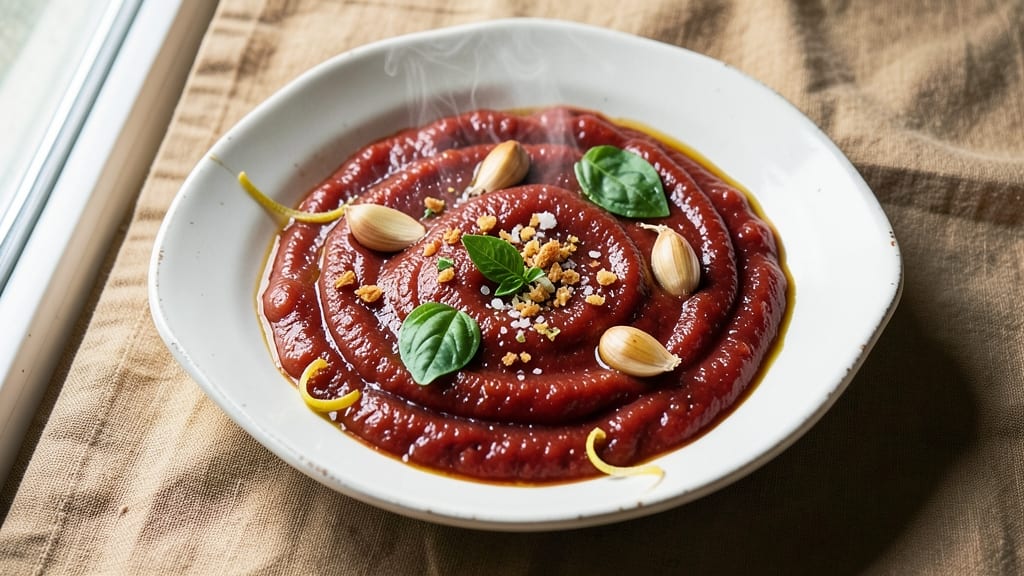
This Boston pizza sauce recipe delivers the deep, herby flavor that makes classic New England pizza unforgettable. The secret lies in balancing crushed tomatoes, garlic, and fresh herbs—simmered until thick and rich—without overpowering sweetness or acidity.
I developed this version after years of perfecting the balance between bold tomato flavor and aromatic herbs, ensuring every spoonful adds depth to your pizza or pasta.
The sauce starts with crushed tomatoes for natural sweetness and texture, then builds complexity with garlic, oregano, and basil.
A touch of sugar and red pepper flakes rounds out the flavor, while simmering reduces the sauce to a perfect consistency—thick enough to cling to crusts but still smooth enough to spread evenly. The key is patience; letting it cook low and slow develops the flavors without burning.
What you’ll end up with is a versatile sauce that transforms any pizza into a restaurant-quality masterpiece. Its rich, herby profile works equally well on thin-crust Boston-style pies or as a base for marinara dishes.
The sauce keeps beautifully in the fridge for up to a week, so you can make a big batch and enjoy it all season long.
Whether you’re a pizza enthusiast or a home cook looking to elevate your dishes, this sauce is a game-changer. Ready in just 30 minutes, it’s simple enough for weeknight cooking but bold enough to impress. Let’s get started—your next pizza night just got better.
Ingredients for boston pizza sauce
Nine essential ingredients transform into the bold, herby sauce that defines Boston pizza.
| Ingredient | Amount | Notes |
|---|---|---|
| Crushed Tomatoes 🍅 | 2 cups | San Marzano preferred for sweetness |
| Garlic Cloves 🧄 | 4 cloves | Freshly minced for aroma |
| Extra-Virgin Olive Oil 🫒 | ¼ cup | For richness and balance |
| Dried Oregano 🌿 | 1 tsp | Mexican oregano ideal |
| Fresh Basil Leaves 🌿 | ¼ cup | Packed, stems removed |
| Granulated Sugar 🍚 | 1 tbsp | Balances acidity |
| Red Pepper Flakes 🌶️ | ½ tsp | Adjust for heat preference |
| Salt 🧂 | 1 tsp | Diamond Crystal preferred |
| Black Pepper 🌶️ | ½ tsp | Freshly ground for depth |
The crushed tomatoes are non-negotiable here—San Marzano is the gold standard for that perfect balance of sweetness and acidity. You'll find them at Whole Foods or any Italian market, often in the canned goods aisle. Fresh basil is a must (the good stuff, not the pre-washed kind)—I always grab an extra bunch because half goes in the sauce and half gets torn over the top of the pizza. The garlic? Freshly minced makes all the difference; pre-minced from jars tastes flat in comparison. If you're short on time, Trader Joe's sells pre-minced garlic in tubes that work in a pinch.
No crushed tomatoes? High-quality canned tomatoes blended until smooth will do, but you'll lose that signature texture. Fresh basil? Dried oregano at half the amount gets you close, but it won't have that same bright punch. The olive oil is where you can splurge—extra-virgin with fruity notes adds depth that cheap oil just can't match. Too much acidity? A pinch more sugar balances it out. The red pepper flakes are optional but worth it for that subtle heat that lingers. And if you're making this for kids or sensitive eaters, just skip the flakes entirely—it's still delicious.
This sauce tastes even better the next day as the flavors meld together. Store it in an airtight container in the fridge for up to 7 days. For longer storage, freeze it in ice cube trays—perfect for portion control when you're ready to make pizza. I usually double the batch because it disappears fast. The sauce thickens as it cools, so if it seems too thick right after cooking, just stir in a splash of water. And trust me, the extra effort of simmering it low and slow is worth it for that restaurant-quality texture.
Why You'll Love This Recipe
- Five-Ingredient Magic: That’s it—just tomatoes, garlic, oil, oregano, and basil. No fancy gadgets, no stress. I swear, the first time I made this, I was skeptical, but the sauce came together smoother than my usual overcomplicated attempts.
- Garlic-Kissed Comfort: The slow-simmered garlic in that olive oil? Pure flavor gold. It’s rich but not heavy, bright but not sharp—like a hug in sauce form. My picky-eater teenager actually asked for seconds, and that’s saying something.
- Pantry-to-Table Flex: This sauce doesn’t just belong on pizza. Slather it on grilled chicken, toss it with pasta, or drizzle it over roasted veggies. I’ve even used it as a marinade for steak—works like a charm every time.
- Budget-Friendly Staple: A single jar of crushed tomatoes and a bulb of garlic stretch for weeks of meals. I make a big batch on Sundays, freeze half, and still have enough for leftovers. My wallet and my freezer both thank me.
Step-by-step instructions for Boston pizza sauce
Here's how to craft a rich, balanced sauce that delivers bold tomato flavor with perfect herb brightness.
Bloom the Garlic in Olive Oil
Heat the 0.25 cup extra-virgin olive oil in a medium saucepan over medium-low heat. Add the 4 cloves minced garlic cloves and cook for 1-2 minutes until they're just beginning to turn golden and smell fragrant. Don't let them brown or they'll become bitter—this is where many home cooks go wrong.
Watch the oil carefully—it should shimmer but not smoke. The garlic should perfume the kitchen with its sweet aroma. This step builds the aromatic foundation of your sauce, so take your time. Once the garlic is perfumed, remove the pan from heat temporarily while you prepare the remaining ingredients.
Combine Tomatoes and Seasonings
Return the pan to medium heat and add the 2 cups crushed tomatoes, 1 tsp dried oregano, 1 tbsp granulated sugar, 0.5 tsp red pepper flakes, 1 tsp salt, and 0.5 tsp black pepper. Stir everything together and bring to a gentle simmer, which should take about 3-4 minutes.
The sugar will begin to dissolve, helping balance the acidity of the tomatoes. Let the mixture simmer uncovered for 10 minutes while you chop the basil. This initial simmer helps develop the sauce's depth and allows the flavors to meld together. You'll notice the mixture thickens slightly as it cooks.
Add Fresh Basil and Simmer
Chop the 0.25 cup fresh basil leaves into thin strips, removing any tough stems. Add the chopped basil to the simmering sauce and stir gently. Reduce the heat to low and let the sauce simmer for another 8-10 minutes until it reaches your desired consistency.
For a classic Boston-style sauce, you want it to be smooth but still coat the back of a spoon. If it thickens too much, add 1-2 tablespoons water to loosen it. The basil should infuse the sauce with its bright, fresh flavor—this is what makes this sauce truly special. Taste as you go and adjust the seasoning if needed.
Finish and Rest the Sauce
Once the sauce reaches your preferred consistency, remove it from heat and let it cool slightly for 5-10 minutes. This resting period allows the flavors to fully meld together. The sauce will thicken further as it cools, so don't worry if it looks a bit loose when you take it off the stove.
For best results, let the sauce sit at room temperature for 30 minutes before using it on pizza. This gives the flavors time to develop and ensures a perfectly balanced sauce. The sauce should have a rich tomato flavor with bright herbal notes and just a hint of sweetness from the sugar. Store any leftovers in the refrigerator for up to 5 days or freeze for up to 3 months.
Pro Tips For Making Boston Pizza Sauce
- Simmer Low and Slow: Crushed tomatoes burn faster than you’d think—keep the heat at a gentle simmer (not a boil) for at least 20 minutes. I learned this the hard way after one batch tasted bitter and underdeveloped. Let that sauce work its magic, and you’ll get that rich, balanced flavor Boston pizza sauce is known for.
- Toast the Oregano First: Crush the dried oregano between your palms or a mortar and pestle before adding it to the sauce. This releases the oils and aroma, making the flavor pop. Sounds like extra work, but it actually cuts down on the amount you need—half a teaspoon of toasted oregano goes further than a full teaspoon of untouched.
- Skip the Salt Rush: Hold off on adding salt until the very end, even if the tomatoes seem bland. The acidity in crushed tomatoes can make the sauce taste flat if you salt too early, and you’ll end up adding way more later. Trust me, it’s better to adjust at the finish—your taste buds will thank you.
- Garlic: Cook It Soft: Add the minced garlic to the olive oil first and let it cook until it’s just fragrant but not browned—about 30 seconds. If you let it turn golden, it’ll turn bitter and overpower the sauce. Think "perfumed," not "roasted," and you’ll nail that classic Boston pizza balance.
Troubleshooting your boston pizza sauce
Sauce Too Thin?
If your sauce ends up too thin after simmering, don’t panic—this is an easy fix. Simmer uncovered for an extra 5-10 minutes to reduce the liquid naturally.
For faster results, mix 1 tablespoon cornstarch with 2 tablespoons cold water, stir into the sauce, and cook for 2-3 minutes until thickened. Just be careful not to overcook or the garlic flavor will turn bitter. 🔥
Sauce Too Thick?
A thick sauce is often ideal, but if it’s too stiff, stir in 1-2 tablespoons water or broth while warm. For a smoother texture, blend briefly with an immersion blender—just pulse 2-3 times to avoid losing the chunky crushed tomato texture.
If you prefer a smoother finish, strain through a fine-mesh sieve after simmering. Always taste as you go!
Garlic Burns Quickly
Garlic is delicate—once it turns golden, it’s already on its way to burning. To prevent this, keep heat at medium-low and remove the pan from heat as soon as you smell that sweet aroma (usually 1-2 minutes).
If you’re using a cast-iron skillet, it retains heat longer, so reduce to low heat after adding garlic. A pro tip: Use a thermometer to keep oil between 275-300°F—this ensures perfect garlic without burning.
Sauce Tastes Bland
Bland sauce usually means the acidity or seasoning needs balancing. Add ½ teaspoon lemon juice to brighten flavors, or increase salt to 1.5 teaspoons for more depth. For extra richness, stir in 1 teaspoon balsamic vinegar at the end.
If the basil flavor feels weak, add 1 extra tablespoon fresh basil and simmer for 2 more minutes. Always taste before serving!
Lumpy Texture
Lumps happen when crushed tomatoes aren’t fully incorporated. To fix this, use an immersion blender for 10 seconds on low speed. For a smoother sauce without blending, press the mixture through a fine-mesh sieve after simmering.
If you prefer texture, stir vigorously with a whisk for 1 minute to break up any clumps. The key is patience—don’t rush the simmering process!
Sauce Separates
Separation usually means the sauce cooled too quickly. To prevent this, let the sauce cool gradually at room temperature for 30 minutes before refrigerating. If it separates later, stir in 1 teaspoon cornstarch mixed with 1 tablespoon water and heat gently until smooth.
For future batches, reduce heat to low during the final 5 minutes** of simmering to maintain emulsion.
Nutrition facts
Frequently asked questions about Boston-style pizza sauce
Can I use this sauce for pasta instead of pizza?
This rich, herby sauce works perfectly as a marinara for pasta dishes like spaghetti or linguine. The chunky texture pairs especially well with al dente pasta, and the balanced sweetness and acidity make it more versatile than traditional marinara. Just thin it slightly with a splash of water if needed for easier tossing.
What's the difference between Boston sauce and regular marinara?
The key differences are texture and flavor depth. Boston sauce uses crushed tomatoes for natural sweetness and a slightly chunkier texture, while traditional marinara is usually smoother and more acidic. This recipe also includes a touch of sugar and red pepper flakes for complexity, plus fresh basil for brightness that sets it apart from basic marinara.
How do I adjust the heat level in this sauce?
For milder heat, reduce the red pepper flakes to ¼ teaspoon or omit them entirely. For extra spice, add ½ teaspoon cayenne pepper or a pinch of crushed chili flakes. Always taste as you go—you can adjust while simmering, but adding more after cooking may make the flavors uneven.
Can I make this sauce without fresh basil?
Yes! Use 1 tablespoon dried basil instead, but add it during the final 5 minutes of simmering. For extra depth, combine with ½ teaspoon dried thyme. The flavor won't be as bright, but it'll still taste delicious—especially if you add a splash of lemon juice at the end for brightness.
How much sauce should I use for a 12-inch pizza?
For a standard 12-inch pizza, spread ½ to ⅔ cup of sauce after it's cooled slightly. The sauce thickens as it cools, so don't overapply—you want just enough to coat the crust without pooling. If using thin crust, use the lighter amount; for thick crust, go toward the higher end. Always let the sauce rest for 30 minutes before using for best texture.