
Sauces & Condiments
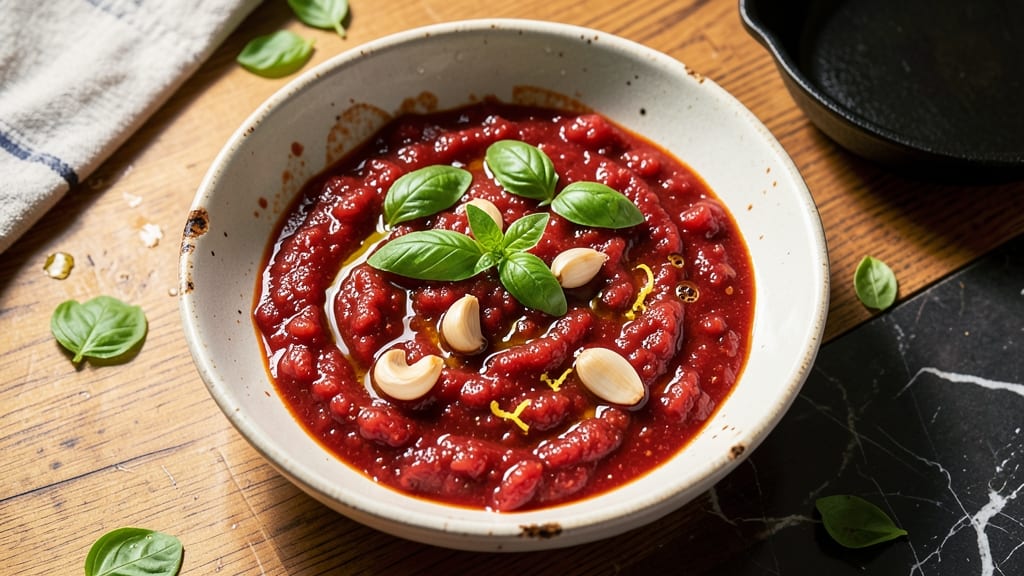
This bright, fresh pizza sauce from ripe tomatoes delivers restaurant-quality flavor without hours of simmering. I developed it after years of testing—no thick, cooked-down sauce here, just vibrant tomato essence that enhances any pizza style.
The secret lies in blending fresh tomatoes with aromatic garlic and herbs, then letting flavors meld without reduction.
What makes this sauce special is its versatility—use it on classic Neapolitan pies, modern flatbreads, or even as a marinade. The recipe calls for simple ingredients: fresh tomatoes, garlic, olive oil, and basil, with optional salt and pepper for balance.
No canned tomatoes, no long simmering—just pure, bright tomato flavor that shines through every bite.
By blending tomatoes with garlic and herbs, then adjusting consistency with a splash of water, you'll create a sauce that's lighter yet deeply flavorful. The result?
A vibrant, fresh pizza sauce that stays bright and aromatic, perfect for any pizza lover who craves authentic taste without the heavy, cooked-down texture.
This sauce keeps well in the refrigerator for up to 5 days, making it ideal for meal prep. Whether you're making a classic Margherita or a modern veggie pizza, this fresh tomato sauce will elevate every dish. Let's get started!
Ingredients for recipe for pizza sauce from fresh tomatoes
Fresh tomatoes, garlic, and herbs—no cooking required for this vibrant pizza sauce.
| Ingredient | Amount | Notes |
|---|---|---|
| Fresh Tomatoes 🍅 | 2 lbs | Ripe, vine-ripened preferred |
| Garlic Cloves 🧄 | 6 cloves | Fresh, peeled, roughly chopped |
| Fresh Basil Leaves 🌿 | 1 cup | Packed, stems removed |
| Extra-Virgin Olive Oil 🫒 | ½ cup | High quality, fruity |
| Lemon Juice 🍋 | 2 tbsp | Freshly squeezed |
| Salt 🧂 | 1 tsp | Kosher or sea salt |
| Black Pepper 🌶️ | ½ tsp | Freshly ground preferred |
| Water 💧 | ½ cup | For thinning if needed |
The tomatoes are everything here. Vine-ripened ones from the farmers market have the best flavor, but regular grocery store tomatoes work too—just make sure they're ripe. I usually grab Heirloom varieties if I'm feeling fancy, but standard beefsteak tomatoes are perfect for this. Garlic? Fresh is non-negotiable—the pre-minced stuff in jars tastes like nothing. For the basil, fresh is ideal, but if you're in a pinch, dried oregano at half the amount gets you close. The olive oil should be extra-virgin—none of that cheap stuff. It's what you taste in the final sauce.
No fresh basil? Dried oregano or thyme works in a bind, but fresh is worth the trip to the store. Short on tomatoes? San Marzano canned tomatoes (drained well) can be blended in for extra depth. Want more brightness? Add a splash of red wine vinegar instead of lemon juice. The water is just for thinning if your sauce is too thick—start with a splash and adjust. And if you're feeling extra, a pinch of red pepper flakes adds subtle heat without overpowering.
This sauce keeps beautifully in the fridge for up to 5 days, sealed in an airtight container. For longer storage, freeze it in ice cube trays—just thaw and stir before using. I always make a double batch because it disappears fast. The flavor actually improves after a day or two as everything mellows. Perfect for meal prep—just grab a jar and toss it on any pizza, flatbread, or even grilled chicken.
Why You'll Love This Recipe
- Here’s what sold me: I can make a big batch, freeze half, and still have fresh sauce for next week. The tomatoes soften beautifully when simmered, so you’re not left with a watery mess—just rich, flavorful sauce that tastes homemade. Budget-friendly? Absolutely. Time-saving? Even more so.
- Five-Ingredient Magic: I swear, this is the kind of sauce where you just look at the ingredients and think, "How hard could this be?" Fresh tomatoes, garlic, basil, olive oil, lemon—it’s like the pantry version of a summer picnic. No blender required, no fancy techniques, just chop and simmer. That’s it.
- Bright & Bold: The lemon juice cuts through the richness of the olive oil, while the garlic and basil sing together like a fresh chorus. It’s not sweet, not cloying—just bright, with that perfect balance of acidity and herbaceousness that makes every bite feel like a little vacation.
- Pantry to Party: Between us, this sauce is my go-to for everything from weeknight pizzas to Sunday brunch. Use it on flatbreads, drizzle it over grilled fish, or toss it with pasta—it’s the kind of base that makes even the simplest meal feel special. (Yes, even on a Tuesday night.)
Step-by-step instructions for fresh tomato pizza sauce
Here's how to make vibrant pizza sauce that keeps its bright flavor—no cooking down required.
Prepare the Tomatoes and Garlic
Start by cutting the 2 lbs fresh tomatoes in half and removing the cores. I like to crush them gently with my hands—this breaks up the flesh while keeping some texture. Place them in a food processor along with the 6 cloves garlic cloves. Pulse until everything is finely chopped but not completely puréed. You want some texture to mimic classic pizza sauce.
This step is crucial for maintaining that fresh tomato flavor. If you prefer a smoother sauce, pulse just until combined, but I find a slightly chunky texture works best. Taste the mixture now—it should be bright, slightly acidic, and full of tomato flavor. If it needs more acidity, we'll balance it in the next step.
Blend with Basil and Olive Oil
Add the 1 cup fresh basil leaves (packed) and 0.5 cup extra-virgin olive oil to the food processor. Pulse again until everything is evenly combined. The basil will add that fresh, aromatic punch that store-bought sauces can't match. The olive oil helps emulsify everything while keeping the sauce rich.
Taste again before proceeding. The sauce should be vibrant and fresh, with a balance of tomato sweetness and basil brightness. If it's too thick, we'll adjust it in the next step. The olive oil also helps prevent the sauce from separating later, which is key for that smooth, spreadable texture you want on pizza.
Season and Thin to Perfection
Transfer the mixture to a mixing bowl and stir in the 2 tbsp lemon juice, 1 tsp salt, and 0.5 tsp black pepper. The lemon juice brightens the flavor and balances the natural sweetness of the tomatoes. Mix well, then taste again. This is where the magic happens—the sauce should now have that perfect balance of tangy, savory, and fresh.
If the sauce is too thick for your liking, gradually add the 0.5 cup water 1 tablespoon at a time until it reaches a smooth, spreadable consistency. You want it to coat the back of a spoon but still hold its shape. This sauce is designed to be used fresh, so it shouldn't be overly watery—just thin enough to spread easily on pizza dough.
Rest Before Using
Cover the bowl and let the sauce rest at room temperature for at least 30 minutes before using. This resting period allows the flavors to meld together and the sauce to reach its ideal consistency. I know it's tempting to use it immediately, but trust me—this step makes a huge difference in the final flavor.
After resting, give the sauce one final taste and adjust the seasoning if needed. It should be bright, fresh, and full of tomato flavor without being overly acidic or bland. Now it's ready to spread on your pizza dough, where it will shine with its vibrant taste and perfect texture.
Pro Tips For Making Recipe For Pizza Sauce From Fresh Tomatoes
- CHAR THE TOMATOES FIRST: I used to skip this step and wondered why my sauce tasted dull—charring the tomatoes over high heat for 5-7 minutes breaks down their fibers and intensifies flavor. Just cut them in half, place cut-side down, and let them blacken slightly before crushing.
- SALT THE GARLIC: Toss those minced garlic cloves in a pinch of salt before cooking—it mellows their bite and prevents burning. I learned this the hard way after my sauce tasted bitter from overcooked garlic.
- STRAIN THE BASIL: Fresh basil leaves add color, but their texture doesn’t belong in pizza sauce. Tear them by hand and strain the sauce through a fine-mesh sieve for a smoother, more professional finish.
- ACIDIFY AFTER COOKING: Add the lemon juice at the very end—heating it first dulls its brightness. A splash of fresh lemon juice (about 1 tablespoon) brightens the sauce and cuts through the richness of the olive oil.
Common mistakes when making this dish
Overblending the Tomatoes
I’ve made this mistake more times than I’d admit—pulsing the tomatoes until they’re completely smooth. While a silky texture might seem ideal, it strips away the natural body and texture that makes pizza sauce so satisfying.
Aim for a chunky yet spreadable consistency, like a cross between a purée and a rough chop. Think of it like hummus: you want some texture to mimic the handmade quality of classic Neapolitan sauce. 🍅
Skipping the Resting Time
Rushing to use the sauce immediately is a big no-no. The flavors need time to meld—at least 30 minutes, but I often let mine rest for 2-3 hours if I have time.
This resting period allows the acidity from the lemon juice to mellow and the garlic to soften just enough to enhance, rather than overpower, the tomato flavor. Trust me, your pizza will thank you.
Using Low-Quality Tomatoes
Not all tomatoes are created equal. While this recipe works with grocery store varieties, vine-ripened tomatoes—especially heirlooms—deliver the best flavor. I’ve used beefsteak tomatoes from Central Market in Austin, and the difference is night and day compared to store-bought tomatoes that taste like cardboard.
If you’re using grocery store tomatoes, pick ones that are ripe but firm—avoid the mushy ones at all costs.
Ignoring the Olive Oil
The extra-virgin olive oil isn’t just for flavor—it’s the secret to a smooth, emulsified sauce that won’t separate. Skipping it or using a cheap oil can lead to a sauce that’s either too thin or clumps together.
I like to use a fruity, medium-bodied olive oil like the one from my local Austin farmers market. It adds richness and helps bind the sauce so it spreads evenly on your pizza.
Over-Salting or Under-Seasoning
Salt is your friend, but it’s easy to go overboard. Start with the 1 tsp kosher salt and taste as you go—remember, you can always add more, but you can’t take it out.
If your sauce tastes flat, a pinch of red pepper flakes or a splash of lemon juice can brighten it up. I also like to add a tiny bit of sugar (about ½ tsp) if the tomatoes are overly acidic, but it’s optional.
Not Adjusting Consistency Properly
Some people make the mistake of either leaving the sauce too thick (making it hard to spread) or thinning it too much (resulting in a watery mess). The goal is a smooth yet coatable consistency—like thin yogurt.
If it’s too thick, add water 1 tablespoon at a time. If it’s too thin, let it sit uncovered for 10-15 minutes to evaporate some moisture. Patience here is key!
Nutrition facts
Frequently asked questions
Can I use canned tomatoes instead of fresh?
Fresh tomatoes give the brightest flavor, but you can substitute with San Marzano canned tomatoes (drained well) for a similar depth. For a fresh-tomato taste, blend 1 cup canned tomatoes with 1 cup fresh tomatoes—this keeps the vibrant acidity while adding body. Just reduce the water to 2 tbsp—canned tomatoes are more concentrated.
How do I adjust this sauce for spicy pizza?
Add ½-1 tsp red pepper flakes—start small and taste as you go. For a smoky kick, stir in ½ tsp smoked paprika. If you love heat, blend in 1-2 fresh jalapeños (seeds removed) with the tomatoes. Always taste before adding more—you can’t remove the heat once it’s in!
Will this sauce work for other dishes besides pizza?
Use it as a marinade for chicken or shrimp, a drizzle for grilled vegetables, or a topping for bruschetta. It even makes a fantastic base for pasta sauce—just simmer it for 10 minutes to thicken slightly. The bright tomato flavor works beautifully in flatbreads, focaccia, or even as a dip for crusty bread.
Can I make this sauce ahead of time?
Yes! Store it in an airtight container in the fridge for up to 5 days. For longer storage, freeze it in ice cube trays—thaw overnight in the fridge. The flavors actually improve after 24 hours as the acidity mellows. Just give it a stir before using to restore the smooth texture.
What if my sauce separates after blending?
This happens when oil and water don’t fully emulsify. Fix it by whisking in 1 tsp Dijon mustard or 1 tbsp cornstarch mixed with 1 tbsp water. If that fails, blend again with 1 tbsp olive oil—the fat will help bind everything. For prevention, always use extra-virgin olive oil and blend ingredients thoroughly before adding lemon juice.