
Sauces & Condiments
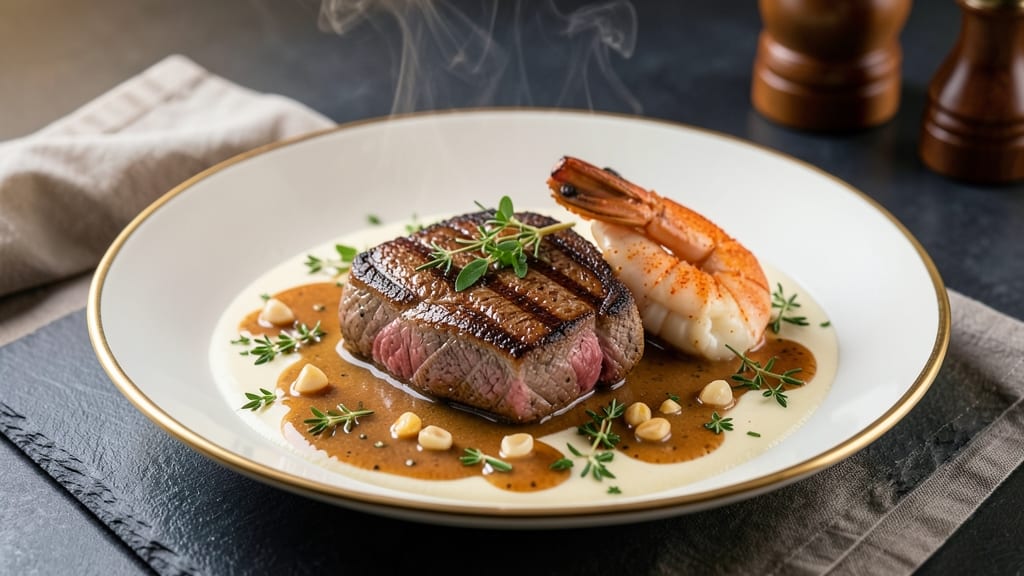
This surf and turf sauce recipe transforms any seafood or steak dish into a restaurant-worthy masterpiece—rich, umami-packed butter meets bright garlic-herb zing in every velvety spoonful. I developed this sauce after years of testing combinations that bridge the ocean and grill, and it’s become my secret weapon for elevating surf-and-turf nights. The key? A perfect balance of creamy depth and herby freshness that clings to every bite, whether drizzled over grilled shrimp or steak.
The foundation starts with high-quality butter and heavy cream, simmered just until silky, then infused with garlic, shallots, and fresh herbs like thyme and parsley. A splash of seafood stock adds that unmistakable briny umami, while a touch of lemon keeps the sauce bright and balanced.
What sets this apart is the optional addition of finely chopped shrimp or crab—just a spoonful transforms it into a seafood-infused butter that’s impossible to resist.
What you’ll end up with is a sauce so versatile it works as a dipping sauce, finishing drizzle, or even a base for pasta. The texture is luxurious—smooth yet rich—while the flavor profile delivers bold umami with a fresh herbal finish.
It’s the kind of sauce that turns a simple grilled dish into something memorable, and it keeps beautifully in the fridge for up to a week, ready to elevate your next meal.
Perfect for pairing with grilled steak, lobster tails, or even as a rich topping for baked potatoes. The best part? It takes just 15 minutes to make, so you can focus on cooking the main event while this sauce works its magic in the background. Let’s get started!
Ingredients for surf and turf sauce
Rich, velvety butter meets bright garlic-herb zing in this restaurant-worthy sauce—perfect for steak or seafood.
| Ingredient | Amount | Notes |
|---|---|---|
| Unsalted Butter 🧈 | 1 cup | High-quality, cold for easier handling |
| Heavy Cream 🥛 | ½ cup | Full-fat for rich texture |
| Garlic Cloves 🧄 | 6 cloves | Freshly minced for bold flavor |
| Shallots 🧅 | 2 whole | Finely chopped, not too small |
| Fresh Thyme Leaves 🌿 | ½ tsp | Or 1/4 tsp dried thyme |
| Fresh Parsley Leaves 🌿 | ¼ cup | Chopped, for fresh brightness |
| Seafood Stock 🌊 | ¼ cup | Low-sodium preferred |
| Lemon Juice 🍋 | 1 tbsp | Freshly squeezed for acidity |
| Salt 🧂 | ½ tsp | Kosher or sea salt |
| Black Pepper 🌶️ | ¼ tsp | Freshly cracked |
| Optional Shrimp or Crab 🦐 | ½ cup | Finely chopped, for seafood boost |
The butter and heavy cream are non-negotiable here—Plugrá or Land O’Lakes are my go-tos for that perfect melt. Grab fresh garlic and shallots from the produce section—they make all the difference. For the seafood stock, Knorr or Pacific Foods are solid choices, but homemade is even better. The thyme and parsley? Fresh is ideal, but dried works in a pinch (just halve the amount). If you’re feeling fancy, grab some fresh crab or shrimp from the seafood counter—just chop it finely and add it at the end for that extra umami punch.
No seafood stock? Chicken stock in a pinch, though it’ll lose that briny depth. Short on butter? Olive oil works but changes the texture slightly. Want more heat? Add a pinch of cayenne or a dash of hot sauce. The lemon juice is key—freshly squeezed is best, but bottled works if you’re in a hurry. If you’re making this ahead, skip the lemon juice until serving so it doesn’t curdle the cream. And if you’re feeling adventurous, swap the parsley for tarragon or chives for a different herbal note.
This sauce keeps beautifully in the fridge for 5-7 days, sealed in an airtight jar. For longer storage, freeze it for up to 3 months—just thaw it in the fridge overnight. The texture might thicken slightly when chilled, so give it a quick whisk or stir before using. It’s perfect for drizzling over grilled steak, lobster, or even as a rich pasta sauce. And if you’re serving it at a party, make a double batch—it disappears fast!
Why You'll Love This Recipe
- I use it for everything: drizzled over grilled fish, tossed with pasta, or even as a dip for crusty bread. (Yes, even on a Tuesday night.) The same sauce, endless possibilities.
- Foolproof Five-Minute Prep: I swear by this—just melt butter, toss in shallots and garlic, and let them soften. No mincing, no stress, and honestly? That’s the magic right there.
- Rich Without Effort: The heavy cream and thyme turn this into something luxurious, but it’s not fancy. Between us, it’s the kind of sauce that makes a simple steak or shrimp feel like a restaurant dish.
- Weeknight to Dinner Party: I use it for everything: drizzled over grilled fish, tossed with pasta, or even as a dip for crusty bread. (Yes, even on a Tuesday night.) The same sauce, endless possibilities.
Step-by-step instructions for bold umami butter with garlic-herb zing
This sauce delivers restaurant-quality depth with minimal effort—just a few simple techniques.
Melt and Infuse the Butter
In a medium saucepan, melt the 1 cup unsalted butter over medium-low heat. I use medium-low to prevent burning while still getting that golden hue. Once fully melted, remove from heat and let it cool slightly—it should be warm but not hot to the touch.
Add the 6 cloves minced garlic and 2 finely chopped shallots to the melted butter. Stir gently to combine, then return the pan to low heat for 5-7 minutes. You'll see the mixture bubble gently and develop a nutty aroma. Watch closely—garlic burns quickly, so keep heat low. The shallots should soften but not brown.
Build the Herb and Seafood Foundation
Reduce heat to low and stir in the 0.5 tsp fresh thyme leaves and 0.25 cup chopped fresh parsley. Let the herbs steep in the butter for 2 minutes, stirring occasionally. This infuses their bright flavors without overpowering the rich base.
Next, add the 0.5 cup optional shrimp or crab (if using) and the 0.25 cup seafood stock. Stir well and let the mixture simmer gently for 3-4 minutes until the stock reduces slightly and clings to the seafood. The sauce should thicken just enough to coat the back of a spoon—this is your signal to move forward.
Finish with Cream and Acid
Pour in the 0.5 cup heavy cream and stir constantly over low heat for 2-3 minutes until the sauce begins to thicken. Here's the thing—don't rush this step. The cream needs time to emulsify with the butter and seafood, creating that luxurious, velvety texture.
Finally, add the 1 tbsp lemon juice, 0.5 tsp salt, and 0.25 tsp black pepper. Taste and adjust seasoning—you might need a touch more salt or lemon to balance the richness. The sauce should be bright, tangy, and deeply flavorful with a perfect harmony of umami and freshness.
Strain and Serve
Line a fine-mesh strainer with cheesecloth or a coffee filter and strain the sauce into a clean bowl. This removes any seafood bits or herb stems, leaving you with an ultra-smooth, professional finish. If the sauce thickens too much as it cools, whisk in 1-2 teaspoons of warm water to reach your desired consistency.
Serve immediately over grilled steaks, shrimp, or lobster for a showstopping surf-and-turf meal. The sauce keeps well in the refrigerator for 3 days, but I promise you won't have leftovers—it's that good. For extra richness, dollop it on top of baked potatoes or corn on the cob too!
Pro Tips For Making Surf And Turf Sauce
- Sweat Shallots Low and Slow: I used to rush this step and end up with bitter, watery shallots—don’t. Slice them thin (1/8-inch or less) and cook them in the butter over medium-low heat for 8-10 minutes. Let the moisture evaporate completely before adding garlic, or you’ll end up with a sauce that tastes like sad, soggy onions. Patience here makes the whole dish taste richer.
- Melt Butter in Stages: Dump all that cold butter in at once, and you’ll shock the cream later. Instead, melt half the butter first, then add the shallots and thyme. Once they’re fragrant, pull the pan off heat for 30 seconds to let the thyme release its oils—this prevents burning when you add the remaining butter and cream. Trust me, your sauce won’t curdle on you.
- Strain the Garlic: Yes, even if you’re tempted to just smash those cloves with the back of your knife. After mincing, press the garlic through a fine-mesh strainer or the tines of a fork to remove any bitter skins and pulp. I learned this the hard way after a batch tasted weirdly sharp—turns out, overworked garlic releases allicin, and no one wants that in their surf and turf sauce.
- Finish with Cold Cream: The cream’s job is to emulsify, not cook. Once you’ve built flavor with the shallots and garlic, remove the pan from heat before adding the heavy cream. Let it warm gently—no boiling—and finish with a splash of cold cream if it starts to thicken too fast. This keeps the sauce silky, not scrambled. (Your future self will thank you.)
Storing and reheating this surf and turf sauce
Fridge Storage Tips
Store your surf and turf sauce in an airtight glass jar or container—I love using Le Parfait glass jars for their tight seals. Let the sauce cool completely before refrigerating to prevent condensation, which can dilute the flavors.
The sauce stays fresh for 5-7 days in the fridge, but I’ve found it’s best used within 3 days for peak texture and flavor. 🧊
When storing, leave about ½ inch of headspace at the top of the jar. This prevents the butter from oxidizing and keeps the sauce smooth.
If you notice a thin layer of liquid (whey) on top when refrigerated, simply stir it back in before using—it’s completely normal and doesn’t affect flavor.
Freezing for Later
For longer storage, freeze the sauce in ice cube trays or small portions in a freezer-safe container. This way, you can thaw exactly what you need without dealing with a large block of frozen butter.
The sauce keeps for up to 3 months in the freezer, though I recommend using it within 2 months for best quality. 🥶
To thaw, transfer the frozen sauce to the fridge overnight. If you’re in a hurry, place the container in a bowl of warm water for 10-15 minutes, stirring occasionally. Once thawed, give it a quick whisk to restore its silky texture.
If it thickens too much, add 1 teaspoon of warm water at a time until it reaches your desired consistency.
Reheating Like a Pro
For the best results, reheat the sauce gently on the stovetop. Place it in a small saucepan over low heat and stir constantly with a silicone spatula. Add 1-2 tablespoons of water or seafood stock to help it warm evenly and prevent separation.
The sauce should reach 160°F—just warm enough to melt the butter without curdling the cream. ✨
Never microwave this sauce—it can cause the butter and cream to separate, leaving you with a greasy mess. If you’re short on time, reheat it in a small bowl set over a pot of simmering water (bain-marie) for 5-7 minutes, stirring occasionally.
This method keeps the sauce smooth and luxurious every time.
Reviving Thickened Sauce
If your sauce thickens too much after refrigeration, don’t toss it! Simply whisk in 1-2 teaspoons of warm water or a splash of seafood stock to loosen it up.
For extra richness, add a pat of softened butter while reheating. The key is to warm the sauce gently—never let it boil, or the butter will separate. 💡
Pro tip: If the sauce looks separated after reheating, whisk vigorously for 30 seconds to re-emulsify it. The heat and motion will bring everything back together.
If all else fails, start fresh with a small amount of the original sauce to rebuild the emulsion—it’s a foolproof trick I learned from my grandmother’s roast chicken gravy!
Nutrition facts
Frequently asked questions
Can I make this sauce without seafood?
The seafood stock and optional shrimp/crab add depth, but you can substitute chicken or vegetable stock and skip the seafood entirely. The butter, cream, and herbs will still create a rich, flavorful sauce that pairs beautifully with steak or roasted vegetables.
How do I prevent the sauce from separating when reheating?
Always reheat gently over low heat and stir constantly with a silicone spatula. Add 1-2 tablespoons of warm water or stock to help it blend smoothly. Never microwave—it causes separation. If it still separates, whisk vigorously for 30 seconds to re-emulsify.
What’s the best way to use leftover sauce?
Drizzle it over grilled steak, lobster, or shrimp for a quick upgrade. It also works as a rich pasta sauce or finishing drizzle for baked potatoes. For extra flavor, stir in a splash of white wine or lemon juice before reheating.
Can I make this sauce dairy-free?
Yes! Replace the butter with coconut oil or olive oil and use coconut cream instead of heavy cream. For richness, add 1 tablespoon of nutritional yeast or a pinch of smoked paprika. The texture will be slightly different but still delicious.
Why does my sauce taste too salty?
Check your stock—many store-bought versions are high in sodium. Use low-sodium stock or homemade. Taste as you go and adjust with lemon juice or fresh herbs to balance. If needed, whisk in 1 teaspoon of warm water to dilute slightly.