
Sauces & Condiments
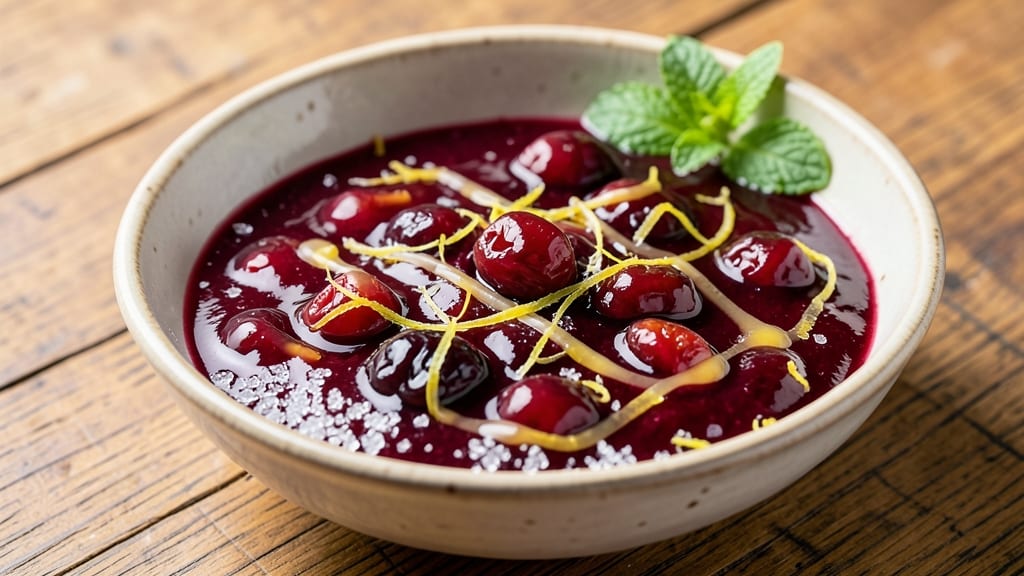
This chokecherry sauce recipe transforms tart wild berries into a versatile, tart-sweet spread perfect for pancakes, pastries, or glaze. The secret lies in balancing sugar and acidity while simmering the cherries until they break down into a luscious, jam-like consistency.
I developed this recipe after years of foraging and perfecting the ratio—too much sugar dulls the unique chokecherry flavor, while too little leaves it overly tart.
The process is straightforward but requires patience: chokecherries must be pitted and simmered until soft, then reduced with sugar and a touch of lemon juice for brightness.
This method preserves the berries' natural depth while creating a sauce that's rich enough for desserts but bright enough to cut through rich meats. The result is a condiment that bridges the gap between jam and sauce, with a texture that's smooth yet slightly chunky.
What sets this sauce apart is its versatility—use it as a pancake topping, pie filling, or even a glaze for roasted meats. The tartness pairs beautifully with buttery baked goods, while the natural sweetness satisfies without overpowering.
Once made, it stores for months in the fridge, making it a pantry staple for seasonal cooking.
For best results, work in batches and avoid rushing the reduction—this is where the sauce develops its signature depth. The final product should coat the back of a spoon with a glossy sheen, ready to elevate any dish it touches. Here’s how to make it perfectly every time.
Ingredients for chokecherry sauce
Nine simple ingredients transform wild chokecherries into a versatile tart-sweet sauce perfect for pancakes and pastries.
| Ingredient | Amount | Notes |
|---|---|---|
| Fresh Chokecherries 🍒 | 2 cups | Pitted, stems removed |
| Granulated Sugar 🍚 | 1 ½ cups | White or light brown |
| Lemon Juice 🍋 | 2 tbsp | Freshly squeezed |
| Water 💧 | ½ cup | Filtered preferred |
| Cornstarch 🌾 | 1 tbsp | For thickening consistency |
| Vanilla Extract 🌸 | 1 tsp | Pure vanilla preferred |
| Sea Salt 🧂 | ¼ tsp | Fine grain preferred |
| Cinnamon 🌿 | ½ tsp | Ground for warmth |
| Extra-Virgin Olive Oil 🫒 | 1 tbsp | For glossy finish |
The chokecherries are the heart of this sauce. Fresh, wild-harvested cherries have the best flavor, but frozen works in a pinch—just thaw and drain first. If you're foraging, look for deep red, plump berries and avoid any that feel mushy or fermented. Costco or local farmers markets often sell fresh chokecherries in late summer. For pitting, a manual cherry pitter is fastest, but a fork works too—just be patient. The sugar amount is critical: 1.5 cups balances the tartness without overpowering the cherries' natural depth. If your cherries are especially tart, reduce to 1.25 cups.
No chokecherries? Substitute tart red berries like sour cherries or cranberries—use 1.5 cups total, pitted if possible. Short on sugar? Honey or maple syrup at 1:1 ratio, but taste as you go. The cornstarch is non-negotiable for that perfect jam-like consistency—it prevents a runny sauce. For extra depth, add 1/2 tsp ground cardamom or 1/4 tsp cloves. The olive oil at the end isn't just for shine; it adds a subtle richness that pairs beautifully with buttery pastries. If you prefer a vegan version, swap the olive oil for avocado oil.
This sauce thickens as it cools, so reheat with 1 tbsp water if it becomes too stiff. Store in a clean, airtight jar in the fridge for up to 3 months—the flavor actually improves over time. For gifting, divide into small jars or use amber glass to protect from light. Freeze for up to 6 months if you won't use it within three months. The sauce works best at room temperature, so let jars sit for 10 minutes before serving. A little goes a long way—1 tbsp per pancake or 2 tbsp per pie is plenty to highlight its unique flavor.
Why You'll Love This Recipe
- No Pits, No Stress: I’ll be real—pitting cherries is a pain. These little chokecherries? You just toss the whole cluster in boiling water, let them simmer, then strain. No tiny seeds, no squinting, just pure ease. That lemon juice twist keeps things bright while you’re at it.
- Tart-Sweet Magic: Honestly, the balance here is next-level. The sugar caramelizes into something rich, but the chokecherries cut through with that wild, jammy tartness—like a cross between a pie and a fancy syrup. A splash of lemon juice at the end? That’s the secret to keeping it from tasting like dessert leftovers.
- Pantry Stash Hero: This sauce is my go-to for when I forget to plan. Drizzle it over pancakes in the morning, toss it into yogurt for a snack, or use it to glaze roasted chicken at dinner. It freezes like a dream, too—just thaw and reheat. No waste, all flavor.
- Budget Bright Spot: Fresh chokecherries are often cheaper than store-bought fruit, and you use the whole thing—no peels, no cores. A big batch costs pennies per serving, and that cornstarch slurry? It thickens perfectly every time, so you’re not left with runny syrup or gloppy jam. Smart, simple, and satisfying.
Step-by-step instructions for chokecherry sauce
Here's how to create a balanced tart-sweet jam with perfect texture for breakfast pastries.
Prepare the Chokecherries and Sugar Mixture
In a large saucepan, combine the 2 cups of fresh chokecherries, 1.5 cups of granulated sugar, 2 tablespoons of lemon juice, and 0.5 cup of water. Stir gently to ensure all ingredients are evenly distributed. I like to use a wooden spoon for this step—it helps prevent scratching the pan and allows for better control when stirring.
Place the saucepan over medium-high heat and bring the mixture to a gentle boil. Watch carefully as the cherries begin to release their juice and soften. You'll notice the mixture will bubble vigorously—this is normal. Once boiling, reduce the heat to medium-low and let it simmer uncovered for 15 minutes. This initial cooking time helps break down the cherries and extract their natural pectin, which will contribute to the sauce's thickness.
Thicken the Sauce with Cornstarch Slurry
While the cherries simmer, create a cornstarch slurry in a small bowl by whisking together the 1 tablespoon of cornstarch and 2 tablespoons of cold water until smooth. This slurry is crucial for achieving the right consistency—it prevents the sauce from becoming too runny while preserving the cherries' natural texture.
After the initial 15 minutes of simmering, carefully pour the cornstarch slurry into the saucepan while stirring continuously. The heat should be at medium-low to prevent the mixture from boiling over. Let the sauce simmer for another 10-12 minutes, stirring occasionally. You'll know it's thickening when it begins to coat the back of a spoon and pulls away from the sides of the pan. The sauce should reach a jam-like consistency, but still be spreadable—not gluey.
Add Flavorings and Finish Cooking
Once the sauce has thickened, remove it from the heat and stir in the 1 teaspoon of vanilla extract, 0.25 teaspoon of sea salt, 0.5 teaspoon of cinnamon, and 1 tablespoon of extra-virgin olive oil. The olive oil adds a subtle richness and helps create a glossy finish. Let the sauce sit off the heat for 5 minutes to allow the flavors to meld together.
Return the sauce to low heat and cook for an additional 5 minutes, stirring gently. This final step ensures all the spices are fully incorporated and the sauce reaches its ideal texture. You want it to be thick enough to hold its shape when spread, but still smooth and glossy. If the sauce is too thick, you can thin it slightly with a few drops of water or lemon juice, but it should generally be ready at this point.
Cool and Store for Best Results
Transfer the chokecherry sauce to a clean glass jar or airtight container. Let it cool to room temperature before sealing. The sauce will thicken further as it cools, so don't be alarmed if it appears slightly looser while still warm. Once cooled, it should have a beautiful jam-like consistency, perfect for spreading on pancakes or filling pastries.
Store the sauce in the refrigerator for up to 2 weeks. For longer storage, you can freeze it for up to 6 months. When reheating, warm it gently in a saucepan over low heat, stirring occasionally, until it reaches your desired consistency. The sauce can also be used immediately while warm, though it's best served at room temperature for the full flavor experience.
Pro Tips For Making Chokecherry Sauce
- STRAIN TWICE: Chokecherries burst when cooked, so one pass through a fine-mesh strainer won’t catch everything. Run the sauce through a nut milk bag or cheesecloth-lined colander for a silky texture—no gritty surprises in your final product. (Yes, it’s tedious, but you’ll taste the difference.)
- SIMMER GENTLY AFTER BOIL: Once your sauce hits a rolling boil, drop the heat to a barely bubbling simmer. I learned this the hard way—aggressive boiling caramelizes the sugar too fast, turning your sauce bitter. Keep it at a steady, lazy bubble for even sweetness.
- PIT THE CHERRIES FIRST: Skip the straining headache by removing pits before cooking. Run pitted cherries through a food mill or fine-mesh sieve—this cuts down on later filtering and keeps your sauce smooth. (Pro move: Freeze cherries for 10 minutes first; pits pop out easier.)
- USE COLD CORNSTARCH SLURRY: Mix your cornstarch with cold water before adding it to the hot sauce—this prevents clumping like crazy. Stir in slowly while simmering, and keep the heat low for 2–3 minutes after. No lumps, no stress. (Your future self will thank you.)
Flavor customization for these flavors
Sweet-Tart Balance
Adjust the sugar-to-cherry ratio based on tartness. If your cherries are extra tart, reduce sugar to 1.25 cups and add 1 extra tbsp lemon juice for brightness. For sweeter results, increase sugar to 1.75 cups—but don’t exceed 2 cups, or the sauce will lose its signature tang.
I’ve found that wild-harvested cherries from Costco or local markets often need less sugar than store-bought varieties. Taste as you go! 🍯
Spice Variations
Swap cinnamon for 1/2 tsp ground cardamom for an exotic twist or add 1/4 tsp cloves for warmth. For a smoky depth, stir in 1/4 tsp smoked paprika during the final 5 minutes of cooking.
If you love heat, finish with 1/8 tsp cayenne—it cuts through the sweetness beautifully. I like to keep a small jar of Penzeys spice blends on hand for quick adjustments. 🌶️
Texture Adjustments
For a chunkier texture, reduce simmering time to 10 minutes before adding cornstarch. If you prefer a smooth glaze, simmer longer (15+ minutes) and blend briefly with an immersion blender.
To make it spreadable for toast, add 1 extra tbsp cornstarch and simmer 2 extra minutes. The key is patience—rushing thickens unevenly. 🍞
Flavor Boosters
Infuse the sauce with 1/2 tsp orange zest for citrusy brightness or 1/4 cup chopped pecans for crunch. For a boozy kick, stir in 1 tbsp bourbon or brandy during the final 5 minutes of cooking.
I’ve also experimented with 1 tsp honey instead of sugar for a floral note. These tweaks work best when added after the cornstarch step to preserve their freshness. 🍷
Dietary Swaps
Make it vegan by replacing olive oil with avocado oil and using maple syrup instead of sugar. For a lower-sugar option, reduce sugar to 1 cup and add 1 extra tbsp lemon juice to balance.
If you’re avoiding cornstarch, use 1 tbsp tapioca starch for a similar thickening effect. Always taste as you go—these swaps can alter the sauce’s depth. 🌱
Regional Twists
In Scandinavian traditions, chokecherry sauce often includes 1/2 tsp allspice and a pinch of nutmeg. For a Southern U.S. touch, add 1/4 cup apple cider and a dash of black pepper.
In Eastern Europe, it’s common to mix in 1 tbsp sour cream for tang. Each region tweaks the sauce to complement local dishes—experiment to find your favorite! 🗺️
Nutrition facts
Frequently asked questions
Can I use frozen chokecherries instead of fresh?
Yes, but thaw and drain them thoroughly first to avoid excess water in your sauce. Frozen chokecherries work well, though fresh berries develop deeper flavor. If using frozen, you may need to simmer 5 extra minutes to achieve the same jam-like consistency.
Why did my sauce turn out too runny?
This usually happens if you didn't simmer long enough or skipped the cornstarch step. For a quick fix, mix 1 tsp cornstarch with 1 tbsp water, stir into the warm sauce, and simmer 2 more minutes. If it's still too thin, repeat until thickened.
How can I make this sauce less sweet?
Reduce sugar to 1 cup and add 1 extra tbsp lemon juice to balance the tartness. For extra depth, simmer 5 extra minutes to let flavors meld. Remember, chokecherries are naturally tart—this sauce is designed to be tart-sweet!
Can I use this sauce on savory dishes?
The tartness pairs beautifully with roasted meats like pork or duck. Use 2 tbsp as a glaze after cooking. For extra richness, stir in 1 tsp Dijon mustard during the final 5 minutes of simmering.
How do I prevent my chokecherries from staining my saucepan?
Use a stainless steel or enamel pan—never aluminum. For extra protection, line the pan with parchment paper cut to fit. If you notice staining, soak the pan immediately after cooking in hot water with 1 tbsp baking soda for 10 minutes**.