
Sauces & Condiments
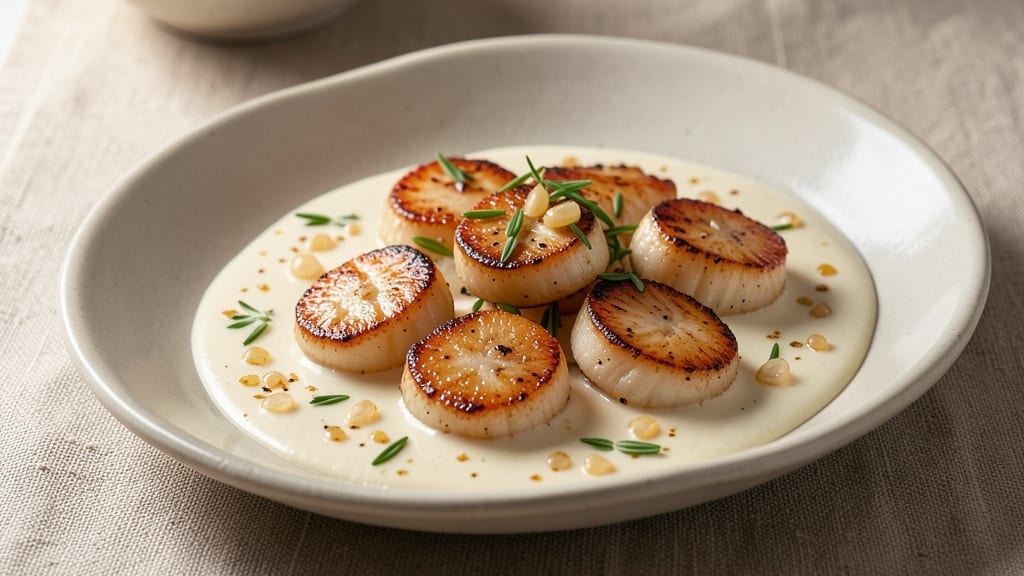
Baked scallops in cream sauce transform simple seafood into an elegant, restaurant-worthy dish with just 20 minutes of hands-on time. The secret lies in the velouté—silky white wine cream sauce that coats each scallop in a velvety finish while the edges develop a delicate crispness.
I developed this recipe after years of perfecting the balance between tender scallops and rich sauce, ensuring every bite delivers both texture and depth.
The process is straightforward but precise: sear the scallops first to lock in juices, then bake them in the cream sauce until just set. This method guarantees scallops that are tender inside with a golden crust, while the sauce remains luscious rather than breaking.
The white wine in the velouté adds brightness that cuts through the richness, creating harmony in every spoonful.
What you'll end up with is a dish that looks and feels like fine dining—plated with the sauce artfully drizzled over the scallops, garnished with fresh herbs, and served with crusty bread or roasted vegetables.
The combination of textures and flavors makes this perfect for special occasions or when you want to impress without complicated techniques.
This recipe serves four and comes together in under 30 minutes, making it ideal for weeknight dinners that feel like a celebration. The sauce can be made ahead and reheated gently, so you can focus on plating while it warms through.
Let's get started on creating this elegant seafood masterpiece.
Ingredients for baked scallops in cream sauce
Simple seafood ingredients that transform into restaurant-worthy elegance with minimal effort.
| Ingredient | Amount | Notes |
|---|---|---|
| Large Dry Scallops 🦪 | 16 whole | Pat dry with paper towels |
| Unsalted Butter 🧈 | ½ cup | Cold, cut into small cubes |
| Shallots 🧅 | 3 whole | Minced finely, about 2 tbsp |
| Garlic Cloves 🧄 | 4 cloves | Minced, about 1 tsp |
| Dry White Wine 🍷 | ½ cup | Sauvignon Blanc preferred |
| Heavy Cream 🥛 | ½ cup | Full-fat for richness |
| Chicken Stock 💧 | ½ cup | Low-sodium preferred |
| Fresh Thyme 🌿 | ¼ cup | Leaves only, chopped |
| Fresh Parsley 🌿 | 0.1 cup | Chopped, for garnish |
| Lemon Juice 🍋 | 1 tbsp | Freshly squeezed |
| Salt 🧂 | 1 tsp | Kosher or sea salt |
| Black Pepper 🌶️ | ½ tsp | Freshly ground |
| All-Purpose Flour 🌾 | 1 tbsp | For thickening sauce |
| Extra-Virgin Olive Oil 🫒 | 1 tbsp | For searing scallops |
Scallops are the star here—look for dry-packed ones with no orange coral (that's the gut). Whole Foods and high-end seafood markets have the best quality, but any reputable fishmonger will do. Pat them dry before searing, or they'll steam instead of crisp. The butter matters too—use European-style if you can find it, like Plugrá or Kerrygold, for that rich, flavorful taste. If your shallots are big, peel and slice them thinly for even cooking. Fresh herbs make all the difference, so grab thyme and parsley from the grocery store's produce section—just make sure the stems are green, not wilted.
No white wine? Dry vermouth or apple cider vinegar works in a pinch, but the acidity will be different. Short on heavy cream? Half-and-half plus a splash of cream cheese gets you close. The chicken stock can be swapped for vegetable stock if you're avoiding poultry. For the flour, if you're gluten-free, use cornstarch instead—it thickens just as well. The lemon juice is non-negotiable though; it brightens the whole dish. If you're prepping ahead, make the sauce first and reheat it gently before adding the scallops—just don't let it boil, or it'll break.
The sauce keeps for 3 days in the fridge, but the scallops are best eaten fresh—so plan to cook them the same day. Store the sauce in a sealed container with plastic wrap pressed right on the surface to prevent a skin from forming. The scallops can be seared ahead and refrigerated for up to 2 hours before baking, but I recommend serving them immediately for that perfect crisp edge. Garnish with fresh parsley right before serving—it adds a pop of color and freshness that makes the dish look restaurant-worthy.
Why You'll Love This Recipe
- No-Fuss Baking: I swear by the "bake it and forget it" method—just toss those scallops in the oven, and the butter and wine do all the heavy lifting. The shallots caramelize right into that sauce, so you’re not stuck stirring on the stove for ages.
- Rich Without Effort: That creamy sauce? It’s basically melted butter and wine hugging the scallops—no heavy cream, no fuss, just pure, velvety satisfaction. The garlic and shallots add depth, but the scallops stay tender, not rubbery.
- Weeknight to Dinner Party: Honestly, this is my go-to when I need something that feels fancy but doesn’t take all day. Double the batch, and you’ve got leftovers for lunch—just reheat the sauce separately to keep the scallops crisp. (Yes, even on a Tuesday night.)
- Budget-Friendly Luxury: Scallops can be pricey, but you’re not drowning them in expensive ingredients here. A little butter, a splash of wine, and some pantry staples stretch this into a meal that tastes like you splurged. My daughter picks out the best ones, but we still fight over seconds.
Step-by-step instructions for baked scallops in cream sauce
Here's how to create restaurant-quality scallops with silky sauce and perfect texture.
Sear Scallops for Buttery Crisp Edges
Preheat your oven to 425°F. Heat a large oven-safe skillet over medium-high heat until very hot. Add the 1 tablespoon extra-virgin olive oil and swirl to coat the pan. Place the 16 whole large dry scallops in the pan, flat-side down, leaving space between them.
Sear undisturbed for 1-2 minutes until the edges turn golden brown and the scallops release easily from the pan. This creates that coveted crispy exterior while keeping the centers tender. Flip each scallop and sear the other side for another 1-2 minutes. Remove from heat and set aside.
Build the White Wine Velouté Base
In the same skillet (no need to clean it), reduce heat to medium and add the 0.5 cup unsalted butter cut into cubes. Let it melt completely, about 1 minute, until it turns a golden hue and smells nutty. Add the 3 minced shallots and cook for 3-4 minutes until softened and translucent.
Stir in the 4 minced garlic cloves and cook for 30 seconds until fragrant—don't let it brown or it'll turn bitter. Pour in the 0.5 cup dry white wine and scrape up any browned bits from the bottom of the pan. Let it simmer for 3-4 minutes until reduced by half and slightly thickened.
Thicken and Season the Cream Sauce
Sprinkle the 1 tablespoon all-purpose flour over the wine mixture and whisk vigorously to combine. Cook for 1-2 minutes until the flour is fully incorporated and the sauce begins to thicken. Slowly pour in the 0.5 cup heavy cream and 0.5 cup chicken stock, whisking constantly to prevent lumps.
Add the 0.25 cup chopped fresh thyme, 1 teaspoon salt, and 0.5 teaspoon black pepper. Bring to a gentle simmer and cook for 5-6 minutes until the sauce coats the back of a spoon. Taste and adjust seasoning—you want it rich but not overpowering.
Bake to Perfection
Return the seared scallops to the skillet, spooning the sauce over them until fully coated. Transfer the skillet to the preheated 425°F oven and bake for 8-10 minutes until the scallops are just opaque in the center and the sauce has thickened slightly. Watch closely in the last 2 minutes to prevent overcooking.
Remove from the oven and let rest for 2 minutes before serving. The residual heat will finish cooking the scallops perfectly. Stir in the 1 tablespoon fresh lemon juice and 0.1 cup chopped fresh parsley just before serving to brighten the flavors and add freshness.
Pro Tips For Making Baked Scallops In Cream Sauce
- Pat dry those scallops: I learned this the hard way—wet scallops steam instead of sear. Use paper towels to wipe them thoroughly before searing, or you’ll end up with sad, waterlogged centers. The butter will sing if the scallops are dry.
- Sweat, don’t fry, the shallots: Low heat is your friend here. If you crank it up to brown the shallots, you’ll burn the garlic before the wine deglazes properly. Keep it at a simmer, stirring often—this is where the sauce’s depth starts.
- Deglaze with wine, then wait: Pour that white wine in, but don’t rush to add the cream. Let the wine reduce by half first—it cuts the acidity and concentrates the flavor. Skipping this step means a thinner, less complex sauce.
- Finish with cold butter: The sauce will look thin at first, but adding a pat of cold butter at the end (yes, even if it looks weird) emulsifies it instantly. Stir until it melts just enough to coat the back of a spoon—this is the non-negotiable step for a velvety finish.
Flavor customization for this recipe
Rich Cream Variations
Swap the heavy cream for crème fraîche to add tangy depth—just use ½ cup and reduce the chicken stock to ¼ cup to maintain balance. For a lighter option, try coconut cream (full-fat) with ½ teaspoon grated nutmeg for warmth.
I’ve also had success with Greek yogurt mixed with 2 tablespoons sour cream—it creates a velvety texture with subtle acidity. 🥛
Wine & Liquor Infusions
Boost the sauce with 1 tablespoon brandy or Cognac when deglazing the pan—it adds caramelized richness. For a non-alcoholic twist, use white grape juice reduced by half.
A splash of lemon balm syrup (simmer ¼ cup honey with 2 tbsp lemon balm leaves for 5 minutes) brightens the sauce beautifully. 🍷
Herb & Spice Twists
Replace thyme with fresh tarragon for an anise-like aroma or chopped chives for a milder onion note. Add ½ teaspoon smoked paprika to the sauce for subtle smokiness, or a pinch of ground coriander for earthy complexity.
I love finishing with micro cilantro for a modern touch—it adds vibrant color too. 🌿
Umami Boosters
Stir in 1 teaspoon fish sauce or ½ teaspoon Worcestershire sauce while simmering for a savory depth. For a vegetarian option, use 1 teaspoon mushroom powder or 1 tbsp soy sauce>. A splash of anchovy paste (just ½ teaspoon) dissolves completely and elevates the sauce’s complexity. 🍄
Texture Contrasts
Add toasted breadcrumbs (mix 2 tbsp panko with 1 tbsp melted butter) to the sauce before baking for a crispy finish. For a silky contrast, fold in ¼ cup ricotta cheese just before serving. I also like sprinkling crushed pistachios on top for a nutty crunch. ✨
Seasonal Brighteners
In summer, fold in 1 tbsp fresh basil pesto at the end for a vibrant twist. For fall, add ½ teaspoon maple syrup and a pinch of cinnamon to complement roasted squash sides.
Winter calls for 1 tbsp cranberry reduction (simmer ¼ cup cranberries with 1 tbsp balsamic) to cut through the richness. 🍂
Nutrition facts
Frequently asked questions
Can I use frozen scallops instead of fresh?
Fresh scallops are ideal for this recipe because they hold their shape better and develop that perfect crisp edge. However, if you must use frozen, thaw them completely in the refrigerator overnight and pat them very dry with paper towels to remove excess moisture. This helps prevent steaming instead of searing.
How do I know when the scallops are done?
Scallops are perfectly cooked when they reach an internal temperature of 125°F—they should be just opaque in the center with a slight bounce when pressed gently. Overcooking by even 1 minute makes them tough. The baking time in this recipe accounts for carryover heat, so remove them when they're slightly underdone.
Can I make the sauce ahead of time?
Yes! The sauce can be prepared up to 3 days in advance and stored in an airtight container in the refrigerator. Reheat it gently on the stovetop over low heat, stirring constantly until warm but not boiling. For the best results, add the scallops directly from the fridge to the warm sauce and bake as directed.
What's the best way to serve these scallops?
These elegant scallops pair beautifully with crusty baguette for dipping, roasted asparagus, or a fresh arugula salad> with lemon vinaigrette. For presentation, spoon the sauce artfully over the scallops and garnish with extra parsley and a sprinkle of flaky sea salt. Serve immediately for the best texture contrast.
What if my sauce breaks or becomes too thin?
If the sauce separates or becomes too thin, whisk in 1 teaspoon cold butter or 1/2 teaspoon cornstarch> mixed with 1 tablespoon cold water until smooth. For a richer texture, reduce the sauce uncovered over medium heat for 2-3 minutes to evaporate excess liquid. Always