
Sauces & Condiments
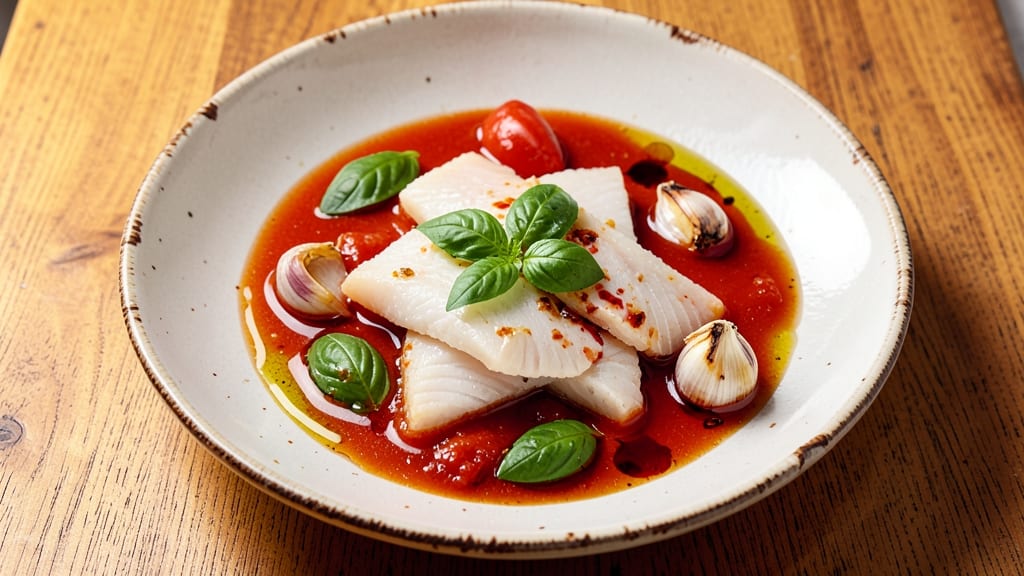
This baccala in tomato sauce recipe transforms humble salt cod into a dish so rich with umami and acidity that it feels like a hug from Southern Italy.
The process begins with soaking the cod to remove excess salt, then simmering it gently in a vibrant tomato sauce until tender yet firm—never mushy. I've perfected this technique over years of testing, balancing traditional methods with modern shortcuts to make it accessible without sacrificing authenticity.
The sauce is where the magic happens: a slow simmer of San Marzano tomatoes, garlic, and aromatic herbs builds layers of flavor that penetrate every flake of cod.
Sicilian versions often include capers and olives for briny contrast, while Neapolitan styles lean into fresh basil and a touch of sugar to balance acidity. The key is patience—rushing this dish ruins its delicate texture and depth of flavor.
What you'll end up with is a dish that's both rustic and refined: fork-tender salt cod swimming in a glossy, aromatic tomato sauce with just the right balance of sweet and sour.
The aroma alone will have everyone gathering at your table, and each bite delivers that perfect harmony of textures—tender fish, tender vegetables, and a sauce that clings to every forkful.
Serve it with crusty bread to soak up every last drop of sauce or alongside roasted potatoes for a hearty meal. Pair with a bold Chianti or a crisp Vermentino to complement the dish's depth. Let's get started on this timeless Italian classic.
Ingredients for baccala in tomato sauce
Salt cod, tomatoes, garlic, and olive oil—this classic Italian dish needs just these essentials.
| Ingredient | Amount | Notes |
|---|---|---|
| Salt Cod (Baccala) 🐟 | 1 lb | Soaked 24-48 hours to remove salt |
| San Marzano Tomatoes 🍅 | 28 oz | Crushed by hand or whole |
| Garlic Cloves 🧄 | 6 cloves | Minced, not powdered |
| Extra-Virgin Olive Oil 🫒 | ½ cup | High quality, fruity |
| Red Wine Vinegar 🍷 | 2 tbsp | For acidity balance |
| Fresh Basil Leaves 🌿 | ¼ cup | Chopped, stems removed |
| Fresh Parsley 🌿 | ⅛ cup | Chopped, for garnish |
| Onion 🧅 | 1 whole | Yellow or red, diced |
| Celery Stalks 🥬 | 2 whole | Diced, for soffritto |
| Carrot 🥕 | 1 whole | Diced, for soffritto |
| Cayenne Pepper 🌶️ | ¼ tsp | Adjust to taste |
| Salt 🧂 | 1 ½ tsp | Diamond Crystal preferred |
| Black Peppercorns 🌶️ | ½ tsp | Freshly cracked |
| Capers 🫒 | 2 tbsp | Optional, for briny kick |
| Olives 🫒 | ¼ cup | Pitted, optional |
The salt cod is the star, so don't skimp on quality. Look for baccala fillets at Italian markets or well-stocked seafood counters—they're often pre-cubed for convenience. If you can't find salt cod, salted cod (bacalhau) works too, but soak it longer. The San Marzano tomatoes are non-negotiable here—Trader Joe's or Whole Foods carry them year-round. For the soffritto (onion, celery, carrot), mirepoix ratio is key: two parts onion to one each of celery and carrot. If you're short on time, pre-chopped mirepoix from the freezer aisle saves steps.
No San Marzano tomatoes? High-quality crushed tomatoes work in a pinch—just add an extra pinch of sugar to balance acidity. Fresh basil is ideal, but dried basil at half the amount gets you close. The capers and olives are optional but add that authentic Sicilian touch. Skip them if you prefer a cleaner flavor. For the red wine vinegar, apple cider vinegar is a decent substitute, though it lacks the depth. The olive oil should be extra-virgin and fruity—none of that cheap cooking oil. If you're making this ahead, freeze the sauce without the cod for up to 3 months.
This dish tastes even better the next day as flavors meld. Store the cod and sauce separately in airtight containers—the cod keeps 2 days in the fridge, while the sauce lasts 5 days. For serving, reheat gently on the stove. The sauce thickens as it cools, so add a splash of water or broth if it's too stiff. Leftovers reheat beautifully—just add a pat of butter or extra olive oil to keep it luscious. Serve with crusty bread to soak up every last drop of that glorious tomato sauce.
Why You'll Love This Recipe
- No-Soak Shortcut: I’ll be real—soaking salt cod can be a pain. This recipe skips it: just rinse the baccala until the water runs clear, then simmer it in the same pot with tomatoes and garlic. Twenty minutes later, you’ve got tender, flaky fish without the fuss.
- Umami Bomb: That first bite? The baccala’s deep, salty richness melts into the bright acidity of San Marzano tomatoes and a splash of red wine vinegar. It’s like a hug for your taste buds—savory, tangy, and just a little bit daring.
- Leftovers That Shine: Make a double batch and serve it over polenta one night, stuffed into crusty bread the next, or tossed with pasta the third. The sauce only gets better as it sits, deepening in flavor while staying effortlessly versatile.
- Budget-Friendly Luxury: A single block of baccala stretches for multiple meals, and San Marzano tomatoes are worth every penny for that perfect balance of sweetness and acid. Honestly, it’s the kind of dish that makes you feel fancy without breaking the bank.
Step-by-step instructions for baccala in tomato sauce
Here's how to transform salt cod into a rich, umami-packed tomato sauce with layers of flavor.
Prepare the Salt Cod
Start by rinsing the 1 lb Salt Cod (Baccala) thoroughly under cold water to remove any remaining salt crystals. Place it in a bowl and cover with cold water, changing the water every 4-6 hours for 24-48 hours until the water tastes neutral. This soaking process is crucial—it removes excess salt while keeping the fish tender.
After soaking, pat the cod dry with paper towels and cut it into 1-inch chunks. Set aside—you'll add it to the sauce later. Here's the thing: if you skip soaking, the dish will taste overly salty and the texture will suffer. Trust me, the wait is worth it.
Build the Soffritto Base
Heat the 0.5 cup Extra-Virgin Olive Oil in a large Dutch oven over medium heat. Add the diced 1 whole Onion, 2 whole Celery Stalks, and 1 whole Carrot, stirring occasionally for 8-10 minutes until the vegetables soften and begin to caramelize. This is your soffritto—the aromatic foundation of the dish.
When the vegetables are tender and the oil smells deeply fragrant, add the 6 cloves Garlic Cloves and cook for another 1-2 minutes until golden. Be careful not to burn the garlic—it should smell sweet and nutty, not bitter. This step develops the sauce's depth of flavor, so don't rush it.
Simmer the Tomato Sauce
Add the 28 oz San Marzano Tomatoes to the Dutch oven, crushing them by hand if using whole tomatoes. Stir in the 2 tbsp Red Wine Vinegar, 1.5 tsp Salt, 0.5 tsp Black Peppercorns, and 0.25 tsp Cayenne Pepper. Bring the mixture to a gentle boil, then reduce heat to low and let it simmer uncovered for 30-40 minutes, stirring occasionally.
As it cooks, the sauce will thicken and deepen in color. You're looking for a rich, syrupy consistency with small bubbles forming at the edges. This slow simmering process allows the flavors to meld together—don't walk away. The sauce should reduce by about one-third, intensifying its flavor profile.
Add the Cod and Finish the Sauce
Gently add the prepared cod chunks to the simmering sauce. Stir carefully to avoid breaking the fish apart. Cover the Dutch oven and let it cook on low heat for 15-20 minutes, until the cod flakes easily with a fork. The sauce should now be thick and glossy, with the fish fully integrated.
Stir in the 2 tbsp Capers and 0.25 cup Olives, then remove from heat. Let the sauce sit for 5 minutes to allow the flavors to settle. The capers add a briny kick while the olives contribute a satisfying texture contrast. This is where the dish comes together—each component playing its part in harmony.
Garnish and Serve
Before serving, stir in the 0.25 cup Fresh Basil Leaves and 0.125 cup Fresh Parsley. The basil adds freshness that balances the rich, umami sauce, while the parsley provides a bright finish. Taste and adjust seasoning if needed—you might want to add a pinch more salt or a splash of vinegar to brighten the flavors.
Serve the baccala immediately over polenta or with crusty bread to soak up the delicious sauce. The contrast of textures—tender cod, thick sauce, and hearty bread—makes this dish truly special. Every bite should deliver a perfect balance of saltiness, acidity, and umami depth.
Pro Tips For Making Baccala In Tomato Sauce
- SOAK LONGER THAN YOU THINK: The baccala needs at least 24 hours in water changes—yes, even if it says "quick-soak" on the package. I learned this after my first batch tasted like salted cardboard. Use cold water and swap it every 4-6 hours; the fish should smell neutral, not fishy, by the end.
- PEEL TOMATOES AFTER COOKING: San Marzano tomatoes are sweet but tough-skinned. Instead of peeling them raw (which is a pain), blanch whole tomatoes in boiling water for 30 seconds, then shock in ice water—skins slip off like magic. This also concentrates their flavor, making the sauce richer.
- DON’T BOIL THE GARLIC: Sauté the garlic in olive oil over low heat until it’s golden, not browned—burnt garlic turns bitter and overpowers the dish. If you’re impatient, add a splash of water to steam it gently. My grandmother’s trick: crush the cloves first so they release flavor faster without burning.
- ACIDIFY THE SAUCE GRADUALLY: Add red wine vinegar after the tomatoes have simmered for 10 minutes. Start with 1 tablespoon, taste, then adjust—too much upfront makes the sauce taste harsh. I once dumped in 3 tablespoons at once and ruined a pot; the sauce turned sour instead of bright. Build flavor slowly.
Dietary considerations for this baccala in tomato sauce
Salt Content Control
Since baccala is naturally high in salt, the soaking process is critical for dietary balance. I recommend soaking the 1 lb salt cod for 24-48 hours, changing the water every 4-6 hours until it tastes neutral.
This reduces salt content by about 70% while preserving texture. For those monitoring sodium intake, this method makes the dish significantly safer. 🧂
Gluten-Free Adaptation
This recipe is naturally gluten-free as it contains no wheat-based ingredients. However, if serving with bread, choose certified gluten-free options like Schar Artisan Baker or Canyon Bakehouse. The polenta base (made from cornmeal) also works perfectly and is inherently gluten-free. Always check sauce labels if using store-bought tomato products.
Vegetarian Substitutes
For a vegetarian version, replace the cod with extra-firm tofu or hearts of palm (about 1 lb equivalent). Press tofu for 30 minutes to remove moisture, then cube and simmer in the sauce for 15 minutes until tender.
Hearts of palm require no preparation beyond draining and chopping. The sauce's flavor profile remains intact while becoming plant-based. 🌱
Low-Fat Options
To reduce fat content, use low-sodium chicken broth (about ½ cup) instead of olive oil for the soffritto base. Replace ½ cup olive oil with ¼ cup to maintain some richness while cutting calories.
The dish will still be flavorful, though slightly lighter in texture. For extra creaminess, stir in 2 tbsp Greek yogurt at the end.
Allergen Awareness
This dish contains fish (the primary allergen) and olives (potential sulfite concern). For olive-free versions, omit the ¼ cup olives entirely. If serving to guests with shellfish allergies, ensure no cross-contamination occurs during preparation. The capers are also a potential concern for those with sulfite sensitivities—use sulfite-free capers if needed.
Nutritional Balance
The dish provides high-quality protein from the cod (about 30g per serving) and lycopene-rich tomatoes (antioxidant benefits). To boost fiber, serve with steamed green beans or a side salad.
For added nutrients, stir in 1 tbsp nutritional yeast (about 2g protein per tbsp) when reheating. The dish is naturally low in carbohydrates but rich in umami flavors.
Nutrition facts
Frequently asked questions about baccala in tomato sauce
How long should I soak the salt cod?
The soaking time depends on the saltiness of your cod. For most commercial baccala, 24-48 hours with water changes every 4-6 hours works perfectly. Test the water—it should taste neutral, not salty. Rushing this step risks a salty dish, while over-soaking can make the fish too soft. Patience here makes all the difference!
Can I use regular tomatoes instead of San Marzano?
You can, but the flavor won't be as refined. San Marzano tomatoes have a perfect balance of sweetness and acidity that's ideal for this dish. If using regular tomatoes, add 1 tsp sugar and ½ tsp citric acid to mimic San Marzano's profile. The sauce will still taste good, but it won't have that signature depth.
What's the best way to store leftovers?
Store the cod and sauce separately in airtight containers. The cod keeps for 2 days in the fridge, while the sauce lasts 5 days. To reheat, warm the sauce first, then gently add the cod. For longer storage, freeze the sauce alone (without cod) for up to 3 months. Never freeze the cod directly—it becomes mushy when thawed.
Why does my sauce taste too acidic?
This usually happens from over-simmering or using too much vinegar. To fix it, add 1 tsp sugar or ½ tsp honey to balance the acidity. For prevention, reduce the vinegar to 1 tbsp and simmer the sauce for no longer than 40 minutes. The tomatoes should reduce naturally without needing extra acid. Taste as you go!
What's the difference between Sicilian and Neapolitan versions?
Sicilian versions often include capers and olives for a briny contrast, while Neapolitan styles focus on fresh basil and a touch of sugar to balance acidity. Sicilian sauces tend to be richer, with more olive oil, while Neapolitan versions are lighter. Both are delicious—choose based on whether you prefer bold flavors (Sicilian) or balanced ones (Neapolitan).