
Sauces & Condiments
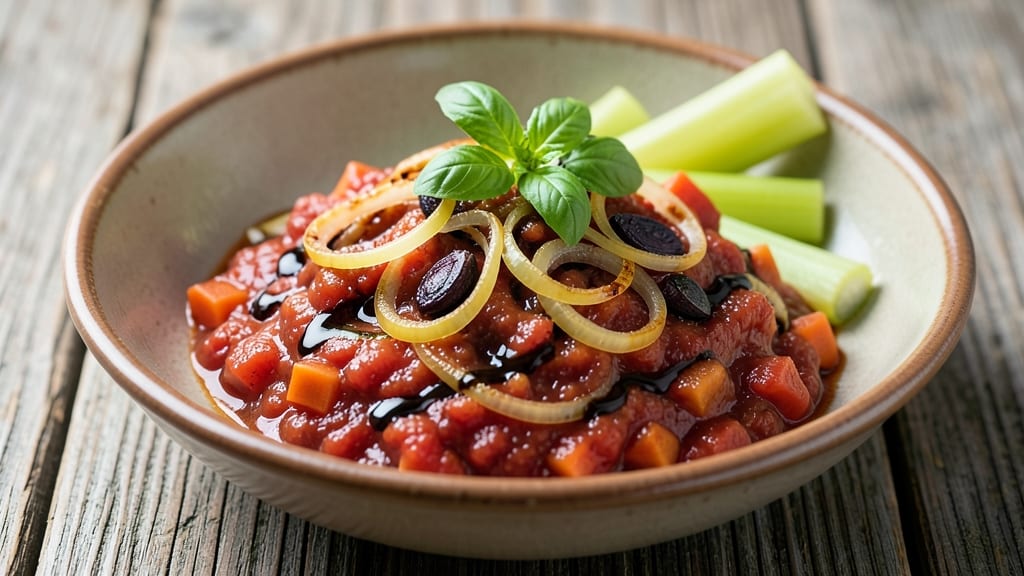
This authentic spaghetti sauce recipe from scratch delivers the rich, slow-simmered depth you crave—no canned shortcuts allowed. 🌟 The secret lies in caramelizing onions and garlic until golden, then building layers of flavor with crushed tomatoes, fresh herbs, and a splash of red wine.
I’ve perfected this over years of testing, ensuring every spoonful tastes like Nonna’s kitchen, not a jar from the supermarket.
What sets this sauce apart is the 30-minute simmer that develops deep, complex flavors without overcooking the tomatoes. You’ll start with a simple soffritto of onions, celery, and carrots, then add garlic, tomato paste, and a splash of wine to create a fragrant base.
The crushed tomatoes (or whole San Marzano for extra authenticity) cook down into a velvety, robust sauce that clings perfectly to al dente pasta.
The result is a sauce that’s bold yet balanced, with bright acidity from the tomatoes and earthy depth from the herbs. It’s flexible enough to adapt—add ground beef or Italian sausage for heartiness, or keep it vegetarian for a lighter version.
The best part? It tastes even better the next day, making it ideal for meal prep.
Whether you’re serving it over spaghetti, using it as a pizza topping, or freezing it for later, this sauce is the foundation of any Italian meal. Let’s get cooking—your taste buds will thank you.
Ingredients for authentic spaghetti sauce recipe from scratch
These simple but transformative ingredients create restaurant-quality spaghetti sauce from scratch.
| Ingredient | Amount | Notes |
|---|---|---|
| Yellow Onions 🧅 | 2 whole | Thinly sliced for caramelization |
| Celery Stalks 🌿 | 3 whole | Diced into small pieces |
| Carrots 🥕 | 2 whole | Diced into small pieces |
| Garlic Cloves 🧄 | 4 cloves | Minced for aromatic base |
| Tomato Paste 🍅 | ½ cup | High-quality, no sugar added |
| Dry Red Wine 🍷 | ½ cup | Bold Cabernet or Merlot |
| Crushed Tomatoes 🍅 | 2 cups | San Marzano preferred |
| Extra-Virgin Olive Oil 🫒 | ½ cup | For richness and depth |
| Fresh Basil Leaves 🌿 | ½ cup | Chopped finely for freshness |
| Fresh Oregano Leaves 🍃 | ¼ cup | Chopped, not dried |
| Salt 🧂 | 1 ½ tsp | Diamond Crystal preferred |
| Black Pepper 🌶️ | ½ tsp | Freshly cracked |
| Sugar 🍬 | 1 tsp | Balances acidity |
The soffritto—onions, celery, and carrots—is where the magic starts. Yellow onions should be sweet and thinly sliced for caramelization, not chopped. Trader Joe's or local Italian markets often have the freshest celery and carrots, but any crisp produce works. I always grab a whole bunch of fresh basil and oregano from the grocery store’s produce section—it’s cheaper than pre-packaged and way fresher. The garlic? Four cloves is perfect for this batch, but if you love garlic, add an extra one. Just don’t overdo it—you want depth, not a garlicky punch.
No red wine? Dry white wine or extra tomato paste works in a pinch, but the wine adds that je ne sais quoi. The crushed tomatoes can be swapped for whole San Marzano canned tomatoes if you want extra authenticity—just crush them by hand. Fresh herbs are non-negotiable here; dried oregano or basil just won’t cut it. Penzeys or any bulk spice shop has great quality, but honestly, the fresh stuff from the grocery store’s herb section is usually fine. If you’re making this ahead, freeze the fresh herbs in olive oil for up to 3 months—they’ll keep their flavor better than just storing them in the fridge.
This sauce tastes even better the next day, so make a double batch if you can. Store it in an airtight container in the fridge for up to 5 days, or freeze for 3 months. I like to portion it into ziplock bags with a splash of olive oil on top to preserve the color. When reheating, add a splash of water or wine to loosen it up—it thickens as it cools. And if you’re prepping for a crowd, double the batch—it’s worth the effort.
Why You'll Love This Recipe
- Sofa-Scratch Comfort: I swear by this sauce when I’m too tired to order takeout—just chop the onions, celery, and carrots (the classic soffritto trio), simmer them down, and let the tomato paste deepen into something rich. No fancy techniques, just patience and a pot that’s already on the stove.
- Garlic Kiss: That moment when you fry the garlic until it’s golden but not burnt? Pure magic. The onions caramelize just enough to balance the bright acidity of the tomatoes, and the celery adds this subtle, earthy depth that makes it taste like my nonna’s kitchen—not some jarred shortcut.
- Leftovers That Shine: Make a double batch on Sunday, and you’ve got weeknight dinners covered. Freeze half for when you’re too wiped to cook, or toss it into omelets, over grilled cheese, or even as a pizza topping. (Yes, I’ve done it. It’s not wrong.)
- Pocketbook Hero: Onions, carrots, celery, and garlic are the cheap superstars of the pantry. A can of tomatoes and a tube of paste stretch this into meals for days without breaking the bank. Honestly, it’s the kind of recipe that makes me feel like I’m feeding a crowd without sacrificing my paycheck.
Step-by-step instructions for slow-simmered spaghetti sauce
Here's how to build a rich, layered sauce from scratch that tastes nothing like canned.
🍳 Step 1: Sauté the Vegetable Base Until Golden
Heat the 0.5 cup extra-virgin olive oil in a large Dutch oven over medium heat. Add the 2 whole yellow onions (thinly sliced), 3 whole celery stalks (diced), and 2 whole carrots (diced). Cook for 10-12 minutes until the vegetables soften and the onions turn a beautiful golden brown—that caramelization is pure flavor.
I stir frequently during this time, making sure nothing sticks to the bottom. If the vegetables start to brown too quickly, reduce the heat slightly. This foundational step builds the sauce's depth—don't rush it. The vegetables should be tender but still hold their shape slightly, not mushy.
🍳 Step 2: Add Garlic and Tomato Paste for Richness
Push the vegetables to one side of the pot and add the 4 cloves garlic cloves (minced) to the empty space. Cook for 30 seconds until fragrant—you'll smell that wonderful garlic aroma. Then stir everything together and add the 0.5 cup tomato paste, spreading it evenly over the vegetables.
Cook for another 2-3 minutes until the tomato paste darkens slightly and coats the vegetables. This step develops the sauce's umami foundation. The paste will stick to the vegetables and create a rich, concentrated base for the rest of the sauce. Don't walk away—garlic burns quickly and can make the sauce bitter.
🍳 Step 3: Deglaze with Red Wine and Simmer
Pour in the 0.5 cup dry red wine and scrape up any browned bits from the bottom of the pot with a wooden spoon. These bits are packed with flavor—don't miss them. Let the wine simmer for 3-4 minutes until it reduces by about half and the alcohol smell dissipates.
Next, add the 2 cups crushed tomatoes, 1.5 tsp salt, 0.5 tsp black pepper, and 1 tsp sugar. Stir well to combine. The sugar balances the acidity of the tomatoes, while the salt and pepper enhance all the flavors. Bring the sauce to a gentle simmer, then reduce the heat to low and let it cook uncovered for 45-60 minutes.
🥘 Step 4: Finish with Herbs and Season to Perfection
After the initial simmer, stir in the 0.5 cup fresh basil leaves (chopped) and 0.25 cup fresh oregano leaves (chopped). These herbs add brightness and freshness that dried herbs can't match. Simmer for another 10-15 minutes, stirring occasionally, until the sauce thickens slightly and coats the back of a spoon.
Taste the sauce and adjust the seasoning if needed. You might need a bit more salt or pepper, or perhaps a splash of water if it's too thick. The sauce should be rich, flavorful, and balanced—not too acidic or sweet. If you're serving it with pasta, the sauce should cling nicely to the strands without being gluey.
⏰ Step 5: Rest and Serve for Maximum Flavor
Remove the sauce from heat and let it rest for 10-15 minutes before serving. This resting time allows the flavors to meld and deepen. I know it's tempting to serve it immediately, but patience here makes all the difference.
Serve the sauce over freshly cooked spaghetti, tossing it gently to coat each strand. The sauce should be vibrant, aromatic, and full of layers of flavor—sweet from the caramelized onions, rich from the tomato paste, bright from the fresh herbs, and balanced by the acidity of the tomatoes. This is the kind of sauce that makes homemade pasta taste like a restaurant dish.
Pro Tips For Making Authentic Spaghetti Sauce Recipe From Scratch
- SWEEAT THE SOFFRITO LOW: I used to blast this with high heat, and the onions would burn before the celery and carrots softened. Instead, keep it on medium-low—yes, even if it feels slow. A properly sweated soffrito (onion, celery, carrots) should look like it’s melting into itself, not turning into charred bits. This is the foundation of your sauce, so don’t rush it.
- CHOP CARROTS SMALLER THAN YOU THINK: I learned this the hard way—big chunks of carrots never fully break down, leaving you with uneven texture. Dice them into 1/8-inch pieces, no bigger than the celery. They’ll dissolve into the sauce instead of sitting like little orange rocks in your mouth.
- STIR THE TOMATO PASTE: Once you add the tomato paste, give it a solid 30 seconds with a wooden spoon before adding anything else. This ensures it doesn’t clump or stick to the bottom—clumps mean uneven flavor distribution. A quick stir now saves you from scraping burnt paste later.
- SAVE THE GARLIC WATER: After mincing the garlic, don’t dump the water it’s sitting in down the drain. Strain it into your sauce—it’s packed with flavor. A splash (about 1-2 tablespoons) adds depth without overpowering. I was skeptical until I tried it, and now I always do it.
Regional styles of this dish
Classic Roman Style
In Rome, they call this sauce ragù alla romana—a simpler, lighter version that skips meat entirely. The secret is using whole peeled tomatoes (not crushed) and simmering them for at least 2 hours to develop deep, caramelized sweetness.
I add 1 tsp red pepper flakes for subtle heat and finish with a handful of fresh parsley instead of basil. Serve it with tonnarelli pasta or bucatini for that authentic Roman feel. 🌶️
Neapolitan Meatball Twist
Southern Italy’s version includes ground beef and pork meatballs simmered directly in the sauce. Cook 1 lb Italian sausage and ½ lb ground beef into small meatballs, then add them to the sauce during the final 30 minutes of simmering.
The meatballs absorb all that rich tomato flavor, creating a hearty, comforting dish. Top with grated Pecorino Romano before serving for that true Neapolitan touch. 🥓
Sicilian Sun-Dried Tomato
Sicily’s version shines with sun-dried tomatoes, which add intense, concentrated flavor. After the initial simmer, stir in ½ cup chopped sun-dried tomatoes (oil-packed) and 1 tsp fennel seeds for a Mediterranean twist.
The sauce takes on a slightly sweet, umami-rich depth that pairs perfectly with rigatoni pasta. Finish with a sprinkle of crumbled feta for a modern fusion touch. ✨
Northern Italian White Wine Reduction
Up north, they use white wine instead of red for a lighter, brighter sauce. Replace the red wine with ½ cup dry white wine (like Pinot Grigio) and add 1 bay leaf during the simmer.
The result is a lighter, more elegant sauce that works beautifully with tagliatelle pasta. Garnish with a few fresh thyme leaves for a fragrant, herbal finish. 🍷
Modern Fusion Adaptations
Want to put your own spin on it? Try adding 1 tbsp miso paste for umami depth or ½ cup roasted red peppers for smoky sweetness. For a smoky twist, swap ½ cup of the crushed tomatoes with fire-roasted canned tomatoes.
These adaptations keep the sauce’s core flavors while adding exciting new dimensions. 💡
Nutrition facts
Frequently asked questions
Why does this sauce need to simmer for so long?
The 45-60 minute simmer is key for developing deep, complex flavors. This slow cooking breaks down the vegetables into the sauce, caramelizes natural sugars, and lets the herbs infuse properly. The longer it simmers, the more the flavors meld together—just like Nonna's kitchen! Skipping this step results in a flat, one-dimensional sauce.
Can I substitute wine with something else?
Yes! Use ½ cup tomato paste or ½ cup dry white wine if you don't have red wine. The wine adds depth, but the tomato paste provides umami richness. For a non-alcoholic version, ½ cup vegetable broth works too—just add a pinch of sugar to balance the acidity.
How do I prevent the sauce from getting too thick?
If your sauce thickens too much, stir in 2-3 tablespoons of water or pasta water while simmering. The sauce will naturally thicken as it cools, so don't overcompensate. For a smoother texture, blend ½ cup of the sauce and mix it back in. The ideal consistency should cling to pasta without being gluey.
What's the best pasta to serve with this sauce?
This sauce pairs perfectly with spaghetti, but also works well with bucatini, pappardelle, or linguine. For a Roman touch, try tonnarelli. The wider noodles hold up better to heartier versions with meat, while thin strands work best with the lighter tomato-based sauce. Always cook pasta al dente!
Can I make this sauce in a slow cooker?
Use the same ingredients and cook on low for 6-8 hours or high for 3-4 hours. The slow cooker's gentle heat creates the same deep flavors. Just stir occasionally and add a splash of water if it gets too thick. The hands-off method is perfect for busy weeknights!