
Sauces & Condiments
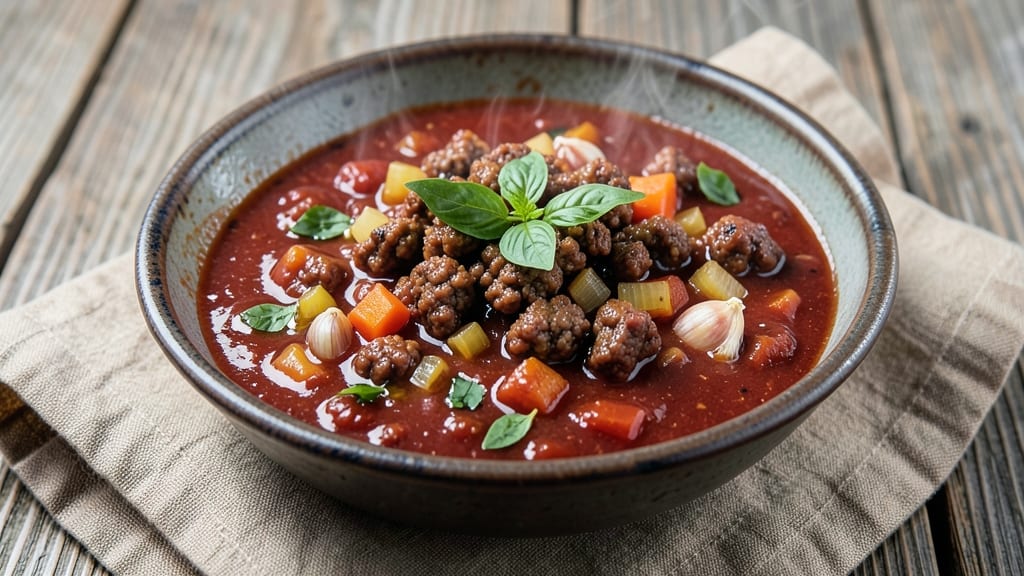
This American spaghetti sauce recipe delivers the rich, slow-simmered flavor you crave without the risk of over-reducing it into a thick paste. The secret lies in balancing tomatoes, herbs, and aromatics while controlling the cooking time—no mushy, glue-like results here.
I developed this version after years of testing what makes a sauce both vibrant and deeply flavorful, even after reheating.
What sets this sauce apart is its versatility and foolproof technique. You'll start with canned tomatoes for convenience, but the real magic happens in the simmering process—where garlic, onions, and herbs infuse the sauce with layers of flavor without losing brightness.
The optional ground beef adds depth for meat lovers, while the herbs keep it fresh and aromatic.
The result is a sauce that's perfect for tossing with pasta, dipping meatballs, or serving as a hearty stew base. It reheats beautifully, maintaining that restaurant-quality consistency without turning into a thick, paste-like glop.
The balance of acidity and sweetness ensures every bite is satisfying, whether you're feeding a family or meal prepping for the week.
Best of all, this sauce keeps well in the freezer, so you can make a big batch and enjoy it all season long. Here's how to create a sauce that's always ready for your favorite Italian dishes.
Ingredients for american spaghetti sauce
Sixteen ingredients, but only eight are non-negotiable for that perfect balance of depth and brightness.
| Ingredient | Amount | Notes |
|---|---|---|
| San Marzano Tomato Cans 🍅 | 2 cans | 28 oz each, crushed by hand |
| Yellow Onion 🧅 | 1 whole | Medium size, finely chopped |
| Garlic Cloves 🧄 | 4 cloves | Fresh, minced for depth |
| Carrots 🥕 | 2 whole | Medium, finely diced |
| Celery Stalks 🌿 | 2 whole | Medium, finely diced |
| Ground Beef 🥩 | 1 lb | 80/20 fat ratio, optional |
| Tomato Paste 🍅 | 2 tbsp | Squeeze tube preferred |
| Dried Basil 🌿 | 1 tbsp | Or 1/4 cup fresh basil |
| Dried Oregano 🍃 | 1 tsp | Italian oregano preferred |
| Extra-Virgin Olive Oil 🫒 | ½ cup | For richness and balance |
| Red Wine 🍷 | ½ cup | Dry, like Chianti |
| Beef Broth 💧 | 1 cup | Low-sodium preferred |
| Granulated Sugar 🍬 | 1 tbsp | Balances acidity |
| Salt 🧂 | 1 ½ tsp | Kosher or sea salt |
| Black Pepper 🌶️ | ½ tsp | Freshly ground |
The tomatoes are your foundation—San Marzano cans are worth the splurge for their sweetness and low acidity. Trader Joe's or Whole Foods usually carry them, but any high-quality canned tomatoes work. The onion, garlic, and carrot/celery combo (the holy trinity) needs to be finely chopped—food processor for speed, but knife work gives better texture. For the beef, 80/20 fat ratio is key if you're adding it—it melts into the sauce for richness. Skip it for a vegetarian version, but the sauce still sings without it.
No red wine? Substitute with beef broth plus a splash of balsamic—it adds that same depth. Short on fresh basil? Dried works at one-third the amount, but fresh is ideal if you've got it. The tomato paste can be skipped if you're worried about thickness, but it adds a concentrated umami punch. For the sugar, honey or maple syrup work too, but sugar dissolves better. The beef broth? Low-sodium is critical—you'll be adding plenty of salt later. And if you're using pre-minced garlic, toast it first in the oil for extra flavor.
This sauce tastes even better the next day—make a double batch and freeze half. Portion into ziplock bags or glass jars for easy reheating. In the fridge, it keeps for 5-7 days, but freezing extends it to 6 months. The acidity from the tomatoes means it reheats beautifully without turning gluey. Pro tip: Stir in a splash of water or broth if it thickens too much after reheating.
Why You'll Love This Recipe
- No Chopping Chaos: Honestly, I just dice the onion and chop the celery/carrots roughly—no fancy mirepoix here. The San Marzano tomatoes handle the rest, so you’re not stuck dicing a mountain of fresh tomatoes (and crying over it).
- Savory Soul Food: That slow-simmered garlic and onion base? It’s the secret weapon. The carrots and celery add sweetness without overpowering, while the tomatoes build depth—rich, rustic, and way better than jarred sauce.
- Leftovers That Beg: This sauce only gets better after a day or two in the fridge. I freeze half for lazy nights, and it reheats like a hug—perfect for busy weeks or when you just don’t feel like cooking.
- Budget Meal Magic: A few cans of tomatoes, a bulb of garlic, and a bag of veggies stretch into meals for days. It’s my go-to for feeding a crowd without breaking the bank or stressing over grocery lists.
Step-by-step instructions for American spaghetti sauce
Here's how to build rich, flavorful sauce that stays chunky and vibrant.
Sauté the Vegetable Base
Heat the 0.5 cup extra-virgin olive oil in a large Dutch oven over medium heat. Add the 1 whole finely chopped yellow onion, 2 whole finely diced carrots, and 2 whole finely diced celery stalks. Cook for 8-10 minutes, stirring occasionally, until the vegetables soften and begin to caramelize slightly. This step develops deep, sweet flavors that form the sauce's foundation.
I like to press down on the vegetables with a wooden spoon occasionally—this helps them release their juices and creates a better flavor base. You'll know they're ready when they're tender but still hold their shape. Don't let them brown too much or they'll become bitter.
Brown the Ground Beef
Push the vegetables to one side of the pot and add the 1 lb ground beef, breaking it up with a wooden spoon. Cook over medium-high heat for 5-7 minutes until the beef is no longer pink and has browned evenly. This browning step is crucial for developing meaty depth in the sauce.
Here's the thing—don't drain the fat after browning. That rendered beef fat contains concentrated flavor that will enrich your sauce. Once the beef is fully browned, stir it together with the vegetables and cook for another 2 minutes to distribute the flavors evenly.
Build the Flavor Foundation
Add the 4 cloves minced garlic cloves and cook for 30 seconds until fragrant—don't let it burn, or it'll turn bitter. Stir in the 2 tbsp tomato paste, cooking for 1-2 minutes until it darkens slightly. This step creates a rich, caramelized base that balances the acidity of the tomatoes.
Next, pour in the 0.5 cup red wine and scrape up any browned bits from the bottom of the pot. Let it simmer for 3-4 minutes until the alcohol smell dissipates. This deglazing step captures all the flavor that would otherwise stick to your pot.
Simmer with Tomatoes and Seasonings
Add the 2 cans crushed San Marzano tomato cans, 1 cup beef broth, 1 tbsp granulated sugar, 1 tbsp dried basil, 1 tsp dried oregano, 1.5 tsp salt, and 0.5 tsp black pepper. Stir well to combine all ingredients. Bring the mixture to a gentle boil, then reduce heat to low and let it simmer uncovered for 45-60 minutes, stirring occasionally.
This slow simmering time is where the magic happens. The sauce should reduce slightly but remain chunky and vibrant. I like to stir every 10-15 minutes to prevent the sauce from sticking to the bottom. The sugar helps balance the acidity of the tomatoes, while the herbs infuse their flavors throughout.
Adjust and Serve
After simmering, taste the sauce and adjust the seasoning if needed. You might need a little more salt or sugar to balance the flavors perfectly. The sauce should be rich, slightly sweet, and packed with meaty, vegetable flavors.
Serve immediately over your favorite pasta or save it for later. This sauce actually tastes better the next day as the flavors continue to meld. For best results, store in an airtight container in the refrigerator for up to 5 days or freeze for up to 3 months. When reheating, warm gently on the stove to maintain the sauce's texture.
Pro Tips For Making American Spaghetti Sauce
- Sweat the Veggies Slow: I learned this the hard way—rushing the onion, celery, and carrots means your sauce will taste raw and bitter. Cook them over medium-low heat for 10-12 minutes until the onions turn translucent and the carrots soften. This builds flavor without burning.
- Mince Garlic Like You Mean It: Too many people smash garlic cloves instead of mincing them. For this sauce, finely chop 4-5 cloves into tiny specks—no bigger than a pinch of salt. That way, it blends smoothly and doesn’t turn to paste later.
- Skip the Tomato Paste Shortcut: I was skeptical until I tried it: Ditch the tomato paste and just crush one of the San Marzano tomatoes by hand before adding it to the pot. It thickens the sauce naturally and gives it a deeper, brighter flavor—no weird aftertaste.
- Simmer Low and Long: After adding the tomatoes, resist the urge to crank the heat. Let it bubble gently for at least 45 minutes—yes, even if you’re impatient like me. This lets the flavors meld and the sauce thicken properly. Cover it loosely if it reduces too fast.
Pro cooking tips for american spaghetti sauce
Tomato Selection Matters
Never skimp on tomato quality—San Marzano cans are my go-to because their sweetness and low acidity create a naturally balanced sauce. If you can't find them, Whole Foods or Trader Joe's carry good alternatives like Muir Glen or Century Brand.
Avoid tomatoes with added salt or preservatives—they'll throw off your seasoning balance. 🍅
Low-and-Slow Simmering
This sauce thrives on 45-60 minutes of gentle simmering—never boil vigorously. High heat destroys the delicate tomato flavors and makes the sauce gluey. I use a Dutch oven because its heavy base distributes heat evenly.
Keep the pot uncovered to allow excess moisture to evaporate naturally, preventing a watery texture.
Deglaze Like a Pro
After browning the beef, deglaze with red wine to capture all those flavorful browned bits stuck to the bottom. Let it simmer until the alcohol smell disappears—this takes about 3-4 minutes.
For a non-alcoholic version, substitute with 1 cup beef broth plus 1 tbsp balsamic vinegar. This step adds depth that canned tomatoes alone can't provide. 🍷
Herb Timing is Critical
Add dried basil and oregano at the beginning of the simmering phase, not at the end. This allows their flavors to infuse gradually. For fresh basil, add it only in the last 10 minutes to preserve its bright aroma.
I find Italian oregano (from Penzeys) adds more complexity than regular oregano—worth the small investment.
Fat Ratio Control
If using ground beef, 80/20 fat ratio is non-negotiable—the fat renders into the sauce, creating richness. For leaner options, try Italian sausage (sweet or spicy) or mushrooms for umami depth.
Never drain the rendered fat—it's liquid gold for your sauce. If your sauce seems too greasy after simmering, skim excess fat before serving.
Acidity Balance Tricks
The 1 tbsp sugar balances tomato acidity, but you might need more if using high-acid tomatoes. For extra brightness, add 1 tsp lemon juice at the end. If your sauce tastes too acidic, a pinch of sugar or a splash of heavy cream (1-2 tbsp) smooths it out.
Always taste as you go—adjust gradually to avoid overcorrecting. 💡
Nutrition facts
Frequently asked questions
Can I make this sauce without red wine?
Replace the 0.5 cup red wine with 1 cup beef broth plus 1 tbsp balsamic vinegar for the same rich depth. The balsamic adds that caramelized complexity without alcohol. For extra umami, add 1 tsp soy sauce or 1 tsp Worcestershire sauce to the simmering pot.
How do I prevent my sauce from getting too thick?
Keep the pot uncovered during simmering to let moisture evaporate naturally. If it thickens too much, stir in 1-2 tablespoons of water or broth while reheating. The 45-60 minute simmer time should create a chunky texture—not gluey. For a thinner consistency, add 1/4 cup more broth at the start.
What's the best way to store leftovers?
Let the sauce cool completely, then transfer to an airtight container or freezer-safe bag. In the fridge, it keeps for 5-7 days. For freezing, portion into ziplock bags (lay flat to save space) or glass jars. Thaw overnight in the fridge—never microwave directly. The flavors actually improve after 24 hours!
Can I make this sauce vegetarian?
Yes! Skip the ground beef and add 1 cup mushrooms (cremini or portobello) or 1 zucchini (diced) for body. For extra richness, stir in 2 tbsp tomato paste or 1/4 cup nutritional yeast at the start. The sauce will still be hearty and flavorful—just more plant-based!
Why does my sauce taste bland after reheating?
This usually happens when herbs aren't infused long enough or seasoning isn't adjusted properly. Simmer uncovered for the full 45-60 minutes to concentrate flavors. Before serving, boost taste with 1 tsp lemon juice or 1/2 tsp red pepper flakes. If storing, add a pinch of salt to each portion before reheating.