
Sauces & Condiments
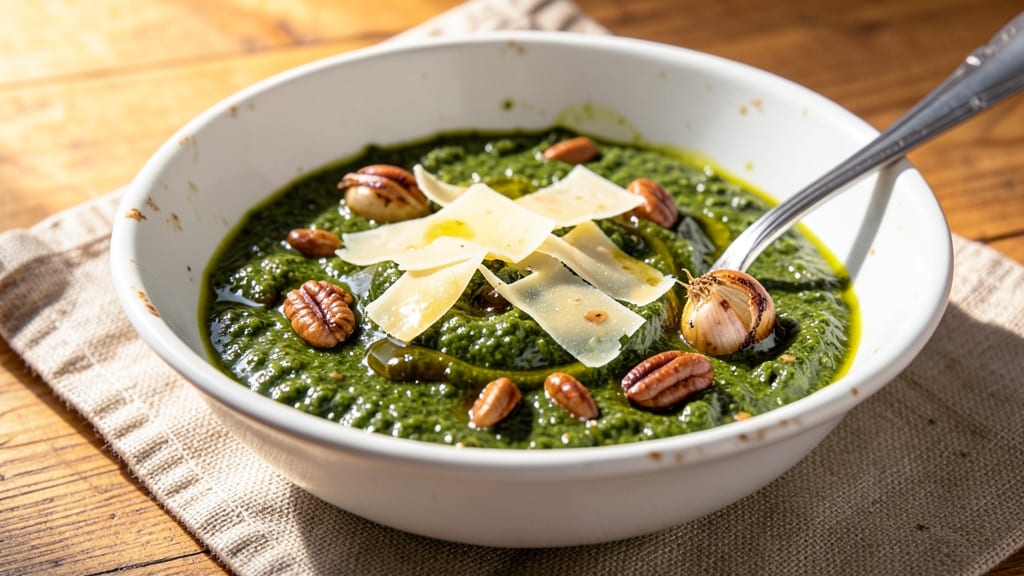
Alton Brown's pesto sauce recipe transforms fresh basil into a vibrant, nutty masterpiece that elevates any dish in just 10 minutes. The secret lies in balancing bold flavors—bright basil, toasted pine nuts, and sharp parmesan—all blended with high-quality olive oil for a sauce that's both rich and light.
This isn't your average pesto; it's a restaurant-quality condiment that stays fresh for days, ready to transform pasta, sandwiches, or even grilled vegetables into something extraordinary.
The beauty of this recipe is its simplicity: no complicated techniques, just a food processor and a few quality ingredients. Alton Brown's signature approach focuses on freshness—using the brightest basil you can find and toasting the nuts just until fragrant.
This step alone deepens the flavor profile, giving the pesto that nutty, aromatic complexity that sets it apart from store-bought versions. The sauce is versatile enough to drizzle over hot pasta, mix into soups, or serve as a dip for crusty bread.
What makes this pesto truly special is how it enhances other dishes without overpowering them. The bright, herby notes of the basil cut through rich flavors, while the toasted pine nuts add a satisfying crunch.
When you blend everything together, you'll notice the sauce thickens slightly—this is normal and actually improves as it sits, allowing the flavors to meld even more. The result? A sauce that's creamy yet vibrant, nutty yet fresh, and impossible to resist.
This recipe delivers on Alton Brown's promise of foolproof, high-quality cooking at home. With just 5 ingredients and 10 minutes of active time, you'll have a sauce that rivals anything you'd find in a gourmet kitchen.
The best part? It keeps well in the refrigerator for up to a week, so you can make a big batch and enjoy it all week long. Let's get started!
Ingredients for alton brown pesto sauce
Five simple ingredients create Alton Brown's vibrant, restaurant-quality pesto in minutes.
| Ingredient | Amount | Notes |
|---|---|---|
| Fresh Basil Leaves 🌿 | 2 ½ cups | Bright green, stems removed |
| Toasted Pine Nuts 🥜 | ½ cup | Lightly browned for depth |
| Garlic Cloves 🧄 | 3 cloves | Peeled, roughly chopped |
| Parmesan Cheese 🧀 | ¾ cup | Freshly grated from block |
| Extra-Virgin Olive Oil 🫒 | ¾ cup | High-quality, fruity variety |
| Lemon Juice 🍋 | 1 tbsp | Freshly squeezed |
| Sea Salt 🧂 | ½ tsp | Fine grain preferred |
| Freshly Ground Black Pepper 🌶️ | ¼ tsp | For subtle heat |
The basil is everything here—bright green leaves make all the difference. Hit up the farmers market for the freshest bunch, or grab the plastic-wrapped containers at Whole Foods if you're in a pinch. Toasting the pine nuts in a dry pan until fragrant (about 3 minutes) adds that nutty depth Alton swears by. Costco sells pine nuts in bulk for better prices, but any grocery store will have them. The Parmesan? Grate it yourself—pre-shredded has anti-caking agents that ruin the texture. Look for a wedge labeled 'Parmigiano-Reggiano' at the deli counter.
No pine nuts? Walnuts or cashews work in a pinch—they change the flavor but still deliver that satisfying crunch. Fresh basil wilted? Dried basil at half the amount gets you close, though it lacks that bright punch. Short on Parmesan? Pecorino Romano adds a sharper bite. The olive oil matters too—skip the cheap stuff. Trader Joe's or Whole Foods have great options, or look for 'extra-virgin' labels. Lemon juice can be bottled, but fresh is brighter. For extra richness, add a splash of nutritional yeast—it mimics the umami of Parmesan.
Pesto browns fast, so store it in a glass jar with a thin layer of olive oil on top—keeps it vibrant for 5-7 days in the fridge. Freeze in ice cube trays for 3 months if you're making a big batch. I always double the recipe—one for tonight, one for later. The sauce thickens as it sits, so thin with a splash of water or olive oil if needed. Perfect for pasta, sandwiches, or even grilled chicken.
Why You'll Love This Recipe
- No-Fuss Assembly: The pine nuts toast in minutes while I chop—no blender required. Just pulse the basil, garlic, and Parmesan in my food processor until it’s just right, then fold in the olive oil. That’s it. (Yes, even when I’m multitasking with a toddler on my hip.)
- Umami Bomb: The garlic and Parmesan hit like a flavor grenade—sharp, nutty, and salty all at once. But the basil? It’s the star, bright and fresh enough to cut through the richness. One taste and you’ll understand why I keep a jar in the fridge.
- Weeknight Swiss Army: Drizzle it over pasta, toss it with roasted veggies, or smear it on grilled chicken. It’s my go-to for lazy dinners, picnic spreads, or even a fancy-ish charcuterie board. (Between us, it’s also the only thing that makes store-bought pizza edible.)
- Leftovers That Lie: This stuff keeps for weeks in the fridge, and honestly? It tastes better the second day. A little olive oil on top keeps it from drying out, and I’ve used it to revive sad salads or dress up last night’s takeout. Budget win, flavor win.
Step-by-step instructions for Alton Brown's pesto sauce
Here's how to make this vibrant, nutty pesto in minutes—just like Alton would.
Toast the Pine Nuts for Depth
Heat a dry skillet over medium-low heat and add the 0.5 cup toasted pine nuts. Toast for 3-5 minutes, stirring constantly, until they're lightly golden and fragrant. Watch them closely—they burn fast. Remove from heat immediately when they turn golden and set aside to cool slightly.
This toasting step is crucial. It enhances the pine nuts' natural flavor and prevents them from tasting raw in the final sauce. If you don't have time to toast, you can use store-bought toasted pine nuts—but freshly toasted makes all the difference.
Pulse the Basil, Nuts, and Cheese
In a food processor, combine the 2.5 cups fresh basil leaves, toasted pine nuts, 3 cloves garlic cloves, and 0.75 cup Parmesan cheese. Pulse 5-6 times until everything is finely chopped but not yet a paste. You want to break down the basil and nuts while keeping some texture.
Don't over-process yet—you'll blend with the olive oil next. The basil should be mostly broken down but still recognizable. If your processor struggles, pulse in batches, but try to keep everything together in one bowl to avoid extra cleaning.
Stream in Olive Oil for Creamy Perfection
With the food processor running, slowly pour in the 0.75 cup extra-virgin olive oil through the feed tube. This gradual addition prevents the oil from splattering and ensures a smooth, emulsified sauce. Process for 30-45 seconds until the mixture is completely smooth and creamy.
Here's the thing—don't rush this step. The oil needs time to fully incorporate with the other ingredients. If the mixture looks too thick, add 1-2 tablespoons of water to loosen it. You're aiming for a sauce that's thick enough to coat the back of a spoon but still flows smoothly.
Finish with Lemon and Seasonings
Transfer the pesto to a bowl and stir in the 1 tablespoon lemon juice, 0.5 teaspoon sea salt, and 0.25 teaspoon freshly ground black pepper. Taste and adjust seasoning—you might need a pinch more salt or a splash more lemon juice to balance the flavors.
The lemon brightens the pesto and cuts through the richness of the olive oil and Parmesan. The pepper adds a subtle heat that makes the flavors pop. Give it a final stir and let it sit for 5 minutes—this lets the flavors meld together for a more cohesive taste.
Store and Use Immediately
Transfer the pesto to an airtight container and press plastic wrap directly onto the surface to prevent oxidation. Store in the refrigerator for up to 5 days or freeze for up to 3 months. For best flavor, use it within 2-3 days if possible.
This pesto is perfect for tossing with pasta, spreading on sandwiches, or dolloping over grilled meats. The vibrant green color and fresh basil flavor will make any dish shine. If the pesto thickens in the fridge, just stir in a splash of water or olive oil to loosen it back up.
Pro Tips For Making Alton Brown Pesto Sauce
- TOAST NUTS LOW: I learned this the hard way—slamming pine nuts in a hot pan turns them into bitter, greasy ash. Instead, use the lowest heat setting on your stove (yes, even if it’s labeled "low") and keep an eye on them. They’re done when they’re just golden, not brown—usually about 3-4 minutes. If you walk away for even 30 seconds, you’ll regret it.
- STACK CHEESE RIGHT: That block of Parmesan? Don’t just grate it straight from the fridge. Let it sit out for 10 minutes first—it’ll grate smoother and give you finer, more even shavings. And here’s the real trick: fold the grated cheese into the pesto last, right before serving. It keeps the texture fresh and prevents the sauce from turning grainy.
- PULSE DON’T PUREE: Your food processor isn’t a blender. Hit pulse, not continuous, until the pesto just comes together. Over-blending turns basil into a sad, watery sludge. You want chunks of garlic and pine nuts—about 10-15 seconds of pulsing is enough. If it looks uneven, that’s good. If it looks like green soup, you’ve gone too far.
- SALT THE BASIL: Fresh basil wilts fast, but salting it first slows that down. Toss the leaves with a pinch of salt (about ¼ teaspoon) right before adding them to the processor. It also crisps the edges slightly, which makes the pesto taste brighter. Skip this, and your basil will turn to mush before you even finish blending.
Pro cooking tips for great alton brown pesto sauce
Toast Nuts Perfectly
Toast your pine nuts over medium-low heat for 3-5 minutes until they're just golden and fragrant. I can't stress enough how important this step is—it prevents that raw, bitter taste in your pesto.
Use a 10-inch nonstick skillet and stir constantly to avoid burning. If you're in a hurry, store-bought toasted nuts work, but fresh toasting gives that restaurant-quality depth. 🥜
Pulse Don't Blend
When combining basil, nuts, and cheese in your food processor, pulse 5-6 times—just until everything is finely chopped but not yet a paste. This keeps some texture that prevents the pesto from becoming too smooth.
If you blend too long, you'll end up with a thick, gluey mess. I like to stop and scrape down the sides halfway through to ensure even processing. 🌿
Oil Stream Technique
Slowly pour the olive oil through the feed tube while the processor runs—this prevents splattering and ensures a silky texture. If you pour it all at once, you'll get oil droplets floating on top. For extra smoothness, I recommend using a high-quality food processor like the Cuisinart DFP-14BCNY.
If your pesto looks too thick, add 1 tablespoon water at a time until it reaches the perfect coating consistency. 🫒
Lemon Brightens
The lemon juice is what transforms good pesto into great pesto—it cuts through the richness and adds freshness. Start with 1 tablespoon, but taste as you go. Sometimes I need up to 2 tablespoons for that perfect balance.
Freshly squeezed lemon works best, but bottled is fine in a pinch. Don't skip this step—it's what makes Alton's pesto stand out from basic recipes. 🍋
Storage Secrets
To keep your pesto vibrant, store it in an airtight container with a thin layer of olive oil on top—this prevents browning. I like using glass jars because they don't absorb odors.
The pesto will thicken in the fridge, so stir in a splash of water or olive oil before using. For longer storage, freeze in ice cube trays—just thaw and stir. The flavor actually improves after a day or two as the ingredients meld together. ❄️
Nutrition facts
Frequently asked questions
Can I use dried basil instead of fresh?
Fresh basil gives that bright, vibrant flavor Alton Brown loves, but you can substitute 0.5 teaspoons dried basil for every 1 tablespoon fresh. The texture will be slightly different—dried pesto tends to be thicker and less aromatic. For best results, toast the dried basil in a dry pan for 30 seconds before adding to the food processor.
What if I don't have pine nuts?
No problem! Swap pine nuts for walnuts or cashews—they change the flavor but still deliver great texture. Toast them first for 3-5 minutes until fragrant. For a different twist, try sunflower seeds—they're budget-friendly and add a mild nutty taste. Just use the same 0.5 cup measurement as pine nuts.
How do I fix pesto that's too thick?
Thick pesto happens when flavors meld in the fridge. Stir in 1 tablespoon water or olive oil at a time until it reaches a smooth, spreadable consistency. For Alton's perfect texture, it should coat the back of a spoon but still flow easily. If you're using it for pasta, a slightly thicker consistency works best for clinging to noodles.
Can I make this pesto ahead of time?
This pesto actually tastes better after 24 hours as flavors develop. Store in an airtight container with a thin layer of olive oil on top to prevent browning. It keeps for 5-7 days in the fridge or 3 months in the freezer. For freezing, portion into ice cube trays—just thaw and stir before using.
Why does my pesto taste bitter?
Bitter pesto usually means over-toasted nuts or wilted basil. Toast pine nuts just until golden (3-5 minutes) and use the freshest basil possible. If the basil is old, replace it with fresh leaves. Another trick: add a splash of lemon juice (up to 2 tablespoons) to brighten the flavor and cut bitterness.