
Sauces & Condiments
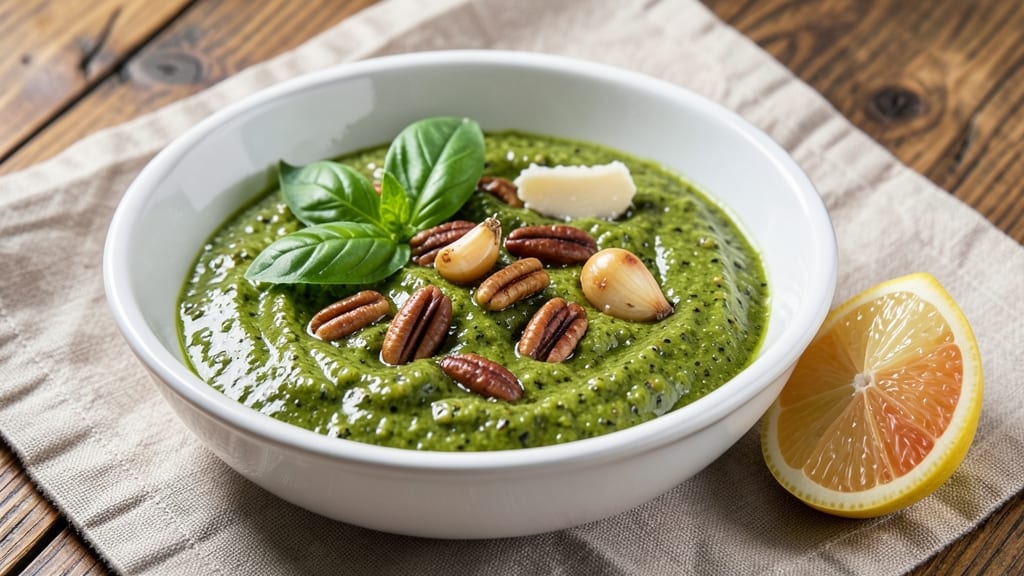
This Aldi pesto sauce recipe delivers restaurant-quality boldness with just five minutes of prep—no fancy equipment needed. The secret lies in fresh basil, toasted pine nuts, and high-quality olive oil, all blended into a vibrant green sauce that's perfect for pasta, sandwiches, or dipping.
I've perfected this version to balance rich, nutty flavors with bright garlic and tangy Parmesan, creating a sauce that's versatile enough for any meal.
The process couldn't be simpler: pulse basil, garlic, nuts, and cheese in a food processor, then stream in olive oil until smooth. What sets this apart is the texture—creamy yet still chunky enough to see those fresh basil flecks in every bite.
The toasted pine nuts add depth, while the Parmesan provides that classic umami punch that makes this sauce irresistible. Unlike store-bought versions, this one stays fresh for up to a week in the fridge or freezes beautifully for later use.
What you'll end up with is a bold, bright pesto that transforms simple dishes into something special. Drizzle it over hot pasta, mix it into soups, or spread it on sandwiches—this sauce elevates everything it touches.
The best part? You can customize it with sun-dried tomatoes, spinach, or even make it vegan by swapping the cheese for nutritional yeast. Let's make this sauce that'll become your new kitchen staple.
Once you try this homemade version, you'll never go back to bottled pesto again. The flavor is fresher, the texture is perfect, and the satisfaction of making it from scratch is unmatched.
Whether you're prepping for a dinner party or just want to add some brightness to your weeknight meals, this recipe delivers every time. Here's how to make it—simple steps for maximum flavor impact.
Ingredients for aldi pesto sauce
Five simple ingredients transform into vibrant, restaurant-quality pesto in minutes.
| Ingredient | Amount | Notes |
|---|---|---|
| Fresh Basil Leaves 🌿 | 2 cups | Packed, stems removed |
| Toasted Pine Nuts 🥜 | ½ cup | Lightly browned for depth |
| Garlic Cloves 🧄 | 3 cloves | Peeled, roughly chopped |
| Parmesan Cheese 🧀 | ¾ cup | Freshly grated, high-quality |
| Extra-Virgin Olive Oil 🫒 | ¾ cup | High-quality, fruity flavor |
| Lemon Juice 🍋 | 1 tbsp | Freshly squeezed, bright |
| Sea Salt 🧂 | ½ tsp | Fine grain preferred |
| Black Pepper 🌶️ | ¼ tsp | Freshly ground for warmth |
The basil is non-negotiable—farmers market basil has that vibrant punch, but even grocery store packs work if the leaves are bright green. Toasting the pine nuts in a dry pan for 2-3 minutes brings out their nutty flavor (don't burn them!). For Parmesan, grate it yourself from a wedge—pre-grated tastes like sawdust. The olive oil should be extra-virgin—anything less and you're cheating yourself. I grab mine at Aldi for the best price, but Whole Foods has great options too.
No pine nuts? Walnuts or cashews work perfectly—just toast them first. Fresh basil wilted? Spinach or arugula can stretch it out (use half the amount). Want to skip the cheese? Swap in nutritional yeast for that umami kick. The lemon juice is key for brightness—don't skip it. If you're making this ahead, store the dry ingredients (basil, nuts, cheese) separately until blending to keep everything fresh longer.
This sauce keeps beautifully—1 week in the fridge or 3 months frozen. For freezing, portion into ice cube trays first, then transfer to a bag. The texture stays perfect when reheated gently. I always make a double batch—one for immediate use, one to freeze for lazy weeknights. The flavor actually improves after a day or two in the fridge as everything melds together.
Why You'll Love This Recipe
- Five-Ingredient Magic: The moment you toss basil, garlic, and toasted pine nuts into the food processor with olive oil, it’s like the sauce assembles itself. No fancy techniques—just pulse, drizzle, and blend. That’s it.
- Pine Nut Crunch: Honestly, the texture is what sells me. Those toasted pine nuts add this irresistible crunch that cuts through the richness of the olive oil and cheese. It’s the kind of bite that makes you reach for seconds without even thinking.
- Weeknight to Party: Slap this on pasta for a Tuesday dinner, or drizzle it over grilled chicken for a dinner party. The same jar of pesto works for both—no need to reinvent the wheel. My kids ask for it after school; my in-laws request it for Sunday brunch.
- Lasts All Week: Between us, I make a big batch and it’s still fresh by Friday. Store it in the fridge with a splash of olive oil on top, and it keeps that vibrant green color and bright flavor. No sad, wilted pesto here—just reliable, delicious leftovers.
Step-by-step instructions for Aldi pesto sauce
Here's how to make vibrant, restaurant-quality pesto in minutes—no fancy equipment needed!
Toast the Pine Nuts for Depth
Heat a small dry skillet over medium-low heat. Add the 0.5 cup toasted pine nuts and toast for 3-4 minutes, stirring constantly until they turn a golden brown color and smell nutty. Watch closely—they burn fast!
Remove from heat immediately and let cool for 1 minute. Here's the thing—properly toasted nuts add that rich, toasty flavor that separates good pesto from amazing pesto. If they smell fresh, they're not ready yet.
Pulse Basil, Garlic, and Nuts Together
Place the 2 cups fresh basil leaves, toasted pine nuts, and 3 cloves garlic cloves in a food processor. Pulse in 3-4 bursts until the basil is finely chopped but not completely puréed—you want visible texture. Stop before it turns to a smooth paste.
This texture is crucial for that perfect balance of fresh basil flavor and creamy richness. If you pulse too long, you'll end up with a muddy, heavy sauce that lacks brightness. Think "chunky" not "smooth" at this stage.
Gradually Add Olive Oil and Cheese
With the food processor running, slowly drizzle in the 0.75 cup extra-virgin olive oil over 20-30 seconds. This gradual addition prevents the oil from splattering everywhere and ensures it emulsifies properly with the other ingredients.
Next, add the 0.75 cup freshly grated Parmesan cheese and pulse again until fully combined. The sauce should look thick but still pourable. If it's too thick, add 1-2 tablespoons of water to loosen it to your desired consistency.
Finish with Lemon, Salt, and Pepper
Transfer the pesto to a bowl and stir in the 1 tablespoon lemon juice, 0.5 teaspoon sea salt, and 0.25 teaspoon black pepper. Taste immediately—the lemon brightens the flavors, the salt enhances everything, and the pepper adds a subtle warmth.
This is the moment that matters: the lemon juice should make your taste buds tingle, the salt should make you crave more, and the pepper should add complexity. If it needs more salt, add it gradually—you can't take it out later!
Adjust Consistency and Store Properly
For immediate use, your pesto is ready! For a smoother texture, pulse it again briefly in the food processor. For extra thickness, let it sit for 10 minutes before using—it'll naturally thicken as it cools.
Store any leftovers in an airtight container covered with a thin layer of olive oil. This oil barrier prevents oxidation and keeps your pesto fresh for up to 5 days in the fridge. When ready to use, simply stir and enjoy!
Pro Tips For Making Aldi Pesto Sauce
- TOAST NUTS LOW: Pine nuts burn faster than you think—watch them like a hawk. Use a dry skillet on medium-low heat and stir constantly until they’re just golden, not brown. I learned this the hard way after scraping charred bits off my teeth.
- PULSE DON’T BLEND: Skip the food processor’s highest setting—it turns pesto into a sad, mushy paste. Use short bursts (2-3 seconds) on low, then scrape down the sides. You want texture, not a smoothie.
- GRATE PARMESAN FRESH: Pre-shredded cheese is coated in anti-caking agents that ruin pesto’s flavor. Grate your own using the fine side of a box grater—it’s faster than you’d think and makes a real difference.
- SALT THE BASIL: Toss the basil leaves with a pinch of salt before blending. It softens them slightly and balances the garlic’s bite—my grandmother swore by this, and she was right. (Yes, even if you’re impatient like me.)
Common mistakes when making your aldi pesto sauce
Over-Tossing the Basil
I see this mistake all the time—people pulse the basil until it turns into a smooth paste. Stop immediately when the basil is just finely chopped with visible texture. Over-processing releases bitter compounds from the basil stems, turning your vibrant green sauce into a muddy, bitter mess.
Aim for 3-4 quick pulses—you should still see flecks of bright green basil in every bite. 🌿
Skipping Nut Toasting
Raw pine nuts lack that nutty depth that makes pesto sing. Toast them for 2-3 minutes in a dry pan until golden brown—they should smell irresistible.
Skipping this step results in a bland, flat sauce. Pro tip: Use a light-colored pan so you can see when they're perfectly toasted (not burnt!).
Adding Oil Too Fast
Dumping all the olive oil at once causes splattering and prevents proper emulsification. Stream it in slowly while the processor runs—this creates a silky texture rather than a greasy separation.
I like to add it in three gradual additions of ¼ cup each, letting the mixture combine between each. 🫒
Using Pre-Grated Cheese
Pre-grated Parmesan contains anti-caking agents that make your pesto taste like sawdust. Grate your own from a fresh wedge using a microplane for fine, flavorful shards. The difference is night and day—homemade grated cheese adds that authentic umami punch store-bought can't match. 🧀
Ignoring the Lemon Juice
Many recipes treat lemon juice as optional, but it's the secret weapon that brightens the entire sauce. 1 tablespoon cuts through the richness and adds a refreshing tang. Without it, your pesto will taste heavy and one-dimensional. Freshly squeezed works best—bottled just doesn't compare.
Storing Without Oil Barrier
Exposing pesto to air causes oxidation, making it turn brown and lose flavor within days. Always store it with a thin layer of olive oil on top (about 1 tablespoon) in an airtight container.
This simple trick extends freshness to 5 days in the fridge. For longer storage, freeze in ice cube trays for easy portioning. ❄️
Nutrition facts
Frequently asked questions
Can I make this pesto without a food processor?
Use a mortar and pestle for a rustic texture or a sharp knife to finely chop the basil, garlic, and nuts in a bowl. Then whisk in the olive oil and cheese until well combined. The texture will be slightly chunkier, but the flavor stays just as vibrant. This method works especially well for small batches.
How do I make this pesto vegan?
Swap the Parmesan for ½ cup nutritional yeast and add 1 tablespoon vegan butter or extra olive oil for creaminess. For extra protein, include ¼ cup roasted sunflower seeds instead of pine nuts. The lemon juice and garlic keep the bright, tangy flavor intact, making it just as delicious without dairy.
What’s the best way to use leftover pesto?
Pesto freezes beautifully—portion into ice cube trays, freeze, then transfer to a bag. Thaw in the fridge overnight. Use it in pasta dishes, as a soup base, or mix into salad dressings. For extra flavor, add a splash of water to thin it out when reheating. A little goes a long way!
Can I substitute walnuts for pine nuts?
Yes! Walnuts or cashews work perfectly—just toast them first for 3-4 minutes until fragrant. Walnuts add a richer, earthier flavor, while cashews create a smoother texture. Use the same ½ cup measurement and toast until golden brown. This swap keeps the pesto creamy and delicious while cutting costs.
Why did my pesto turn brown after a few days?
This happens when pesto oxidizes from air exposure. Always store it with a thin layer of olive oil on top in an airtight container. If it’s already brown, it’s still safe to eat—just mix in 1 tablespoon fresh lemon juice to revive the color and brightness. For longer shelf life, freeze it immediately after making.