
Sauces & Condiments
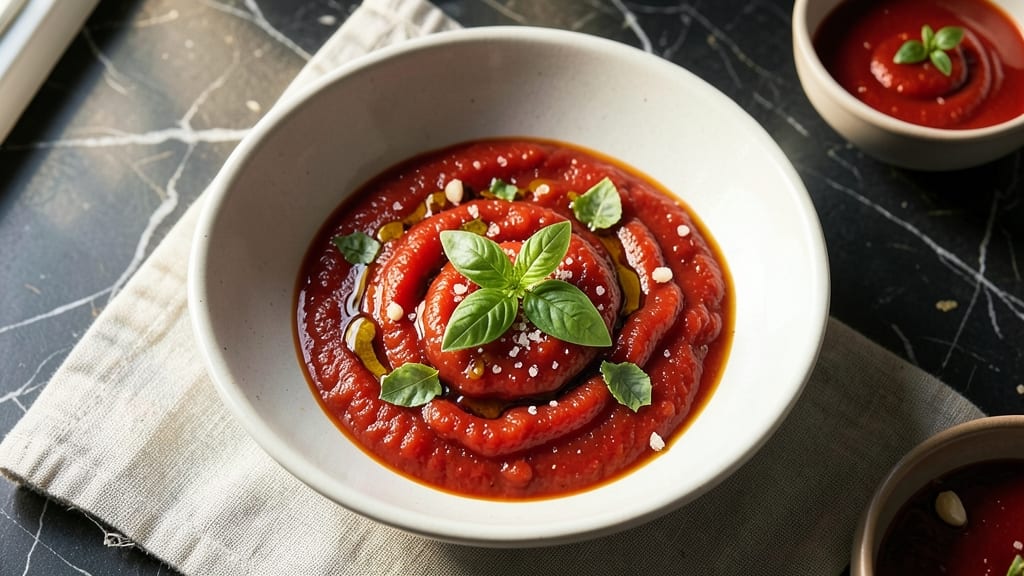
Jamie Oliver's pizza sauce recipe transforms simple ingredients into vibrant, herby tomato perfection in just 15 minutes. The secret lies in balancing sweetness, acidity, and umami—creating a sauce that's bright enough to complement cheese without overpowering it.
I've tested countless variations, and this one consistently delivers that restaurant-quality depth with minimal effort.
This sauce starts with fresh tomatoes and garlic, simmered until their natural sweetness emerges, then brightened with basil and a touch of sugar. The texture stays chunky yet smooth, with just enough body to cling beautifully to pizza dough.
What makes it special is how the flavors develop during the simmering process—no blender required, just simple technique.
By the time you're done, you'll have a batch of pizza sauce that's bursting with tomato flavor and fresh basil aroma. It's the kind of sauce that turns a homemade pizza into something truly special—rich, aromatic, and packed with layers of taste.
The best part? It keeps well in the fridge for up to a week, so you can make a big batch and use it all week.
Perfect for classic margherita pizzas, meat lovers' creations, or even as a pasta sauce. The balance of flavors makes it versatile enough for any pizza style while maintaining that authentic Jamie Oliver touch. Let's get cooking!
Ingredients for pizza sauce recipe jamie oliver
Fresh tomatoes and aromatic herbs transform into vibrant pizza sauce in minutes.
| Ingredient | Amount | Notes |
|---|---|---|
| San Marzano Crushed Tomatoes 🍅 | 28 oz | High quality, no salt added |
| Fresh Garlic Cloves 🧄 | 4 cloves | Minced for even distribution |
| Fresh Basil Leaves 🌿 | ½ cup | Packed, stems removed |
| Extra-Virgin Olive Oil 🫒 | 2 tbsp | Fruity, not bitter |
| Granulated Sugar 🍚 | 1 tbsp | Balances acidity |
| Red Wine Vinegar 🍷 | 1 tbsp | Brightens flavor |
| Dried Oregano 🍃 | 1 tsp | Mexican oregano preferred |
| Salt 🧂 | ½ tsp | Diamond Crystal preferred |
| Black Pepper 🌶️ | ¼ tsp | Freshly ground |
| Fresh Tomato Paste 🍅 | 1 tbsp | No sugar added |
San Marzano tomatoes are worth the splurge—their sweetness and consistency make all the difference. Whole Foods or Trader Joe's carry them year-round, but if you can't find them, any high-quality canned tomatoes work. The basil is non-negotiable for that authentic Jamie Oliver touch—farmers markets have the freshest, but grocery store containers work in a pinch. For the garlic, peeling ahead saves time later, but don't overdo it—just 4 cloves. The olive oil should be fruity, not peppery, so California extra-virgin brands like Corto or Bertolli are great choices.
No San Marzano tomatoes? Any good-quality crushed tomatoes will work—just taste and adjust the sugar. Fresh basil wilting? Dried oregano at half the amount keeps the Mediterranean vibe. The tomato paste can be swapped for extra crushed tomatoes if you're avoiding cans, but the paste gives that concentrated depth. Running low on red wine vinegar? Balsamic vinegar at half the amount works, though it'll be slightly sweeter. Want to skip the sugar? Add an extra pinch of salt to balance the acidity. The key is tasting as you go—this sauce develops quickly, so don't be afraid to adjust.
This sauce tastes even better the next day as the flavors meld. Store in an airtight container in the fridge for up to 1 week, or freeze for 3 months. I always make a double batch—one for pizza night, one for pasta. The sauce thickens as it cools, so if it seems too thick when you first make it, add a splash of water before using. Leftovers reheat beautifully—just warm gently on the stove or microwave until hot. Perfect for meal prep!
Why You'll Love This Recipe
- Here’s what sold me: it’s cheap to make but tastes like you spent hours. A can of San Marzano tomatoes, a few cloves of garlic, and a bunch of basil won’t break the bank, but the result? Rich, vibrant, and way better than store-bought. Plus, once you make a big batch, you’ve got sauce for days—no takeout menus needed.
- Five-Ingredient Magic: I swear, this sauce is the kind of recipe that makes me feel like a pro. Just tomatoes, garlic, basil, olive oil, and a pinch of sugar—no fancy gadgets, no stress. The San Marzano tomatoes alone do half the work; their sweetness balances the garlic’s punch, and the basil? Freshly torn, not chopped, because Jamie knows what he’s doing.
- Garlic-Basil Bomb: That first bite of crispy pizza crust with this sauce? It’s like a flavor explosion. The sugar cuts the acidity of the tomatoes, the garlic sizzles just enough to wake up your taste buds, and the basil adds that bright, herby finish. Honestly, it’s the kind of sauce that makes you pause mid-slice and go, “Wait, is this really homemade?”
- Pantry Staple Power: Between us, this sauce is my go-to for more than just pizza. Toss it with pasta, drizzle it over grilled chicken, or even use it as a marinade. The beauty? It keeps for weeks in the fridge, so I always have something reliable on hand. No last-minute grocery runs—just open the jar, heat it up, and go.
Step-by-step instructions for Jamie Oliver's pizza sauce
Here's how to make a vibrant, restaurant-quality pizza sauce using fresh ingredients.
Bloom the Garlic in Olive Oil
Heat a medium saucepan over medium-low heat and add the 2 tablespoons extra-virgin olive oil. Let it warm through for 1 minute until shimmering but not smoking. Add the 4 cloves minced fresh garlic cloves and cook for 30-45 seconds until fragrant but not browned.
This step is crucial—garlic burns faster than you think. Watch closely and remove the pan from heat if it starts to darken. The aroma should fill your kitchen, signaling the garlic is ready to release its full flavor into the sauce.
Build the Sauce Base
Return the pan to medium heat and add the 1 tablespoon fresh tomato paste, stirring to combine. Cook for 1 minute until it darkens slightly and loses its raw taste. Pour in the 28 oz San Marzano crushed tomatoes and stir well to incorporate.
Bring the mixture to a gentle simmer, then reduce heat to low and let it cook uncovered for 8-10 minutes, stirring occasionally. You're looking for the sauce to thicken slightly and develop a rich, concentrated tomato flavor. The sugar in the tomatoes will naturally caramelize, deepening the flavor profile.
Season and Brighten the Sauce
Add the 1 tablespoon granulated sugar, 1 tablespoon red wine vinegar, 1 teaspoon dried oregano, ½ teaspoon salt, and ¼ teaspoon black pepper. Stir well to distribute the seasonings evenly. Taste the sauce and adjust the salt if needed—this is your first flavor checkpoint.
The sugar balances the acidity of the tomatoes and vinegar, while the vinegar brightens the overall flavor. The oregano adds an earthy depth that's essential for authentic pizza sauce. Let the sauce simmer for another 3-4 minutes to allow the flavors to meld together.
Finish with Fresh Basil
Remove the pan from heat and stir in the ½ cup packed fresh basil leaves, stems removed. Let the sauce sit off the heat for 5 minutes to infuse with the basil's fresh aroma. Taste again and adjust seasoning if necessary—this is your final flavor checkpoint before using.
The basil should impart a bright, herbal note that cuts through the richness of the tomatoes. You'll see the leaves wilt slightly as they release their oils into the sauce. For the best results, use the sauce immediately on your pizza or store it in an airtight container in the refrigerator for up to 5 days. The flavors will continue to develop over time, becoming even more complex.
Pro Tips For Making Pizza Sauce Recipe Jamie Oliver
- Cook Low and Slow: Jamie’s recipe relies on the tomatoes breaking down into a glossy, sweet-savory jam. If you rush it on high heat, you’ll end up with a thin, bitter sauce. Simmer uncovered at a gentle bubble—think tiny, lazy ripples—for at least 20 minutes. I learned this the hard way when I skipped this and got a sauce that tasted like it had been microwaved.
- Peel and Bruise Garlic: Fresh garlic cloves should be peeled and lightly smashed with the flat side of your knife before cooking. This releases more flavor without burning. Skip the mincing—whole cloves stay fragrant longer, and bruising them gives you that deep, mellow garlic taste without bitterness. (Yes, even if you’re impatient like me.)
- Balance the Sugar Early: The sugar in this recipe isn’t just for sweetness—it’s to cut the acidity of the tomatoes and let the basil shine. Add the full amount (usually 1 tsp) with the garlic, not at the end. Taste after 10 minutes: if it’s too sharp, add a pinch more. If it’s cloying, you’ve already lost—so trust your first instinct.
- Strain the Basil at the End: Whole basil leaves add aroma, but their bitterness can overpower the sauce if cooked too long. Tear them by hand (not chop) and swirl them in for the last 2 minutes, then strain out the leaves with a fine-mesh sieve. The sauce stays bright and fragrant, not grassy. (Your future self will notice the difference.)
Essential equipment for this recipe
Saucepan Essentials
Start with a medium-sized saucepan (about 3-quart capacity) with a heavy base—I swear by All-Clad stainless steel for even heat distribution. The saucepan should have slightly sloped sides to prevent overflow when simmering.
If you don’t have one, a high-quality enameled cast iron (like Le Creuset) works beautifully too. Just avoid thin, flimsy pans that can’t handle the simmering process without scorching. 🔥
For the garlic blooming step, a smaller saucepan (like 1.5-quart) works better if you’re cooking just the garlic first. This gives you better control over the heat and prevents burning.
I’ve made this sauce in non-stick pans before, but I always worry about the non-stick coating breaking down over time with acidic tomatoes.
Heat Control Tools
A long-handled wooden spoon (like Oxo Good Grips) is your best friend for stirring—it won’t conduct heat like metal utensils. I also recommend a kitchen timer (even a phone alarm works) to track the 8-10 minute simmer without staring at the stove.
For precise temperature control, a digital thermometer (like Thermoworks Thermapen) helps monitor the sauce’s heat, though it’s not strictly necessary.
If you’re new to simmering, a stovetop with precise burners (like gas or induction) gives you better control than electric coils. I’ve seen sauces burn when heat fluctuates—keep it at a gentle simmer, not a rolling boil.
A heat diffuser (like Ozeri Touch Control) can help if your stove runs hot.
Knife and Prep Tools
For the 4 cloves of garlic, a sharp chef’s knife (like Wüsthof Ikon) makes mincing a breeze. I like to smash the cloves first with the flat side of my knife before mincing for even distribution.
A microplane works too if you prefer finely grated garlic. For the ½ cup fresh basil, a serrated knife (like Victorinox Fibrox) gives clean cuts without bruising the leaves.
A small cutting board (like Teakhaus bamboo) keeps your prep area organized. If you’re making this sauce often, a garlic press saves time, but I find mincing gives better control over texture.
For the tomato paste, a small offset spatula helps spread it evenly in the pan—don’t skip this step, as it deepens the sauce’s flavor.
Storage Containers
Once your sauce is ready, transfer it to airtight containers for storage. I love glass mason jars (like Ball jars) for fridge storage—they’re reusable and microwave-safe.
For freezing, quart-sized freezer bags (like Stasher bags) work best—they lay flat, saving space, and thaw quickly. Label everything with the date to track freshness.
If you’re prepping for the week, divide the sauce into smaller portions (like 1-cup servings) to avoid reheating large batches. A vacuum sealer (like FoodSaver) extends shelf life to 3 months in the freezer by locking out air. Just thaw overnight in the fridge before using.
Nutrition facts
Frequently asked questions
Can I make this pizza sauce without fresh basil?
Yes, but the flavor will be different. If you're out of fresh basil, use 1 teaspoon dried basil instead—it's less potent, so double the amount. For a similar effect, try ½ teaspoon dried basil plus ½ teaspoon dried oregano. The sauce will still taste good, but that fresh, bright basil aroma is what makes this recipe special.
How do I adjust the thickness of the sauce?
If your sauce is too thick, stir in 1-2 tablespoons water or pasta water while simmering. For a thicker sauce, simmer uncovered for an extra 2-3 minutes to reduce it. The ideal consistency should coat the back of a spoon but still be spreadable. Remember, sauces thicken as they cool—don't over-reduce it while hot.
What if I don't have San Marzano tomatoes?
No problem! Use any high-quality crushed tomatoes—look for brands like Muir Glen or Century. If your tomatoes taste particularly tart, reduce the vinegar to ½ tablespoon or add an extra ½ teaspoon sugar to balance. The key is starting with good-quality tomatoes—never watery or overly acidic ones.
Can I make this sauce in a slow cooker? Follow the same steps until adding the basil, then transfer everything to a slow cooker on low for 2 hours. The low-and-slow method enhances the flavors beautifully. Just
Why does my sauce taste too acidic?
This usually happens when the tomatoes are very tart or you used too much vinegar. Balance it by adding ½ teaspoon sugar or 1 teaspoon tomato paste and simmering for 2-3 more minutes. If it's still too sharp, a pinch of salt helps round out the flavors. Taste as you go—this sauce is all about balance!