
Sauces & Condiments
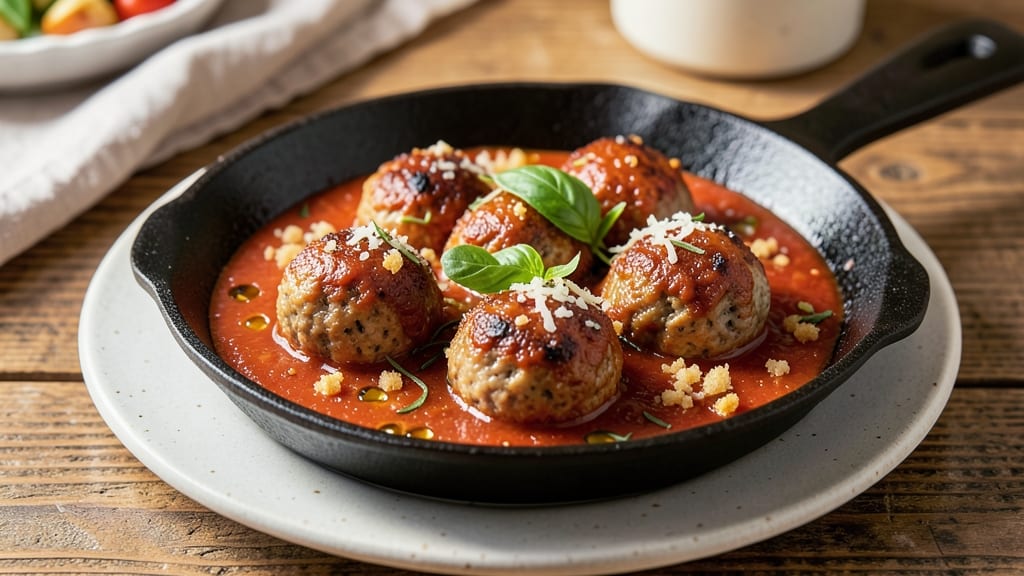
This chicken meatballs in tomato sauce recipe delivers restaurant-quality bites with a rich, wine-infused sauce that's perfect for weeknight dinners. The secret lies in tender chicken meatballs—juicy inside, crisp at the edges—simmered in a slow-cooked tomato sauce with red wine, garlic, and fresh herbs.
I developed this version after years of perfecting meatballs for my restaurant menu, where they became a customer favorite. The sauce starts with a simple blend of crushed tomatoes, red wine, and aromatic herbs, then simmers until thick and velvety.
The meatballs are bound with breadcrumbs and egg for structure, while a touch of grated Parmesan adds depth. What sets this apart is the balance—herby, slightly sweet, and tangy all at once—without overpowering the chicken.
By the time you're done, you'll have a dish that's hearty enough for a family meal but elegant enough for guests. The meatballs stay tender and flavorful, while the sauce coats every bite in a perfect harmony of acidity and richness.
It's the kind of recipe that tastes even better the next day, making it ideal for meal prep. Serve with crusty bread to soak up the sauce or over al dente pasta for a complete meal. The technique is straightforward, but the results are undeniably restaurant-worthy. Let's get started!
Ingredients for chicken meatballs in tomato sauce
Restaurant-quality chicken meatballs start with these simple but flavor-packed ingredients.
| Ingredient | Amount | Notes |
|---|---|---|
| Boneless, Skinless Chicken Breast 🍗 | 1 ½ lb | Pounded to even thickness |
| All-Purpose Flour 🌾 | ½ cup | For breadcrumbs |
| Panko Breadcrumbs 🍞 | ½ cup | For extra crunch |
| Large Eggs 🥚 | 2 whole | Beaten for binding |
| Parmesan Cheese 🧀 | ½ cup | Freshly grated from block |
| Crushed Tomatoes 🍅 | 15 oz | San Marzano preferred |
| Dry Red Wine 🍷 | ½ cup | Bold variety like Cabernet |
| Garlic Cloves 🧄 | 4 cloves | Minced for sauce |
| Fresh Parsley 🌿 | ¼ cup | Chopped finely |
| Fresh Basil 🌿 | ¼ cup | Chopped for garnish |
| Olive Oil 🫒 | 2 tbsp | Extra-virgin for richness |
| Salt 🧂 | 1 tsp | Kosher or sea salt |
| Black Pepper 🌶️ | ½ tsp | Freshly ground |
| Dried Oregano 🍃 | 1 tsp | For extra depth |
| Red Pepper Flakes 🌶️ | ½ tsp | Optional for heat |
The chicken breast is key—pound it to an even thickness so the meatballs cook through without drying out. Costco or Trader Joe's usually have the best pre-pounded chicken breasts, but any boneless, skinless cut works. For the tomatoes, San Marzano is ideal (sweet and meaty), but any quality crushed tomatoes will do. The red wine should be bold—Cabernet Sauvignon or Merlot work perfectly. If you're not a wine drinker, grape juice in a pinch, but the flavor won't be quite the same. Fresh herbs elevate everything, so grab a bunch of parsley and basil—half goes into the meatballs, half gets torn over the top at the end.
No panko? Regular breadcrumbs plus a pinch of baking soda for extra crispiness. Short on Parmesan? Pecorino Romano works too—just grate it yourself for the best texture. The crushed tomatoes can be swapped for whole peeled tomatoes (hand-crushed) if that's what you've got. For the wine, beef broth with a splash of balsamic mimics the depth. Fresh herbs? Dried oregano at half the amount works in a bind. The olive oil matters here—use something fruity and peppery, like California extra-virgin. If you're making this ahead, prep the meatballs and sauce separately—they taste even better the next day.
Meatballs keep well in the fridge for 3 days, and the sauce can be made 2 days ahead. Freeze the meatballs for 3 months or the sauce for 1 month—just thaw in the fridge. I always double the sauce because it's perfect for pasta or pizza another night. Store leftovers in airtight containers with a layer of olive oil on top to keep the herbs fresh. The meatballs reheat beautifully—just warm them gently in the sauce on the stove.
Why You'll Love This Recipe
- No-Fuss Assembly: I swear, these meatballs come together faster than takeout. Just pulse the chicken, flour, egg, and panko in a food processor—no hand-chopping, no overworking the mixture. That Parmesan? It’s the secret to holding everything together without falling apart.
- Crispy-Creamy Magic: The panko gives them that addictive crunch, while the tomato sauce soaks in just enough to keep them tender. Honestly, the first bite has me reaching for seconds—no one will guess they’re chicken breast, not ground meat.
- Lunchbox Hero: Between us, these reheat like a dream for school lunches or office meals. Pack them cold with pasta, and they’ll still taste fresh hours later. My kid actually eats his lunch now—call me a miracle worker.
- Budget Win: Chicken breast is cheaper than ground meat, and the sauce stretches to feed four for under $10. Plus, leftovers freeze perfectly—just thaw and toss into pasta or sandwiches. My wallet and I are forever grateful.
Step-by-step instructions for chicken meatballs in tomato sauce
Here's how to make tender, herby chicken meatballs that simmer perfectly in a rich red wine tomato sauce.
👨🍳 Step 1: Prepare the Chicken Mixture
In a food processor, pulse the 1.5 lb boneless, skinless chicken breast until it resembles coarse crumbs—you want texture, not paste. Transfer to a large bowl and add 0.5 cup all-purpose flour, 0.5 cup panko breadcrumbs, 0.5 cup freshly grated parmesan cheese, 1 tsp salt, 0.5 tsp black pepper, 1 tsp dried oregano, and 0.5 tsp red pepper flakes. Mix gently with your hands until just combined.
Crack the 2 whole large eggs into the bowl and mix again until everything clings together. The mixture should hold its shape when pressed but still be moist enough to form balls. If it's too dry, add 1 tablespoon water at a time until it reaches the right consistency. This step is crucial—overmixing develops tough meatballs, so keep your hands moving gently.
👨🍳 Step 2: Form and Brown the Meatballs
Roll the mixture into 1.5-inch diameter meatballs (about 16 total for 4 servings). Place them on a plate and refrigerate for 15 minutes to firm up—this prevents them from falling apart when you add them to the pan. Heat 2 tablespoons olive oil in a large skillet over medium-high heat until shimmering.
Working in batches to avoid crowding, add the meatballs to the skillet and brown them for 2-3 minutes per side until they develop a golden crust. They'll release easily when ready—don't press down with your spatula. Transfer the browned meatballs to a plate and set aside. Here's the thing—if they brown too quickly, reduce the heat slightly next time to develop flavor without burning.
🍳 Step 3: Build the Tomato-Wine Sauce
In the same skillet, reduce heat to medium and add 4 cloves minced garlic. Sauté for 30 seconds until fragrant—don't let it brown or it'll turn bitter. Pour in the 0.5 cup dry red wine and scrape up any browned bits from the bottom of the pan with a wooden spoon. Let it simmer for 2 minutes until reduced by half.
Add the 15 oz crushed tomatoes, 0.25 cup finely chopped fresh parsley, and 0.25 cup chopped fresh basil. Stir well, then return the meatballs to the skillet. The sauce should just cover them—if it's too thin, simmer uncovered for 5 minutes to thicken slightly. This is where the flavors meld, so let it bubble gently for 10 minutes while you prepare to serve.
⏰ Step 4: Simmer to Perfection
Reduce heat to low and cover the skillet. Let the meatballs simmer for 15-20 minutes, turning occasionally, until they're cooked through and the sauce has thickened. They're done when the internal temperature reaches 165°F—use an instant-read thermometer to check the thickest meatball. The sauce should coat the back of a spoon and be rich, not watery.
Taste and adjust seasoning—add more salt if needed or a pinch of sugar if the tomatoes are too acidic. Garnish with extra fresh basil and serve immediately with crusty bread or over pasta. The meatballs should be tender inside with a juicy center, and the sauce should cling beautifully to each bite.
Pro Tips For Making Chicken Meatballs In Tomato Sauce
- Pulse, Don’t Overwork: Chicken breast gets tough when handled like dough—give it 8-10 pulses in the food processor with flour, egg, and Parmesan, then stop. I learned this the hard way after ending up with dense, rubbery meatballs that screamed "fast food." Let the panko stay chunky for texture.
- Chill Before Frying: Form the meatballs, then pop them in the fridge for 20 minutes. Cold chicken sears better and won’t fall apart when you add them to the sauce. (Yes, even if you’re impatient like me—this isn’t optional.)
- Skip the Crowding: Fry your meatballs in batches—don’t toss them all in at once. Overcrowding drops the oil temperature, and you’ll end up with greasy, unevenly cooked meatballs. Two minutes per side in hot oil is all they need.
- Deglaze with Wine: After browning the meatballs, splash in ¼ cup dry white wine (or broth) to scrape up the browned bits. It’s the non-negotiable step that makes your tomato sauce taste like it simmered for hours—not just 20 minutes. (Save the wine you’d normally drink for this.)
Troubleshooting perfect results
Meatballs Too Dry
If your chicken meatballs turn out dry, it’s usually from overcooking or using too much breadcrumbs. I’ve found that chicken dries out faster than pork or beef, so keep an eye on the internal temperature—165°F is the magic number.
To prevent this, reduce the simmering time to 12-15 minutes and cover the pan tightly. Another trick? Add 1 tablespoon chicken broth to the sauce during simmering to keep things moist. 💫
Sauce Too Thin
A watery sauce is often from not reducing the wine or tomatoes enough. After adding the wine, let it simmer uncovered for 3-4 minutes to concentrate the flavors before adding tomatoes.
If it’s still thin, mash 1-2 tablespoons tomato paste into the sauce or simmer longer—just don’t let it boil hard or it’ll break the herbs. For a quick fix, stir in ½ teaspoon cornstarch mixed with 1 teaspoon water and cook for 1 minute.
Meatballs Falling Apart
This happens when the mixture is too wet or overmixed. The eggs and breadcrumbs need to bind properly, so handle the mixture gently—just until combined. If your meatballs crumble when forming, add 1 extra tablespoon panko or let them rest 10 minutes longer in the fridge before browning.
I also recommend using cold chicken straight from the fridge for better binding. 🍳
Sauce Too Acidic
Bright tomatoes or wine can make the sauce taste sharp. Balance it by adding a pinch of sugar or a splash of heavy cream (just ¼ cup) at the end.
For a deeper flavor, stir in ½ teaspoon balsamic vinegar or a small piece of unsalted butter to round out the acidity. Taste as you go—this sauce should be tangy but not sour.
Uneven Browning
If some meatballs brown faster than others, it’s likely due to uneven heat distribution. Use a skillet with a heavy-bottomed base (like a Lodge cast iron) to prevent hot spots.
Brown in batches if needed, and avoid overcrowding—give them space to crisp properly. For extra color, finish with 30 seconds under a broiler after simmering, but watch closely to avoid burning.
Herbs Not Bright Enough
Fresh herbs lose their vibrancy when cooked too long. Add the parsley and basil only in the last 5 minutes of simmering, or toss them in at the very end. For extra freshness, reserve some herbs to garnish the dish right before serving.
If using dried herbs, reduce to ½ teaspoon and add them early—dried herbs need more time to infuse. 🌿
Nutrition facts
Frequently asked questions
Can I use ground chicken instead of chicken breast for this recipe?
Yes, but with adjustments! Ground chicken works perfectly, but the texture will be slightly finer. For best results, add 1 extra tablespoon breadcrumbs to help bind the mixture. Ground chicken also cooks faster, so reduce simmering time to 10-12 minutes to prevent dryness. The flavor remains just as rich!
How can I make this recipe gluten-free?
Swap the all-purpose flour and panko for ½ cup gluten-free breadcrumbs and ¼ cup gluten-free flour. Use a gluten-free beer or sparkling water to replace the wine if you need to avoid it entirely. The meatballs will still hold together beautifully while keeping the dish flavorful and safe for gluten-sensitive diners.
What's the best way to reheat leftovers?
Gently reheat in a skillet over low heat with a splash of water or broth to prevent drying. For extra moisture, cover the pan and let them simmer for 3-4 minutes. Never microwave—it makes the meatballs rubbery. The sauce thickens when cooled, so thin with a little water if needed before serving.
Can I bake these meatballs instead of pan-frying?
Preheat oven to 375°F and bake on a parchment-lined tray for 20-25 minutes until golden. For extra crispiness, broil for 2 minutes at the end. The sauce can be made separately and combined later. Baking works great for meal prep—just freeze the meatballs before adding sauce.
What are the best sides to serve with this dish?
Classic choices include al dente pasta, crusty Italian bread, or creamy polenta. For a lighter option, try a simple arugula salad with lemon vinaigrette. The rich tomato sauce pairs beautifully with anything that can soak up its flavors—just avoid heavy greens that might overpower the dish.