
Sauces & Condiments
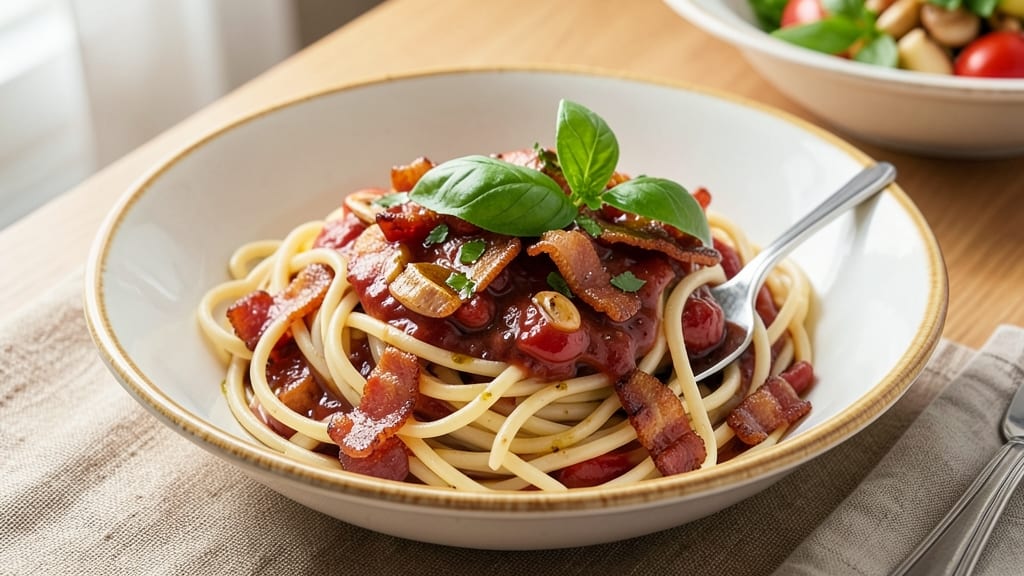
This bacon spaghetti sauce recipe transforms simple ingredients into a rich, smoky-sweet tomato base packed with crispy bacon bits that add depth and texture.
The secret lies in slow-cooking the bacon until perfectly crisp, then simmering it with tomatoes, garlic, and herbs to create a sauce that clings beautifully to pasta.
What makes this sauce stand out is how the bacon's smokiness melds with the sweetness of the tomatoes, creating a flavor profile that's both comforting and sophisticated.
What sets this sauce apart is its versatility—it works equally well as a quick weeknight dinner over spaghetti or as a flavorful addition to roasted meats, grilled vegetables, or even as a pizza topping.
The slow simmering process allows the flavors to develop fully, while the crispy bacon bits add a satisfying crunch that elevates every bite. Unlike many store-bought sauces, this one delivers a homemade quality that's hard to beat, with no artificial flavors or preservatives.
By the time you're done, you'll have a sauce that's deeply aromatic, slightly sweet, and packed with layers of smoky bacon flavor. The texture is just right—smooth enough to coat pasta perfectly but with enough body to stand up to heartier dishes.
The best part? It tastes even better the next day, making it ideal for meal prep or gifting in jars. This sauce is the kind of recipe that turns a simple pasta dinner into something memorable.
The process is straightforward but requires patience—simmering the sauce low and slow ensures the flavors meld together beautifully. Store any leftovers in the refrigerator for up to five days or freeze for up to three months, so you always have a delicious, homemade sauce on hand.
Whether you're serving it with al dente spaghetti or using it as a marinade, this bacon spaghetti sauce is a game-changer for any kitchen.
Ingredients for bacon spaghetti sauce
Crispy bacon meets sweet tomatoes in this smoky-sweet sauce that sticks to pasta perfectly.
| Ingredient | Amount | Notes |
|---|---|---|
| Thick-Cut Bacon 🥓 | 8 oz | Cut into 1/2-inch pieces for crispiness |
| Canned San Marzano Tomatoes 🍅 | 28 oz | Crushed or whole, no salt added |
| Yellow Onion 🧅 | 1 whole | Medium size, diced finely |
| Garlic Cloves 🧄 | 4 cloves | Minced for aromatic depth |
| Extra-Virgin Olive Oil 🫒 | 2 tbsp | For sautéing aromatics |
| Tomato Paste 🍅 | 2 tbsp | Squeeze tube preferred |
| Dried Oregano 🌿 | 1 tsp | Italian preferred for authentic flavor |
| Dried Basil 🌿 | 1 tsp | Crushed between fingers |
| Red Pepper Flakes 🌶️ | ½ tsp | Adjust for heat preference |
| Granulated Sugar 🍚 | 1 tbsp | Balances tomato acidity |
| Balsamic Vinegar 🍷 | 1 tbsp | For depth and tang |
| Salt 🧂 | 1 tsp | Diamond Crystal preferred |
| Black Pepper 🌶️ | ½ tsp | Freshly cracked |
The bacon is non-negotiable here—thick-cut gives the best crisp, and those crunchy bits are what make this sauce special. Costco sells it in bulk for great prices, but any grocery store bacon works. Look for San Marzano tomatoes if you can find them—they're sweeter and less acidic than regular canned tomatoes. The onion and garlic are your flavor base, so don't skip sautéing them until soft. I always grab a whole onion and chop it myself rather than using pre-diced for better texture control.
No San Marzano tomatoes? Any good-quality canned tomatoes work—just taste and add a pinch more sugar if they're too tart. Short on balsamic vinegar? Apple cider vinegar at half the amount gives a similar tang. Want to stretch this further? Add a 15-oz can of kidney beans for extra heartiness. The sugar might seem odd, but it rounds out the acidity—trust me, it's essential. For extra richness, stir in 2 tbsp of heavy cream at the end, but keep it optional.
This sauce gets better with time—2-3 days in the fridge lets the flavors meld perfectly. Portion into jars for easy meal prep, and it keeps for up to 3 months in the freezer. The bacon bits will separate when frozen, but just stir them back in when reheating. For serving, I like to toss it with fresh basil leaves right before eating—adds a bright pop of color and freshness that cuts through the richness.
Why You'll Love This Recipe
- One-Pan Magic: I swear by this recipe because it’s literally one pan, one spatula, and zero dishes. The bacon renders crispy while the sauce simmers—no chopping boards, no mess. Honestly, I’ve made it after work when I just wanted to collapse on the couch.
- Crispy-Savory Obsession: That thick-cut bacon? It’s not just a garnish—it’s the star. The salty crunch cuts through the sweet, tangy San Marzano tomatoes like a dream, and the garlic? Oh, it’s there, but not overpowering. It’s the kind of flavor that makes you go back for seconds without even thinking.
- Weeknight to Potluck: This sauce is my secret weapon for everything. Too tired for dinner? Toss it with pasta in 15 minutes. Bringing a dish to a gathering? It’s hearty enough for a crowd but simple enough to make ahead. Between us, I’ve served it at BBQs, game nights, and even a last-minute office potluck.
- Budget Meal That Lasts: A can of tomatoes, a pound of bacon, and a few pantry staples? That’s it. And the best part? It tastes fresh for days—reheat it, add a splash of water if it’s too thick, and it’s just as good the third day. I’ll be real: I’ve had it for lunch three times in a row, and no one complained.
Step-by-step instructions for bacon spaghetti sauce
Here's how to build a rich, smoky tomato sauce with perfectly crispy bacon bits that cling to every strand of pasta.
🔥 Step 1: Cook the Bacon Until Crispy
Cut the 8 oz thick-cut bacon into ½-inch pieces and place them in a large, deep skillet over medium heat. Cook undisturbed for 5-6 minutes until the edges start to crisp and the fat begins to render. Here's the thing—don't stir yet. You want those pieces to develop a deep golden crust that'll add incredible texture to your sauce.
After 5 minutes, gently stir the bacon with a wooden spoon, breaking any large pieces into smaller chunks. Continue cooking for another 3-4 minutes until the bacon is deep brown and crispy throughout. You'll have about ½ cup of rendered fat in the pan—this is liquid gold for building flavor. Remove the bacon with a slotted spoon and set it aside on a paper towel-lined plate, leaving the fat in the skillet.
🍳 Step 2: Sauté Aromatics in Bacon Fat
Reduce the heat to medium-low and add the finely diced 1 whole yellow onion to the skillet with the bacon fat. Cook for 5-6 minutes until the onions become translucent and just start to soften at the edges. Don't let them brown—you want sweetness, not bitterness.
Add the 4 minced garlic cloves and cook for 30 seconds until fragrant. Here's where it gets good—stir in the 2 tbsp tomato paste and cook for 1 minute, stirring constantly. This step develops the sauce's deep umami flavor and prevents a raw tomato taste. The paste will darken slightly as it cooks down.
🥘 Step 3: Build the Tomato Base
Pour in the 28 oz canned San Marzano tomatoes (crushed or whole) and stir to combine with the aromatics. Add the 1 tbsp granulated sugar, 1 tbsp balsamic vinegar, 1 tsp dried oregano, 1 tsp dried basil, 0.5 tsp red pepper flakes, 1 tsp salt, and 0.5 tsp black pepper. The sugar balances the acidity while the vinegar adds depth—don't skip this combination.
Bring the mixture to a gentle simmer over medium heat. Let it cook uncovered for 20-25 minutes, stirring occasionally. You're looking for a sauce that thickens slightly and develops a rich, concentrated tomato flavor. The red pepper flakes should infuse subtle heat without overpowering. Taste and adjust seasoning—this is where you can really make the sauce your own.
⏰ Step 4: Finish and Incorporate Bacon
Return the crispy bacon to the skillet and stir to combine with the sauce. The bacon will soften slightly but retain its crispy texture. Let the sauce simmer together for 5-7 minutes to allow all the flavors to meld. The sauce should now have a beautiful glossy sheen and a complex balance of smoky, sweet, and tangy notes.
For the best texture, use a potato masher or wooden spoon to gently break down any large tomato pieces while keeping some chunkiness. This creates that perfect restaurant-quality sauce consistency. The sauce should coat the back of a spoon but still be loose enough to cling beautifully to spaghetti.
🍽️ Step 5: Serve Immediately Over Pasta
Ladle the warm sauce over cooked spaghetti and toss gently to coat. The sauce should cling to every strand, with crispy bacon bits scattered throughout. Serve immediately while the sauce is hot—this is when all the flavors shine brightest. The contrast of the crispy bacon against the silky sauce is what makes this sauce truly special.
Pro tip: Save any leftover sauce and reheat it gently on the stove. The flavors actually improve overnight as they continue to meld. This sauce tastes even better the next day—just stir in a splash of water if it thickens too much during storage.
Pro Tips For Making Bacon Spaghetti Sauce
- CRISP THE BACON LOW: I used to blast that bacon on high and end up with rubbery, greasy strips—no one wants that. Cook thick-cut bacon on medium-low heat until the edges turn golden and the fat renders slowly. This keeps the meat tender while giving you enough fat to make the sauce sing (and crispy bits for texture).
- SMASH THE GARLIC: Skip the mincer—crush those cloves with the flat side of your knife first. This releases more flavor without turning bitter, and you’ll get a smoother texture in the sauce. I learned this the hard way after burning garlic three times in a row.
- SWEAT THE ONIONS SLOW: Rushing this step makes the onions taste raw and bitter. Cook them over medium heat with a pinch of salt until they’re translucent and just starting to caramelize—about 8-10 minutes. Patience here means the sauce won’t taste like you skipped the onion step entirely.
- STIR THE TOMATOES GENTLY: Dumping crushed tomatoes into a hot pan and stirring like crazy will break them into mush. Instead, add them whole (or in large chunks) and let them simmer undisturbed for 5 minutes before stirring. This keeps the sauce chunky and vibrant—no one wants tomato paste in their spaghetti.
Make-ahead tips for this bacon spaghetti sauce
Sauce Prep Timeline
Start by cooking the bacon first—it needs 8-10 minutes to crisp perfectly. While it cooks, chop your onion and garlic so they're ready to go as soon as the bacon fat is ready.
This parallel prep saves 15-20 minutes of total cooking time. I often set a timer for the bacon and start chopping veggies right away. 💪
Storage Containers
Use glass jars with airtight lids for best results—plastic can absorb odors over time. I recommend Mason jars (pint or quart size) because they stack well in the fridge and freeze beautifully. Label each jar with the date to track freshness. For freezing, leave 1-inch headspace to prevent expansion cracks.
Freezing Method
Let the sauce cool completely before transferring to containers. Pour into freezer-safe jars or ziplock bags, leaving ½-inch headspace. Freeze flat for up to 3 months—this maximizes freezer space.
When reheating, thaw overnight in the fridge and stir in a splash of water if needed to restore texture. 🧊
Reheating Techniques
For stovetop reheating, transfer sauce to a pot and heat over medium-low heat for 8-10 minutes, stirring occasionally. Never boil—this can make the sauce separate. Microwave reheating works too: use 50% power for 2-3 minutes, stirring halfway. The bacon bits will soften slightly but still add great texture.
Fridge Shelf Life
This sauce stays fresh in the fridge for 5-7 days when stored properly. The flavors actually deepen over time, making it perfect for meal prep. I like to make a big batch on Sundays so I have ready-to-use sauce all week.
Just give it a quick stir before reheating to redistribute the bacon bits evenly. 🍽️
Portioning Tips
For individual servings, divide sauce into 4-ounce portions per jar. This makes it easy to grab just what you need for one meal. I often double the recipe so I have extras for pizza toppings or sandwich fillings.
The sauce keeps its vibrant color and rich flavor when portioned correctly, making leftovers just as delicious as fresh.
Nutrition facts
Frequently asked questions
Can I make this sauce without bacon?
The bacon is what gives this sauce its signature smoky depth and crispy texture, but you can substitute with 2 tbsp smoked paprika and 2 tbsp bacon bits (store-bought) for a similar flavor profile. For a vegetarian version, use mushrooms or tempeh cooked in olive oil to mimic the meaty texture. The sauce will still be delicious but lose that authentic bacon richness.
How do I adjust the heat level?
The ½ tsp red pepper flakes provides a mild kick—reduce to ¼ tsp for minimal heat or increase to 1 tsp for spicier sauce. For extra heat, add 1-2 chopped jalapeños with the onions. If you prefer no heat, simply omit the red pepper flakes entirely. The balsamic vinegar and sugar already balance acidity, so heat adjustments won't affect the sauce's overall sweetness.
Can I use fresh tomatoes instead of canned?
Fresh tomatoes work but require more prep. Use 4-5 large ripe tomatoes, roasted at 400°F for 20 minutes until softened, then blended until smooth. Add 1 tbsp tomato paste to compensate for the lower natural acidity. Fresh tomato sauce will be brighter but less concentrated than canned—simmer it 10 minutes longer to develop deeper flavor.
Why did my sauce turn out too thick?
Sauces thicken when simmered too long or with too much tomato paste. Thin with 2-3 tbsp water or broth while reheating, stirring constantly. For future batches, reduce simmering time to 15-20 minutes or omit 1 tbsp tomato paste. The sauce should coat the back of a spoon but still be pourable. If it's too thin, simmer uncovered for 5 extra minutes to reduce.
What's the best pasta to serve with this?
This rich sauce pairs perfectly with spaghetti, linguine, or bucatini for maximum clinging action. For extra texture, try penne or rigatoni—the ridges catch the sauce and bacon bits beautifully. Avoid delicate pastas like angel hair, as they'll break under the sauce's weight. Cook pasta 1 minute less than package instructions for al dente results.