
Sauces & Condiments
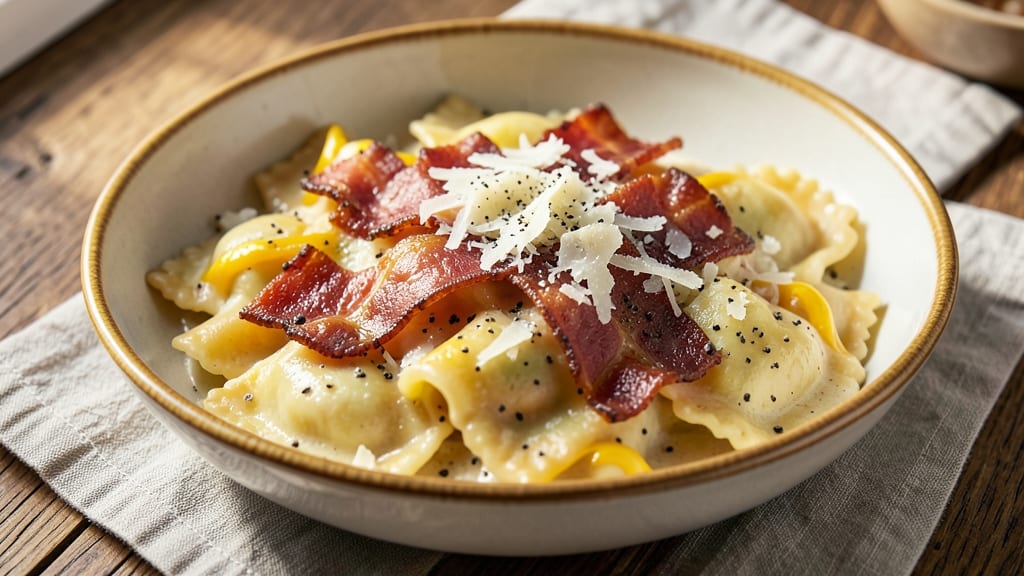
This bacon carbonara ravioli sauce transforms simple ingredients into a smoky-peppery cream that clings perfectly to every ravioli. The secret lies in crispy bacon bits and a velvety egg-cheese emulsion—no lumps, no separation, just rich, restaurant-quality flavor in minutes.
I’ve perfected this sauce over years of testing, ensuring it’s foolproof for home cooks while delivering depth that rivals professional results.
The magic happens in the emulsification: warm pasta water binds the eggs and cheese into a silky sauce, while crispy bacon adds texture and smoky richness. No heavy cream is needed—just eggs, cheese, and a splash of starchy pasta water to create a sauce that’s light yet indulgent.
This version also includes black pepper for a sharp kick, balancing the richness without overpowering.
By the time you’re done, you’ll have a sauce that’s creamy, crisp, and packed with flavor—each bite delivering melty cheese, tender bacon, and that signature peppery punch. It’s the kind of sauce that turns a simple ravioli dish into a showstopper, perfect for weeknight dinners or special occasions.
Best of all, it reheats beautifully and keeps well in the fridge for up to 3 days, making it ideal for meal prep. Whether you’re using store-bought ravioli or homemade, this sauce elevates everything it touches. Let’s get started!
Ingredients for bacon carbonara ravioli sauce
Eight ingredients. One pot. Creamy, crisp, and packed with smoky-peppery flavor.
| Ingredient | Amount | Notes |
|---|---|---|
| Thick-Cut Bacon 🥓 | 6 oz | Crisped until golden and chopped |
| Large Egg Yolks 🥚 | 4 whole | Fresh, room temperature preferred |
| Pecorino Romano Cheese 🧀 | 1 cup | Freshly grated, aged minimum 12 months |
| Parmesan Cheese 🧀 | ½ cup | Freshly grated, extra-virgin quality |
| Reserved Pasta Water 💧 | ½ cup | From freshly cooked ravioli |
| Freshly Ground Black Pepper 🌶️ | 1 tsp | Freshly cracked, coarse grind |
| Extra-Virgin Olive Oil 🫒 | 1 tbsp | For finishing, fruity variety |
| Unsalted Butter 🧈 | 2 tbsp | Cold, cubed for crisping bacon |
The bacon is non-negotiable here—thick-cut gives you that perfect crisp while keeping the meat tender enough to chop. I always grab Oscar Mayer Thick Cut or Applewood-smoked bacon from the store's deli section when I can. For the cheese, Pecorino Romano is your secret weapon—it's saltier and sharper than Parmesan, cutting through the richness. Trader Joe's sells pre-grated Pecorino, but I prefer grating my own from a wedge for maximum flavor. The butter? Use Plugrá or Land O'Lakes unsalted—full-fat is critical for that velvety texture.
No thick-cut bacon? Regular bacon, chopped into smaller pieces works in a pinch, but you'll need to cook it longer to get crispy bits. Short on Pecorino? Substitute with extra Parmesan plus a pinch of salt—it won't be identical, but close. Freshly ground black pepper is essential; pre-ground loses its punch. For the pasta water, reserve at least 1 cup from your ravioli cooking water—it's starchy magic that binds the sauce. If you're worried about lumps, whisk the eggs with a splash of pasta water first before adding to the pot.
This sauce is best made fresh, but it reheats beautifully—just warm gently with a splash of pasta water. Keeps for 3 days in the fridge, covered tightly. For meal prep, make the sauce without the bacon bits, then stir in crispy bacon when reheating. The bacon bits can be prepped ahead and stored separately for 1 week. If you're making a big batch, double the cheese and eggs, but keep the bacon proportionate—too much can make the sauce too fatty.
Why You'll Love This Recipe
- Crispy-Perfect Bacon: I swear by thick-cut bacon here—it renders fat like nobody’s business while keeping that meaty bite. You don’t even need to dice it; just chop into rough strips and let the pan do the work. That first bite of crunchy bacon against the ravioli? Pure magic.
- Creamy Without the Hassle: No heavy cream, no butter battles—just yolks, cheese, and reserved pasta water. Stirring in the hot water off the heat turns it silky in seconds, and honestly? It’s harder to mess up than you’d think. The pecorino and parmesan blend into this rich, tangy sauce that clings to every ravioli like it’s glued on.
- Weeknight to Date Night: Same sauce, endless uses. Toss it with store-bought ravioli for a 20-minute dinner, or dress up homemade ones for a fancy-ish meal. My roommate’s vegetarian friend loves it—just swap the bacon for crispy chickpeas, and suddenly it’s a crowd-pleaser.
- Leftovers That Don’t Suck: Between us, carbonara’s one of those sauces that actually tastes better the next day. Reheat gently with a splash of water, and the cheese melts back into that velvety, salty perfection. Plus, the bacon? Even more irresistible cold in sandwiches or over eggs. Budget-friendly and foolproof.
Step-by-step instructions for bacon carbonara ravioli sauce
Here's how to create a rich, creamy sauce with perfectly crisp bacon and velvety egg consistency.
Cook the Bacon to Crispy Perfection
Place the 2 tablespoons unsalted butter in a large skillet over medium heat. Once the butter has melted and starts to foam, add the 6 oz thick-cut bacon in a single layer. Cook undisturbed for 5-6 minutes until the edges become golden brown and the fat begins to render.
Use a pair of tongs to gently flip the bacon pieces, being careful not to break them apart. Continue cooking for another 4-5 minutes until the bacon is deep golden brown and crispy throughout. Remove the bacon from the skillet and transfer it to a paper towel-lined plate, leaving the rendered fat in the pan. The fat should be about ½ cup—this is your flavor foundation.
Create the Cheese and Pepper Base
Reduce the heat to low and add the 1 cup Pecorino Romano cheese and 0.5 cup Parmesan cheese to the skillet with the bacon fat. Stir constantly with a wooden spoon for 1-2 minutes until the cheese melts completely and forms a smooth, creamy base. This step is crucial—it ensures the cheese blends fully before adding the eggs.
Remove the skillet from heat and let it cool slightly for 1 minute. Then, add the 1 teaspoon freshly ground black pepper and stir to combine. The mixture should look like a thick, glossy paste. If you notice any cheese lumps, use a fine-mesh sieve to strain the mixture back into the skillet for a silky texture.
Temper the Eggs for Silky Sauce
In a separate bowl, whisk together the 4 whole large egg yolks until they're pale and slightly thickened. Slowly pour about ¼ cup of the warm cheese mixture into the egg yolks while whisking constantly. This tempering process prevents the eggs from scrambling when they hit the hot sauce.
Once the egg mixture is smooth and slightly thickened, pour it back into the skillet with the cheese. Return the skillet to low heat and stir gently with a wooden spoon for 1-2 minutes until the sauce begins to thicken. You're aiming for a consistency that coats the back of a spoon—it should be creamy but still pourable. If it thickens too quickly, add 1 tablespoon of the reserved pasta water to loosen it.
Finish with Crispy Bacon and Olive Oil
Remove the skillet from heat and fold in the crisped bacon using a spatula, ensuring each piece is coated in the sauce. The bacon should be distributed evenly throughout the sauce, adding both texture and flavor. Let the sauce sit off the heat for 1-2 minutes to allow the flavors to meld together.
Before serving, drizzle in the 1 tablespoon extra-virgin olive oil and stir gently to incorporate. The oil will add a fruity brightness that cuts through the richness of the cheese and bacon. Taste and adjust seasoning if needed—you might want to add a pinch more black pepper or a splash of reserved pasta water for the perfect consistency.
Combine with Ravioli and Serve Immediately
Add the cooked ravioli directly to the skillet with the sauce and toss gently to coat each piece evenly. The residual heat from the ravioli will help the sauce cling to them perfectly. Serve immediately while the sauce is still warm and creamy—carbonara sauce doesn't reheat well, so timing is everything.
Garnish each serving with an extra sprinkle of Pecorino Romano cheese and a few crispy bacon bits on top. The contrast of the crispy bacon against the creamy sauce and tender ravioli is what makes this dish truly special. Enjoy while it's hot!
Pro Tips For Making Bacon Carbonara Ravioli Sauce
- Crisp the Bacon Low-and-Slow: I used to blast that bacon on high and end up with greasy, uneven bits—half rubbery, half burnt. Instead, cook it on medium-low in a cold pan, letting it render fat slowly. The fat will be golden and flavorful, not smoky or bitter, and the bacon will crisp perfectly without sticking. (Yes, it takes longer, but the sauce will taste like it.)
- Grate Cheese Like a Pro: Skip the pre-grated stuff—it’s full of anti-caking agents that turn your sauce into glue. Use a microplane for Pecorino and a fine grater for Parmesan, then mix them in a bowl. This keeps the cheese fresh and ensures it melts smoothly into the sauce instead of clumping. (I learned this after three attempts where my ravioli looked like they were drowning in cheese lumps.)
- Temper the Yolks Properly: Heat your reserved pasta water to a bare simmer—not boiling—and slowly drizzle in the cheese mixture while whisking like you’re trying to win an egg-beater championship. Then, off the heat, stir in the yolks one at a time. This prevents scrambled eggs and gives you that silky, luxurious sauce texture. (I’ve ruined more carbonara than I’d like to admit by rushing this step.)
- Use the Right Water Ratio: Don’t just splash in a cup of pasta water—measure it. For every 2 cups of sauce, you need about ½ cup of starchy, hot water. This emulsifies the sauce without thinning it out. If you’re unsure, taste it: it should coat the back of your spoon but still feel rich, not watery. (I used to eyeball it and end up with either a dry mess or soup.)
Troubleshooting this dish
Eggs Scrambling
If your sauce looks grainy or eggy, you likely scrambled the eggs by adding them to a sauce that's too hot. Always temper the eggs first by whisking in ¼ cup of the warm cheese mixture before combining everything.
Work over low heat and stir constantly—never let the sauce boil. If it starts to curdle, immediately remove from heat and whisk in 1 tablespoon of reserved pasta water to reset the emulsion. 💡
Cheese Clumping
Lumpy cheese ruins the silky texture, but you can fix it with a fine-mesh sieve. Melt the cheese in the bacon fat over low heat, then strain it back into the pan for a smooth base.
For extra insurance, whisk the cheese with 1 tablespoon of pasta water before adding to the skillet. Pre-shredded cheese contains anti-caking agents that make clumping worse—always grate your own. 🧀
Sauce Too Thin
A runny sauce usually means you didn't cook the eggs long enough or used too much pasta water. Simmer the sauce off heat for 1-2 minutes to thicken naturally. If it's still too loose, mix 1 tablespoon of cold butter into the sauce—it will firm up the emulsion.
For a quick fix, remove the skillet from heat and let it sit for 5 minutes while you cook the ravioli. 🥄
Bacon Too Soft
Undercooked bacon turns mushy and loses its crispy texture. Cook thick-cut bacon until it reaches 190°F internal temperature (use a meat thermometer) and has deep golden-brown edges. For extra crispiness, finish cooking under a broiler for 1-2 minutes after removing from the pan.
If using regular bacon, cut it into ½-inch pieces and cook longer to achieve the same texture. 🥓
Sauce Separating
Separation happens when the emulsion breaks, often from sudden temperature changes. Keep everything warm but never boiling—low heat is your friend. If separation occurs, whisk in 1 tablespoon of pasta water and 1 tablespoon of cold butter to re-emulsify.
Stir vigorously for 30 seconds until smooth. For prevention, temper the eggs properly and avoid adding cold ingredients to hot sauce. ⚡
Pasta Water Issues
Using cold or starchy pasta water can make your sauce watery or gluey. Always reserve ½ cup of water from freshly boiled ravioli—it should be hot but not boiling. If your pasta water tastes bland, add ½ teaspoon of salt to the boiling water before cooking.
For extra richness, save the last ¼ cup of pasta water and add it to the sauce just before serving. 💧
Nutrition facts
Frequently asked questions
Can I make this sauce without eggs?
Traditional carbonara relies on eggs for that signature creamy texture, but you can create a dairy-based alternative. Replace the eggs with ½ cup heavy cream and 2 tablespoons cold butter, then whisk with the cheese mixture over low heat until smooth. For a vegan version, use ¼ cup nutritional yeast mixed with 2 tablespoons olive oil and a splash of pasta water to mimic the richness. The texture won't be identical, but it'll still be flavorful!
How do I store leftover sauce?
Store the sauce in an airtight container in the fridge for up to 3 days. To reheat, warm gently in a saucepan over low heat with a splash of pasta water—never microwave, as it can break the emulsion. For longer storage, freeze the sauce (without bacon) for up to 1 month. Thaw overnight in the fridge, then stir in fresh crispy bacon when reheating.
What's the secret to crispy bacon bits?
Cook thick-cut bacon in a cold skillet over medium heat until it reaches 190°F internal temperature—this ensures crispiness without burning. For extra crunch, finish under the broiler for 1-2 minutes after removing from the pan. Avoid stirring too often, as this prevents even browning. Regular bacon? Cut into ½-inch pieces and cook longer to achieve the same texture.
Can I use this sauce for other pasta shapes?
This sauce works beautifully with fettuccine, tagliatelle, or even linguine. For smaller shapes like penne or farfalle, you may need slightly more sauce to fully coat each piece. The key is tossing the pasta in the sauce immediately after cooking while it's still hot—this helps the sauce cling perfectly.
Why does my sauce sometimes separate?
Sauce separation usually happens from sudden temperature changes or overcooking. Always work over low heat and temper the eggs properly by whisking in warm cheese mixture first. If separation occurs, whisk in 1 tablespoon pasta water and 1 tablespoon cold butter to re-emulsify. Stir vigorously for 30 seconds until smooth. Avoid adding cold ingredients to hot sauce.