
Sauces & Condiments
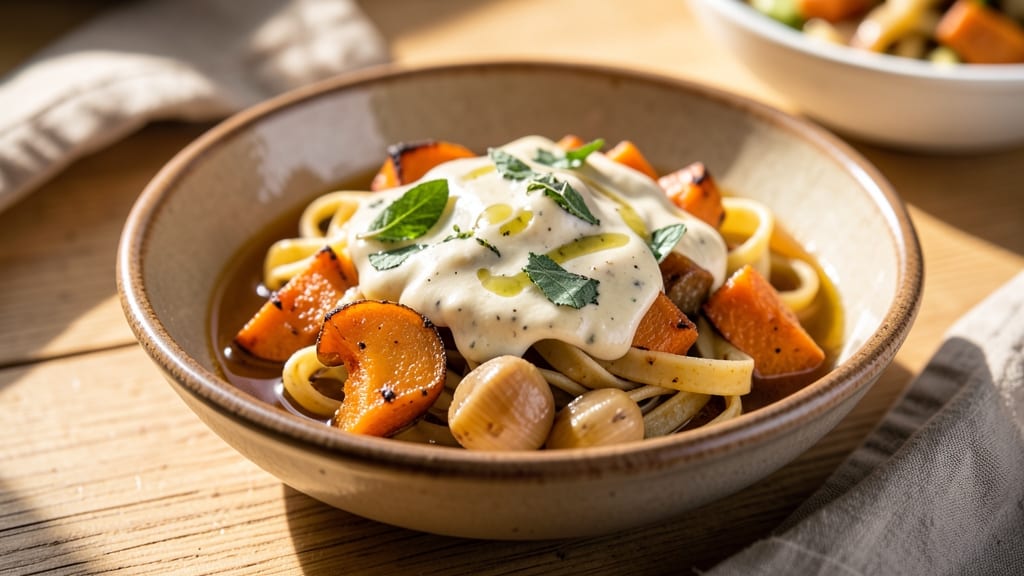
This autumn harvest pasta sauce recipe transforms humble squash and sage into a velvety, aromatic sauce that clings to every strand of pasta like a cozy sweater. 🍂 The secret lies in roasting butternut squash until caramelized—this step deepens its natural sweetness and creates a rich, almost buttery texture that forms the sauce's backbone.
What starts as simple roasted vegetables becomes a luxurious, silky sauce when blended with garlic, sage, and a touch of cream, delivering restaurant-quality depth in just 45 minutes.
What sets this sauce apart is its versatility—it works as a standalone condiment for grilled meats or roasted vegetables, or as the star of your pasta dish.
The roasted squash adds natural sweetness that balances the earthy sage and savory garlic, while a splash of cream creates that signature velvety mouthfeel. Unlike store-bought sauces, this one builds flavor through slow simmering, ensuring every bite tastes homemade and seasonal.
Once you taste this sauce, you'll never reach for jarred again. The aroma alone—warm squash, toasted sage, and a hint of garlic—transforms any meal into a cozy autumn feast.
It keeps well in the fridge for up to 5 days or freezes beautifully for up to 3 months, making it the perfect make-ahead sauce for busy weeknights. The best part? It's simple enough for weeknight cooking but impressive enough for dinner guests.
Pair it with your favorite pasta, drizzle it over roasted chicken, or serve it alongside grilled fish for a sauce that feels like a warm hug on a crisp autumn evening.
The instructions are straightforward, but the results are anything but ordinary—this is the kind of sauce that makes you slow down and savor every bite. Let's get started on creating your new favorite autumn staple.
Ingredients for autumn harvest pasta sauce
Pantry staples meet seasonal bounty—roasted squash and sage create velvety richness for your pasta.
| Ingredient | Amount | Notes |
|---|---|---|
| Butternut Squash 🎃 | 2 lb | Cubed, skin removed |
| Fresh Sage Leaves 🌿 | ½ cup | Packed, stems removed |
| Garlic Cloves 🧄 | 4 cloves | Peeled, roughly chopped |
| Extra-Virgin Olive Oil 🫒 | ½ cup | High quality, fruity |
| Heavy Cream 🥛 | ½ cup | Full-fat for richness |
| Vegetable Broth 💧 | 1 cup | Low-sodium preferred |
| Salt 🧂 | 1 ½ tsp | Diamond Crystal preferred |
| Black Pepper 🌶️ | ½ tsp | Freshly ground preferred |
| Honey 🍯 | 1 tbsp | For balancing acidity |
| Pasta 🍝 | 1 lb | Any shape preferred |
The squash is the star here. Butternut is ideal, but acorn or kabocha work too—just adjust roasting time. I grab mine from Whole Foods when it's in season, but any grocery store's produce section has it. Look for squash that's firm but yields slightly to pressure—no soft spots. Roast it until caramelized for that buttery texture the sauce needs. Trader Joe's often has pre-cubed squash if you're short on time, though fresh is always better. Sage? Fresh is non-negotiable for that toasty aroma, but if you're in a pinch, dried works at one-third the amount.
No heavy cream? Full-fat coconut milk gives similar richness, though the flavor profile shifts slightly. Vegetable broth can be swapped for white wine if you're feeling fancy—just reduce it first. Honey can be replaced with maple syrup for a deeper autumnal note. The pasta shape is flexible—fettuccine or penne work best for clinging sauce, but any shape will do. For extra depth, toast your pasta in olive oil before adding sauce—game-changer. And if you're making this ahead, roast the squash and prep ingredients the day before; assemble when ready to cook.
This sauce keeps beautifully—5 days in the fridge, 3 months frozen. For freezing, portion into ice cube trays, then transfer to a bag. Thaw overnight in the fridge before reheating. Leftovers reheat wonderfully—just warm gently on the stove with a splash of broth or water to loosen the texture. I always make extra because it disappears fast. The aroma alone makes the kitchen smell like autumn, so save some for garnish—fresh sage leaves torn over the top elevate it instantly.
Why You'll Love This Recipe
- Here’s what sold me: the heavy cream smooths out the sweetness of the squash while the crispy sage leaves add this earthy punch—like autumn in a bowl. Honestly, I’ve tried store-bought sauces that can’t compete with this simple combo.
- One-Pan Magic: I swear by this—roast the squash alongside the garlic and sage in the same pan. No chopping boards, no extra pots, just toss everything on a sheet, let the oven do the work, and boom. That caramelized squash practically melts into the sauce when you blend it.
- Creamy-Savory Balance: Here’s what sold me: the heavy cream smooths out the sweetness of the squash while the crispy sage leaves add this earthy punch—like autumn in a bowl. Honestly, I’ve tried store-bought sauces that can’t compete with this simple combo.
- Weeknight to Dinner Party: Between us, this sauce works for everything. Slap it on fettuccine for a lazy Tuesday, drizzle it over roasted chicken for guests, or even toss it with crusty bread when you’re too tired to cook. (Yes, even on a Tuesday night.)
Step-by-step instructions for roasted squash and sage pasta sauce
Here's how to transform simple ingredients into a velvety sauce with autumnal depth.
🔥 Step 1: Roast the Butternut Squash and Sage
Preheat your oven to 400°F and line a large baking sheet with parchment paper. Toss the 2 lb butternut squash cubes with 0.25 cup of the extra-virgin olive oil, 1 tsp of the salt, and 0.25 tsp of the black pepper. Spread them in a single layer on the baking sheet.
In a small bowl, mix the 0.5 cup fresh sage leaves with 0.25 cup of the extra-virgin olive oil, 0.5 tsp of the salt, and 0.25 tsp of the black pepper. Spread the sage leaves on the baking sheet alongside the squash. Roast for 25-30 minutes until the squash is tender when pierced with a fork and the sage leaves are crispy around the edges.
I like to pull the baking sheet out after 20 minutes and give it a gentle shake to redistribute the squash—this ensures even browning. The sage should be fragrant and slightly charred, which adds incredible depth to the sauce.
🍳 Step 2: Build the Rich Sauce Base
While the squash roasts, heat 1 tablespoon of the extra-virgin olive oil in a large skillet over medium heat. Add the 4 cloves garlic cloves and sauté for 30 seconds until fragrant—don't let them brown or they'll turn bitter.
Transfer the roasted squash and sage to the skillet, discarding any excess oil from the baking sheet. Add the 1 cup vegetable broth and 1 tbsp honey, scraping up any browned bits from the bottom of the pan. Bring to a simmer and let it cook for 5 minutes until the liquid reduces slightly and the flavors meld.
Here's the thing—this reduction step is where the magic happens. The broth concentrates, the honey caramelizes just enough to balance the earthy squash, and the sage releases its piney aroma. You'll know it's ready when the mixture smells like a cozy autumn afternoon.
🥘 Step 3: Finish with Creamy Velvety Texture
Reduce the heat to low and stir in the 0.5 cup heavy cream. Let it simmer gently for 3-4 minutes until the sauce thickens slightly but remains silky. Taste and adjust seasoning with more salt or black pepper if needed.
Use an immersion blender to purée the sauce until smooth, or carefully transfer it to a blender and blend until completely velvety. The sauce should coat the back of a spoon with a luxurious, creamy consistency. If it's too thick, whisk in 1-2 tablespoons of pasta water to reach your desired texture.
This is where the sauce transforms from good to extraordinary. The cream adds richness, but the roasted squash keeps it from being too heavy. The sage and honey balance each other perfectly—savory meets sweet in every bite.
🍽️ Step 4: Cook and Combine with Pasta
Bring a large pot of salted water to a boil and cook the 1 lb pasta according to package directions until al dente. Reserve 1 cup of pasta water before draining.
Drain the pasta and immediately return it to the pot. Pour the roasted squash sauce over the pasta, tossing gently to coat. If the sauce seems too thick, add pasta water 1 tablespoon at a time until it clings beautifully to each strand. The sauce should be glossy and velvety, not watery.
Let the pasta sit in the sauce for 1-2 minutes off the heat—this allows the flavors to meld completely. Serve immediately with additional fresh sage leaves sprinkled on top for a pop of color and fresh aroma.
Pro Tips For Making Autumn Harvest Pasta Sauce
- Roast Squash Until Tender: I learned this the hard way—undercooked butternut squash turns your sauce grainy and bland. Roast it at 400°F (200°C) for 25-30 minutes, cut-side down, until a fork glides in like butter. If it’s still firm, don’t rush; a few more minutes make all the difference when puréed.
- Toast Sage Leaves First: Skip the wilting—toss whole sage leaves in olive oil over medium heat for 10 seconds until they crisp slightly. Then remove and chop. This concentrates their flavor and prevents them from turning bitter in the cream. (Yes, even if you’re impatient like me.)
- Sweat Garlic Low and Slow: After roasting the squash, sauté minced garlic in olive oil on low heat until just fragrant—about 2 minutes. High heat burns it fast, and you’ll taste it in every bite. Patience here means richer, deeper flavor in the sauce.
- Finish with Cream Off Heat: Add heavy cream to the sauce after removing it from heat, then stir gently. The residual warmth thickens it naturally without scrambling or curdling. Stirring over heat risks breaking the cream—trust me, your sauce will thank you.
Creative variations of this autumn harvest pasta sauce
Sweet Potato Twist
Swap the butternut squash for 2 lb sweet potatoes, cubed and roasted alongside the sage. The natural sweetness intensifies, creating a sauce with caramelized depth that pairs beautifully with brown butter pasta. I add ½ tsp cinnamon during the simmer for warmth—it’s a game-changer for autumnal flavors. 🎃
Creamy Chestnut Addition
For a luxurious texture, blend in ½ cup cooked chestnuts (roasted and peeled) with the sauce. Chestnuts add a buttery richness that complements the sage perfectly. I use canned chestnuts for convenience—just drain and rinse them first. This variation feels especially festive for holiday meals.
Spicy Kick with Chili
Infuse the sauce with heat by adding 1 tbsp chili flakes during the roasting stage or 1 chipotle pepper in adobo sauce when simmering. The smoky depth of chipotle pairs wonderfully with the roasted squash. For a milder option, use ½ tsp cayenne pepper instead. 🌶️
White Wine Elevation
Replace the vegetable broth with 1 cup dry white wine (like Sauvignon Blanc) and reduce it by half before adding the cream. The acidity brightens the sauce, cutting through the richness. I like to deglaze the pan with the wine after roasting the squash for extra flavor extraction.
Nutty Crunch Garnish
Top the finished sauce with toasted pecans or walnuts for texture contrast. Pulse ¼ cup nuts in a food processor until finely chopped, then sprinkle over the pasta. The crunch adds a delightful contrast to the velvety sauce, and the nutty flavor complements the sage beautifully.
Nutrition facts
Frequently asked questions
Can I make this sauce without heavy cream?
For a lighter version, substitute the 0.5 cup heavy cream with 0.5 cup full-fat coconut milk or even 0.5 cup Greek yogurt. The sauce will still be creamy but slightly tangier. If you prefer a dairy-free option, use 0.5 cup cashew cream (blend soaked cashews with water) for a rich, nutty depth.
How can I make this sauce ahead of time?
This sauce freezes beautifully! After blending, let it cool completely, then portion into airtight containers or ice cube trays (for single servings). Freeze for up to 3 months. Thaw overnight in the fridge and reheat gently on the stove with a splash of broth or water to restore its velvety texture. It reheats just as well as fresh!
What's the best pasta shape for this sauce?
Any shape works, but fettuccine, penne, or rigatoni are ideal—their ridges and grooves help the sauce cling perfectly. For extra flavor, toast your pasta in olive oil for 1-2 minutes before adding the sauce. If you're using a smooth pasta like spaghetti, toss it with a little extra sauce at the end to ensure full coverage.
Can I use dried sage instead of fresh?
Yes, but use 1 tablespoon dried sage (about one-third the amount of fresh) and add it during the roasting stage. Fresh sage has a more vibrant, piney aroma, but dried works in a pinch. For best results, crush the dried sage slightly between your fingers before adding to release its oils and intensify the flavor.
How do I fix a sauce that's too thick or too thin?
If your sauce is too thick, whisk in 1 tablespoon of pasta water at a time until it reaches a glossy, velvety consistency. For a thinner sauce, simmer it uncovered for 2-3 minutes to reduce the liquid. Pro tip: Always reserve some pasta water before draining—it’s the secret to adjusting sauce texture perfectly!