
Sauces & Condiments
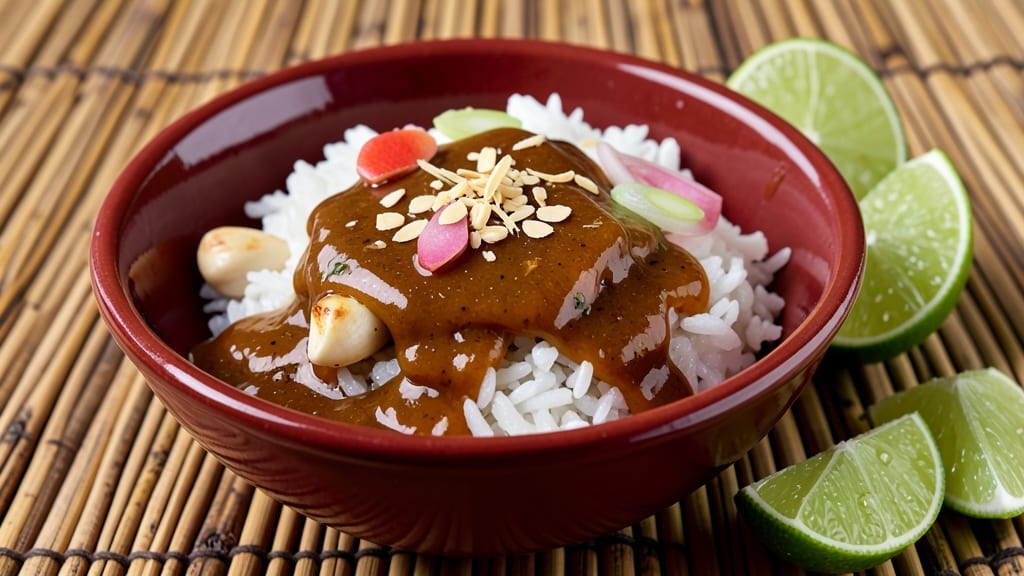
This authentic Thai sauce recipe captures the soul of street-side dining in minutes—where tangy, spicy, and umami flavors collide in perfect balance. The secret lies in the harmony of fish sauce, lime, and palm sugar, simmered just enough to meld without losing their bright, vibrant essence.
I’ve perfected this version over years of testing, ensuring every spoonful delivers that signature Thai restaurant punch without the mystery ingredients. What sets this sauce apart is its versatility—adjust the heat with chili flakes or sweetness with extra sugar, depending on your taste.
The base ingredients are simple but powerful: garlic, shallots, and a touch of ginger provide depth, while lime juice keeps it fresh and vibrant. Unlike store-bought versions, this sauce builds layers of flavor rather than masking them with artificial additives.
The result is a rich, glossy sauce that clings to noodles, grilled meats, or spring rolls, enhancing every bite with a burst of authentic Thai flavor.
It’s the kind of sauce that transforms ordinary dishes into something extraordinary—whether you’re drizzling it over pad thai, tossing it with satay, or using it as a marinade.
Best of all, it keeps beautifully in the fridge for up to a week, so you can make a batch and enjoy it all week long. Let’s get started—your taste buds will thank you.
Ingredients for authentic thai sauce
Nine simple ingredients transform into restaurant-quality Thai sauce with bold umami and tangy brightness.
| Ingredient | Amount | Notes |
|---|---|---|
| Fish Sauce 🐟 | ½ cup | Red Boat preferred for quality |
| Palm Sugar 🍯 | ⅓ cup | Or light brown sugar |
| Lime Juice 🍋 | ¼ cup | Freshly squeezed, no pulp |
| Garlic Cloves 🧄 | 6 cloves | Minced finely for depth |
| Shallots 🧅 | ¼ cup | Finely chopped, not minced |
| Fresh Ginger 🌿 | 1 tbsp | Grated, not powdered |
| Chili Flakes 🌶️ | 1 tbsp | Adjust for heat preference |
| Extra-Virgin Olive Oil 🫒 | ¼ cup | For richness and gloss |
| Water 💧 | ½ cup | For thinning if needed |
| Salt 🧂 | ½ tsp | Kosher or sea salt |
Fish sauce is the soul of this recipe—Red Boat is my go-to, but any good-quality brand works. Palm sugar gives that signature Thai sweetness, but light brown sugar is a perfect swap if you can't find it. Lime juice needs to be fresh (the bottled stuff lacks punch). For the aromatics, garlic and shallots should be finely chopped—no big chunks. Ginger? Freshly grated, not powdered. I grab mine at Asian markets where they keep it cool, but the regular grocery store works too.
No fish sauce? Soy sauce plus a splash of Worcestershire gets you close (though it won't be exactly authentic). Short on palm sugar? Honey or maple syrup at half the amount works in a pinch. Chili flakes can be swapped for fresh red chili or Thai bird's eye chili—just adjust the quantity. The olive oil adds richness, but avocado oil works too. If your sauce gets too thick, add water 1 tbsp at a time. And trust me, the salt is crucial—taste as you go!
This sauce keeps beautifully in the fridge for up to 1 week, sealed in a jar with a thin layer of oil on top to preserve freshness. Freezes for 3 months too—portion into ice cube trays for perfect single-use servings. I always double the batch because it disappears fast. The flavor actually improves after sitting overnight as everything melds together—perfect for meal prep!
Why You'll Love This Recipe
- Five-Ingredient Magic: I swear by this—just fish sauce, sugar, lime, garlic, and shallots. No fancy pantry trips, no stressing over ratios. Honestly, the first time I made it, I thought, "This can’t be all there is"—but it is. And it’s that good.
- Umami Bomb: That first hit of fish sauce and caramelized palm sugar? Instant flavor explosion. The garlic and shallots toast until they’re fragrant and sweet, then the lime cuts through like a bright, tangy finish. Between us, this sauce has ruined me for store-bought versions.
- Weeknight Superhero: Drizzle it on noodles, toss it with grilled chicken, or use it as a marinade—it’s the MVP of quick meals. I keep a jar in the fridge because, let’s be real, I’m always scrambling for dinner ideas. It turns even the simplest protein into something special.
- Budget-Friendly Staple: Fish sauce and sugar are cheap, and a little goes a long way. I’ve made this sauce last me two weeks with minimal effort. Plus, the leftovers? Perfect for freezing—just thaw and use. My wallet and taste buds thank me every time.
Step-by-step instructions for authentic Thai sauce
Here's how to craft a vibrant, balanced Thai sauce that delivers restaurant-quality depth.
Sauté Aromatics Until Fragrant
Heat the 0.25 cup extra-virgin olive oil in a small saucepan over medium-low heat. Add the 6 cloves minced garlic cloves and 0.25 cup finely chopped shallots, stirring constantly for 3-4 minutes until the shallots soften and become translucent. You'll smell that sweet, oniony aroma—this is your foundation.
Here's the thing—don't let the garlic brown or it'll turn bitter. I like to keep the heat low and stir frequently so the aromatics cook gently. Add the 1 tablespoon grated fresh ginger and cook for another 1 minute until fragrant. The ginger should mellow out rather than dominate—this prevents an overpowering bite in your sauce.
Add Chili Flakes and Sugar for Depth
Increase heat to medium and stir in the 1 tablespoon chili flakes, cooking for 30 seconds until the flakes darken slightly and release their aroma. This step builds the sauce's signature heat profile. Immediately add the 0.33 cup palm sugar and stir for 1 minute until the sugar begins to dissolve and caramelize just slightly.
Watch closely—you want the sugar to melt completely but not burn. If it starts to darken too quickly, reduce heat to low. The sugar will balance the acidity later, creating that perfect sweet-savory contrast. This is where the sauce's complexity begins to develop.
Incorporate Wet Ingredients for Balance
Pour in the 0.25 cup lime juice and 0.5 cup fish sauce, stirring continuously. The mixture will bubble vigorously—this is normal. Let it simmer for 2-3 minutes until the sauce thickens slightly and the raw lime aroma mellows into something more refined. You'll notice the sauce turning glossy and cohesive.
Add the 0.5 cup water and 0.5 teaspoon salt, then bring to a gentle simmer. Taste at this point—you should detect the garlic, shallots, and ginger as distinct notes, with the fish sauce adding umami depth. This is your flavor baseline before final adjustments.
Simmer and Adjust to Perfection
Reduce heat to low and let the sauce simmer uncovered for 5-7 minutes, stirring occasionally. This slow cooking allows the flavors to meld while the sauce reduces slightly. You're aiming for a consistency that coats the back of a spoon but isn't syrupy.
Taste again and make final adjustments: Need more heat? Add a pinch of chili flakes. Too sharp? A tiny bit more sugar. Too salty? A splash of water to dilute. The sauce should be vibrant, with bright acidity, balanced sweetness, and lingering umami. Real talk: This is where most home cooks stop—don't skip the tasting and adjusting!
Pro Tips For Making Authentic Thai Sauce
- CHAR THE SHALLOTS FIRST: Don’t just toss them in raw—get that pan hot and sear the shallots until they’re deep golden, almost caramelized. I used to rush this, and the sauce tasted flat. Now I wait until the edges crisp slightly before adding garlic, which adds a smoky depth you won’t get otherwise.
- MEASURE FISH SAUCE BY SMELL: Fish sauce varies wildly in saltiness. Start with half the recipe’s amount, taste, then adjust—it should taste slightly fishy but balanced. I learned this the hard way by overdoing it once and ruining a whole batch. Trust your nose, not the bottle’s instructions.
- LOW AND SLOW WITH THE SUGAR: Once you add palm sugar, drop the heat to a simmer. Let it melt fully and bloom into the sauce gradually, or you’ll end up with grainy bits that ruin the texture. Sounds weird, but it works—no one wants to bite into a sugar crystal mid-bite.
- ACID IN STAGES: Add half the lime juice at the start, then save the rest for the end. This keeps the sauce from curdling or turning bitter too fast. I was skeptical until I tried it—now I never skip it, especially if the sauce sits for more than 10 minutes.
Perfect pairings for authentic thai sauce
Noodle Pairings
This sauce transforms rice noodles into a Thai street-food masterpiece. Toss 8 ounces cooked rice noodles with 2 tablespoons sauce, 1 cup bean sprouts, and ½ cup sliced cucumber.
Top with crushed peanuts and fresh cilantro for texture and freshness. For extra richness, add 2 tablespoons coconut milk to the sauce before serving. 🥢
Grilled Meats
Use this sauce as a marinade or glaze for chicken skewers or pork tenderloin. Marinate 1.5 lbs meat for 2-4 hours in ½ cup sauce mixed with 1 tbsp soy sauce.
Grill over medium-high heat for 6-8 minutes per side, basting with extra sauce. The caramelized exterior and tangy interior are unbeatable. 🍗
Spring Rolls
Dip homemade or store-bought spring rolls in this sauce for an instant flavor upgrade. Warm ¼ cup sauce with 1 tsp honey and a splash of water to loosen.
Serve alongside sweet potato spring rolls or shrimp wraps for a restaurant-style experience. Garnish with lime wedges and chili slices for extra zing. 🥟
Stir-Fry Base
This sauce elevates any stir-fry in 5 minutes. Toss 2 cups mixed veggies (bell peppers, broccoli, snap peas) with 3 tbsp sauce and 1 tbsp sesame oil. Add ½ lb shrimp or chicken breast and stir-fry over high heat for 4-5 minutes.
Finish with 1 tbsp soy sauce and 1 tsp toasted sesame seeds. 🥦
Dipping Sauce
Thin the sauce with 2 tbsp water for the perfect dipping sauce. Serve with satay sticks, grilled tofu, or crispy spring rolls. For extra depth, stir in 1 tsp tamarind paste or ½ tsp fish sauce after thinning. The glossy consistency makes it irresistible for dipping. 🍢
Soup Enhancer
Add 2 tbsp sauce to tom kha soup or pho just before serving. The umami and tang cut through the coconut milk richness, balancing flavors perfectly. For a quick upgrade, stir 1 tbsp sauce into hot and sour soup and adjust with extra lime or chili. 🍜
Nutrition facts
Frequently asked questions
Can I make this Thai sauce without fish sauce?
Yes! For a vegetarian version, replace the fish sauce with ½ cup soy sauce plus 1 tbsp Worcestershire sauce (or 1 tbsp coconut aminos for a gluten-free option). The umami will be slightly different but still delicious. For extra depth, add ½ tsp miso paste. The sauce will taste more savory than traditional, but it works beautifully for dipping or stir-fries!
How do I adjust the heat level in this sauce?
Start with the 1 tbsp chili flakes as written for a mild-medium heat. For spicier sauce, add ½ tsp extra chili flakes or 1-2 finely chopped Thai bird's eye chilies (seeds in for extra kick). If you prefer no heat, simply omit the chili flakes entirely—your sauce will still be tangy and sweet. Always taste as you go!
Can I make this sauce in advance?
This sauce actually tastes better after resting. Make it 1-2 days ahead and store in an airtight container in the fridge. The flavors meld beautifully over time. For longer storage, freeze in ice cube trays for perfect single-use portions. Thaw overnight in the fridge before using. The texture may thicken slightly when refrigerated—just stir in 1 tsp water to loosen before using.
What's the best way to use leftover Thai sauce?
Leftover sauce is incredibly versatile! Use it as a marinade for grilled chicken or tofu, a dipping sauce for spring rolls or satay, or a stir-fry base. Thin it with 1-2 tbsp water if needed for dipping. For extra richness, stir in 1 tbsp coconut milk before serving. It also makes an amazing glaze for baked fish—just brush on and broil for 3-4 minutes.
Why does my sauce look cloudy instead of glossy?
Cloudiness usually means the sauce needs more simmering time or a touch of oil. Return your sauce to low heat and simmer uncovered for another 3-5 minutes, stirring occasionally. For extra shine, stir in 1 tsp olive oil or ½ tsp cornstarch mixed with 1 tbsp water. The gloss comes from the emulsification of oil and water in the sauce—this is what makes it look professional and appetizing!