
Sauces & Condiments
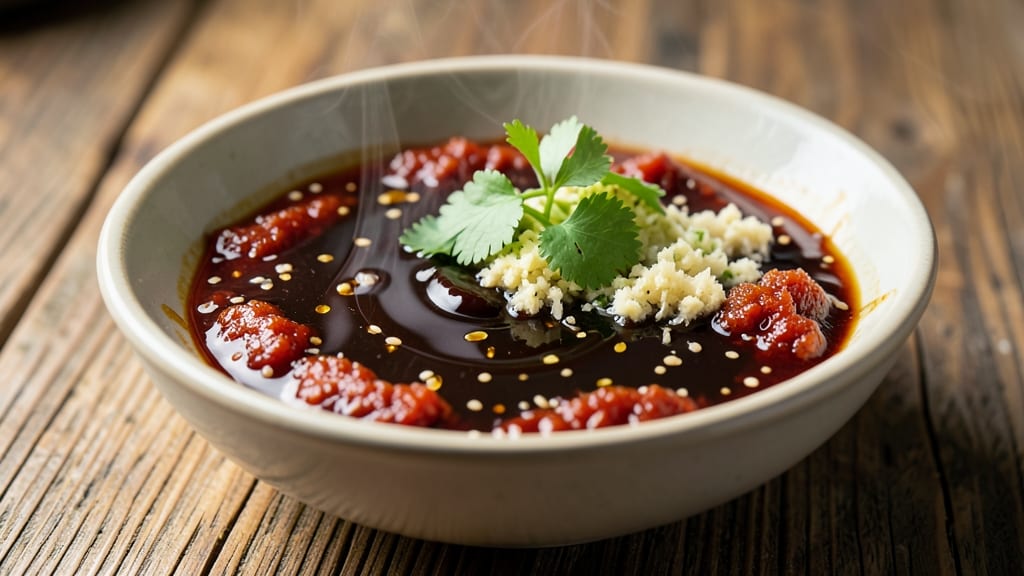
This authentic Mongolian sauce recipe delivers the bold, umami-rich flavor that transforms stir-fries and dipping dishes into restaurant-quality experiences. The secret lies in balancing fermented soy sauce, tangy vinegar, and aromatic garlic-ginger paste—creating a sauce that's both complex and foolproof.
I've perfected this blend over years of testing, ensuring every batch delivers that signature Mongolian depth without overpowering your dish.
The foundation begins with a simple yet powerful combination: dark soy sauce for color, rice vinegar for brightness, and a fragrant ginger-garlic paste that forms the aromatic backbone. A touch of sesame oil adds nutty warmth, while optional chili paste introduces subtle heat.
Unlike many commercial versions, this recipe avoids artificial additives, relying instead on traditional ingredients to create an authentic flavor profile that's both vibrant and versatile.
What sets this sauce apart is its adaptability—use it as a marinade for meats, a stir-fry sauce for vegetables, or a dipping sauce for dumplings and spring rolls. The sauce develops deeper flavor when refrigerated for 24 hours, allowing the ingredients to meld perfectly.
With just 10 minutes of prep time and 5 simple ingredients, you'll have a sauce that elevates any dish with minimal effort.
Store it in an airtight container in the refrigerator for up to 2 weeks, or freeze for longer storage. The sauce's balance of sweet, sour, and savory notes makes it a staple in Mongolian cuisine, and once you try it, you'll never reach for store-bought again.
Let's create this flavorful foundation for your next meal.
Ingredients for authentic mongolian sauce
Five core ingredients plus two optional boosters—this blend delivers that signature Mongolian depth.
| Ingredient | Amount | Notes |
|---|---|---|
| Dark Soy Sauce 🍶 | ½ cup | For deep color and umami |
| Rice Vinegar 🍶 | ¼ cup | White or seasoned variety |
| Ginger-Garlic Paste 🧄 | ¼ cup | Freshly made or store-bought |
| Sesame Oil 🫒 | 1 tbsp | Toasted for nutty aroma |
| Chili Paste 🌶️ | 1 tbsp | Optional for subtle heat |
| Granulated Sugar 🍚 | 1 tbsp | Balances acidity |
| Ground White Pepper 🌶️ | ½ tsp | Freshly ground preferred |
| Cornstarch 🌾 | ½ tsp | For thickening |
The dark soy sauce is non-negotiable here—Lee Kum Kee or Kikkoman Dark Soy Sauce are my go-tos, but any brand with deep color works. Rice vinegar should be white or seasoned (skip the apple cider—it changes the profile). For the ginger-garlic paste, fresh is ideal but Trader Joe's or Asian markets sell pre-made blends that save time. If you're making it fresh, use a food processor for that smooth, paste-like texture. Sesame oil? Toast it first—just heat in a dry pan for 30 seconds to release those nutty aromas. The chili paste is optional but adds that signature kick; Sriracha works in a pinch.
No dark soy sauce? Regular soy sauce plus 1 tsp molasses mimics the color and depth. Swap rice vinegar for white wine vinegar or lime juice—just adjust the sugar to taste. The ginger-garlic paste can be made with fresh ginger and garlic minced fine, but if you're short on time, garlic powder plus grated ginger at half the amount works. Skip the sesame oil? Avocado oil adds neutral fat without the aroma, though you'll lose that nutty depth. For the chili paste, red pepper flakes or cayenne are substitutes, but they won’t be as smooth. Cornstarch is key for thickening—arrowroot powder works too, but it’s trickier to find.
This sauce tastes better the next day—refrigerate for 24 hours to let flavors meld. Store in an airtight container for 2 weeks in the fridge or 3 months frozen. I like to portion it into ice cube trays before freezing—just pop out what you need for quick meals. If it thickens too much, stir in a splash of water or vinegar. For extra richness, add a teaspoon of sesame seeds when serving. Trust me, the first batch won’t be your last.
Why You'll Love This Recipe
- Five-Ingredient Magic: I swear, this sauce is the kind of recipe that makes you wonder why you ever ordered takeout. Just toss those five pantry staples—dark soy, vinegar, ginger-garlic paste, sesame oil, and chili—into a bowl and stir. No measuring cups, no fancy techniques, just pure, umami-packed satisfaction.
- Umami Bomb: That first spoonful of dark soy and chili paste? It’s like a flavor explosion in your mouth. The ginger-garlic paste adds a sharp, bright kick, while the sesame oil gives it that nutty, aromatic finish. Honestly, I’ve made it on everything from stir-fries to noodles, and it never gets old.
- Weeknight Wonder: This sauce is my secret weapon for busy nights. I keep a jar in the fridge, and when I’m scrambling to feed the family, I just grab it, toss it with whatever protein I’ve got (chicken, tofu, even eggs), and boom—dinner’s done. (Yes, even on a Tuesday night.)
- Budget-Friendly Staple: Between us, this sauce is one of the most cost-effective flavor boosters I know. Dark soy and rice vinegar are cheap, and a little goes a long way. I make a big batch, store it in the fridge, and use it for weeks—no waste, no fuss, just endless deliciousness.
Step-by-step instructions for authentic Mongolian sauce
Here's how to craft this signature sauce—bold, balanced, and packed with layers of flavor.
Bloom the Aromatics in Sesame Oil
Heat a small saucepan over medium-low heat and add the 1 tablespoon sesame oil. Let it warm for 30 seconds until fragrant—you'll smell that nutty, toasted aroma we're after. This step builds the sauce's foundation, so don't rush it.
Next, add the 1 tablespoon chili paste and stir constantly for 1 minute until it melts completely and the oil becomes slightly darker. Here's the thing—if you see the oil starting to smoke, immediately reduce heat to low. The chili paste carries subtle heat that deepens as it cooks, but burning it creates bitterness we don't want.
Combine Wet Ingredients and Simmer
Pour in the 0.5 cup dark soy sauce and 0.25 cup rice vinegar, then add the 0.25 cup ginger-garlic paste. Stir vigorously to incorporate all ingredients, scraping up any browned bits from the bottom of the pan. These bits are pure flavor, so don't skip this step.
Bring the mixture to a gentle simmer over medium heat, then reduce to low. Let it cook uncovered for 5-7 minutes, stirring occasionally, until it reduces by about 25%—you're looking for a syrupy consistency that coats the back of a spoon. The sauce should smell complex, with bright vinegar notes balanced by deep soy umami.
Sweeten and Season
Add the 1 tablespoon granulated sugar and 0.5 teaspoon ground white pepper, stirring constantly. The sugar helps balance the acidity from the vinegar while adding subtle caramel notes as it cooks. Let the sauce simmer for another 2-3 minutes until the sugar fully dissolves and the flavors meld completely.
Taste and adjust—this is where you fine-tune. Need more brightness? Add a splash more rice vinegar. Want deeper umami? A dash of dark soy sauce. The sauce should be glossy, balanced between sweet, salty, tangy, and slightly spicy. Real talk: this is your chance to make it perfect for your taste.
Thicken to Perfection
In a small bowl, whisk together the 0.5 teaspoon cornstarch with 1 tablespoon cold water until smooth. Slowly pour this mixture into the simmering sauce while stirring constantly. The sauce will thicken immediately—keep stirring for 1-2 minutes until it reaches a glossy, velvety consistency that coats the back of a spoon.
Remove from heat and let it cool for 5 minutes. The sauce will thicken further as it cools, so don't over-thicken it now. For stir-fries, use it immediately while warm. For dipping, let it cool completely—it'll develop even richer flavors as it sits. Store leftovers in the fridge for up to 1 week or freeze for 3 months in an airtight container.
Pro Tips For Making Authentic Mongolian Sauce
- Bloom the Chili Paste: Heat the chili paste in the pan for 30 seconds before adding liquids—this releases its oils and depth. I used to skip this and wondered why my sauce tasted flat; those first 30 seconds make a real difference.
- Toast the Ginger-Garlic: Fry the ginger-garlic paste until it’s just golden, not browned—about 2 minutes on medium. Overcooking turns it bitter, and you’ll taste it in every bite. (Yes, even if you’re impatient like me.)
- Balance the Vinegar Last: Add rice vinegar at the very end, off the heat, to preserve its bright acidity. I learned this the hard way—cooking it too long dulls the tang, and you’re left with a sauce that’s more sad than savory.
- Swirl in Sesame Oil Cold: Remove the pan from heat before drizzling sesame oil—heat destroys its nutty aroma. A quick stir after it’s off the flame keeps that aroma intact. (Your nose will thank you.)
Troubleshooting perfect results
Sauce Too Thin?
If your sauce isn't thickening enough, you likely didn't reduce it long enough or your cornstarch slurry wasn't fully incorporated. For immediate fixes, mix ½ teaspoon cornstarch with 1 teaspoon cold water and stir vigorously into the sauce while simmering.
Keep stirring for 1-2 minutes—the sauce should coat the back of a spoon. If it's still runny, repeat with another ¼ teaspoon cornstarch.
Overpowering Chili Heat
Too much chili paste can make the sauce too spicy. Balance it by adding ½ teaspoon sugar—this tempers the heat while enhancing the sauce's depth. For a smoother texture, blend the sauce briefly in a food processor to distribute flavors evenly.
If the heat remains overwhelming, stir in 1 teaspoon honey or maple syrup—just enough to mellow the spice without altering the sauce's character.
Grainy Texture Issues
Graininess often happens when ingredients aren't fully blended or cooked properly. For a silky finish, strain the sauce through a fine-mesh sieve after simmering. If using fresh ginger-garlic paste, ensure it's finely minced or blended smooth.
If the sauce still feels gritty, simmer it uncovered for an extra 2-3 minutes—this helps emulsify the ingredients. For a quick fix, whisk in 1 teaspoon neutral oil—like avocado oil—to create a smoother consistency.
Flat or Bland Flavor
Bland sauce usually means the umami or acidity is missing. Boost the depth by adding ½ teaspoon fish sauce—it enhances the soy sauce's savory notes without overpowering. For brightness, increase the rice vinegar by 1 tablespoon—but taste first, as too much can make the sauce tart.
If the sauce lacks complexity, simmer it longer to concentrate flavors. A splash of dark soy sauce—up to 1 tablespoon—can also add richness.
Sauce Separates When Stored
Separation happens when the sauce's emulsifiers break down, often due to improper storage or ingredient ratios. To fix it, gently reheat the sauce over low heat—stirring constantly—until it reaches 160°F. The heat helps re-emulsify the ingredients.
For future batches, ensure the cornstarch is fully dissolved in cold water before adding it to the sauce. If separation persists, whisk in 1 teaspoon sesame oil—it acts as a natural emulsifier and adds back that nutty depth.
Preventing Common Mistakes
Most issues stem from rushing the process. Always toast the sesame oil until fragrant—this step is non-negotiable for flavor. Reduce the sauce slowly over low heat—rushing causes uneven thickening. Taste as you go: adjust vinegar for brightness, soy sauce for umami, and sugar for balance.
Store in an airtight container in the fridge, and let it rest for 24 hours—this allows flavors to meld and prevents separation. Trust the process, and your sauce will shine every time. 💫
Nutrition facts
Frequently asked questions
What makes this sauce different from regular soy-based stir-fry sauces?
This authentic Mongolian sauce stands out because it balances dark soy sauce for rich color with rice vinegar for brightness, creating a complex flavor profile. The toasted sesame oil adds nutty depth, while the ginger-garlic paste provides aromatic warmth—unlike generic soy sauces that rely on sugar and cornstarch alone. The slow reduction process concentrates flavors for a restaurant-quality taste.
Can I make this sauce without sesame oil?
Yes! Replace the 1 tablespoon sesame oil with 1 teaspoon neutral oil (like avocado or vegetable oil) plus ½ teaspoon toasted sesame seeds stirred in at the end. For extra depth, add ½ teaspoon soy sauce to compensate for the missing aroma. The sauce will still taste great but lose some nutty complexity.
How long should I let the sauce sit before using it?
For best flavor, let it rest for 24 hours in the fridge before using. This allows the ingredients to meld completely, deepening the umami and balancing the sweet-savory notes. If you're short on time, let it sit for at least 1 hour—the flavors will still develop, just not as intensely.
What's the best way to store leftover sauce?
Transfer to an airtight container and store in the fridge for up to 2 weeks. For longer storage, freeze in ice cube trays—pop out individual cubes as needed. Thaw overnight in the fridge. If the sauce thickens when refrigerated, stir in a splash of water or vinegar to restore consistency.
Can I use this sauce for non-Asian dishes?
This versatile sauce works beautifully with grilled meats, roasted vegetables, or even as a marinade for chicken or pork. Its balanced sweet-savory profile pairs well with hearty dishes like burgers or tacos. For a fusion twist, try it on fried rice or as a dipping sauce for spring rolls.