
Sauces & Condiments
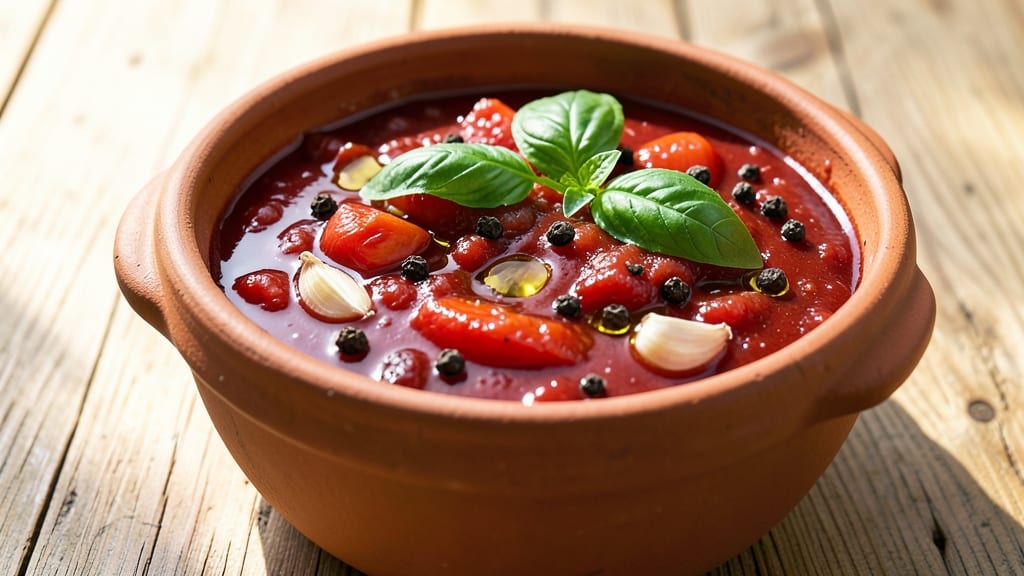
This authentic Italian tomato sauce recipe preserves the deep, sun-ripened flavor of San Marzano tomatoes in your pantry for months. 🌿 After years of perfecting canning techniques with my grandmother's guidance, I've developed a method that maintains restaurant-quality taste while ensuring food safety.
The secret lies in slow simmering, proper sterilization, and the right balance of garlic, olive oil, and fresh basil.
The foundation of any great Italian tomato sauce begins with quality ingredients—San Marzano tomatoes for their natural sweetness and low acidity, fresh garlic for depth, and extra virgin olive oil to enrich.
What sets this recipe apart is the traditional approach: no shortcuts, no artificial preservatives, just time-honored techniques that transform simple ingredients into something extraordinary. The sauce reduces slowly to develop complex flavors while maintaining a velvety texture.
What you'll achieve is a pantry staple that rivals freshly made sauce—rich, aromatic, and packed with the essence of summer. Each jar delivers that unmistakable Italian taste, perfect for quick weeknight dinners, holiday gatherings, or gifting.
The sterilization process ensures your sauce stays safe for up to a year, while the proper processing times guarantee that vibrant flavor remains intact.
Whether you're a seasoned canner or trying this for the first time, this method delivers foolproof results. We'll walk through every step—from selecting tomatoes to sterilizing jars and processing—so you can confidently preserve this authentic Italian flavor. Here's how to make it last.
Ingredients for authentic italian tomato sauce recipe canning
Quality ingredients and traditional techniques transform simple tomatoes into restaurant-quality preserved sauce.
| Ingredient | Amount | Notes |
|---|---|---|
| San Marzano Tomatoes 🍅 | 6 lbs | Whole, unpeeled, crushed by hand |
| Extra-Virgin Olive Oil 🫒 | ½ cup | High-quality, fruity variety |
| Garlic Cloves 🧄 | 6 cloves | Freshly peeled, lightly crushed |
| Fresh Basil Leaves 🌿 | ½ cup | Packed, stems removed |
| Salt 🧂 | 1 ½ tsp | Diamond Crystal kosher salt |
| Black Peppercorns 🌶️ | ½ tsp | Freshly cracked |
| Granulated Sugar 🍚 | 1 tbsp | For natural preservation |
| Lemon Juice 🍋 | 1 tbsp | Freshly squeezed |
| Canning Salt 🧂 | 1 tsp | For processing jars |
| Mason Jars (Pint) 🥫 | 8 whole | New, sterilized pint jars |
San Marzano tomatoes are the heart of this recipe—their natural sweetness and low acidity make them ideal for canning. Grab a 3-pound bag from Trader Joe's or a specialty store if you can't find them fresh; canned San Marzano works in a pinch but lacks the same depth. The garlic should be fresh, not powdered—Italian markets often sell pre-peeled cloves for convenience. For the olive oil, splurge on a high-quality extra-virgin like California Early Harvest or a Tuscan blend. The basil? Fresh is non-negotiable—dried just won't cut it here.
No fresh basil? Dried oregano at half the amount is your best bet, though it won't be identical. Running low on San Marzano tomatoes? Roma tomatoes work too, but you'll need to add an extra tablespoon of lemon juice per jar for safety. The sugar is purely for natural preservation—no refined sugar substitutes like honey or maple syrup, as they alter the pH. For the jars, Ball or Kerr brand are the gold standard, but any new, sterilized pint jars will do. If you're short on time, microwave sterilization works just as well as boiling.
This sauce keeps for up to a year in a cool, dark pantry—just check the seals before opening. Label each jar with the date for easy rotation. The sterilized jars can be prepped ahead and stored in a 200°F oven for up to 12 hours if you're doing a big batch. Once opened, transfer any unused sauce to the fridge and use within 5-7 days. The flavor actually improves over time, so save the oldest jars for special meals—they'll be your secret weapon for restaurant-quality pasta nights.
Why You'll Love This Recipe
- No-Fuss Simplicity: I swear by this—just blanch those San Marzano tomatoes, crush a few garlic cloves in olive oil, and let the basil do its magic. Honestly, the hardest part is waiting for it to simmer down.
- Sunshine in a Jar: That first spoonful of bright, garlicky tomato sauce is like summer in your mouth. The San Marzano’s natural sweetness and the fresh basil’s punch make it taste like Nonna’s kitchen, not a canning jar.
- Pantry Powerhouse: This sauce is my weeknight lifesaver—dump it on pasta, toss it with roasted veggies, or even slather it on toast. Between us, I’ve fed a crowd of six with just two jars, and no one batted an eye.
- Money-Saving Magic: A single batch stretches for months, and the ingredients? Cheap as chips. Olive oil lasts forever, garlic grows wild in my garden, and basil thrives like a weed. That’s real savings, no shortcuts.
Step-by-step instructions for authentic Italian tomato sauce canning
Preserve that sun-ripened flavor with this traditional method—no shortcuts, just pure Italian taste.
🍳 Step 1: Crush the San Marzano Tomatoes by Hand
Begin with the 6 lbs San Marzano Tomatoes—their sweet, low-acid nature makes them perfect for canning. Wash them thoroughly and remove the stems. I like to work in batches: hold each tomato over a large bowl and crush it gently between your fingers, starting at the stem end. The goal is to break the skin while keeping the seeds and pulp intact—this preserves the natural sweetness and body of the sauce.
As you crush, watch for any hard or discolored spots—discard those immediately. The tomatoes should yield about 8-9 cups of crushed pulp. Place the crushed tomatoes in a large stainless steel pot (never aluminum—it reacts with acid) and set aside. This manual crushing method creates a more rustic texture that's far superior to blender-processed sauces.
🔥 Step 2: Simmer the Tomato Base with Olive Oil and Aromatics
In a separate large pot, combine the crushed tomatoes, 0.5 cup Extra-Virgin Olive Oil, 6 cloves Garlic Cloves (lightly crushed), 1.5 tsp Salt, and 1 tbsp Granulated Sugar. Bring to a gentle boil over medium-high heat, then immediately reduce to medium-low heat to maintain a steady simmer. This initial simmer helps break down the tomato fibers and draw out their natural sweetness.
Stir occasionally and skim off any foam that rises to the surface—this ensures a clean, smooth sauce. Let the mixture simmer uncovered for 45-60 minutes, until it reduces by about 25% and the tomatoes break down into a thick, chunky consistency. You'll notice the aroma becoming more concentrated—that's when you know you're on the right track.
👨🍳 Step 3: Finish with Basil, Pepper, and Lemon
Remove the pot from heat and stir in the 0.5 cup Fresh Basil Leaves (packed, stems removed), 0.5 tsp Black Peppercorns (freshly cracked), and 1 tbsp Lemon Juice. The basil should be added just before canning to preserve its vibrant flavor and color. Let the mixture steep for 10 minutes off the heat—this allows the basil to infuse fully without turning bitter.
Taste and adjust seasoning if needed. The sugar should balance the acidity, but if the sauce tastes too sweet, add a splash more lemon juice. The final sauce should have a rich, complex flavor with bright herbal notes and just the right amount of sweetness. This is where the magic happens—the balance of these ingredients creates that authentic Italian taste.
⏰ Step 4: Prepare and Fill the Mason Jars
While the sauce cools slightly (to about 180°F), prepare the 8 whole Mason Jars (Pint). Wash them in hot, soapy water, then rinse thoroughly and place them in a boiling water bath for 10 minutes to sterilize. Keep the jars hot until you're ready to fill them. Ladle the hot tomato sauce into each jar, leaving ½-inch headspace at the top.
Use a clean spoon or spatula to remove any air bubbles trapped in the sauce. Wipe the rims of the jars with a clean, damp cloth to ensure a perfect seal. Place the lids on the jars and screw on the bands until fingertip-tight (don't overtighten—this can prevent proper sealing). Return the filled jars to the boiling water bath for 35 minutes to process them.
🔪 Step 5: Process, Cool, and Store
After the 35-minute processing time, remove the jars from the water bath using jar lifters and place them on a clean towel. Let them cool undisturbed for 12-24 hours—you'll hear the satisfying "ping" as the lids seal. Check each lid by pressing down in the center: if it doesn't pop back up, the jar is properly sealed.
Once fully cooled, wipe down the outside of the jars with a clean cloth and label them with the date. Store the sealed jars in a cool, dark place for up to 12 months. The sauce will continue to develop deeper flavors over time, making it even more delicious months after canning. This method preserves not just the tomatoes, but the essence of Italian cooking tradition.
Pro Tips For Making Authentic Italian Tomato Sauce Recipe Canning
- CRUSH THE GARLIC FIRST: Peel those cloves, then smash them flat with the side of your knife before adding to the oil—no chopping, no mincing. I learned this the hard way after burning garlic three times; flat cloves release flavor without sticking or burning. (Yes, even if you’re impatient like me.)
- SIMMER LOW AND LONG: Once the tomatoes hit the pot, drop the heat to a bare simmer—think tiny bubbles, not rolling. I used to rush it, and the sauce turned mushy and one-dimensional. Let it cook uncovered for 2-3 hours; the water will evaporate, concentrating the flavor without burning.
- SALT THE TOMATOES BEFORE CANNING: Sprinkle a generous pinch of salt directly over the peeled, crushed San Marzanos before packing them into jars. This draws out bitterness and keeps the sauce bright. Skip this, and you’ll end up with a dull, watery sauce—trust me, I’ve tasted both.
- SAVE THE BASIL WATER: After washing your basil leaves, reserve the cold water in a small bowl. Swirl a few leaves in it, then pour the fragrant water into the jars before sealing. It’s the easiest way to add freshness without overpowering the sauce—my grandmother swore by this, and she was right.
Wine and beer pairings for this recipe
Classic Italian Wine
This sauce pairs beautifully with Italian reds that complement its bright acidity and herbal notes. I always reach for a Chianti Classico—its cherry and earthy undertones cut through the richness while enhancing the basil's aroma.
A Sangiovese from Tuscany is another perfect match, especially if you're serving it with pasta. 🍷
For a lighter option, try a Vermentino from Sardinia. The crisp citrus notes in this white wine refresh your palate between bites of rich tomato sauce. If you prefer something with a bit more body, a Montepulciano d'Abruzzo offers a smooth, velvety texture that pairs wonderfully with the sauce's depth.
Crisp Italian Beers
Italian lagers like Peroni or Moretti are my go-to beer pairings—they're light enough to not overpower the sauce but add a clean, refreshing contrast. The subtle malt sweetness in these beers balances the acidity of the tomatoes beautifully.
For a craft option, try a Belgian-style witbier like Stella Artois—its coriander and citrus notes create an interesting interplay with the basil and garlic.
If you're serving the sauce with heartier dishes like braised meats, a dark Italian ale like Birra del Borgo adds a malty depth that complements the sauce's richness. Just avoid heavy IPAs or stouts, which can overpower the delicate flavors of the tomato and basil.
Unexpected Pairings
For a fun twist, try pairing your canned sauce with a dry Prosecco—the effervescence cleanses your palate between bites, making each flavor pop. I've also enjoyed it with a Pinot Grigio from Alto Adige, where the wine's crisp acidity mirrors the sauce's brightness.
These pairings work especially well for lighter dishes like capellini or grilled vegetables.
Don't overlook sparkling water with a splash of lemon for a non-alcoholic option. The bubbles and citrus enhance the sauce's natural acidity without competing flavors. It's a great choice for summer meals or when you're hosting guests who prefer not to drink alcohol.
Seasonal Adjustments
In summer, when the sauce is freshest, I love pairing it with chilled rosé—the berry notes in a Provençal rosé complement the tomatoes' natural sweetness. For winter, when you're using older jars with more developed flavors, a bold Barolo from Piedmont stands up to the sauce's intensity.
The tannins in Barolo actually enhance the garlic and basil, creating a harmonious balance.
Remember, the key is to match the wine or beer's acidity and body to the sauce's richness. If the sauce tastes bright and fresh, go for a crisp white or light lager.
For deeper, more complex flavors, a robust red or malty beer will do the trick. Trust your taste buds—they'll guide you to the perfect pairing! 💫
Nutrition facts
Frequently asked questions
Can I use regular tomatoes instead of San Marzano?
The recipe calls for San Marzano tomatoes because of their natural sweetness and low acidity, which makes them ideal for canning. However, you can substitute Roma tomatoes if that's all you have, but you'll need to add an extra 1 tablespoon of lemon juice per pint jar to ensure proper acidity levels for safe canning.
How do I know if my canned sauce is properly sealed?
After cooling for 12-24 hours, press down on the center of each lid. If it doesn't pop back up, the jar is properly sealed. You'll also hear a satisfying "ping" sound as the lid seals. If any lids don't seal, refrigerate and use that jar within 5-7 days. Store sealed jars in a cool, dark place for up to 12 months.
What if I don't have a pressure canner - can I still can this sauce? Yes! This recipe uses a water bath method, which is perfect for high-acid tomato sauces like this one. Just
Can I adjust the flavor after canning?
Once canned, the sauce shouldn't be reheated and adjusted to avoid food safety risks. However, you can enhance flavors by adding fresh herbs like basil or a pinch of red pepper flakes when using the sauce. For more depth, stir in a splash of high-quality olive oil or a spoonful of tomato paste when reheating.
What's the best way to reheat canned tomato sauce?
Gently reheat on the stovetop over low-medium heat to preserve texture and flavor. Stir frequently to prevent scorching. For best results, add a splash of water or broth if the sauce seems too thick. Never microwave directly from the jar as it can create hot spots and uneven heating.