
Sauces & Condiments
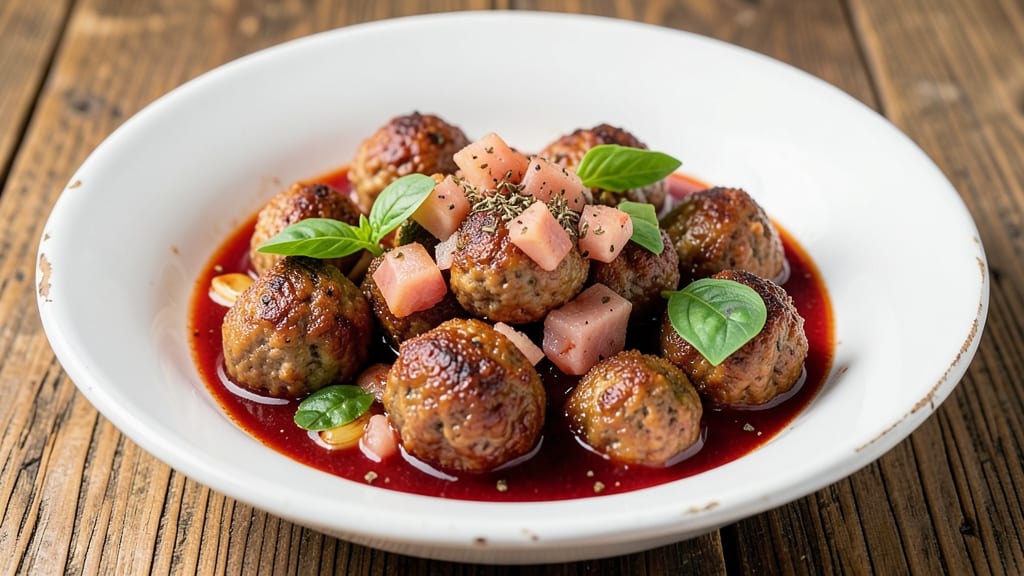
This authentic Italian meatball sauce transforms simple ingredients into a rich, aromatic foundation for weeknight dinners. The secret lies in slow simmering—where tomatoes deepen, garlic mellows, and herbs unfold into layers of flavor that cling to every forkful.
I’ve perfected this recipe over years of testing, ensuring it delivers restaurant-quality depth without requiring hours in the kitchen.
What sets this sauce apart is its balance: bright San Marzano tomatoes provide acidity, while red wine and pancetta add umami richness. Fresh basil and oregano infuse the aroma, and a touch of sugar rounds out the acidity for perfect harmony.
The sauce thickens naturally as it simmers, creating a velvety consistency that coats meatballs beautifully.
Ready in under 45 minutes, this sauce stays vibrant for days, making it ideal for meal prep. Whether paired with homemade meatballs, pasta, or grilled chicken, its bold flavors elevate any dish. The key is patience—letting the sauce develop on the stove ensures every spoonful tastes like Nonna’s kitchen.
Store it in the fridge for up to a week or freeze for months, so you always have a taste of Italy at your fingertips. Here’s how to make it—simple steps for a sauce that tastes like tradition.
Ingredients for authentic italian meatball sauce
Nine ingredients, one pot, all the Italian flavor you crave for meatballs or pasta.
| Ingredient | Amount | Notes |
|---|---|---|
| San Marzano Tomatoes 🍅 | 28 oz | Canned, whole peeled tomatoes |
| Red Wine 🍷 | ½ cup | Bold dry variety like Cabernet |
| Pancetta 🥓 | 4 oz | Diced, substitute bacon if needed |
| Garlic Cloves 🧄 | 4 cloves | Minced for aromatic depth |
| Fresh Basil Leaves 🌿 | ½ cup | Chopped, stems removed |
| Dried Oregano 🍃 | 1 tsp | Italian preferred for authenticity |
| Extra-Virgin Olive Oil 🫒 | 2 tbsp | For sautéing pancetta |
| Granulated Sugar 🍬 | 1 tsp | Balances acidity |
| Salt 🧂 | 1 tsp | Kosher or sea salt |
| Black Pepper 🌶️ | ½ tsp | Freshly ground preferred |
San Marzano tomatoes are non-negotiable here—they’re sweeter and less acidic than regular canned tomatoes. Trader Joe's and Whole Foods carry them year-round, but Italian markets often have them too. The pancetta adds that unmistakable umami—ask the butcher to dice it thinly if you’re buying a whole piece. Fresh basil is ideal, but dried oregano works at half the amount if you’re in a pinch. I always grab extra basil because half gets torn over the top at the end.
No red wine? Substitute beef broth with a splash of balsamic vinegar—it’s the closest you’ll get. Pancetta unavailable? Smoked bacon or guanciale works just as well. The sugar might seem odd, but it’s essential—it rounds out the acidity of the tomatoes and wine, giving that perfect balance. Fresh basil wilted? Freeze it in ice cube trays with olive oil, then thaw as needed. The garlic should be minced finely—no big chunks—or it’ll be noticeable in every bite.
This sauce tastes even better the next day as flavors meld. Store it in the fridge for up to 1 week or freeze for 3-4 months—just thaw in the fridge overnight. I double the batch and freeze half because it’s perfect for lazy weeknights. The sauce thickens as it cools, so you can thin it with a splash of water or broth if needed. Leftovers? Freeze in portion-sized containers for quick pasta nights.
Why You'll Love This Recipe
- No-Sweat Simplicity: I swear, this sauce comes together while you’re still debating what to watch on Netflix. Pancetta renders in 10 minutes, garlic sizzles in a flash, and those San Marzano tomatoes? Just crush, dump, and let them do their magic.
- Wine-Infused Magic: That splash of red wine isn’t just for show—it deepens the flavor into something rich and complex, like a secret handshake between the tomatoes and basil. Honestly, I’ve tried shortcuts, but nothing beats this balance.
- Weeknight to Dinner Party: Same sauce, endless uses. Slap it over spaghetti for a lazy Tuesday, or serve it in a bread bowl for Sunday guests. The pancetta adds a salty crunch that makes it feel fancy without the fuss.
- Leftovers That Don’t Suck: Between us, most sauces dry out or taste sad the next day. Not this one. The wine keeps it vibrant, and the basil stays bright—so I make double batches and freeze it. Thaw, reheat, and boom: instant Italian night.
Step-by-step instructions for authentic Italian meatball sauce
This isn't your basic tomato sauce—it's a rich, layered simmer that builds flavor step by step.
Render the Pancetta for Deep Flavor
Heat the 2 tablespoons extra-virgin olive oil in a large, heavy-bottomed pot over medium-low heat. Add the 4 ounces diced pancetta and cook until the fat renders out and the pancetta becomes crispy around the edges—about 8-10 minutes. This step is crucial; don't rush it. The rendered fat carries all the meaty flavor into the sauce.
Once the pancetta is golden and crisp, use a slotted spoon to remove it from the pot, leaving the fat behind. Set the pancetta aside for later—you'll add it back in at the end. The fat should coat the bottom of the pot, creating a flavorful base for your sauce. If you're substituting bacon, make sure to drain it well to avoid a greasy sauce.
Sauté Aromatics Until Fragrant
Reduce the heat to low and add the 4 minced garlic cloves to the pancetta fat. Sauté gently for 1-2 minutes until the garlic is fragrant but not browned—this prevents bitterness. Stir constantly to avoid burning. The garlic should smell like a warm Italian kitchen, not like a hospital.
Next, add the 1 teaspoon dried oregano and stir for 30 seconds to toast the spices lightly. This step wakes up the flavors, making them more vibrant. If you're using fresh oregano, add it now instead—just 1 teaspoon—but dried works perfectly fine for this sauce. The spices should dissolve into the fat, creating a fragrant foundation for the sauce.
Deglaze with Wine and Simmer the Tomatoes
Pour in the ½ cup red wine and increase the heat to medium. Let the wine simmer for 3-4 minutes until it reduces by about half and the alcohol cooks off. You'll smell the wine's depth intensify as it reduces—this is where the sauce starts to come together. Don't walk away; the wine can burn quickly.
Add the 28 ounces San Marzano tomatoes, crushing them gently with your hands as you add them to the pot. Stir in the 1 teaspoon salt, ½ teaspoon black pepper, and 1 teaspoon granulated sugar. The sugar balances the acidity of the tomatoes, while the salt and pepper round out the flavors. Bring the sauce to a gentle simmer, then reduce the heat to low and let it cook uncovered for 20-25 minutes. Stir occasionally to prevent sticking.
Finish with Basil and Crispy Pancetta
After the sauce has simmered, stir in the ½ cup chopped fresh basil leaves. The basil adds a bright, fresh finish that cuts through the richness of the tomatoes and pancetta. Taste the sauce and adjust the seasoning if needed—you might need a little more salt or sugar to balance the flavors. This is your chance to perfect it.
Return the crispy pancetta to the pot and stir gently to distribute it throughout the sauce. Let the sauce simmer for another 5 minutes to let the flavors meld. The pancetta should be warm but still crispy. Serve the sauce immediately over pasta, meatballs, or polenta. The longer it sits, the deeper the flavors become, but it's best enjoyed fresh for that restaurant-quality taste.
Pro Tips For Making Authentic Italian Meatball Sauce
- DEGLaze WITH WINE FIRST: After cooking the pancetta, pour in the red wine before adding tomatoes—this pulls all the crispy fat and flavor into the sauce immediately. I used to skip this, and the sauce always tasted flat until I realized how much flavor gets left behind.
- CRUSH TOMATOES BY HAND: Skip the blender—roughly crush San Marzano tomatoes with your fingers or a wooden spoon to keep some texture and prevent a gluey sauce. My grandmother did this, and the sauce always had that perfect balance of chunk and smoothness.
- LOW AND SLOW AFTER BOIL: Once the sauce starts simmering, drop the heat to a gentle bubble—too high, and it’ll turn bitter or separate. I learned this the hard way after burning three batches; now I keep it at a whisper of a simmer for at least 45 minutes.
- SAUTE GARLIC JUST UNTIL FRAGRANT: Cook the garlic cloves in pancetta fat for no more than 30 seconds—just until they’re soft and smell amazing, not browned. Overcooking turns them bitter, and that ruins the whole dish. (Yes, even if you’re impatient like me.)
Serving suggestions for leftovers
Pasta Pairings
This sauce clings beautifully to short, ridged pasta shapes like tonnarelli or rigatoni, where the grooves trap every flavorful bite. I always cook 12 ounces pasta per serving, reserving ½ cup pasta water to thin the sauce if needed.
For a lighter option, try orecchiette—its ear-like shape cradles the sauce perfectly. 🍝
For a heartier meal, pair with bucatini or pappardelle, which hold up to the sauce's richness. Toss the cooked pasta directly in the pot with the sauce, adding reserved pasta water gradually to reach your desired consistency.
The sauce will thicken as it cools, so start with slightly less than you think you need.
Meatball Serving
Serve the sauce over homemade meatballs for a classic Italian experience. I recommend baking 12-15 meatballs (about 1.5 inches in diameter) alongside the sauce, then simmering them in the sauce for the final 10 minutes of cooking. This ensures they absorb the sauce's flavors deeply. 🥩
For a quick weeknight dinner, arrange the meatballs in a single layer on a baking sheet, then spoon the sauce over them. Broil for 3-5 minutes until bubbly and golden. Garnish with extra crispy pancetta and fresh basil for that restaurant-quality finish.
Bread & Polenta
Use the sauce as a dipping sauce for crusty Italian bread, like ciabatta or focaccia. Warm the bread slightly in the oven, then dip it into the sauce for an easy appetizer. The sauce's richness pairs perfectly with the bread's airy texture. 🍞
For a comforting side, serve the sauce over creamy polenta or mashed potatoes. The sauce's acidity cuts through the richness of the polenta, creating a balanced dish. I like to serve it with a sprinkle of Parmigiano-Reggiano for added depth.
Garnish Ideas
Finish your dish with fresh basil leaves torn by hand for a bright, aromatic touch. A sprinkle of grated Parmigiano-Reggiano adds a salty, nutty contrast. For extra flair, top with crispy fried shallots or toasted pine nuts—both add texture and a hint of sweetness. 🌿
If you love heat, add a pinch of red pepper flakes or a drizzle of hot honey to the sauce before serving. The heat balances the sauce's richness beautifully, adding a layer of complexity that elevates the dish.
Nutrition facts
Frequently asked questions
Why does this sauce use red wine instead of broth?
The red wine adds depth and complexity that broth can't match. The alcohol cooks off during simmering, leaving behind rich, fruity notes that enhance the tomatoes' natural sweetness. For a vegetarian version, substitute with beef broth plus 1 tablespoon balsamic vinegar to mimic the wine's acidity.
Can I make this sauce without fresh basil?
Use 1 tablespoon dried basil instead, but add it during the final 5 minutes of simmering to preserve its aroma. For extra flavor, toss in ½ teaspoon dried basil along with the oregano at the beginning, then add more fresh basil at the end if you have any.
How do I fix a sauce that's too acidic?
Add ½ teaspoon sugar or 1 teaspoon honey to balance the acidity. If it's still too sharp, stir in 1 tablespoon tomato paste or a pinch of baking soda (just a pinch!) to neutralize. Always taste as you go—Italian sauces should be bright but never overpowering.
What's the best way to reheat leftovers?
Gently warm the sauce on the stovetop over low heat for 5-7 minutes, stirring occasionally. Avoid boiling, which can break down the tomatoes and make the sauce watery. For extra richness, add 1 tablespoon olive oil or a splash of water to help it cling better.
Can I make this sauce in a slow cooker?
Yes! Follow the same steps until adding the tomatoes, then transfer everything to a slow cooker. Cook on low for 6-8 hours or high for 3-4 hours, stirring occasionally. The slow cooking enhances the flavors even more, but check the seasoning at the end—it may need more salt or sugar.