
Sauces & Condiments
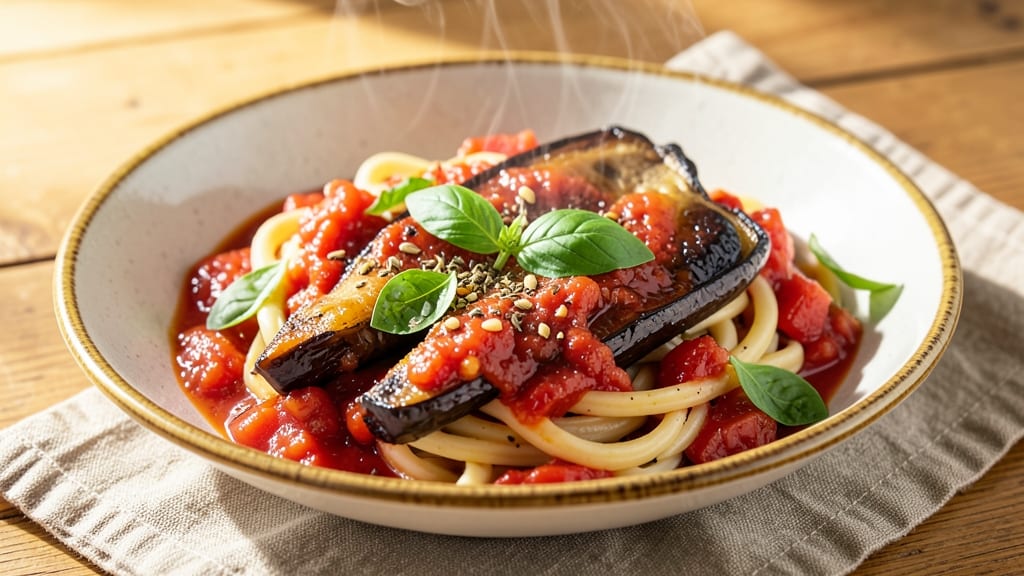
This aubergine pasta sauce recipe transforms humble eggplant into a velvety, smoky masterpiece that clings to every strand of pasta. 🌟 The secret lies in slow-cooked eggplant and tomatoes that meld into a rich, aromatic sauce with just the right balance of sweetness and depth—no dairy required, making it perfect for vegetarians.
What starts as simple ingredients becomes something extraordinary when simmered to perfection.
The sauce begins with charred eggplant and garlic, which infuse the olive oil with intense, smoky flavors. Tomatoes and herbs like basil and oregano round out the base, creating a sauce that’s both hearty and elegant.
The beauty of this recipe is its versatility—use it as a pasta sauce, a dip for crusty bread, or even a topping for grilled meats. It’s the kind of sauce that elevates any dish with minimal effort.
What makes this recipe truly special is how it develops over time. The longer it simmers, the more complex the flavors become, with the eggplant breaking down into a creamy, almost butter-like texture.
A sprinkle of Parmesan at the end adds a touch of richness, but the sauce stands strong on its own. It’s the kind of dish that tastes even better the next day, making it ideal for meal prep.
Storage is a breeze—this sauce keeps in the refrigerator for up to 5 days or can be frozen for months, ensuring you always have a flavorful, ready-made sauce on hand.
Whether you're serving it over al dente pasta or drizzling it over roasted vegetables, this eggplant sauce is a game-changer for any meal. Let’s get cooking!
Ingredients for aubergine pasta sauce
Nine essential ingredients transform simple eggplant into a velvety, restaurant-quality pasta sauce.
| Ingredient | Amount | Notes |
|---|---|---|
| Eggplant 🍆 | 2 lbs | Medium-sized, cut into 1-inch cubes |
| Extra-Virgin Olive Oil 🫒 | ½ cup | High quality, fruity variety |
| Garlic Cloves 🧄 | 6 cloves | Peeled, roughly chopped |
| Canned San Marzano Tomatoes 🍅 | 2 cans | 28 oz each, crushed by hand |
| Fresh Basil Leaves 🌿 | ½ cup | Packed, stems removed |
| Dried Oregano 🍃 | 1 tsp | Mediterranean blend preferred |
| Red Wine Vinegar 🍷 | 1 tbsp | For brightness and acidity |
| Salt 🧂 | 1 ½ tsp | Diamond Crystal kosher preferred |
| Black Pepper 🌶️ | ½ tsp | Freshly ground for best flavor |
| Parmesan Cheese 🧀 | ¼ cup | Freshly grated from block |
Eggplant is the star here—look for firm, glossy skins with no soft spots (Trader Joe's or Whole Foods carry excellent organic varieties). The San Marzano tomatoes make all the difference; their sweetness and low acidity create a balanced sauce. Fresh basil should be vibrant green—avoid wilted leaves. For the olive oil, California extra-virgin brands like Corto or Bertolli elevate the dish with their fruity notes. The Parmesan adds depth, so use freshly grated from a wedge rather than pre-shredded.
No fresh basil? Dried oregano at double the amount works in a pinch, though fresh is ideal. Short on San Marzano? Any high-quality crushed tomatoes will do—just add an extra pinch of salt. For a smokier flavor, swap half the olive oil for smoked paprika. The eggplant can be roasted instead of charred (425°F for 25 minutes), but charring develops deeper caramelized flavors. If you prefer less acidity, reduce the red wine vinegar to 1 teaspoon.
This sauce develops beautifully over time—simmering longer creates a silkier texture. Store in airtight containers for up to 5 days in the fridge, or freeze for 3 months. For meal prep, portion into single servings before freezing. The sauce reheats perfectly, making it ideal for busy weeknights. A sprinkle of Parmesan at serving adds that final touch of richness without overpowering the dish.
Why You'll Love This Recipe
- One-Pan Magic: I swear by this—just grill the eggplant, toss it in a pan with olive oil and garlic until it’s blistered and sweet, then dump in those San Marzano tomatoes. No extra dishes, no fuss, and the smoky aroma fills the kitchen before the sauce even simmers.
- Umami Bomb: That eggplant soaks up the olive oil like a sponge, then caramelizes into something rich and meaty—no actual meat needed. Add the garlic and basil at the end, and suddenly you’ve got a sauce that tastes like it simmered all day, not 20 minutes.
- Leftovers That Don’t Suck: Between us, most pasta sauces turn into a sad, watery mess the next day. Not this one. The eggplant holds up, the tomatoes stay bright, and the basil? I freeze it in portions with a splash of olive oil—reheat with a drizzle, and it’s like new. (Yes, even on a Tuesday night.)
- Budget Flexibility: San Marzano cans and fresh basil might sound fancy, but they stretch this sauce far—feed four tonight, have enough for lunch tomorrow, or freeze half for when you’re too tired to cook. Plus, eggplant is cheaper than it used to be, and a little olive oil goes a long way when you’re roasting it first. Smart spending, great flavor.
Step-by-step instructions for smoky eggplant and tomato pasta sauce
Here's how to transform simple ingredients into a rich, smoky sauce that clings perfectly to pasta.
🔥 Step 1: Roast the Eggplant for Deep Flavor
Preheat your oven to 425°F and line a baking sheet with parchment paper. Arrange the 2 lbs eggplant (cut into 1-inch cubes) in a single layer, leaving space between pieces. Drizzle with 2 tablespoons of the extra-virgin olive oil and sprinkle with ½ teaspoon salt and ¼ teaspoon black pepper.
Roast for 25-30 minutes, stirring once halfway through, until the eggplant is tender when pierced with a fork and has deep golden brown spots. The edges should be slightly charred—this adds that smoky depth we're after. Real talk: If it starts to brown too quickly, tent with foil to prevent burning while keeping the oven hot.
🍳 Step 2: Sauté Garlic and Build the Tomato Base
While the eggplant roasts, heat 2 tablespoons extra-virgin olive oil in a large skillet over medium heat. Add the 6 cloves garlic cloves and sauté for 30-45 seconds until fragrant but not browned—you want to preserve that sweet garlic aroma, not burn it.
Pour in the 2 cans crushed San Marzano tomatoes and stir to combine. Add 1 teaspoon dried oregano, 1 tablespoon red wine vinegar, and the remaining 1 teaspoon salt. Bring to a gentle simmer and cook uncovered for 10 minutes, stirring occasionally, until the sauce thickens slightly and the raw tomato taste mellows into something rich and inviting.
🥘 Step 3: Combine Roasted Eggplant and Simmer
Transfer the roasted eggplant to the skillet with the tomato sauce. Stir gently to combine, letting the eggplant absorb the flavors. The sauce should coat the eggplant pieces—if it looks too thick, add ¼ cup water to loosen it. Return to a simmer and cook for another 15 minutes, stirring occasionally, until the eggplant is completely tender and the flavors meld together.
Here's the thing—this is where the magic happens. The roasted eggplant releases its oils into the tomato base, creating a velvety texture that's neither watery nor cloying. Taste and adjust seasoning if needed, adding a pinch more salt or a crack of pepper to balance the acidity from the vinegar.
🍽️ Step 4: Finish with Fresh Basil and Parmesan
Remove the skillet from heat and stir in the ½ cup fresh basil leaves, using a wooden spoon to chop them slightly as you incorporate. Let the sauce sit for 2 minutes to allow the basil's bright flavors to infuse. Finish with the ¼ cup freshly grated Parmesan cheese, stirring until melted and creamy.
This is the moment that matters: the basil adds that fresh, bright note that cuts through the richness of the eggplant and tomatoes, while the Parmesan ties everything together with its nutty depth. The sauce should be thick enough to cling to pasta but still coat the back of a spoon. If you're serving immediately, keep the sauce warm over low heat—it'll only get better as it sits.
Pro Tips For Making Aubergine Pasta Sauce
- SALT THE EGPLANT FIRST: Toss sliced eggplant with 1 teaspoon salt per pound and let it sit for 20 minutes before cooking. This draws out the bitterness and prevents a soggy sauce—trust me, your taste buds will notice the difference.
- ROAST THE GARLIC: Wrap whole garlic cloves in foil with a drizzle of olive oil, then roast at 400°F (200°C) for 10 minutes alongside the eggplant. The mellow, caramelized flavor beats raw minced garlic every time—no more harsh bite in your sauce.
- CRUSH THE TOMATOES: Skip the blender—use your fingers or a wooden spoon to break up the San Marzano tomatoes by hand. This keeps the sauce chunky and vibrant, and you’ll avoid the gluey texture that comes from over-processing.
- ADD BASIL LATE: Tear the basil leaves and stir them in only during the last 5 minutes of cooking. Fresh basil wilts fast and loses flavor when simmered too long—this keeps it bright and aromatic, like it just came from the garden.
Regional styles of these flavors
Mediterranean Roasted Style
In Mediterranean regions, eggplant pasta sauces often feature roasted eggplant with garlic, tomatoes, and fresh herbs like basil and oregano.
The key here is slow-roasting the eggplant at 400°F for 30 minutes until caramelized, then blending it into a smooth sauce with San Marzano tomatoes and a splash of red wine vinegar. I love adding a pinch of smoked paprika for depth—it’s a staple in Greek and Italian kitchens.
Serve over orecchiette pasta for that classic Italian touch. 🌿
Southern Italian Tomato-Basil
Southern Italy takes this sauce to another level by incorporating fresh basil leaves directly into the simmering sauce, allowing their flavors to meld. The secret? Use 1 cup fresh basil (not dried) and stir it in during the final 5 minutes of cooking.
A splash of white wine (about 2 tbsp) deglazes the pan and adds brightness. This version pairs perfectly with bucatini pasta—the thick strands hold the sauce beautifully. 🍅
North African Harissa Twist
For a bold, spicy variation, blend in 1 tbsp harissa paste with the roasted eggplant and tomatoes. North African cuisine often uses harissa to balance the richness of eggplant, adding a fiery kick. I recommend La Boîte à Harissa for its smooth, aromatic heat.
Finish with toasted cumin seeds and a drizzle of harissa oil for extra depth. This sauce works amazingly with whole wheat couscous or farro pasta. 🌶️
Spanish Sofrito Base
Spanish cooks often start with a sofrito—a blend of roasted peppers, onions, and garlic—before adding eggplant. Sauté 1 diced onion and 1 red bell pepper in olive oil until soft, then add the eggplant and tomatoes.
A splash of sherry vinegar (instead of red wine vinegar) adds a unique tang. This version pairs well with rigatoni pasta or as a topping for grilled seafood. 🍷
Turkish Eggplant Puree
Turkish cuisine often turns eggplant into a velvety puree, blending roasted eggplant with yogurt and garlic. For this sauce, blend the cooked eggplant with ¼ cup plain Greek yogurt and a pinch of Aleppo pepper.
The result is a creamy, tangy sauce that’s perfect over butter noodles or as a dip. I love adding toasted pine nuts for crunch. 🥛
Nutrition facts
Frequently asked questions
Can I make this eggplant sauce without roasting?
You can sauté the eggplant instead, but roasting develops deeper, caramelized flavors. For a quick version, cook 1-inch eggplant cubes in 2 tablespoons olive oil over medium-high heat for 8-10 minutes until golden. The texture will be less velvety but still delicious—just add 1 extra teaspoon salt to compensate for lost moisture.
How do I prevent the sauce from being too watery?
Simmer the sauce uncovered for 20-25 minutes total to reduce excess liquid. If it's still too thin, mash some eggplant pieces against the pot sides to thicken naturally. For extra insurance, blend ½ cup sauce and return it to the pot—this creates a silky consistency without adding starch.
What pasta works best with this sauce?
Ridged pastas like penne or rigatoni hold the sauce best, but orecchiette or farfalle work beautifully too. For a lighter option, try angel hair—just toss it with extra sauce at the end. Avoid smooth pastas like spaghetti unless you prefer a more saucy dish.
Can I make this sauce ahead of time?
This sauce tastes even better the next day. Store in an airtight container in the fridge for 5 days or freeze for 3 months. When reheating, add 1-2 tablespoons water to restore thickness. The flavors deepen overnight, making it perfect for meal prep.
What if I don't have fresh basil?
Use 1 teaspoon dried basil (or ½ teaspoon dried oregano) instead, but add it during the final 5 minutes of cooking. For extra flavor, stir in ½ teaspoon red pepper flakes or a pinch of smoked paprika to compensate for the missing freshness.