
Sauces & Condiments
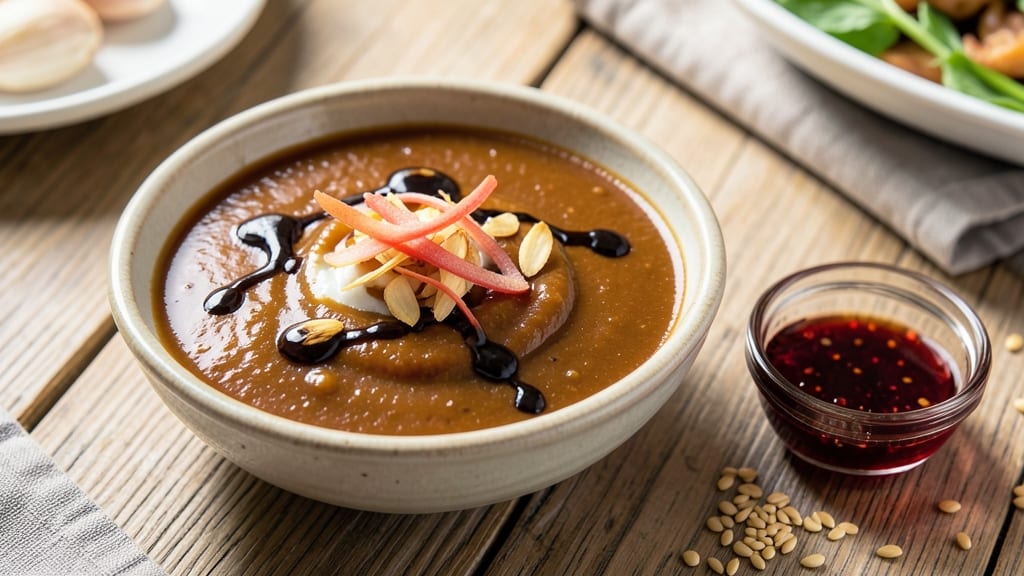
This Asian hoisin sauce recipe transforms simple pantry staples into a rich, glossy sauce that elevates stir-fries, dumplings, and spring rolls.
The balance of sweet, salty, and umami comes from fermented bean paste—though soy sauce and molasses work perfectly as substitutes—simmered with garlic, vinegar, and a touch of five-spice powder for depth.
What starts as a humble blend becomes a velvety, aromatic sauce that clings to every bite, turning ordinary dishes into restaurant-worthy meals.
The secret lies in slow reduction—letting the sauce thicken and meld over 15-20 minutes on low heat until it reaches that signature glossy consistency. No fancy equipment is needed, just a saucepan and patience.
Traditional recipes call for hoisin paste, but this version keeps it accessible with pantry-friendly swaps, ensuring you can achieve the same bold flavor without specialty ingredients.
Once cooled, this sauce keeps for up to 2 weeks in the fridge, making it ideal for meal prep. Use it as a dipping sauce for egg rolls, a stir-fry glaze, or even a marinade for grilled meats.
The versatility is what makes it a kitchen essential—one batch serves multiple purposes, reducing waste and saving time.
For an extra layer of complexity, finish with a splash of rice vinegar or a pinch of chili flakes. The result? A sauce that’s sweet-savory, tangy, and deeply aromatic, ready to transform your favorite Asian dishes into something extraordinary. Let’s get started.
Ingredients for asian hoisin sauce
Pantry staples transform into a velvety sauce with just ten ingredients—no specialty items needed.
| Ingredient | Amount | Notes |
|---|---|---|
| Hoisin Paste 🍶 | ½ cup | Traditional or substitute with soy sauce |
| Soy Sauce 🍶 | ¼ cup | Light or dark variety |
| Molasses 🍯 | ¼ cup | Unsulphured preferred |
| Garlic Cloves 🧄 | 4 cloves | Minced or finely chopped |
| Fresh Ginger 🌿 | 1 tbsp | Grated, peeled |
| Rice Vinegar 🍶 | 2 tbsp | White or seasoned |
| Five-Spice Powder 🌶️ | 1 tsp | Toasted for depth |
| Sesame Oil 🫒 | 1 tbsp | Toasted for aroma |
| Water 💧 | ½ cup | For thinning consistency |
| Cornstarch 🌾 | 1 tsp | Dissolved in 1 tbsp water |
Hoisin paste is the heart of this sauce, but don’t stress if you can’t find it. Kikkoman or La Choy hoisin paste works perfectly, or swap in an extra tablespoon of soy sauce plus a teaspoon of brown sugar. For the ginger, fresh is ideal—it brightens the sauce—but powdered works in a pinch (use half the amount). Garlic cloves should be peeled and minced finely for that signature umami punch. If you’re feeling fancy, toast your five-spice powder in a dry pan for 30 seconds—it deepens the flavor instantly. I always grab my spices from Trader Joe’s bulk section since they’re fresh and affordable.
No hoisin paste? Double the soy sauce and add 1 tbsp of honey—it’s a solid swap. Fresh ginger not an option? Ground ginger at half the amount gets you close, though it lacks that bright zing. The molasses can be swapped for maple syrup if you prefer a lighter sweetness. For extra richness, add a splash of sesame paste (like tahini) if you’ve got it. The cornstarch slurry is key for that glossy finish—don’t skip it! If you’re making this ahead, reduce the water slightly since the sauce will thicken as it cools.
This sauce keeps beautifully in the fridge for up to 2 weeks, though it tastes even better after a day or two as the flavors meld. For longer storage, freeze portions in ice cube trays—perfect for single-use servings later. If it thickens too much, just stir in a splash of water or vinegar. The sauce pairs perfectly with egg rolls, dumplings, or grilled meats, so make extra—you’ll want it on hand for everything from stir-fries to spring rolls.
Why You'll Love This Recipe
- Pantry Magic: I swear by this sauce—no fresh herbs, no exotic imports, just what’s already lurking in my cupboard. The molasses and hoisin paste alone give it that deep, sticky richness without hunting for specialty jars.
- Garlic-Ginger Punch: That fresh ginger and minced garlic? Oh, it’s there—warm, bright, and just sharp enough to cut through the sweetness. Honestly, the first time I tasted it, I nearly licked the spoon.
- Glaze, Dip, Marinade: Slather it on grilled chicken for dinner, toss it with noodles for lunch, or use it to glaze roasted veggies while you’re meal prepping. I’ve even drizzled it over scrambled eggs (don’t judge).
- Make-Ahead Gold: Double the batch—it keeps for weeks in the fridge and freezes like a dream. Between us, this is my secret weapon for lazy Sundays or when I forget to plan ahead. The taste stays bold, the effort stays zero.
Step-by-step instructions for Asian hoisin sauce
This sweet-savory sauce comes together in minutes with bold flavors that elevate any dish.
Toast the Aromatics for Depth
Heat a small skillet over medium-low heat and add the 4 cloves garlic cloves and 1 tablespoon fresh ginger. Toast for 2-3 minutes until the garlic turns golden and fragrant—you'll smell it before you see it. This step builds complex flavor that separates homemade sauce from store-bought.
Remove the aromatics with a slotted spoon and set aside. In the same skillet, add the 1 teaspoon five-spice powder and toast for 30 seconds until warm and aromatic. This warming step unlocks the spices' full potential. Immediately add the 1 tablespoon sesame oil and let it sizzle for 10 seconds—this infuses the oil with nutty depth.
Simmer the Base Ingredients
Transfer the skillet to a saucepan and add the 0.5 cup hoisin paste, 0.25 cup soy sauce, and 0.25 cup molasses. Stir over medium heat for 3-4 minutes until the mixture begins to bubble gently. You're looking for a thick, syrupy consistency that coats the back of a spoon.
Add the 2 tablespoons rice vinegar and 0.5 cup water, then bring to a gentle simmer. Let it cook uncovered for 5-6 minutes until the sauce reduces slightly and the aromas meld together. The molasses will caramelize slightly, deepening the sauce's rich color and complex sweetness.
Finish with Cornstarch Slurry
In a small bowl, whisk together the 1 teaspoon cornstarch with 1 tablespoon water until completely dissolved. This slurry will give your sauce that perfect glossy finish. Return the saucepan to medium heat and pour in the slurry, stirring constantly.
Simmer for 1-2 minutes until the sauce thickens to your desired consistency—it should coat the back of a spoon but still be pourable. Taste and adjust seasoning: add more soy sauce for saltiness, rice vinegar for tang, or molasses for sweetness. The sauce should balance all five flavors: sweet, salty, sour, umami, and aromatic.
Cool and Store for Maximum Flavor
Remove from heat and let the sauce cool to room temperature. The flavors will continue developing as it sits—this resting period allows all the components to fully integrate. For best results, refrigerate for at least 1 hour before using, which lets the sauce thicken further and the flavors meld completely.
Store in an airtight container in the refrigerator for up to 2 weeks. The sauce will keep well, but I find it tastes best within the first week when the flavors are freshest. This versatile condiment works as a dipping sauce, stir-fry glaze, or marinade—just adjust the thickness with water as needed before each use.
Pro Tips For Making Asian Hoisin Sauce
- Simmer Slow and Low: Hoisin paste burns faster than you’d think—keep the heat at a gentle simmer, not a rolling boil. I learned this the hard way when my first batch turned bitter; now I watch for tiny bubbles breaking the surface, not full-on steam.
- Peel Ginger, Not Garlic: Skip peeling the garlic cloves (just smash them), but peel that ginger thoroughly—uneven chunks make the sauce taste patchy. My grandmother swore by this, and she was right: smooth texture equals smooth flavor.
- Balance Molasses First: Taste the molasses before adding soy sauce—it’s sweeter than you remember. Start with half the called-for amount, then adjust; you can’t fix cloying sweetness later, but you can always add more savory soy.
- Strain for Smoothness: After simmering, strain the sauce through a fine-mesh sieve if you want restaurant-quality results. Yes, it’s an extra 30 seconds, but those tiny ginger fibers add bitterness—your future self will thank you.
Regional styles of this asian hoisin sauce
Cantonese Roots
The hoisin sauce we know today traces back to Cantonese cuisine, where it originated as a sweet-savory condiment for dumplings and spring rolls. Traditional versions used fermented soybean paste (like yellow bean sauce) and chili oil, creating a thick, sticky glaze.
The name "hoisin" comes from the Cantonese word for seafood, though modern recipes often omit seafood entirely. 🌶️
Authentic Cantonese hoisin relies on five-spice powder and star anise for depth, while some regional versions include dried shrimp or preserved radish for umami. The sauce was originally a glossy, syrupy topping rather than a dipping sauce, designed to cling to delicate dumpling wrappers.
I love how this history connects the sauce to Southern Chinese street food culture—it’s all about bold, balanced flavors that stand up to frying.
Sichuan Spicy Twist
In Sichuan province, hoisin sauce gets a spicy kick with Sichuan peppercorns and dried chili flakes. The result is a fiery, aromatic sauce perfect for mapo tofu or spicy noodles.
Sichuan cooks often add fermented black beans for extra umami depth. The heat level can vary—some versions are mildly spicy, while others pack serious chili heat. 🔥
For a Sichuan-inspired hoisin, swap 1 tsp Sichuan peppercorn powder for half the five-spice powder and add ½ tsp chili flakes. The peppercorns add a tingling numbness that pairs perfectly with the sauce’s sweetness.
I’ve found that Lao Gan Ma chili crisp works well as a finishing touch for extra heat.
Japanese Adaptations
Japanese cuisine incorporates hoisin in yakiniku (grilled meat) sauces and ramen toppings, often blending it with mirin and sake for a softer, sweeter profile.
The Japanese version tends to be less thick and more liquid-based, making it ideal for drizzling. Worcestershire sauce is sometimes added for a savory depth that bridges East Asian and Western flavors. 🍜
To make a Japanese-style hoisin, reduce the molasses to 2 tbsp and add 1 tbsp mirin plus 1 tsp soy sauce. Simmer the sauce with ½ cup dashi stock instead of water for a richer umami base.
This lighter version works beautifully as a dipping sauce for yakitori or a ramen finishing sauce.
Modern Fusion Takes
Today’s chefs are reimagining hoisin with global twists. A Korean-inspired version might include gochujang for heat and sesame seeds for texture, while Vietnamese adaptations blend in fish sauce and lime juice.
Even American BBQ has seen hoisin used in sliders or pulled pork glazes for a sweet-savory contrast. 🌎
For a fusion experiment, try adding 1 tbsp gochujang (Korean chili paste) and 1 tsp fish sauce to the base recipe. The result is a spicy, funky sauce that works surprisingly well on grilled wings or tacos.
I’ve also seen hoisin used in burgers—trust me, it’s a game-changer for a sticky, umami-packed glaze.
Vegetarian Versions
Traditional hoisin often contains anchovies or shrimp paste, but vegetarian versions use mushroom powder or soy sauce to mimic umami. Substitute ½ cup vegetarian hoisin paste (like Annie Chun’s) for the traditional version, or blend 2 tbsp miso paste with the soy sauce for depth. 🌱
For extra richness, add 1 tbsp nutritional yeast or 1 tsp smoked paprika to the sauce. The result is a meaty, savory profile without any animal products. This version works perfectly for vegetarian dumplings or as a marinade for tofu.
I’ve found that vegan molasses (like Barley Malt Syrup) keeps the sweetness intact while staying plant-based.
Nutrition facts
Frequently asked questions
What’s the best substitute for hoisin paste if I can’t find it?
Mix 2 tablespoons soy sauce, 1 tablespoon molasses, and ½ teaspoon five-spice powder for a quick substitute. For extra depth, add 1 teaspoon grated ginger and ½ teaspoon garlic powder. This combo mimics hoisin’s sweet-savory balance without specialty ingredients.
Can I make this sauce without cornstarch?
Yes! Swap the cornstarch for 1 teaspoon arrowroot powder or ½ teaspoon xanthan gum for a vegan-friendly thickener. If avoiding all starches, reduce the water by 2 tablespoons and simmer longer—just stir frequently to prevent burning. The sauce will be slightly less glossy but still flavorful.
How do I adjust the sweetness level?
For less sweetness, reduce the molasses to 2 tablespoons and add 1 extra tablespoon soy sauce for saltiness. Need more sweetness? Add 1 teaspoon honey or maple syrup at the end. Taste as you go—the sauce should balance sweet, salty, and umami without overpowering any single flavor.
Why did my sauce turn out too thin?
This usually happens if you didn’t simmer long enough or added too much water. Fix it by mixing 1 teaspoon cornstarch with 1 tablespoon water and stirring it back into the sauce. Simmer for 1-2 minutes until thickened. For future batches, reduce water by ¼ cup or simmer uncovered for 5 extra minutes.
What’s the best way to use leftover hoisin sauce?
Drizzle it over stir-fries, use as a dipping sauce for spring rolls, or brush onto grilled meats like pork or chicken. For extra creativity, mix it into burgers or tacos for a sweet-savory glaze. Store leftovers in the fridge for up to 2 weeks—it tastes even better after flavors meld!