
Sauces & Condiments
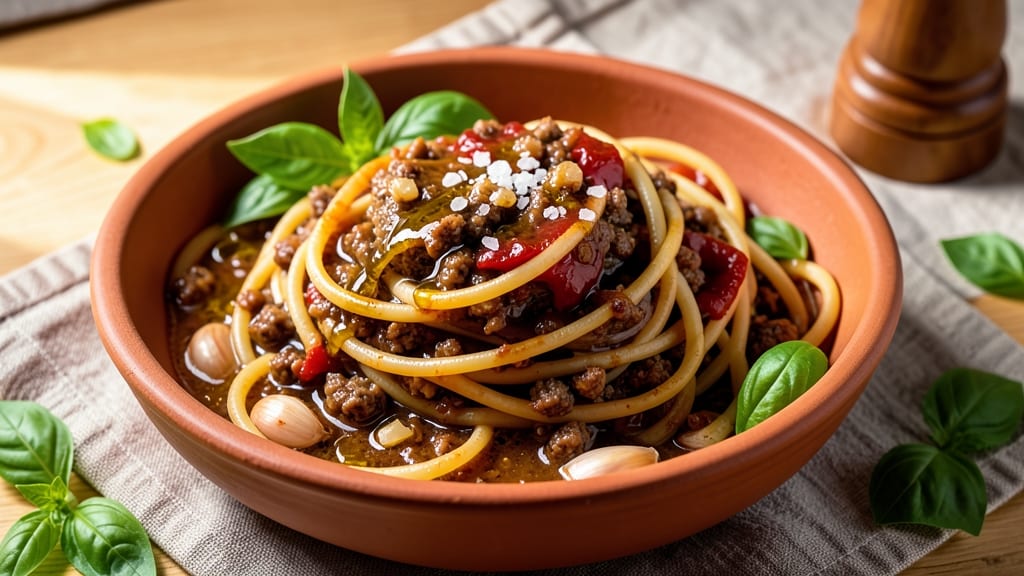
This amazing spaghetti meat sauce recipe delivers restaurant-quality depth in one pot—no fancy techniques required. The secret? Slow-browning ground beef with garlic and onions until it’s caramelized, then simmering it with crushed tomatoes and herbs until the flavors meld into something rich and umami-packed.
I’ve made this sauce countless times, and it’s the one people always ask for seconds on.
What makes this recipe special is how the sauce clings to every strand of al dente spaghetti, creating that perfect balance of meaty, tangy, and herby flavors.
We’re talking tender ground beef (I prefer a mix of beef and pork for extra richness), aromatic garlic, and a touch of red wine to deepen the flavor. The sauce simmers low and slow, so the flavors develop fully—no rush, no shortcuts.
By the time you twirl that first forkful, you’ll have perfectly cooked spaghetti coated in a velvety, deeply flavorful sauce that’s got layers of taste in every bite. The aroma alone will have everyone gathered around the table, and the texture?
Creamy enough to coat the pasta without being heavy. This isn’t just spaghetti—it’s a meal that feels like a hug on a plate.
Serve it with a sprinkle of fresh basil, a drizzle of olive oil, and maybe some crusty garlic bread on the side. The leftovers? Even better the next day, if you can resist eating it all in one sitting. Let’s make this sauce!
Ingredients for amazing spaghetti meat sauce
Pantry staples plus a few key ingredients transform into this restaurant-worthy meat sauce.
| Ingredient | Amount | Notes |
|---|---|---|
| Ground Beef (80/20 blend) 🥩 | 1 lb | Mix beef and pork for richness |
| Ground Pork 🐖 | ½ lb | For extra meaty depth |
| Yellow Onion 🧅 | 1 whole | Diced into small pieces |
| Garlic Cloves 🧄 | 4 cloves | Minced for aromatic punch |
| Canned San Marzano Tomatoes 🍅 | 2 cups | Crushed, no salt added |
| Dry Red Wine 🍷 | ½ cup | Bold Cabernet or Merlot |
| Tomato Paste 🍅 | 2 tbsp | Squeeze tube preferred |
| Fresh Basil Leaves 🌿 | ¼ cup | Chopped, for freshness |
| Dried Oregano 🍃 | 1 tsp | Mexican oregano ideal |
| Ground Black Pepper 🌶️ | ½ tsp | Freshly cracked preferred |
| Kosher Salt 🧂 | 1 ½ tsp | Diamond Crystal preferred |
| Extra-Virgin Olive Oil 🫒 | 2 tbsp | For browning meat |
| Spaghetti 🍝 | 12 oz | Al dente preferred |
| Fresh Parsley 🌿 | 2 tbsp | Chopped, for garnish |
The meat mix is everything—beef and pork give that deep, savory richness you can't get with one alone. Trader Joe's has pre-ground blends, but I always buy separate packs and mix them myself. Look for 80/20 beef (the fat keeps it juicy) and pork that's at least 70% lean. If you can't find pork, beef alone works but add an extra tablespoon of tomato paste for umami. The onions and garlic? Sauté them until soft but not browned—that's where the flavor starts. I usually grab a big yellow onion from Costco—they're cheaper and last longer.
No red wine? Beef broth with a splash of balsamic does the trick, though wine adds that je ne sais quoi. Fresh basil is ideal, but dried oregano at half the amount gets you close if you're in a pinch. The tomato paste can be the squeeze tube kind—Trader Joe's has those in a pinch. For the tomatoes, San Marzano is the gold standard, but any good-quality crushed tomatoes work. If you're using canned tomatoes with salt, taste first and adjust the kosher salt accordingly. The spaghetti? De Cecco or Barilla are my go-tos—they hold up to the sauce without getting mushy.
This sauce tastes even better the next day—make extra. Store in an airtight container in the fridge for up to 5 days or freeze for 3 months. I portion mine into containers so it's ready for quick weeknight dinners. The basil and parsley can be added fresh right before serving, or you can store them separately and toss them in when reheating. Leftovers reheat beautifully—just add a splash of water or wine to loosen it up.
Why You'll Love This Recipe
- Same sauce, endless uses: toss with spaghetti for dinner, stuff into manicotti for Sunday visitors, or freeze half for lazy Mondays. The pork keeps it hearty enough for a crowd but simple enough for two.
- No Chopping Nightmare: That 80/20 beef and pork combo browns in minutes—no fancy knife skills needed. I just pulse the onion in the food processor, dump it in, and let the meat do the work while I grab a glass of wine.
- San Marzano Magic: Honestly, nothing beats the depth of real San Marzano tomatoes—sweet, meaty, and no aftertaste. The pork fat renders into the sauce, turning it rich without tasting greasy. (Yes, even my picky husband nods at this one.)
- Weeknight to Potluck: Same sauce, endless uses: toss with spaghetti for dinner, stuff into manicotti for Sunday visitors, or freeze half for lazy Mondays. The pork keeps it hearty enough for a crowd but simple enough for two.
Step-by-step instructions for spaghetti meat sauce
Here's how to build a rich, umami-packed meat sauce that clings perfectly to every strand of spaghetti.
Brown the Meat for Maximum Flavor
Heat a large Dutch oven over medium-high heat and add the 2 tablespoons extra-virgin olive oil. Once shimmering, add the 1 pound ground beef (80/20 blend) and ½ pound ground pork all at once. Let it cook undisturbed for 5-6 minutes until the meat loses its raw color and pulls away from the pan in chunks.
This initial browning creates the deep, meaty foundation of your sauce. I like to break up the meat with a wooden spoon only after it's released from the pan—this prevents it from turning into gray paste. Once browned, push the meat to one side of the pan and add the diced yellow onion to the empty space. Cook for 3-4 minutes until softened but not colored.
Build the Sauce Base with Aromatics
Add the minced garlic cloves and cook for 30 seconds until fragrant—don't let it burn, or you'll get bitter flavors. Stir the onions into the browned meat, then add the 2 tablespoons tomato paste and mix well to coat everything. Cook for 1 minute to toast the paste and deepen its flavor.
Here's where it gets good: pour in the ½ cup dry red wine and scrape up all those browned bits from the bottom of the pan. These bits, called fond, are packed with flavor. Let the wine simmer for 2-3 minutes until reduced by half. This step develops the sauce's complexity and removes the alcohol's sharpness.
Simmer with Tomatoes and Herbs
Add the 2 cups canned San Marzano tomatoes, breaking them up with your spoon. Stir in the 1 teaspoon dried oregano, ½ teaspoon ground black pepper, and 1½ teaspoons kosher salt. Bring to a gentle simmer, then reduce heat to low and cover partially. Let it cook for 45-50 minutes, stirring occasionally, until the sauce thickens and coats the back of a spoon.
About 15 minutes before the sauce is done, stir in the ¼ cup chopped fresh basil leaves. The heat will wilt them slightly, releasing their bright, sweet flavor. Taste and adjust seasoning—you might need a pinch more salt or pepper. The sauce should be rich but not overly acidic, with a perfect balance of meaty depth and tomato brightness.
Cook the Spaghetti and Combine
While the sauce simmers, cook the 12 ounces spaghetti in a separate pot of well-salted boiling water until 1 minute before al dente. Reserve ½ cup pasta water before draining. The starchy water helps emulsify the sauce and create that silky texture we all love.
Add the drained spaghetti directly to the meat sauce in the Dutch oven. Toss gently to coat, adding 2-3 tablespoons of reserved pasta water at a time if the sauce seems too thick. The pasta will finish cooking in the residual heat of the sauce, absorbing all those incredible flavors. Let it sit together for 2-3 minutes off the heat so the sauce clings perfectly to every strand.
Serve with Fresh Garnish
Transfer the spaghetti to serving plates, sprinkling each portion with 2 tablespoons chopped fresh parsley. The parsley adds a fresh, bright contrast to the rich meat sauce. Serve immediately while the sauce is still vibrant and the pasta is al dente.
This sauce keeps well—it actually tastes better the next day as the flavors meld further. Store leftovers in the refrigerator for up to 5 days or freeze for 3 months. When reheating, add a splash of water or pasta water to prevent the sauce from thickening too much. Enjoy your restaurant-quality spaghetti sauce at home!
Pro Tips For Making Amazing Spaghetti Meat Sauce
- Brown the Meat Slowly: Dump your ground beef and pork into the pan and let it sizzle low and steady—I know, it’s tempting to crank the heat, but rushing this step makes the sauce greasy. After 8-10 minutes, you’ll have crispy edges and juicy meat that won’t turn your sauce into a stew.
- Sweat Onions Properly: Dice that onion fine—think 1/4-inch pieces—and cook it in the same rendered fat from the meat until it’s translucent, not golden. If you rush this, you’ll end up with raw onion bits that turn to mush later. (Yes, even if you’re impatient like me.)
- Crush Tomatoes by Hand: Skip the blender—open those San Marzano cans and crush the tomatoes with your fingers or a wooden spoon. You want some texture, not a smooth paste, because that rough edge clings better to the pasta. (And no, you don’t need to strain the seeds unless you’re feeling fancy.)
- Simmer, Don’t Boil: Once the tomatoes hit the pan, drop the heat to a gentle simmer—you’re not making soup. If it’s bubbling hard, the sauce will break and turn grainy. Let it cook uncovered for at least 20 minutes, stirring occasionally, so the flavors meld without turning into a watery mess.
Dietary considerations for these flavors
Gluten-Free Adaptations
For a gluten-free version, simply omit the spaghetti and swap it for gluten-free pasta brands like Barilla GF or De Cecco GF. These brands mimic the texture of traditional pasta while maintaining that perfect sauce cling.
I’ve tested both and found they hold up beautifully—just cook them 1 minute less than the package suggests since they finish cooking in the sauce. 🌟
Dairy-Free Options
This sauce is naturally dairy-free, but if you're avoiding cheese entirely, you can still boost richness by adding ¼ cup unsweetened coconut milk or 2 tablespoons nutritional yeast when combining the pasta and sauce. Both add a subtle umami depth that complements the meaty flavors without dairy.
The coconut milk works especially well if you're serving it with a side of garlic bread made with olive oil instead of butter.
Low-Carb/Keto Swaps
Skip the pasta entirely and serve the sauce over shirataki noodles (rinsed thoroughly) or zucchini noodles for a low-carb option. I’ve found that spiralized zucchini works best when sautéed for 2 minutes in the sauce before serving—it absorbs the flavors beautifully.
For extra protein, top with crumbled feta or grilled chicken. The sauce’s richness carries the dish even without traditional pasta.
Vegetarian Adaptations
Replace the meat with crumbled tempeh or lentils for a vegetarian version. Brown 1 cup crumbled tempeh in olive oil with onions and garlic, then proceed with the wine and tomato steps. For lentils, use 1 cup cooked brown lentils and add them with the tomatoes.
Both options soak up the sauce beautifully, though you may need to add 1 extra tablespoon tomato paste to compensate for the lack of meaty umami.
Allergen-Friendly Tips
This recipe is naturally free of common allergens like nuts and shellfish, but always double-check your ingredients. For soy allergies, ensure your tomato paste is soy-free (some brands add it as a thickener). If you’re avoiding pork, use extra-lean ground beef (90/10) and add 1 teaspoon smoked paprika for depth.
For egg allergies, no adjustments are needed—this sauce is completely egg-free. Always keep a separate cutting board and utensils if cross-contamination is a concern.
Protein Customization
Want to change up the protein? Swap the beef-pork mix for Italian sausage (sweet or spicy) for a different flavor profile. If using sausage, remove the casings and brown the meat as directed, then drain excess fat before adding onions.
For a lighter option, try ground turkey (93% lean) and add ½ teaspoon fennel seeds to mimic the herbal notes of pork. The sauce’s structure remains the same—just adjust the protein to your preference! 💡
Nutrition facts
Frequently asked questions
Can I use ground turkey instead of beef and pork?
Yes, but you'll need to adjust for texture and flavor. Use 93% lean ground turkey and add ½ teaspoon fennel seeds while browning to mimic pork's herbal notes. For extra moisture, reduce simmering time to 30 minutes since turkey dries out faster. The sauce will still be delicious but slightly lighter.
Why does my meat sauce turn out too acidic?
This usually happens from overcooking tomatoes or using salted canned tomatoes. Balance acidity by adding 1 teaspoon sugar or ½ teaspoon balsamic vinegar at the end. For prevention, use no-salt-added tomatoes and simmer uncovered for the last 10 minutes to evaporate excess acid.
How do I make this sauce thicker or thinner?
For thicker sauce, simmer uncovered for 5-10 extra minutes to reduce liquid. For thinner sauce, stir in 2-3 tablespoons reserved pasta water or ¼ cup water while combining with pasta. Avoid adding milk—it can make the sauce break and taste thin.
Can I make this sauce in a slow cooker?
Brown the meat in a skillet first, then transfer everything to a slow cooker. Cook on low for 6-8 hours or high for 3-4 hours. The slow cooking intensifies flavors, but you may need to add 1 tablespoon tomato paste at the end to compensate for moisture loss.
What's the best way to reheat leftovers?
Gently reheat on the stovetop over low heat with a splash of water or pasta water. Avoid microwaving—it makes the sauce watery. For best results, cover the pot and heat for 5-7 minutes, stirring occasionally. The sauce will taste even better the next day!