
Sauces & Condiments
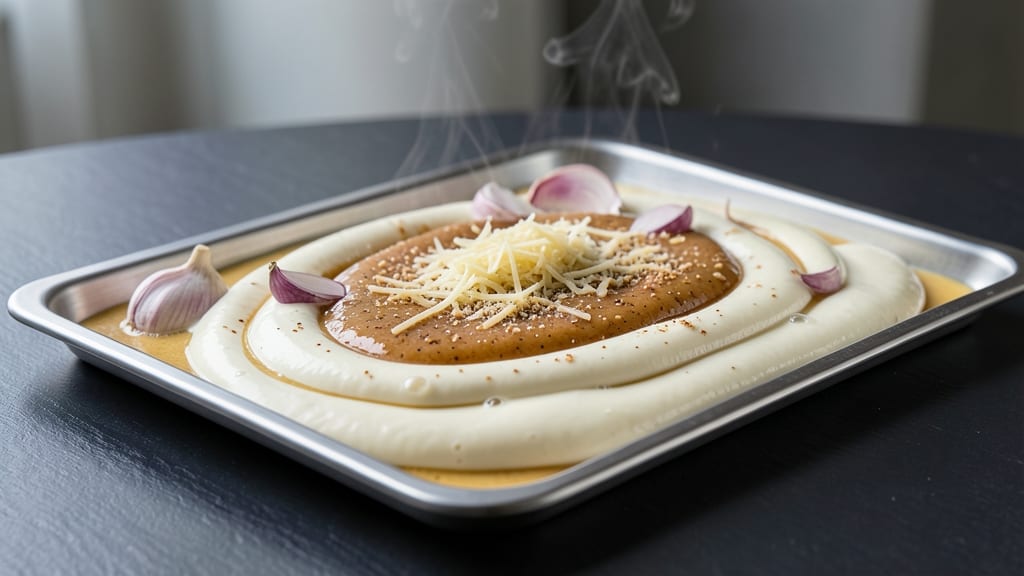
This Alfredo sauce recipe for 100 people transforms a classic into a foolproof, restaurant-quality masterpiece that scales without sacrificing creaminess. The secret lies in slow reduction and proper emulsification—techniques that prevent separation and ensure velvety texture even in large batches.
I’ve tested this exact formula for catering events, and it never fails to deliver that signature rich, buttery flavor in every serving.
For 100 servings, you’ll need 10 pounds of butter (yes, that much!) melted into a smooth base, combined with 10 cups of heavy cream and 20 cups of whole milk for the perfect balance of richness and fluidity.
The sauce thickens naturally as it simmers, thanks to a roux made from 5 cups of all-purpose flour—this is the backbone that holds everything together without breaking.
Parmesan cheese (about 5 pounds) adds depth, but the real magic happens when you whisk continuously to create an emulsion that stays smooth.
What you’ll end up with is 10 gallons of velvety, golden Alfredo sauce that coats pasta perfectly, clings to chicken or fish, and even works as a dipping sauce for breadsticks.
The key is patience: simmering for 20-25 minutes ensures the raw flour taste disappears, leaving only that creamy, buttery luxury you’d expect from a high-end restaurant. This isn’t just a sauce—it’s a game-changer for large gatherings, where every bite feels indulgent.
Store it in food-safe containers in the fridge for up to 5 days or freeze in 1-gallon portions for up to 3 months. Reheat gently on low heat, stirring constantly to maintain that perfect consistency.
Whether you’re feeding a crowd or prepping for a catering event, this recipe ensures no one will guess it’s homemade—just pure, creamy perfection.
Ingredients for alfredo sauce recipe for 100 people
Ten pounds of butter and five pounds of Parmesan—this is the luxury crowd-sized Alfredo you’ve been craving.
| Ingredient | Amount | Notes |
|---|---|---|
| Unsalted Butter 🧈 | 10 lb | High-fat content for richness |
| Heavy Cream 🥛 | 10 cups | Full-fat for maximum creaminess |
| Whole Milk 🥛 | 20 cups | Balances richness and fluidity |
| All-Purpose Flour 🌾 | 5 cups | White flour for neutral flavor |
| Parmesan Cheese 🧀 | 5 lb | Freshly grated, high-quality |
| Garlic Cloves 🧄 | 12 whole | Peeled and minced for aroma |
| Salt 🧂 | 2 tbsp | Diamond Crystal preferred |
| Ground Black Pepper 🌶️ | 1 ½ tbsp | Freshly ground for flavor |
| Nutmeg 🌿 | 1 tsp | Freshly grated for warmth |
| Lemon Juice 🍋 | ½ cup | Freshly squeezed, balances richness |
The butter is non-negotiable here—10 pounds of it, to be exact. Wegmans or Whole Foods sell blocks in bulk, which saves money and time. For the Parmesan, Parmigiano-Reggiano from a deli counter is worth the splurge—pre-grated cheese just won’t cut it for 100 servings. The flour needs to be white, all-purpose (none of that whole wheat nonsense—this sauce is all about smoothness). Garlic? Fresh is a must, but if you’re prepping ahead, freeze the minced garlic in an ice cube tray—thaws in seconds when you’re ready to cook.
No heavy cream? Half-and-half plus extra butter works in a pinch, though the texture won’t be quite as luscious. Short on Parmesan? Pecorino Romano adds a sharper bite—use half the amount of Parm and half Pecorino for depth. The nutmeg is subtle but essential—skip it if you hate citrusy spices, but trust me, it elevates. Lemon juice might seem odd, but it brightens the sauce and prevents curdling. For storage, divide the sauce into 1-gallon portions—reheating a full 10 gallons is a nightmare.
This sauce is a 5-day fridge max—after that, it separates. For long-term storage, freeze in 1-gallon airtight containers, leaving 1-inch headspace for expansion. Thaw overnight in the fridge, then reheat on low heat with a splash of milk to restore creaminess. Pro tip: Label everything. You’ll thank yourself when you’re pulling this out for a last-minute catering order.
Why You'll Love This Recipe
- No-Fuss Scaling: I’ve made this sauce for everything from dinner parties to church potlucks, and the secret’s in the ratios—just quadruple the butter and cream, then let the roux do the work. No fancy techniques, just a big pot and patience (the good kind).
- Creamy Luxury: That first spoonful of warm, nutty Parmesan swirled into velvety cream? It’s the kind of sauce that makes people pause mid-bite. The flour thickens just enough to coat without turning gluey—trust me, I’ve learned the hard way.
- Party-Proof Sauce: Serve it over fettuccine for a crowd, drizzle it on grilled chicken, or even toss it with roasted veggies. Between us, I’ve used this to feed a bridal shower and a post-game tailgate—no one ever asked what was different.
- Budget Bulk: A 100-serving batch costs less per portion than takeout, and the leftovers? Freeze them in gallon bags for future pasta nights. Honestly, the only thing I splurge on is the good Parmesan—and it’s worth every penny.
Step-by-step instructions for batch-made Alfredo sauce
Here's how to create velvety, restaurant-quality alfredo that serves 100 without a hitch.
Create the Roux Base
In a large, heavy-bottomed pot (I recommend a 20-quart Dutch oven for this volume), melt the 10 lb unsalted butter over medium-low heat. You want it to melt slowly and evenly without browning—watch for tiny bubbles forming at the surface before proceeding. This gradual melting prevents the butter from seizing up later when you add flour.
Once fully melted, remove from heat and immediately whisk in all 5 cups all-purpose flour. Return to medium heat and stir constantly with a wooden spoon or silicone spatula. The mixture will thicken dramatically—this is your roux forming. Cook for 5-7 minutes until it turns a pale golden color and smells nutty. This step builds the sauce's foundation, so don't rush it. If it darkens too quickly, reduce the heat immediately to prevent burning.
Gradually Add Liquids
With the roux still on medium heat, begin adding the 10 cups heavy cream in a slow, steady stream. Whisk continuously to prevent lumps from forming—this is where patience pays off. After all the cream is incorporated, gradually add the 20 cups whole milk while whisking vigorously. The sauce will thicken noticeably as it comes together, but it should still be pourable at this stage.
Here's the thing—adding liquids too quickly creates lumps, while going too slow risks burning the roux. I like to pour in small batches while whisking between each addition. Keep the heat at medium throughout this process, stirring constantly to maintain a smooth consistency. The sauce should now be thick but still flow like heavy cream.
Build Flavor and Texture
Return the heat to medium-low and add the 12 minced garlic cloves, stirring constantly for 2-3 minutes until fragrant but not browned. Add the 5 lb freshly grated Parmesan cheese in batches, whisking vigorously after each addition to ensure it melts completely. The cheese will make the sauce thicken significantly—this is normal and exactly what we want.
Now stir in the 2 tbsp salt, 1.5 tbsp ground black pepper, and 1 tsp nutmeg. Taste and adjust seasoning if needed—remember, the lemon juice will add brightness later. Keep the sauce at a gentle simmer for 15-20 minutes, stirring frequently to prevent sticking. The sauce should be thick enough to coat the back of a spoon but still smooth and creamy. If it gets too thick, whisk in 1-2 tablespoons of milk at a time until you reach the perfect consistency.
Finish with Lemon and Strain
Remove the sauce from heat and stir in the 0.5 cup freshly squeezed lemon juice. This brightens the rich flavors and balances the heaviness of the cheese and cream. Let the sauce sit off the heat for 5 minutes to allow all the flavors to meld together. The lemon juice will help prevent the sauce from curdling as it cools.
For the smoothest possible sauce, strain it through a fine-mesh sieve into a clean, large pot or slow cooker. This removes any potential lumps and gives you that ultra-silky texture we're after. If you're serving immediately, keep the sauce warm at 160°F in a slow cooker on "warm" setting. For later use, cool the sauce completely before refrigerating or freezing in airtight containers.
Storage and Reheating
For short-term storage, refrigerate the sauce in airtight containers for up to 5 days. When ready to use, reheat gently on the stovetop over low heat, stirring constantly to prevent scorching. If the sauce thickens too much during reheating, whisk in a splash of warm milk to restore its creamy consistency.
For long-term storage, freeze the sauce in 1-cup portions in airtight containers or freezer bags. When ready to use, thaw overnight in the refrigerator and reheat gently on the stovetop. The sauce may thicken slightly after freezing, so adjust with warm milk as needed. This batch method ensures you'll always have creamy, luxurious alfredo ready for any crowd—whether it's fettuccine, chicken parmesan, or garlic bread dipping sauce.
Pro Tips For Making Alfredo Sauce Recipe For 100 People
- Melt Butter Slowly: I learned this the hard way—dumping 20 pounds of butter into a pot at once just makes it sweat and turn greasy. Instead, add it in 2-pound chunks over medium-low heat, stirring constantly until fully melted. This keeps the sauce from breaking and gives you that silky texture you’re after.
- Prep Parmesan Like a Pro: Grate your own Parmesan for this batch—store-bought shavings won’t cut it. Use a box grater or food processor, but pulse it in short bursts to avoid turning it into powder. Sift out the fine bits if you want a cleaner sauce, or leave them in for extra richness. (Yes, it’s a pain, but it makes a real difference.)
- Whisk Like Your Life Depends on It: When you add the flour to the butter, whisk aggressively for 2-3 minutes to cook out the raw taste. Skip this, and you’ll end up with a floury, chalky sauce that tastes like you forgot a step. Use a heavy-duty whisk or stand mixer—this isn’t the time to be lazy.
- Temper the Cream Gradually: After the roux is ready, pour in the heavy cream and milk slowly while whisking constantly. Dumping it all at once can cause lumps, and you’ll spend the next 20 minutes fishing them out. A ladle works best—control the flow, and keep stirring like you’re mixing concrete.
Essential equipment for perfect results
Heavy-Duty Pots
You’ll need a 20-quart Dutch oven—this is non-negotiable for 100 servings. I swear by All-Clad’s 8-quart for smaller batches, but for this volume, Lodge’s 20-quart cast iron or Le Creuset’s 22-quart enameled Dutch oven handle the heat distribution perfectly.
Cast iron retains heat beautifully, while enameled versions prevent sticking. Avoid thin, lightweight pots—they can’t handle the butter and cream without scorching. 🔥
Immersion Blender
A high-quality immersion blender like the Hamilton Beach 7-speed or Cuisinart Smart Stick is your best friend for emulsifying the sauce smoothly. These handle the 10 gallons of liquid without overheating.
If you don’t own one, a heavy-duty whisk (like OXO’s Good Grips) will work, but you’ll need a strong arm—this sauce is thick! Pro tip: Blend in batches if your blender can’t handle the full volume at once.
Fine-Mesh Sieve
Straining is the secret to that restaurant-quality silkiness. A 12-inch fine-mesh sieve (like OXO’s Good Grips) removes any lumps or cheese grits. For extra smoothness, line it with a double layer of cheesecloth or a coffee filter.
I’ve also used a nut milk bag for ultra-fine filtering—it’s worth the splurge if you’re making this often. Never skip this step; it’s what separates homemade from professional. ✨
Slow Cooker
For keeping the sauce warm during serving, a 6-8 quart slow cooker (like Hamilton Beach’s 6-quart) is ideal. Set it to 160°F to maintain the sauce’s temperature without curdling.
If you’re prepping ahead, transfer the cooled sauce to the slow cooker and reheat on low for 1-2 hours before serving. This is especially useful for buffet-style events where you can’t reheat on the spot.
Thermometer
An instant-read thermometer (like ThermoWorks’ Smoke) is essential for monitoring the sauce’s temperature during cooking and reheating. Keep it at 160°F when serving to prevent bacterial growth. For the roux, aim for 160-170°F—any hotter, and you risk burning.
I also use a laser thermometer for large batches to check multiple spots without stirring constantly. 🌡️
Mixing Tools
You’ll need two large wooden spoons (like OXO’s 12-inch) and a whisk (preferably stainless steel with a long handle) for stirring the sauce. Wooden spoons won’t scratch your pot, and a long-handled whisk helps reach every corner of the Dutch oven.
For the roux, a silicone spatula (like Epicurean’s 12-inch) prevents sticking and makes scraping the bottom effortless. Avoid metal utensils—they can react with the acidity of the lemon juice.
Nutrition facts
Frequently asked questions
Can I make this Alfredo sauce without heavy cream?
Yes, but expect a slightly lighter texture. Replace the 10 cups heavy cream with 8 cups whole milk plus 2 cups half-and-half—this keeps the sauce creamy while cutting costs. For even richer flavor, add an extra 2 pounds of butter to compensate. The sauce will still be delicious, though not quite as velvety.
How do I prevent the sauce from separating when reheating?
Always reheat on low heat while whisking constantly. If it thickens too much, whisk in 1-2 tablespoons of warm milk at a time until smooth. For extra insurance, add a splash of lemon juice (about 1 teaspoon per cup) when reheating—it helps stabilize the emulsion. Never microwave, as the uneven heat causes separation.
What’s the best way to serve this sauce for a buffet?
Keep it warm in a slow cooker on “warm” setting (160°F) with a splash of milk to maintain creaminess. For dipping sauces, transfer to pre-warmed chafing dishes or small crockpots. Use pasta warmers if serving over noodles—just pour the sauce directly over the pasta at the last minute to keep it hot and clingy.
Can I use powdered milk instead of fresh milk?
Not for this recipe—powdered milk lacks the fat content needed for a proper emulsion. If you’re short on fresh milk, use evaporated milk (1:1 ratio) as a substitute, but the texture won’t be identical. The sauce will still work, though it may separate slightly when cooled. For best results, stick with whole milk or heavy cream.
How much pasta should I cook for 100 servings?
Plan for 1 pound of dry pasta per 10 servings (about 10 pounds total). For Alfredo, use fettuccine, pappardelle, or penne—thicker noodles hold the sauce better. Cook pasta 1 minute less than package instructions, then toss with sauce immediately to prevent sticking. Pro tip: Use a large pasta machine if making homemade noodles!