
Sauces & Condiments
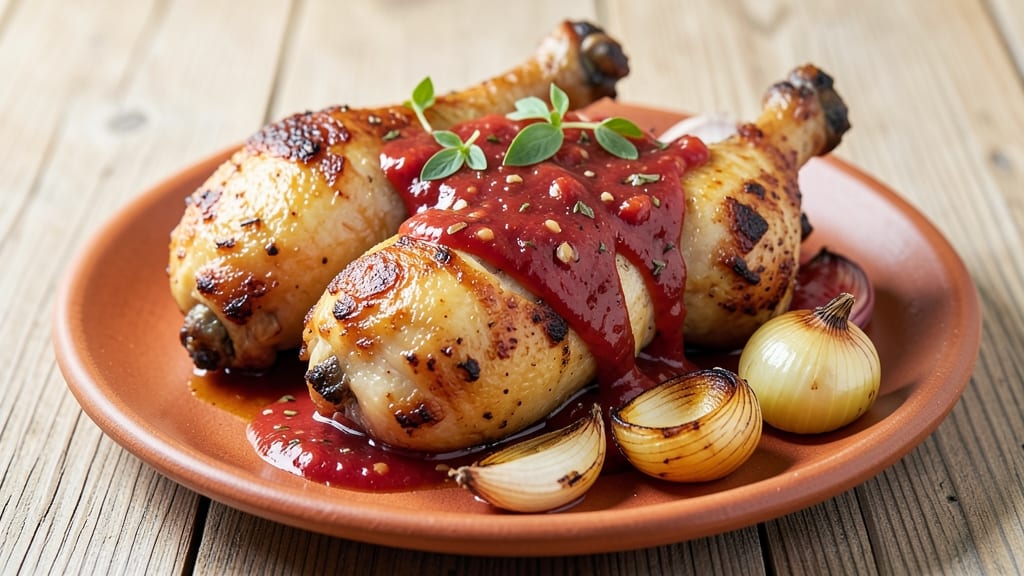
This chicken legs with tomato sauce recipe delivers the perfect balance of crispy skin and tender meat bathed in a rich, herbed sauce that's simple yet deeply flavorful.
The secret lies in a high-heat sear that locks in juices while creating that coveted golden crust, followed by a slow simmer in a vibrant tomato base that develops layers of complexity.
I developed this method after years of perfecting restaurant-style results at home—no shortcuts, just reliable technique that works every time.
The beauty of this dish is its versatility. You can bake, grill, or pan-fry the chicken legs, each method offering distinct textures while maintaining the same luscious tomato sauce.
The sauce itself builds depth through a simple combination of canned tomatoes, aromatics, and fresh herbs that infuse the meat with bright, savory notes. What makes this recipe stand out is how the crispy skin contrasts with the silky sauce, creating a bite that's both satisfying and elegant.
By the time you're done, you'll have golden-brown chicken legs with skin that shatters at the touch, paired with a sauce that's rich enough to coat every bite yet light enough to let the chicken shine.
The aroma alone will have everyone gathering around the table, and the leftovers reheat beautifully for lunch the next day. This is comfort food at its finest—simple enough for weeknights but impressive enough for company.
Serve with crusty bread for dipping or alongside roasted vegetables to round out the meal. The sauce works equally well over pasta if you prefer a lighter presentation. Let's get started with this foolproof method that delivers restaurant-quality results at home.
Ingredients for chicken legs with tomato sauce
Four crispy chicken legs and twelve simple ingredients transform into restaurant-quality comfort food.
| Ingredient | Amount | Notes |
|---|---|---|
| Chicken Legs 🍗 | 4 whole | Bone-in, skin-on for crispy texture |
| San Marzano Tomatoes 🍅 | 28 oz | Canned, crushed or whole |
| Garlic Cloves 🧄 | 4 cloves | Minced for aromatic base |
| Yellow Onion 🧅 | 1 whole | Diced, medium size |
| Olive Oil 🫒 | ½ cup | Extra-virgin for richness |
| Dried Oregano 🌿 | 1 tbsp | Or 1 tbsp fresh chopped |
| Dried Basil 🌿 | 1 tbsp | Or 1 tbsp fresh chopped |
| Salt 🧂 | 1 ½ tsp | Kosher or sea salt |
| Ground Black Pepper 🌶️ | ½ tsp | Freshly ground preferred |
| Red Wine Vinegar 🍷 | 1 tbsp | For bright acidity |
| Butter 🧈 | 2 tbsp | Unsalted, for basting |
| Fresh Parsley 🌿 | ¼ cup | Chopped, for garnish |
The chicken legs are the foundation—bone-in, skin-on for that perfect crispy skin. Look for uniform size at the grocery store, around 1.5 to 2 pounds total, so they cook evenly. Trader Joe's and Costco usually have great quality, but any supermarket works. Pat them completely dry before cooking—this is non-negotiable for crispy skin. The San Marzano tomatoes are worth the splurge; their sweetness and low acidity make a noticeable difference. If you can't find them, any high-quality canned tomatoes will do, just add an extra pinch of sugar to balance the acidity.
No dried oregano? Fresh oregano or thyme at half the amount works beautifully. Short on fresh herbs? Dried basil and oregano are fine, but toast the dried herbs in the olive oil for 30 seconds before adding to the sauce—this deepens their flavor. The red wine vinegar can be swapped for white wine vinegar or even lemon juice, though the color will differ slightly. For a richer sauce, add 1 tablespoon of tomato paste to the canned tomatoes before crushing. And if you're feeling adventurous, a pinch of red pepper flakes adds subtle heat that pairs perfectly with the crispy chicken.
This dish reheats beautifully—just warm the sauce and chicken together on the stovetop. The sauce thickens as it cools, so if it's too thick after reheating, add a splash of water or chicken broth. Store leftovers in the fridge for up to 4 days, covered to keep the flavors fresh. For longer storage, freeze the chicken and sauce together for up to 3 months. The skin stays crispy if you reheat it in the oven at 375°F for 10 minutes after warming the sauce on the stovetop.
Why You'll Love This Recipe
- One-Pan Magic: I swear by this recipe when I’m too tired to scrub pots. Toss the chicken legs, diced onion, and crushed garlic in a single pan—no chopping boards, no mess. The San Marzano tomatoes do all the work, simmering down into a rich sauce while you sip your wine.
- Craving-Worthy Crisp: That golden-brown skin on the chicken legs? It’s the star. The secret’s letting them roast first—just until they’re blistered—before bathing them in the tangy tomato sauce. Honestly, I’ll take this over takeout any day.
- Leftovers That Beg for More: Between us, this dish tastes even better the next day. The sauce thickens slightly, clinging to the chicken like a cozy blanket. I freeze portions for lazy Mondays or pack them for lunch—no one ever guesses they’re reheated.
- Budget Meal, Big Flavor: Chicken legs are my wallet’s best friend—cheap, meaty, and forgiving. A can of San Marzano tomatoes (the good stuff) and a head of garlic make this feel fancy without breaking the bank. It’s the kind of meal that makes grocery day worth it.
Step-by-step instructions for crispy chicken legs with tomato sauce
Transform simple ingredients into restaurant-quality chicken legs with perfectly crisp skin and rich, aromatic tomato sauce.
Season and Sear the Chicken Legs for Maximum Crispiness
Pat the 4 whole chicken legs completely dry with paper towels—this is critical for achieving crispy skin. Season both sides generously with 1.5 teaspoons salt and 0.5 teaspoon ground black pepper, pressing the seasoning into the skin so it adheres well. Let the seasoned chicken rest at room temperature for 15 minutes while you prepare the sauce base.
Heat a large oven-safe skillet over medium-high heat and add 0.25 cup olive oil. Once the oil shimmers (about 2 minutes), carefully add the chicken legs skin-side down. Cook undisturbed for 8-10 minutes until the skin is deeply golden brown and crispy. Flip the legs once and cook for another 6-8 minutes on the other side, basting occasionally with the rendered fat. The chicken should reach an internal temperature of 165°F at the thickest part of the thigh.
Build the Flavorful Tomato Sauce Base
While the chicken cooks, finely dice the 1 whole yellow onion and mince the 4 cloves garlic cloves. In the same skillet (no need to wipe it clean—the browned bits add flavor), add the onion and cook over medium heat for 5-6 minutes until softened and translucent. Add the garlic and cook for another 30 seconds until fragrant—don't let it brown or it'll turn bitter.
Pour in the 28 oz San Marzano tomatoes, breaking up any large chunks with your hands. Stir in the 1 tablespoon dried oregano, 1 tablespoon dried basil, and 1 tablespoon red wine vinegar. Bring the mixture to a gentle simmer, then reduce heat to low and let it cook uncovered for 15-20 minutes, stirring occasionally. The sauce should thicken slightly and develop deep, concentrated flavors. Taste and adjust seasoning with additional salt if needed.
Finish with Butter and Fresh Herbs for Richness
Once the chicken is fully cooked, carefully transfer it to a plate. Increase the heat under the skillet to medium-high and add the 2 tablespoons butter, swirling to coat the bottom. Pour the sauce back into the skillet and let it bubble gently for 2-3 minutes until the butter melts completely and the sauce becomes glossy. Stir in the 0.25 cup chopped fresh parsley and remove from heat.
Return the chicken legs to the skillet, spooning sauce over the top. Let them rest in the sauce for 5 minutes to absorb the flavors. The skin should remain crispy while the meat stays juicy and tender. Serve immediately with crusty bread or over polenta to soak up every last bit of that rich tomato sauce.
Rest and Serve for Maximum Juiciness
Transfer the chicken legs to a serving platter and let them rest for 5 minutes before serving. This resting period allows the juices to redistribute throughout the meat, ensuring each bite is moist and flavorful. The crispy skin will maintain its texture while the sauce clings beautifully to the chicken.
Garnish with additional fresh parsley if desired and serve with the tomato sauce spooned generously over the top. The combination of crispy skin, tender meat, and rich herb-infused tomato sauce creates a dish that's both comforting and elegant—perfect for a weeknight dinner or special occasion.
Pro Tips For Making Chicken Legs With Tomato Sauce
- CRISP THE SKIN FIRST: I used to skip this, but browning the chicken legs skin-side down in a cold pan for 8–10 minutes—no oil needed—builds a crackling crust that holds up to the sauce. The fat renders slowly, and the skin gets golden before the meat cooks, so you’re not left with soggy legs after simmering.
- PEEL THOSE TOMATOES: San Marzano tomatoes are sweet and meaty, but their skins can turn bitter when simmered. Peel them first—just slash an X on the bottom, blanch for 30 seconds, then shock in ice water. The sauce stays bright and smooth, not like that sad, murky jarred stuff.
- DON’T CROWD THE PAN: I learned this the hard way—piling chicken legs too close steams them instead of searing. Leave space between each piece so they develop color and crispy bits. If your pan’s too small, work in batches. Trust me, the difference in texture is night and day.
- SAUTÉ THE ONION LOW AND LONG: Cook the onion until it’s deep golden, not just soft—about 15 minutes on low heat. This caramelizes the natural sugars, giving the sauce a rich depth that cuts through the acidity of the tomatoes. Skip this, and you’re just eating bland tomato soup with chicken.
Common mistakes when making this recipe
Overcooking the Chicken
One of the biggest mistakes is overcooking the chicken legs, which turns the meat dry and tough. Use a meat thermometer to check the internal temperature—165°F at the thickest part of the thigh is perfect.
I've seen people cook them until the skin is blackened, but that's a sure sign you've gone too far. Remove them from heat as soon as they hit 165°F and let them rest. 💡
Skipping the Resting Time
Rushing the 5-minute rest after cooking is another common error. This resting period lets juices redistribute, keeping the meat moist. I've made this mistake too—when I skipped resting, the first bite was dry, but the second was juicy. Always let the chicken rest before serving; it's worth the wait.
Not Drying the Chicken
Wet skin won't crisp up, no matter how long you cook it. Pat the chicken legs completely dry with paper towels before seasoning. I've tried skipping this step, and the result was sad, limp skin. Trust me, the extra 30 seconds of drying makes all the difference. 🍗
Using Low-Quality Tomatoes
Cheap canned tomatoes can make your sauce taste flat or overly acidic. Invest in San Marzano tomatoes—their sweetness and low acidity elevate the dish. If you can't find them, add ½ teaspoon sugar to balance the acidity. I've tasted the difference, and it's night and day.
Ignoring the Butter Finish
Adding butter at the end enriches the sauce, giving it a velvety texture. Skipping this step leaves the sauce flat. Melt 2 tablespoons unsalted butter into the sauce just before serving—it's the secret to that restaurant-quality finish.
I always add it now, and my family never questions why the dish tastes so good.
Overcrowding the Pan
Cooking too many chicken legs at once lowers the pan temperature, leading to greasy, undercooked meat. Cook in batches if needed—2 legs at a time in a 12-inch skillet gives them room to crisp properly.
I learned this the hard way when I tried to cook all four at once and ended up with soggy skin. 🔥
Nutrition facts
Frequently asked questions
Can I use chicken thighs instead of drumsticks?
Chicken thighs work beautifully in this recipe—they're even more flavorful and stay juicier. Use 4 bone-in, skin-on thighs instead of drumsticks, adjusting cooking times slightly (they'll take about 10-12 minutes per side to reach 165°F). The skin crisps just as well, and the meat remains tender.
How do I make this dish spicier?
Add ½ teaspoon red pepper flakes to the sauce while simmering, or stir in 1-2 teaspoons hot sauce at the end. For extra heat, toss the chicken with 1 teaspoon smoked paprika before searing. Adjust to taste—start with less if you're sensitive to spice.
Can I prepare this ahead of time?
Yes! Cook the chicken legs and sauce up to 2 days ahead, then refrigerate. Reheat gently in the oven at 350°F for 20 minutes to maintain crispy skin. The sauce thickens when chilled, so add a splash of water or broth when reheating. For freezing, store components separately for up to 3 months.
What's the best way to serve this dish?
Pair with crusty bread for dipping, roasted potatoes, or creamy polenta. The sauce also works over spaghetti or orzo for a lighter meal. Garnish with extra parsley and a sprinkle of grated Parmesan for added richness.
Why did my sauce turn out too thick?
Sauce thickens as it cools—simmer uncovered for 10-15 extra minutes to reduce it while cooking, or thin with 1-2 tablespoons water or broth while warm. For future batches, simmer slightly longer or reduce the tomatoes by 4 oz. A glossy sauce should coat the back of a spoon lightly.