
Sauces & Condiments
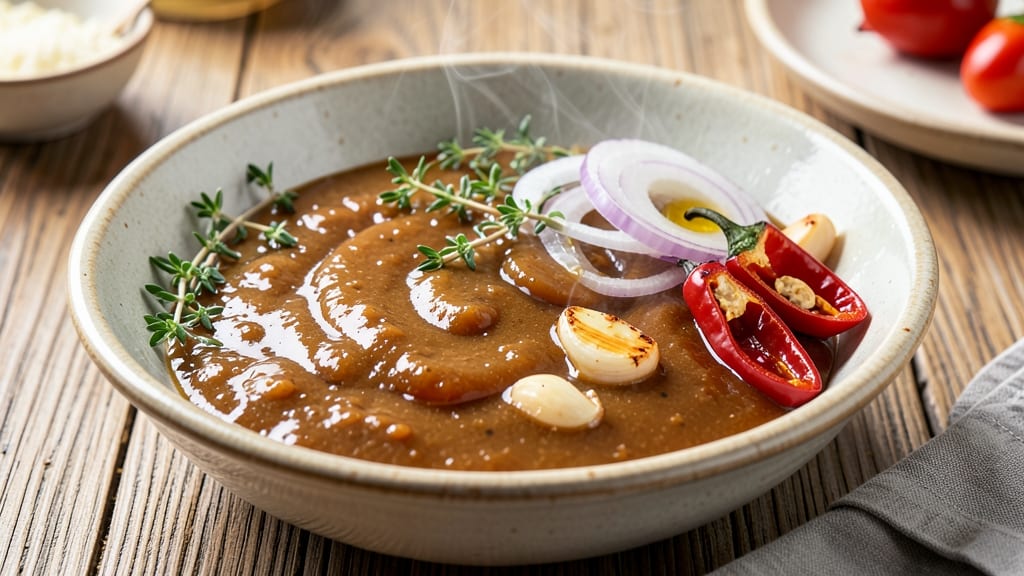
This cassareep sauce recipe unlocks the bold, earthy essence of the Caribbean—perfect for transforming simple stews into soul-stirring masterpieces. 🌟 Made with cassareep (or cassava-based syrup), aromatic spices like thyme and scotch bonnet, and tangy vinegar, this vegan sauce delivers deep umami and a subtle sweetness that lingers.
The key lies in balancing heat, acidity, and richness, creating a versatile condiment that elevates everything from hearty soups to marinades.
What sets this sauce apart is its ability to build layers of flavor over time. The cassareep provides a natural sweetness and depth, while garlic, onion, and thyme infuse warmth and complexity. A splash of vinegar brightens the sauce, cutting through the richness while adding a tangy kick.
Unlike store-bought versions, this recipe lets you control the intensity—adjust the scotch bonnet for heat or the vinegar for acidity to suit your taste.
The result is a sauce that’s restaurant-quality yet simple to make, with a shelf life of up to 6 months when canned or 3 months refrigerated.
Its versatility makes it a pantry staple—drizzle it over black beans, stir it into stews, or use it as a marinade for grilled meats or tofu. The aroma alone will transport you to a Caribbean kitchen, where bold flavors take center stage.
Once you taste the difference, you’ll never go back to bottled versions. Here’s how to make it—step by step—for a sauce that’s as functional as it is flavorful.
Ingredients for cassareep sauce
Nine Caribbean-inspired ingredients that transform simple dishes into bold, restaurant-quality masterpieces.
| Ingredient | Amount | Notes |
|---|---|---|
| Cassareep (or Cassava-Based Syrup) 🍠 | ½ cup | Substitute cassava syrup if unavailable |
| Fresh Thyme Leaves 🌿 | ¼ cup | Or 1 tbsp dried thyme |
| Scotch Bonnet Peppers 🌶️ | 1 whole | Adjust for heat preference |
| White Onion 🧅 | 1 whole | Medium size, finely chopped |
| Garlic Cloves 🧄 | 4 cloves | Peeled and minced |
| Apple Cider Vinegar 🍎 | ¼ cup | For tangy brightness |
| Extra-Virgin Olive Oil 🫒 | ¼ cup | For richness and depth |
| Vegetable Broth 💧 | 1 cup | Low-sodium preferred |
| Sea Salt 🧂 | 1 ½ tsp | Diamond Crystal preferred |
| Black Peppercorns 🌶️ | ½ tsp | Freshly cracked |
Cassareep is the heart of this sauce—it’s the cassava-based syrup that gives Caribbean dishes their signature depth. Look for it in Latin markets or online—if you can’t find it, cassava syrup works perfectly. The scotch bonnet peppers are non-negotiable for that signature heat, but reduce the amount if you prefer mild flavors. Fresh thyme is best, but dried works in a pinch (just use one-third the amount). For the onion and garlic, char them slightly in the oil first—this adds a smoky sweetness that takes the sauce to the next level. Apple cider vinegar is key for that bright, tangy kick that balances the richness.
No cassareep? Brown sugar or molasses at half the amount adds sweetness, though it won’t replicate the exact depth. Skip the scotch bonnet? Jalapeño or habanero at one-third the quantity for a milder heat. The olive oil should be extra-virgin—cheap oil tastes cheap in the final sauce. Vegetable broth can be swapped for water, but the saltiness will be less complex. For a smokier flavor, add a pinch of smoked paprika. If you’re making this ahead, let the sauce sit for at least 24 hours—the flavors meld beautifully over time.
This sauce keeps beautifully—3 months refrigerated or 6 months canned. Store it in a clean glass jar with a tight seal, and the flavors will only deepen. For canning, process in a water bath for 15 minutes. The sauce thickens as it cools, so add a splash of water or broth if it gets too thick. Once opened, keep it refrigerated and use within 2 weeks. Freeze for up to 3 months if you won’t use it soon—just thaw in the fridge before using.
Why You'll Love This Recipe
- Few Ingredients, Big Payoff: I swear by this recipe because it’s that simple—just five core ingredients, no fancy techniques. The cassareep does all the heavy lifting, while the thyme and Scotch bonnet add depth without fuss. Honestly, the hardest part is deciding what to drown in it first.
- Heat Meets Sweet: That first bite of Scotch bonnet’s fiery punch, then the cassareep’s caramelized sweetness—it’s a flavor explosion. The garlic and onion caramelize into this rich, sticky base, but the thyme keeps it from being overpowering. (Yes, even on a Tuesday night.)
- Dinner Party Ready: This sauce turns anything into a showstopper—grilled fish, roasted chicken, even mashed plantains. I’ve used it for family dinners, potlucks, and lazy Sunday brunches. It’s the kind of sauce that makes you sound like a chef, even if you’re just stirring a pot.
- Stretches Like Magic: A little goes a long way, so I always make extra. The cassareep’s thick, syrupy texture means it reheats beautifully, and it keeps for weeks in the fridge. Between us, it’s my budget-friendly secret for feeding a crowd without breaking the bank.
Step-by-step instructions for cassareep sauce
This aromatic sauce delivers Caribbean soul in every spoonful—rich, tangy, and packed with depth.
🔥 Step 1: Sauté the Aromatics Until Fragrant
Heat the 0.25 cup extra-virgin olive oil in a medium saucepan over medium heat. Add the 1 whole white onion, chopped into ¼-inch dice, and cook for 5-6 minutes until translucent and slightly caramelized. You'll know it's ready when the onion releases its sweet aroma and the edges begin to soften.
Next, add the 4 cloves minced garlic and cook for 30 seconds until golden and fragrant—don't let it brown or it'll turn bitter. Here's the thing: garlic burns fast, so keep an eye on it. If you see it darken, reduce the heat slightly. The goal is to infuse the oil with flavor without scorching.
🍳 Step 2: Add Heat and Acid for Complexity
Carefully remove the stem and seeds from the 1 whole Scotch bonnet pepper (wear gloves if you're sensitive to heat). Add the pepper directly to the pan and cook for 2 minutes until it softens and releases its fiery aroma. This step is where the sauce gets its signature kick—just don't walk away, or you'll risk burning the pepper.
Stir in the 0.25 cup apple cider vinegar and let it simmer for 1-2 minutes until the acidity brightens the aromatics. You'll smell the tangy citrus notes mingling with the smoky garlic—this is the foundation of the sauce's depth. If you're using dried thyme instead of fresh, add it now with the vinegar.
🥘 Step 3: Build the Base with Cassareep and Broth
Pour in the 0.5 cup cassareep (or cassava-based syrup) and 1 cup vegetable broth, stirring constantly to combine. The cassareep will darken the mixture and add its signature molasses-like richness. Bring the sauce to a gentle simmer over medium-low heat, then reduce the heat to low and let it cook uncovered for 10-12 minutes.
During this time, the sauce will thicken slightly as the liquid reduces. Stir occasionally to prevent sticking—this is where the magic happens. You're looking for a consistency that coats the back of a spoon but still flows smoothly. If it thickens too much, add 1-2 tablespoons water to loosen it.
👨🍳 Step 4: Finish with Seasoning and Fresh Thyme
Add the 0.25 cup fresh thyme leaves (or 1 tablespoon dried thyme) and stir gently to incorporate. The thyme will release its earthy aroma, adding another layer of complexity. Season with the 1.5 teaspoons sea salt and 0.5 teaspoon freshly cracked black peppercorns, tasting as you go.
Simmer for another 3-4 minutes until the thyme is fragrant and the flavors are fully melded. The sauce should now have a glossy sheen and a balanced profile—sweet from the cassareep, tangy from the vinegar, and spicy from the Scotch bonnet. If you're using Diamond Crystal salt, remember it's less dense, so you might need to add a pinch more for the right seasoning.
⏰ Step 5: Rest and Adjust for Perfection
Remove the sauce from heat and let it rest for 5 minutes. This resting period allows the flavors to settle and the sauce to thicken slightly. Taste again and adjust the seasoning if needed—perhaps a splash more vinegar for brightness or a pinch of salt to balance.
Strain the sauce through a fine-mesh sieve if you prefer a smooth texture, or leave it slightly chunky for added depth. Serve warm over grilled fish, stews, or rice—this sauce transforms simple dishes into something extraordinary. Store any leftovers in an airtight container in the refrigerator for up to 5 days, or freeze for up to 3 months.
Pro Tips For Making Cassareep Sauce
- Bloom the Thyme: Tear the thyme leaves off the stems right before adding them to the sauce—no need to chop. Fresh thyme releases its aroma better when it hits the hot oil, and skipping the stems keeps the sauce from getting fibrous. I used to add whole sprigs and wonder why my sauce never tasted vibrant enough.
- Sweat, Don’t Burn: Cook the onions and garlic on medium-low heat until they’re translucent but not browned—about 8-10 minutes. Rushing this step turns the base bitter, and that bitterness lingers even after adding cassareep. Sounds tedious, but trust the process—your sauce will thank you.
- Seed the Scotch Bonnet: Remove the seeds and membranes from the Scotch bonnet before blending or mincing—yes, even if you love heat. The seeds pack a punch that can overpower the delicate balance of cassareep and thyme. I learned this after making a batch so fiery it ruined a perfectly good meal.
- Simmer, Don’t Boil: Reduce the heat to the lowest setting once the cassareep is added and let it bubble gently for 15-20 minutes. Boiling burns off the deep, caramelized flavors you’re trying to build, leaving you with something flat and one-dimensional. Think "gentle kiss," not "full-blown steamroll."
Regional styles of this recipe
Trinidadian Pepper Sauce
In Trinidad, cassareep sauce often takes center stage as a fiery pepper sauce called "pepper sauce" or "hot sauce." Here, the cassareep is reduced with scotch bonnet peppers, garlic, and thyme, then blended until silky. The key difference?
Trinidadians often add a pinch of cinnamon (½ tsp) for warmth and 1 tbsp lime juice at the end for brightness. Use this version as a marinade for grilled meats or a dipping sauce for roti. 🌶️
Jamaican Jerk-Inspired Twist
Jamaican jerk flavors shine in this adaptation, where cassareep sauce becomes a jerk glaze. Blend the finished sauce with 1 tbsp jerk seasoning (store-bought or homemade with allspice, cinnamon, and nutmeg) and 1 tsp soy sauce for depth.
Brush it on chicken or pork before grilling for that signature smoky, spicy kick. Jamaicans also love drizzling it over ackee and saltfish for a bold breakfast dish.
Barbadian Cassareep Gravy
Barbados transforms cassareep into a thick, savory gravy perfect for stews or mashed potatoes. After simmering the base, whisk in 2 tbsp cornstarch with 2 tbsp cold water to thicken it into a glossy sauce.
Barbadian cooks often finish it with 1 tbsp tomato paste for richness and a splash of dark rum (1 tsp) for depth. Serve it alongside cou-cou or flying fish for a true island feast. 🍛
Guyanese Pepperpot Adaptation
Guyanese pepperpot stew relies on cassareep for its signature depth. Here, the sauce is simmered with pumpkin, sweet potatoes, and cassava for hours, creating a hearty, sweet-savory stew. The cassareep balances the natural sweetness of the vegetables while adding a smoky undertone.
Serve it with roti or breadfruit for a comforting meal that’s perfect for cooler weather.
Dominican "Salsa de Cassareep"
In the Dominican Republic, cassareep sauce is often used as a salsa base for grilled meats. After making the sauce, blend it with 1 avocado and 2 tbsp sour cream for a creamy, spicy dip.
Dominicans also love tossing it with black beans and rice for a flavor-packed one-pot meal. The avocado adds a cool contrast to the heat, making it a crowd-pleaser. 🥑
Surinamese Cassareep Chutney
Surinamese cuisine turns cassareep into a chunky chutney by blending it with grated coconut, cilantro, and lime. The texture is thicker and more textured than the classic sauce, making it ideal for dipping or topping curries.
Add 1 tbsp grated ginger and 1 tsp turmeric for extra warmth. This version is a staple in Surinamese roti shops and pairs perfectly with pom (fried dumplings). 🥥
Nutrition facts
Frequently asked questions
Can I substitute cassareep with something else if I can't find it?
Yes! Use ½ cup molasses or brown sugar for sweetness, but you'll lose the cassareep's signature depth. For a closer match, try ½ cup cassava syrup (available in Latin markets) or even ½ cup honey if you're not strict about vegan requirements. The sauce will still taste rich and aromatic, though the flavor profile will differ slightly.
How do I adjust the heat level in this sauce?
For milder heat, reduce the scotch bonnet pepper to ½ or ⅓ of the recipe (or remove seeds completely). For extra spice, add ½ tsp cayenne powder or an additional ¼ pepper at the end. Remember—heat builds over time, so taste as you go!
Can I make this sauce without vinegar?
Technically yes, but the vinegar is key for balancing the sauce's richness. Substitute with ½ cup lemon juice for brightness or ½ cup tomato paste for tanginess. Without acidity, the sauce may taste overly sweet or flat. If you skip it, add an extra pinch of salt to compensate.
How long should I let the sauce rest before using it?
Always let it rest for at least 5 minutes after cooking—this lets flavors meld and thicken slightly. For best results, refrigerate overnight (up to 24 hours). The longer it sits, the more complex the flavors become, especially the thyme and scotch bonnet notes. Pro tip: Taste after resting before adjusting seasoning!
What's the best way to store homemade cassareep sauce?
For short-term use, store in an airtight container in the fridge for up to 3 months. For long-term storage, can it in a water bath for 15 minutes (shelf-stable for 6 months). Freeze for up to 3 months—thaw in the fridge and stir well before using. The sauce thickens when cold, so add 1-2 tbsp water if needed after reheating.