
Sauces & Condiments
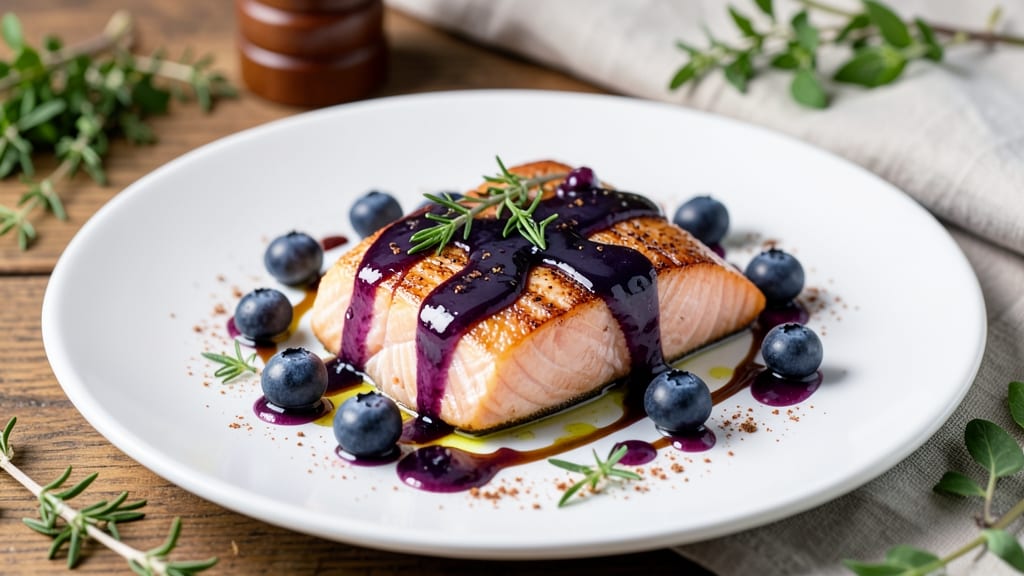
This blueberry sauce recipe transforms fish into a restaurant-worthy centerpiece with its perfect balance of tart and sweet flavors. 💛 The secret lies in simmering blueberries with a touch of vinegar and spices, then reducing them into a glossy, jam-like consistency that clings beautifully to salmon, trout, or cod.
I developed this sauce after realizing how much brighter fish tastes when paired with this fruity, slightly tangy glaze.
The magic happens when you reduce the sauce until it thickens just enough to coat the back of a spoon, creating a glossy finish that caramelizes slightly on the grill or in the oven.
A splash of balsamic vinegar adds depth, while a pinch of thyme and cinnamon elevate the natural berry flavors without overpowering the delicate fish. This sauce works equally well as a glaze before cooking or a drizzle after plating.
What makes this sauce special is its ability to cut through the richness of fish while enhancing its natural sweetness. The blueberries soften into a velvety texture that adds a luxurious touch, and the subtle tartness prevents the dish from feeling too heavy.
Whether you're grilling, baking, or pan-searing your fish, this sauce will turn a simple weeknight meal into something extraordinary.
Use it as a finishing touch for your favorite fish fillets, or let it simmer while your fish cooks for a hands-off approach. The sauce keeps well in the fridge for up to a week, making it a versatile addition to any meal.
Ready to elevate your fish dishes? Let's get started.
Ingredients for blueberry sauce recipe for fish
Nine simple ingredients transform into a luxurious blueberry glaze that makes fish unforgettable.
| Ingredient | Amount | Notes |
|---|---|---|
| Fresh Blueberries 🫐 | 1 ½ cups | Washed and dried thoroughly |
| Balsamic Vinegar 🍷 | ½ cup | High-quality aged variety |
| Granulated Sugar 🍚 | ¼ cup | Light brown sugar for depth |
| Fresh Thyme Leaves 🌿 | ½ tsp | Dried thyme works at 1/3 amount |
| Ground Cinnamon 🌶️ | ¼ tsp | Freshly ground for warmth |
| Extra-Virgin Olive Oil 🫒 | 1 tbsp | For glossy finish and richness |
| Fresh Lemon Juice 🍋 | 1 tbsp | Brightens the sauce beautifully |
| Salt 🧂 | ¼ tsp | Kosher or sea salt preferred |
| Black Pepper 🌶️ | ⅛ tsp | Freshly ground for subtle kick |
Blueberries are the star—frozen works in a pinch, but fresh gives that vibrant pop. Trader Joe's and Costco often have organic blueberries at great prices. If using frozen, don't thaw them first—just toss them straight into the pot. The balsamic vinegar should be aged (look for 'extra aged' on the label)—it adds that deep, complex flavor that makes this sauce sing. I always grab a small bottle from Whole Foods or the fancy section of my grocery store; it's worth the extra few bucks for this recipe.
No balsamic vinegar? Apple cider vinegar works in a bind, though it'll taste slightly different. Swapping sugar? Maple syrup or honey (if pescatarian) adds natural sweetness—just reduce the amount by 20%. Fresh thyme is ideal, but dried thyme at one-third the amount gets you close. The olive oil matters here—use something fruity and high-quality (like California Extra Virgin from the grocery store's olive oil aisle). It adds richness and helps the sauce cling beautifully to fish. And if you're out of cinnamon, a pinch of allspice or cardamom gives a different but equally delicious twist.
This sauce keeps beautifully—up to 1 week in the fridge if stored in a sealed jar. I like to make a double batch because it's so versatile. For grilling, let it warm up to room temperature before using so it spreads evenly. The sauce thickens as it cools, so if it seems too thick when done, just add a splash of water and simmer another minute. Freezes well for up to 3 months, though the texture might change slightly after thawing. I always portion it into small jars for easy use—perfect for quick weeknight dinners or last-minute entertaining.
Why You'll Love This Recipe
- Five-Ingredient Magic: I swear by this—just berries, vinegar, sugar, thyme, and cinnamon. No fancy gadgets, no stress. Simmer it while you prep the fish, and you’ve got a sauce that tastes like it spent hours simmering.
- Sweet-Tart Balance: That balsamic and sugar combo? It’s the kind of contrast that makes your taste buds do a happy dance. The thyme adds earthiness, and the cinnamon? A whisper of warmth that sticks with you.
- Weeknight to Dinner Party: Slap this on grilled trout for a lazy Friday or drizzle it over baked cod for company. It’s fancy enough to feel special, but simple enough that you won’t stress if your guests show up early.
- Leftovers That Don’t Suck: Make a double batch—this stuff keeps for days in the fridge. Use it on pancakes, yogurt, or even ice cream. (Yes, I’ve done it.) No waste, all flavor.
Step-by-step instructions for blueberry sauce for fish
This tart-sweet glaze transforms simple fish into a showstopper dish.
🍳 Step 1: Simmer Blueberries Until Soft
In a medium saucepan, combine the 1.5 cups fresh blueberries with the 0.25 cup granulated sugar. Bring to a gentle boil over medium-high heat, then immediately reduce to medium-low heat. Let them cook for 5-6 minutes until they soften and begin to burst, releasing their juices. You'll know they're ready when they look slightly flattened and release a sweet, jammy aroma.
Here's the thing—don't stir constantly. Let them cook undisturbed for the first 2 minutes so they develop those beautiful caramelized spots. I like to give them a gentle stir every 30 seconds after that to prevent sticking while still encouraging those juices to flow.
🍳 Step 2: Add Balsamic and Aromatics
Pour in the 0.5 cup balsamic vinegar and add the 0.5 tsp fresh thyme leaves, 0.25 tsp ground cinnamon, and 1 tbsp extra-virgin olive oil. Stir gently to combine, then let the mixture simmer for another 3-4 minutes until the blueberries are completely tender and the sauce starts to thicken slightly. You'll notice the balsamic deepening in color and developing a rich, slightly syrupy consistency.
This is where the magic happens. The balsamic vinegar adds that perfect tang that cuts through the sweetness, while the thyme and cinnamon bring warmth. If you're using dried thyme, add just ⅓ tsp—it's more concentrated than fresh. Keep an eye on the sauce to prevent it from boiling over as it reduces.
🍳 Step 3: Finish with Lemon and Seasonings
Remove the saucepan from heat and stir in the 1 tbsp fresh lemon juice, 0.25 tsp salt, and 0.125 tsp black pepper. The lemon juice brightens the flavors and balances the sweetness. Taste and adjust seasoning if needed—you might want a touch more salt or lemon depending on your blueberries' natural tartness.
Let the sauce sit off the heat for 5 minutes to thicken further. If it's too thick for your liking, you can thin it with a splash of water or more balsamic vinegar. The sauce should coat the back of a spoon but still be pourable enough to glaze fish beautifully. This resting period also lets all the flavors meld together perfectly.
🍽️ Step 4: Strain and Serve Warm
For a silky-smooth sauce, strain it through a fine-mesh sieve to remove any seeds or thyme stems. If you prefer a rustic texture, skip this step—those little blueberry bits add great visual appeal and texture contrast. The sauce should now have that perfect balance of sweet, tart, and slightly smoky flavors that complement fish so beautifully.
Serve immediately over your cooked fish or keep it warm in a small saucepan until ready to use. This sauce works wonders with baked or grilled fish fillets, drizzling over the top just before serving. The glossy finish from the olive oil makes it look absolutely stunning on a plate, and the flavors will elevate your fish from ordinary to extraordinary.
Pro Tips For Making Blueberry Sauce Recipe For Fish
- Simmer Slow and Steady: I learned this the hard way—blueberries burn faster than you’d think. Keep the heat at a gentle simmer (about medium-low) once everything’s combined, and resist the urge to crank it up. You’re not making jam here; you want those berries to soften and release their juices without turning into blackened bits.
- Strain the Seeds, Not the Soul: Fresh blueberries are great, but their seeds can make the sauce gritty if you’re not careful. After simmering, strain the mixture through a fine-mesh sieve—no need to press hard, just let gravity do the work. (Yes, even if you’re impatient like me.) This keeps the texture smooth without losing flavor.
- Balance the Balsamic Early: Balsamic vinegar adds depth, but too much too late can make your sauce taste harsh. Add about half the called-for amount upfront, taste as you go, and adjust at the end. If it’s still too sharp, a pinch of sugar or a splash of water can mellow it out—trust me, your fish (and your palate) will thank you.
- Toast the Cinnamon First: Ground cinnamon loses its warmth when it sits in liquid. Sprinkle it over the warm sauce off the heat for the last 30 seconds—just long enough to infuse the aroma without letting it turn bitter. Fresh thyme leaves should go in last too; otherwise, they’ll turn mushy and lose their bright flavor. (Your future self will thank you.)
Regional styles of blueberry sauce recipe for fish
Southern US Style
In the Southern states, this blueberry sauce often gets a smoky twist by adding a dash of hot sauce or a splash of bourbon (about 1 tbsp) to deepen the flavor profile. I love using Louisiana-style hot sauce like Crystal or Tabasco to give it that signature kick.
This version pairs beautifully with blackened catfish or grilled trout, which are popular in regions like Louisiana and Mississippi. 🔥
Another Southern adaptation is to replace the cinnamon with a pinch of smoked paprika (about ¼ tsp) for a subtle smokiness that complements grilled fish perfectly. This works especially well with whole fish like red snapper or flounder, which are commonly grilled in the South.
Serve it alongside steamed collard greens or cornbread for a complete Southern-inspired meal.
Pacific Northwest Twist
Up in the Pacific Northwest, where fresh blueberries are abundant, the sauce often includes local honey (about 2 tbsp) instead of sugar to highlight regional ingredients.
I prefer using wildflower honey from local farmers' markets, which adds a floral note that pairs wonderfully with salmon or halibut, both staple fish in this region. 🌿
This version also incorporates fresh rosemary (about ½ tsp finely chopped) instead of thyme, reflecting the herbs commonly used in Pacific Northwest cuisine. The rosemary's piney aroma complements the earthy flavors of fish like cod or lingcod, which are often grilled or baked with this sauce.
It's a fantastic way to showcase the region's fresh, seasonal ingredients.
New England Adaptation
In New England, where seafood is a staple, this blueberry sauce often gets a maple syrup twist (about 2 tbsp) to honor the region's maple tradition. I use Grade B maple syrup for its deeper, caramel-like flavor, which works beautifully with fish like haddock or scrod.
This version is especially popular during summer grilling season, when blueberries are at their peak. 🍁
Another New England touch is adding a pinch of ground cloves (about ⅛ tsp) for warmth, which pairs exceptionally well with the natural sweetness of the fish. This adaptation is perfect for baked fish dishes, like cod in a blueberry-maple glaze, which is a local favorite.
Serve it with steamed asparagus or roasted potatoes for a complete coastal-inspired meal.
Caribbean Fusion
For a Caribbean-inspired twist, swap the cinnamon for allspice (about ¼ tsp) and add a splash of dark rum (about 1 tbsp) to infuse a warm, spiced flavor.
This version pairs beautifully with grilled mahi-mahi or snapper, which are popular in Caribbean cuisine. The rum adds a subtle depth that enhances the tropical vibe of the dish. 🌴
You can also incorporate fresh lime juice (about 1 tbsp) instead of lemon to brighten the sauce and complement the flavors of fish like red snapper or grouper. This adaptation is perfect for a summer dinner, especially when paired with grilled plantains or coconut rice.
The sweet-tart balance of the sauce makes it a standout topping for Caribbean-style seafood dishes.
Nutrition facts
Frequently asked questions
Can I use frozen blueberries instead of fresh?
Yes! Frozen blueberries work perfectly—just skip thawing them first. Toss them straight into the saucepan with the sugar to soften evenly. The texture will be slightly different but still delicious. For best results, use high-quality frozen blueberries without added sugars or syrups.
How do I adjust the sweetness for tart blueberries?
If your blueberries are extra tart, reduce the sugar to 1/4 cup and add 1 extra tablespoon of balsamic vinegar for balance. Taste as you go—you can always add more sugar later, but vinegar is harder to fix. The sauce should taste like a perfect harmony of sweet and tart, not one dominating the other.
What's the best way to use this sauce with fish?
For grilled or baked fish, brush the sauce on 2-3 minutes before cooking to create a caramelized glaze. For delicate fish like trout, drizzle it over the top after cooking. For extra richness, warm the sauce gently before serving—it clings beautifully to flaky fish like salmon or cod.
Can I make this sauce ahead of time?
This sauce keeps well in an airtight container in the fridge for up to 1 week. For best results, reheat gently on the stove with a splash of water to restore its glossy texture. Freeze for up to 3 months, though the texture may change slightly after thawing. Reheat slowly to avoid separation.
What if my sauce is too thick or too thin?
If it's too thick, thin with 1 teaspoon of water or balsamic vinegar at a time while stirring. For a thicker sauce, simmer uncovered for 2-3 extra minutes to reduce. The ideal consistency coats the back of a spoon but remains pourable. Remember, it thickens more as it cools, so adjust while warm.