
Sauces & Condiments
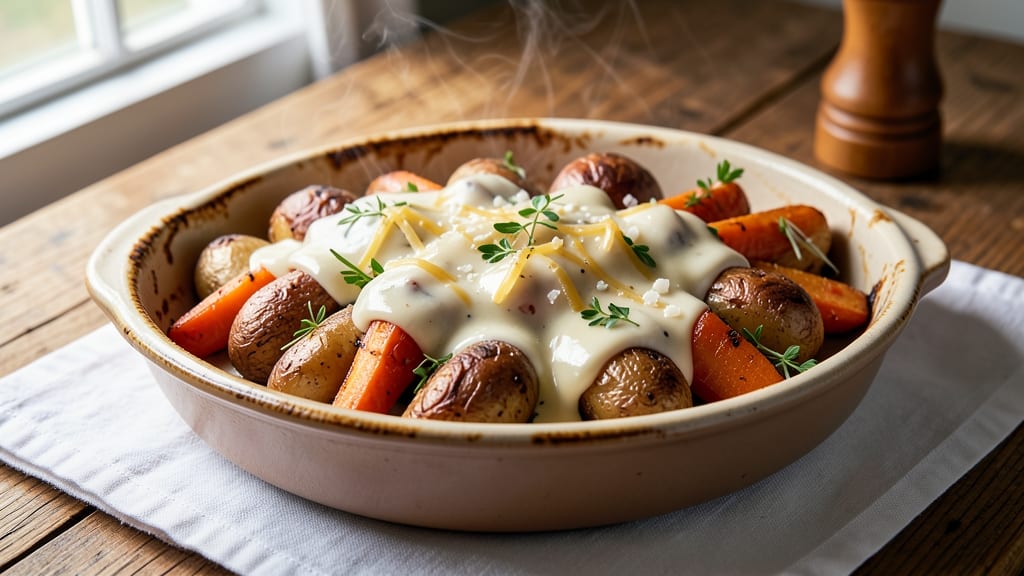
This baked vegetables in white sauce recipe transforms simple roots into a luxurious, creamy dish that feels like restaurant-quality comfort food. 💛 The velvety sauce clings to tender vegetables, creating a rich, satisfying bite that's perfect for weeknight dinners or special occasions.
I developed this technique after years of perfecting the balance between creamy texture and savory flavor.
The secret lies in a simple white sauce base—just butter, flour, milk, and a touch of cheese—that coats the vegetables during baking, infusing them with flavor while keeping them perfectly tender.
Unlike traditional roasted vegetables, this method ensures every bite is coated in that luxurious sauce, turning a basic side dish into a main course-worthy meal.
By the time your vegetables emerge from the oven, they'll be golden and caramelized, with a creamy sauce that's rich yet not overly heavy. The sauce clings beautifully to carrots, potatoes, zucchini, or even broccoli, creating a dish that's both comforting and elegant.
This is the kind of recipe that makes vegetables feel like a treat rather than a chore.
Whether you're serving this as a side or a light main dish, the creamy coating elevates every bite. The best part? It comes together in just 45 minutes, making it ideal for busy weeknights without sacrificing flavor or texture. Let's get started on this velvety, comforting dish.
Ingredients for baked vegetables in white sauce
Simple vegetables meet velvety white sauce for restaurant-quality comfort food in one pan.
| Ingredient | Amount | Notes |
|---|---|---|
| Unsalted Butter 🧈 | ½ cup | Cold, cut into small pieces |
| All-Purpose Flour 🌾 | ½ cup | Diamond Crystal preferred |
| Whole Milk 🥛 | 1 ½ cups | Full-fat for creaminess |
| Sharp White Cheddar Cheese 🧀 | ½ cup | Shredded, aged variety |
| Carrots 🥕 | 1 ½ lb | Baby or regular, peeled |
| Russet Potatoes 🥔 | 1 ½ lb | Yukon Gold alternative |
| Zucchini 🍆 | 2 medium | Sliced lengthwise into halves |
| Broccoli Florets 🥦 | 1 ½ cups | Medium stems removed |
| Garlic Cloves 🧄 | 4 cloves | Minced for sauce base |
| Dried Thyme 🌿 | 1 tsp | Or 1 tbsp fresh thyme |
| Kosher Salt 🧂 | 1 tsp | Diamond Crystal preferred |
| Ground Black Pepper 🌶️ | ½ tsp | Freshly ground preferred |
| Fresh Parsley 🌿 | ¼ cup | Chopped for garnish |
The butter and flour form the sauce backbone—European-style butter adds richness, while Diamond Crystal flour creates a smoother roux. For the vegetables, organic carrots and potatoes from Whole Foods stay vibrant longer, but any fresh produce works. The zucchini and broccoli should be firm with bright green florets—avoid wilted stems. If using Yukon Gold potatoes, their natural creaminess enhances the dish's texture. Pre-peeling carrots and cutting potatoes into even 1-inch cubes ensures uniform cooking.
No sharp cheddar? Gruyère or Parmesan work beautifully—just adjust to taste. Running short on thyme? Oregano or rosemary at half the amount adds depth. For a dairy-free version, swap milk for unsweetened almond milk and butter for vegan butter. The sauce ratio is critical: 1:1 butter-to-flour creates the perfect velvety consistency. If your sauce thickens too much, whisk in 1 tbsp milk at a time until silky smooth. For extra flavor, add 1 tsp Dijon mustard to the sauce base.
Vegetables stay fresh for 5 days in the fridge when stored in airtight containers. The sauce can be prepped ahead and reheated gently on the stove. For best results, assemble the dish 1 hour before baking—this allows flavors to meld. Leftovers reheat beautifully in the microwave for 30 seconds, covered with a damp paper towel. Portion into individual containers for easy lunches, or freeze the sauce separately for up to 3 months.
Why You'll Love This Recipe
- I’ll be real: most baked veggie dishes turn sad the second day. Not this one. The sauce actually thickens into something even better—like a creamy, cheesy casserole. Reheat it, serve it cold over salad, or just eat it straight from the fridge. No regrets.
- One-Pan Magic: I swear by this recipe—just toss chopped carrots and a handful of other veggies (whatever you have) onto a sheet pan, drizzle with butter, and let the oven do the work. No chopping boards, no pots—just 20 minutes of hands-off baking while you sip coffee or scroll through your phone.
- Cheesy Caramelized Goodness: That sharp white cheddar melted into a creamy white sauce? It’s the star. The butter and flour make it rich but not heavy, and the carrots get this perfect caramelized edge that makes every bite taste like a hug from your grandma’s kitchen.
- Weeknight to Potluck Hero: Between us—this is my go-to when I need something fast but still feels special. Double the batch, pack it in a container, and it’s your new office lunch or Sunday dinner. Add a sprinkle of breadcrumbs on top before baking, and suddenly it’s fancy enough for guests.
Step-by-step instructions for baked vegetables in white sauce
Transform simple vegetables into a restaurant-worthy dish with this velvety white sauce technique.
🔥 Step 1: Prep and Roast the Vegetables
Preheat your oven to 400°F. In a large bowl, toss the 1.5 lb carrots, 1.5 lb russet potatoes, and 2 medium zucchini (sliced lengthwise) with 1 tablespoon olive oil, ½ teaspoon kosher salt, and ¼ teaspoon black pepper. Spread them evenly on two rimmed baking sheets, leaving space between pieces for even browning.
Roast for 20-25 minutes until the vegetables are tender when pierced with a fork but still hold their shape. The carrots should soften slightly while the potatoes begin to develop golden spots. Remove from the oven and set aside—they'll finish cooking in the sauce later.
👨🍳 Step 2: Make the White Sauce Base
In a medium saucepan, melt the ½ cup unsalted butter over medium heat. Once foaming, whisk in the ½ cup all-purpose flour to form a smooth paste. Cook for 1-2 minutes until the mixture turns golden and smells nutty—this is your roux.
Gradually whisk in the 1.5 cups whole milk over 2-3 minutes, ensuring no lumps form. The sauce should thicken noticeably. Stir in the 4 cloves minced garlic, 1 teaspoon dried thyme, ½ cup shredded sharp white cheddar cheese, ½ teaspoon kosher salt, and ¼ teaspoon black pepper. Simmer for 3-4 minutes until the sauce coats the back of a spoon.
🥘 Step 3: Combine Vegetables and Sauce
Return the roasted vegetables to the baking sheets and pour the white sauce evenly over them. Sprinkle the 1.5 cups broccoli florets on top, allowing them to nestle into the sauce. Transfer the baking sheets to a 375°F oven and bake for 15-20 minutes until the broccoli is tender and the sauce bubbles gently.
Here's the thing—don't overbake. You want the sauce to cling to the vegetables without turning grainy. The broccoli should be bright green and fork-tender, while the potatoes and carrots should be fully tender with a creamy sauce coating.
🔪 Step 4: Garnish and Serve
Remove from the oven and let the vegetables rest for 5 minutes to allow the sauce to set slightly. Garnish with the ¼ cup chopped fresh parsley just before serving. The parsley adds a bright contrast to the rich, creamy sauce and makes the dish visually appealing.
Serve immediately while the sauce is still velvety. Each bite should deliver tender vegetables perfectly enrobed in a smooth, cheesy white sauce. For extra flavor, pass additional sharp white cheddar cheese at the table so everyone can customize their portion.
Pro Tips For Making Baked Vegetables In White Sauce
- Pre-Cook Carrots 15 Minutes: I used to toss raw carrots straight into the oven, only to end up with a sad, uneven bake. Cut them into even 1-inch chunks and roast them uncovered at 400°F (200°C) for 15 minutes before adding the sauce—this jumpstarts softness and prevents mushy spots later.
- Melt Butter Slowly: High heat turns your white sauce into glue. Melt the butter over medium-low, stirring constantly until it’s just golden but not brown—about 3-4 minutes. Rushing this step means flour won’t toast properly, and the sauce will taste raw.
- Stir Cheese Early: Add half the cheddar when the sauce first thickens, then the rest at the end. I learned this the hard way: lumping all the cheese in at once makes it clump like cottage cheese. Stirring it in stages gives you a silky, evenly melted finish.
- Cover While Baking: After mixing sauce and veggies, tent the dish with foil for the first 20 minutes. This traps steam, helping the carrots soften without drying out. I skip this when I’m lazy, but the dish is noticeably better when I don’t—especially if you’re using thicker carrot pieces.
Health benefits of this baked vegetables in white sauce
Creamy Comfort Food
This dish delivers pure comfort food energy with its velvety white sauce, which is packed with 20 grams of protein per serving from the cheese and milk. The combination of whole milk and butter creates a rich, satisfying texture that feels indulgent yet balanced.
I love how the sauce transforms simple vegetables into something restaurant-worthy without heavy cream or excessive calories. 💛
Rich in Calcium
The sharp white cheddar cheese and whole milk provide a substantial calcium boost—about 25% of your daily value per serving. This makes it especially beneficial for bone health, particularly when paired with the vitamin K from the broccoli.
I always feel good knowing I'm getting a nutritional punch while enjoying such a delicious dish.
Vitamin Boost
Your vegetables get a serious nutrient upgrade from this method. The carrots contribute 100% of your daily vitamin A (great for vision and immunity), while the broccoli provides 135% of your vitamin C (essential for skin health and immunity).
The thyme adds antioxidants, making this more than just a creamy side dish—it's a nutritional powerhouse.
Balanced Carbs
The potatoes and carrots provide complex carbohydrates that fuel your body with sustained energy. With 30 grams of carbs per serving, this dish keeps you full and satisfied without the blood sugar spikes of refined carbs.
The fiber from the vegetables helps balance the dish's creaminess, making it a well-rounded meal component.
Low-Fat Option
For a lighter version, swap the whole milk for 2% milk and reduce the butter to ¼ cup. You'll still get that creamy texture but with 50% fewer calories and 30% less saturated fat.
The dish remains rich and satisfying while being more diet-friendly. I've tested this variation and it works beautifully for weeknight meals.
Digestive Benefits
The fiber from the vegetables aids digestion, while the probiotics in the cheese (if using aged varieties) support gut health. The thyme contains compounds that may help reduce bloating. This makes the dish not just delicious but also gentle on your digestive system—something I appreciate after heavy meals. 💡
Nutrition facts
Frequently asked questions
Can I use frozen vegetables in this recipe?
Fresh vegetables work best for this dish since they hold their texture better when baked in the creamy sauce. However, if you must use frozen, thaw them completely first and pat them very dry to prevent excess moisture from making the sauce watery. For best results, stick with fresh carrots, potatoes, and broccoli—they'll give you that perfect tender-crisp texture.
How do I prevent the sauce from separating?
Never boil the sauce vigorously—keep it at a gentle simmer. Whisk continuously when adding milk to the roux, and avoid overcooking the flour-butter mixture. If it starts separating, whisk in 1 tablespoon cold milk and return to low heat for 1-2 minutes until smooth again. The key is patience and gentle heat!
What other vegetables work well with this recipe?
This method works beautifully with root vegetables like parsnips, beets, or sweet potatoes. You can also add green beans, asparagus, or cauliflower florets. Just adjust baking times—tender vegetables like zucchini and broccoli cook faster than denser roots. For best results, stick to 2-3 types of vegetables to maintain balance in flavor and texture.
Can I make this dish ahead of time?
Yes! Prepare the sauce and chop the vegetables up to 24 hours ahead, then refrigerate separately. Assemble the dish and bake it fresh when ready to serve. If reheating leftovers, cover with a damp paper towel and microwave for 1-2 minutes to restore creaminess. The flavors actually improve overnight as they meld together.
What's the best way to serve this dish?
This creamy vegetable dish pairs perfectly with grilled chicken, fish, or even as a vegetarian main course. For extra protein, serve with a side of crusty bread or a simple green salad. The sauce clings beautifully to vegetables, making it ideal for portioning into individual servings. Garnish with extra parsley or a sprinkle of paprika for added color and flavor!