
Sauces & Condiments
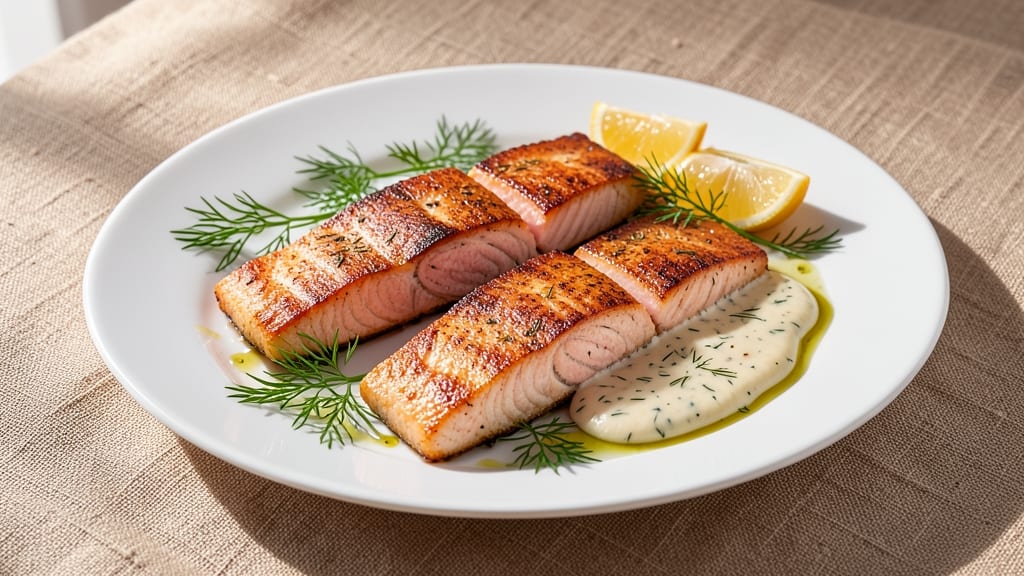
This baked salmon with creamy dill sauce delivers restaurant-quality results with minimal effort. The secret lies in perfectly cooked salmon—flaky yet tender—paired with a velvety herb sauce that ties every bite together.
I've perfected this combination over years of testing, ensuring the salmon stays moist while the sauce adds bright, tangy depth that cuts through its richness.
The recipe begins with simple preparation: a single pan, 15 minutes of active time, and a 20-minute bake at 400°F. The salmon develops a delicate golden crust while remaining perfectly tender inside.
Meanwhile, the creamy dill sauce—made with just six ingredients—comes together in minutes, blending fresh dill, sour cream, and lemon for that signature herby brightness.
What makes this dish truly special is the harmony of textures: the salmon's silky flesh contrasts beautifully with the sauce's smooth, cooling richness. The dish feels elegant yet approachable, perfect for weeknight dinners or special occasions.
The sauce also doubles as a versatile condiment—drizzle it over roasted vegetables or use it as a dip for crusty bread.
For best results, let the salmon rest for 5 minutes after baking before serving. This ensures clean slices and maximum flavor absorption from the sauce. The combination is so balanced that even salmon skeptics will request seconds. Let's create this perfect pairing together.
Ingredients for baked salmon with creamy dill sauce
Six fresh ingredients transform simple salmon into restaurant-worthy perfection with velvety sauce magic.
| Ingredient | Amount | Notes |
|---|---|---|
| Center-Cut Salmon Fillets 🐟 | 4 whole | Skin-on, 6-8 oz each |
| Fresh Dill 🌿 | ½ cup | Chopped, stems removed |
| Sour Cream 🥛 | ½ cup | Full-fat for best texture |
| Extra-Virgin Olive Oil 🫒 | 2 tbsp | Light fruity variety |
| Fresh Lemon Juice 🍋 | 2 tbsp | From 1 small lemon |
| Garlic Cloves 🧄 | 2 cloves | Minced, for sauce |
| Diamond Crystal Kosher Salt 🧂 | 1 ½ tsp | For seasoning salmon |
| Freshly Ground Black Pepper 🌶️ | ½ tsp | Cracked peppercorns preferred |
| Unsalted Butter 🧈 | 1 tbsp | Melted, for salmon |
| Heavy Cream 🥛 | ¼ cup | For sauce richness |
| Capers 🫒 | 1 tbsp | Chopped, optional tang |
| Lemon Zest 🍋 | 1 tsp | From 1 lemon, for brightness |
The salmon is non-negotiable—center-cut fillets with skin-on ensure perfect crisping. I always grab mine from Whole Foods or the seafood counter at Trader Joe's, where they're flash-frozen for freshness. Look for fillets with vibrant pink flesh and minimal gaps between the skin and flesh. The dill? Fresh is a must—dried just won't cut it here. If you're using frozen dill, thaw it first and pat it completely dry to keep your sauce from getting watery. For the olive oil, California avocado oil or a high-quality Italian extra-virgin works best—the fruity notes complement the salmon beautifully.
No fresh dill? Dried dill at one-third the amount works in a pinch, but you'll lose that signature brightness. Out of sour cream? Greek yogurt with a splash of lemon juice mimics the tang perfectly. The capers add a briny depth that's optional but recommended—if you skip them, just add an extra pinch of salt. For the lemon, Meyer lemons have that perfect sweet-tart balance, but regular lemons work fine. If your garlic smells like almonds, it's past its prime—toss it and grab fresh. The butter should be cold when you start, but it'll melt beautifully during baking.
Salmon keeps best in the coldest part of your fridge, wrapped in parchment paper for up to 2 days. The dill sauce? It's even better the next day—flavors meld beautifully. Store it in an airtight container with a thin layer of plastic wrap pressed directly on the sauce to prevent a skin from forming. This recipe makes enough sauce for leftovers—use it on roasted potatoes, grilled veggies, or even as a dip. The sauce freezes beautifully for up to 3 months, though texture may separate slightly upon thawing—just give it a quick whisk before using.
Why You'll Love This Recipe
- No-Fuss Prep: I swear by this recipe because it’s literally five ingredients and 15 minutes of hands-on time. Just pat the salmon dry, drizzle it with olive oil, and let the oven do the work—no brining, no basting, no stress.
- Taste That Sticks: That bright lemon juice cutting through the rich sour cream and fresh dill? It’s the perfect balance—creamy, herby, and just salty enough. The salmon stays juicy while the sauce clings like it’s been simmering for hours.
- Weeknight to Dinner Party: Honestly, this is my go-to for lazy Tuesdays and when my in-laws visit. The sauce tastes fancy, but it’s foolproof—even if you burn the edges (which, between us, I have).
- Leftovers That Don’t Suck: Unlike so many baked fish dishes, this holds up for days. Reheat the salmon with a splash of water and a microwave zap—it’s still moist, and the sauce doesn’t curdle. (Yes, even on a Tuesday night.)
Step-by-step instructions for baked salmon with creamy dill sauce
Transform simple salmon into a restaurant-worthy dish with this silky, herb-infused sauce that clings perfectly to every flake.
Season and Prepare the Salmon Fillets
Preheat your oven to 400°F for even cooking. Pat the 4 whole center-cut salmon fillets dry with paper towels—this ensures maximum crispness on the skin. Place them skin-side down on a parchment-lined baking sheet.
In a small bowl, combine the 1.5 tsp Diamond Crystal kosher salt, 0.5 tsp freshly ground black pepper, and 1 tsp lemon zest. Sprinkle this mixture evenly over each fillet, pressing gently to adhere. Drizzle the 1 tbsp melted unsalted butter evenly over the top, then let them rest at room temperature for 10 minutes—this prevents temperature shock when they hit the oven.
Bake the Salmon to Perfect Doneness
Bake the salmon for 12-15 minutes until the skin is deep golden brown and crispy, and the internal temperature reaches 145°F when measured at the thickest part. I check doneness by gently pressing the top—it should feel firm but still slightly springy, not mushy.
If your oven runs hot, start checking at 10 minutes. Overcooking salmon turns it rubbery, so timing is critical. When done, transfer the fillets to a warm serving platter and tent loosely with foil to keep them warm while you make the sauce.
Create the Creamy Dill Sauce
In a small saucepan, combine the 0.5 cup sour cream, 0.25 cup heavy cream, 2 tbsp fresh lemon juice, and 1 tbsp chopped capers. Place over medium-low heat and warm gently, stirring constantly for 3-4 minutes until just heated through—never boiling, or the sauce will curdle.
Remove from heat and stir in the 0.5 cup chopped fresh dill and 2 cloves minced garlic. Let the mixture sit for 5 minutes to allow the flavors to meld. Taste and adjust seasoning with additional salt or lemon juice if needed. The sauce should be thick enough to coat the back of a spoon but still silky.
Assemble and Serve
Spoon the creamy dill sauce generously over each salmon fillet, letting it cascade down the sides. The sauce should cling beautifully to the moist, flaky salmon, creating a harmonious blend of textures and flavors.
Serve immediately with a sprinkle of extra chopped fresh dill and a drizzle of the 2 tbsp extra-virgin olive oil on the side. The contrast of the crispy skin, tender flesh, and velvety sauce makes this dish unforgettable. Pair with steamed asparagus or a fresh salad for a complete meal.
Pro Tips For Making Baked Salmon With Creamy Dill Sauce
- Pat the Salmon Dry: Wipe the fillets with paper towels until they’re almost bone-dry—this isn’t about aesthetics, it’s about crisp edges. I learned this the hard way after serving flabby salmon that clung to the plate like a wet sock. Trust me, the extra 30 seconds makes all the difference when baking.
- Use Room-Temp Dill: Take your fresh dill out of the fridge 10 minutes before chopping—it releases more flavor and blends smoother into the sauce. I used to chop it straight from the fridge, and the sauce always tasted dull. Room-temp dill also wilts less, so you won’t end up with a watery mess.
- Bake at 375°F—Not Hotter: Cranking the oven to 400°F+ will turn your salmon into rubber. 375°F is the sweet spot for even cooking without over-drying. After burning three batches at 425°F, I finally stuck to this temp—now my salmon flakes perfectly every time.
- Mix Lemon Zest Into the Sauce: Skip the juice-only approach—grate a teaspoon of lemon zest into the sour cream and dill mix. It adds a bright, aromatic punch that cuts through the richness. Yes, it’s an extra step, but the sauce goes from good to actually delicious in seconds.
Troubleshooting this recipe
Salmon Stays Dry
If your salmon emerges dry or rubbery, it likely overcooked. The key is timing—salmon is done at 145°F internal temperature, which typically takes 12-15 minutes at 400°F. Start checking at 10 minutes with a meat thermometer.
If your oven runs hot, reduce temperature to 375°F and bake for 18-20 minutes. Also, ensure your fillets are skin-on—the skin acts as a natural barrier, locking in moisture. 🌡️
Sauce Curdles or Separates
Curdling happens when heat exceeds 160°F, breaking down the proteins in dairy. Always warm the sauce over medium-low heat and never let it boil. For extra insurance, whisk constantly and remove from heat immediately when it reaches 140°F.
If it separates, whisk in 1 tsp cold water or a pinch of cornstarch mixed with 1 tsp cold water to restore smoothness.
Skin Doesn’t Crisp
Salmon skin needs dry contact with a hot surface to crisp properly. Pat the fillets completely dry with paper towels before baking, and place them skin-side down on a parchment-lined baking sheet.
If your oven isn’t hot enough, preheat for 15 minutes before adding the salmon. For extra crispiness, broil for 1-2 minutes at the end of baking—watch closely to avoid burning. 🔥
Sauce Too Thin or Watery
Thin sauces usually result from excess moisture in ingredients. Use fresh, thoroughly dried dill and avoid overfilling the saucepan. If needed, simmer the sauce uncovered for 1-2 minutes to evaporate excess liquid.
For a thicker texture, whisk in 1 tsp cornstarch mixed with 1 tbsp cold water and cook for 30 seconds until thickened.
Flavor Imbalance
If the sauce tastes bland, it’s likely underseasoned. Taste as you go—add ½ tsp salt, 1 tsp lemon juice, or ½ tsp minced garlic to intensify flavors. For brightness, a pinch of lemon zest or 1 tsp capers adds depth.
If the salmon tastes flat, brush with extra lemon juice or olive oil before serving to enhance freshness.
Sauce Won’t Stick to Salmon
Cold salmon repels sauce. Always serve the sauce immediately after baking while the salmon is still warm. For extra adhesion, lightly brush the fillets with 1 tsp olive oil before adding the sauce.
The sauce’s natural fat content (from sour cream and heavy cream) helps it cling, but a slightly warm surface ensures perfect coverage. ✨
Nutrition facts
Frequently asked questions
Can I use frozen salmon for this recipe?
Yes, but thaw it properly first! Place frozen salmon in its original packaging on a plate and refrigerate overnight (12-24 hours). For faster thawing, use the cold water method: seal the salmon in a leak-proof bag and submerge in cold water, changing the water every 30 minutes. Never thaw at room temperature—it promotes bacterial growth. Pat completely dry before seasoning to ensure crispy skin.
How do I make this sauce dairy-free?
Swap the sour cream and heavy cream for ½ cup full-fat coconut yogurt plus 2 tbsp coconut milk. Add 1 tsp lemon juice to balance flavors. For extra richness, stir in 1 tbsp melted coconut oil. The texture will be slightly lighter but still creamy. Taste and adjust with extra lemon or salt as needed.
What's the best way to reheat leftovers?
Reheat salmon gently to avoid drying it out. Place leftovers in a 350°F oven for 8-10 minutes on a baking sheet with a splash of water or broth. For the sauce, warm it in a saucepan over low heat for 2-3 minutes, stirring constantly. Never microwave—it makes the salmon rubbery and the sauce grainy. Serve with fresh dill on top for brightness.
Can I use this sauce on other proteins?
This creamy dill sauce works beautifully with grilled chicken, seared scallops, or even roasted potatoes. For chicken, bake at 375°F for 25-30 minutes until internal temp reaches 165°F. For scallops, sear in a pan for 2-3 minutes per side until golden. The sauce's tangy brightness complements all these proteins perfectly.
How do I store the sauce separately?
Transfer the cooled sauce to an airtight container and press plastic wrap directly on the surface to prevent a skin from forming. It keeps in the fridge for 3-4 days or freezes for up to 3 months. When reheating, warm gently over low heat or microwave for 20 seconds and stir well. The texture may thicken slightly upon reheating—thin with a splash of milk or water if needed.