
Sauces & Condiments
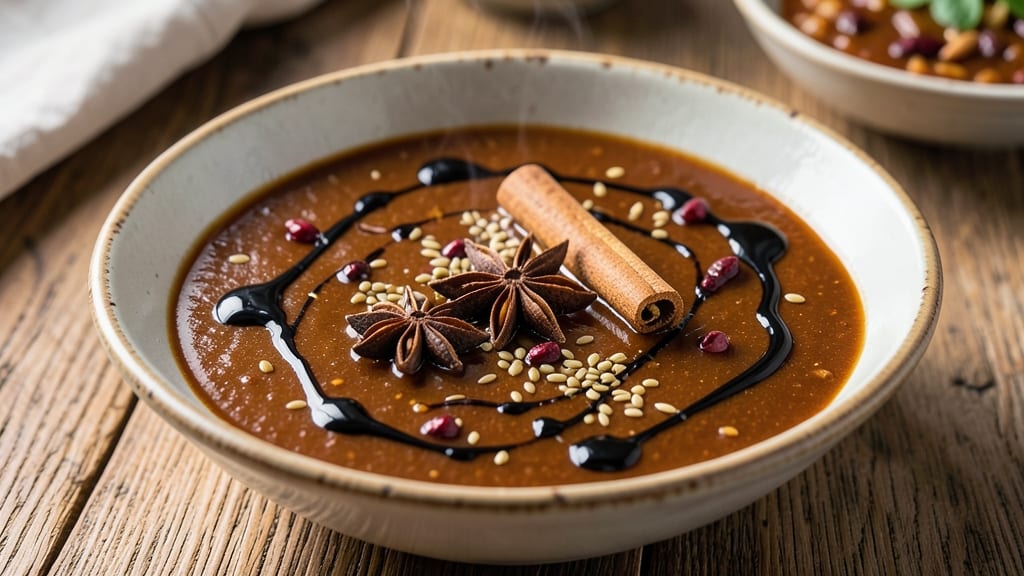
This bak kut teh sauce recipe unlocks the deep, fermented complexity that defines Singapore's most beloved pork rib stew. The secret lies in balancing salty, spicy, and aromatic elements—dark soy sauce for richness, star anise for warmth, and a touch of fermented tauco for that unmistakable umami depth.
What sets this sauce apart is the slow simmering process, which develops layers of flavor that bottled versions can't match.
The foundation starts with a simple spice blend of cinnamon, cloves, and fennel, toasted until fragrant to avoid bitterness. Then comes the star player: dark soy sauce, which caramelizes beautifully while building a glossy, molasses-like consistency.
Fermented tauco adds a funky, savory note that's essential for authentic depth, while a splash of vinegar brightens the final profile.
By the time you strain and reduce this sauce, you'll have a concentrated, aromatic liquid that transforms simple pork ribs into a restaurant-quality dish. The aroma alone—warm spices mingling with fermented soy—will have your kitchen smelling like a bustling Singapore hawker stall.
Every spoonful delivers that perfect balance of salty, spicy, and herbal notes that define bak kut teh.
Store it in the refrigerator for up to 2 weeks, where the flavors continue to meld and deepen. This sauce works as a marinade, dipping sauce, or the backbone of your homemade stew. Let's get started on creating this flavor-packed essential.
Ingredients for bak kut teh sauce
Nine ingredients transform into a restaurant-quality sauce with deep fermented complexity.
| Ingredient | Amount | Notes |
|---|---|---|
| Dark Soy Sauce 🥄 | ½ cup | For deep caramelized richness |
| Fermented Tauco 🧂 | 2 tbsp | Essential for authentic umami |
| Star Anise Pods 🌿 | 2 whole | Toasted lightly to avoid bitterness |
| Cinnamon Sticks 🍃 | 1 whole | Lightly toasted for warmth |
| Fennel Seeds 🌶️ | 1 tsp | Toasted to release aroma |
| Cloves 🌶️ | 4 whole | Lightly crushed for depth |
| White Vinegar 🍋 | 1 tbsp | Brightens the final flavor |
| Sugar 🍬 | 2 tbsp | Balances salty-sweet profile |
| Garlic Cloves 🧄 | 3 cloves | Minced for aromatic punch |
| Fresh Ginger 🧅 | 1 tbsp | Grated, for zesty kick |
The dark soy sauce is non-negotiable—Lee Kum Kee or Sambal Brand are the gold standards, but any quality dark soy will work. Fermented tauco, often found in Asian markets, is the secret weapon here; its funky, savory depth is unmatched by regular soy sauces. Look for it in the refrigerated section—it should have a pungent aroma and slightly sticky texture. Star anise and cinnamon sticks should be whole and fragrant; if they smell stale, toast them briefly in a dry pan to revive their aroma. Fennel seeds? Buy them whole—pre-ground loses its punch fast. Cloves should be plump and dark brown, not shriveled.
No dark soy sauce? Double the regular soy sauce and add 1 tbsp molasses for color and depth. Tauco unavailable? Substitute with 1 tbsp fish sauce plus 1 tsp soy sauce, though it won't be identical. Star anise too strong? Use 1 tsp ground star anise instead, but it won't have the same aromatic complexity. Fresh ginger and garlic are ideal, but powdered works in a pinch—just use half the amount. Vinegar can be swapped for rice vinegar or lime juice, though white vinegar gives the most authentic tang. Sugar? Coconut sugar or brown sugar adds subtle caramel notes if you're feeling fancy.
This sauce only gets better with time—let it sit overnight before using for maximum depth. Store in an airtight jar in the fridge for up to 2 weeks, where the flavors continue to meld. Freezes beautifully for 3 months if you want to make a big batch. The aroma alone will make your kitchen smell like a Singapore hawker stall—trust me on that. Use it as a marinade, dipping sauce, or the backbone of your bak kut teh stew. Every spoonful delivers that perfect balance of salty, spicy, and herbal notes that define authentic bak kut teh.
Why You'll Love This Recipe
- Five-Ingredient Simplicity: I swear by this—just a pot, five pantry staples, and 20 minutes. No mincing, no peeling, no stress. That dark soy and tauco do all the work while you sip tea.
- Spice Without the Guilt: Honestly, the star anise and cinnamon smell like a hug in a jar. It’s rich but not heavy—just enough warmth to make pork ribs or noodles taste like a late-night street stall, even if you’re cooking in pajamas.
- Leftovers That Beg for More: This sauce actually improves the second day. I’ve used it to glaze chicken thighs, stir-fry veggies, or even drizzle over rice. (Yes, even on a Tuesday night.) The tauco’s umami deepens, and suddenly, yesterday’s takeout feels like a cheat code.
- Budget Magic in a Jar: Between us, this costs less than half of store-bought sauces. A few bucks for spices and soy sauce, and I’ve got enough to feed four for under $10. Fennel seeds? Tiny but mighty—they add depth without breaking the bank.
Step-by-step instructions for bak kut teh sauce
This aromatic sauce builds layer by layer—start with toasting the spices and end with a perfect balance of salty, sweet, and umami.
Toast the Whole Spices for Depth
Heat a dry skillet over medium heat and add the 2 whole star anise pods, 1 whole cinnamon stick, 1 tsp fennel seeds, and 4 whole cloves. Toast for 2-3 minutes until the spices release their aroma—you'll smell warm, earthy notes filling your kitchen. Watch closely to avoid burning; the fennel seeds darken quickly.
Here's the thing—light toasting enhances their natural oils without bitterness. Once fragrant, remove the skillet from heat and let the spices cool for 1 minute. Then transfer them to a spice grinder or mortar and pestle. Grind until finely powdered—this ensures even distribution in the sauce. Set aside for the next step.
Bloom the Aromatics in Vinegar
In the same skillet (no need to clean it—the toasted spices leave behind flavor), add 1 tbsp white vinegar and 1 tbsp grated fresh ginger. Bring to a simmer over medium heat and cook for 1-2 minutes until the vinegar reduces slightly and the ginger softens. You're building the sauce's bright, zesty foundation here.
Add the 3 minced garlic cloves and cook for another 30 seconds until fragrant but not browned. Garlic burns fast—watch it like a hawk. Once the garlic releases its aroma, remove the skillet from heat and let it cool for 1 minute. This step prevents the sauce from becoming bitter when you add the soy-based ingredients later.
Build the Sauce Base
Return the skillet to medium-low heat and add the 0.5 cup dark soy sauce and 2 tbsp fermented tauco. Stir gently to combine, then bring to a simmer. Let it reduce for 5-7 minutes until the sauce thickens slightly and coats the back of a spoon. This reduction concentrates the umami and deepens the color—essential for that classic bak kut teh richness.
Stir in the 2 tbsp sugar and the ground spice mixture from Step 1. Taste the sauce—it should be salty, sweet, and aromatic, but not overly bitter. If it's too strong, add 1 tsp water to balance. The spices should be evenly distributed, not clumping. Let it simmer for another 2 minutes to meld all the flavors together.
Finish and Adjust
Remove the sauce from heat and let it cool for 5 minutes. This resting period allows the flavors to settle and the sauce to thicken slightly. Taste again and adjust the balance—add a pinch more sugar if it's too salty, or a splash of vinegar if it's too sweet. The sauce should be sticky, glossy, and deeply aromatic.
For the best results, use the sauce immediately to coat pork bones or meat for braising. If storing, transfer to an airtight container and keep refrigerated for up to 1 week. The flavors only deepen with time, making this sauce worth the effort every step of the way.
Pro Tips For Making Bak Kut Teh Sauce
- CRUSH THE SPICES: Lightly toast your whole star anise, cinnamon sticks, and fennel seeds in a dry pan for 30 seconds until fragrant—don’t let them burn, just wake them up. I used to skip this, and the sauce tasted flat; now it’s got that deep, warm backbone you can’t ignore.
- STIR CONSTANTLY: Once you add the dark soy sauce and tauco, keep the sauce moving over medium-low heat. The second it starts to thicken (about 10 minutes), reduce to the lowest simmer and stir every 30 seconds—this prevents scorching and ensures even flavor distribution.
- STRAIN THE SPICES: Don’t leave the whole spices in forever. After 15 minutes of simmering, strain them out with a fine-mesh sieve. They’ll keep giving flavor but turn bitter if left too long—trust me, your sauce will thank you.
- SALT IN LAYERS: Add half the tauco and soy sauce first, let it reduce slightly, then add the rest. This way, you’re not drowning the spices in liquid upfront, and the sauce builds depth instead of turning one-note. (Yes, even if you’re impatient like me.)
Serving suggestions for leftovers
Pork Rib Braising
This sauce transforms simple pork ribs into a restaurant-quality bak kut teh stew. Start by marinating 2 lbs pork ribs in ½ cup bak kut teh sauce for at least 2 hours (overnight works best).
Braise them in a pot with 2 cups water and the sauce over low heat for 3-4 hours until tender. The sauce caramelizes beautifully on the ribs, creating a glossy, sticky exterior. 🥓
Dipping Sauce
Serve this sauce as a bold dipping sauce for dumplings, spring rolls, or grilled meats. Thin it slightly with 1 tbsp water if needed for easier dipping. The fermented tauco and dark soy sauce create a funky, umami-rich flavor that pairs perfectly with crispy fried foods.
I love using it with wonton wrappers or pork belly slices for a quick snack.
Rice Noodle Upgrade
Stir 2 tbsp bak kut teh sauce into 2 cups cooked rice noodles with shredded cabbage, bean sprouts, and crushed peanuts. The sauce adds a salty-sweet depth that elevates the dish from basic to extraordinary.
For extra richness, drizzle with a little chili oil on top. This is my go-to quick lunch when I'm craving something hearty but fast.
Grilled Meat Marinade
Use this sauce as a marinade for chicken, beef, or fish before grilling. Coat your protein in 3 tbsp sauce and let it sit for 30 minutes to 2 hours.
The spices and fermented notes infuse beautifully into the meat, creating a caramelized crust when grilled. I love using it on pork chops or salmon fillets for a Singaporean-inspired twist.
Soup Base
This sauce makes an instant umami boost for soups like pho or ramen. Add 1-2 tablespoons to your broth along with fresh herbs and protein. The dark soy sauce deepens the color, while the fermented tauco adds that authentic hawker stall richness.
I often use it in miso soup for a bold, savory kick that stands out from traditional recipes.
Storage Tips
Store leftover sauce in an airtight container in the fridge for up to 2 weeks. The flavors actually improve over time as the spices and fermented elements meld together. For longer storage, freeze for up to 3 months.
Thaw in the fridge overnight before using—never microwave it directly, as it can break down the delicate balance of flavors. 💫
Nutrition facts
Frequently asked questions
What makes this bak kut teh sauce different from regular soy sauce?
The key difference is the fermented tauco and toasted whole spices that create deep umami and aromatic layers. Regular soy sauce lacks the funky, savory complexity from tauco and the warm spice notes from star anise and cinnamon. This sauce also develops a glossy, caramelized texture from slow reduction that bottled versions can't match.
Can I substitute tauco with something else?
Yes! For a similar umami punch, use 1 tbsp fish sauce + 1 tsp soy sauce, though it won't be identical. Another option is 1 tbsp miso paste (white or red), which adds fermented depth. If you're vegetarian, 1 tbsp soy sauce + 1 tsp mushroom powder works as a base, though the funky character will differ.
How do I know when the sauce is done reducing?
The sauce is ready when it coats the back of a spoon and has a thick, syrupy consistency (about 5-7 minutes of simmering). It should also smell deeply aromatic with notes of caramelized soy, spices, and a hint of vinegar. If it's too thin, simmer uncovered for another 2 minutes—just watch closely to avoid burning.
Will this sauce work for non-pork dishes?
This versatile sauce works beautifully with chicken, beef, or even tofu. The fermented and spiced profile complements grilled meats, stir-fries, or noodle dishes. For seafood, use it as a marinade for salmon or shrimp—the bold flavors pair surprisingly well with delicate proteins.
Can I make this sauce without dark soy sauce?
Yes, but you'll need to adjust for color and depth. Use ½ cup regular soy sauce + 1 tbsp molasses to mimic the caramelized richness. For extra umami, add ½ tsp MSG (optional). The sauce will be lighter in color but still pack the same spicy, fermented punch that defines bak kut teh.