
Sauces & Condiments
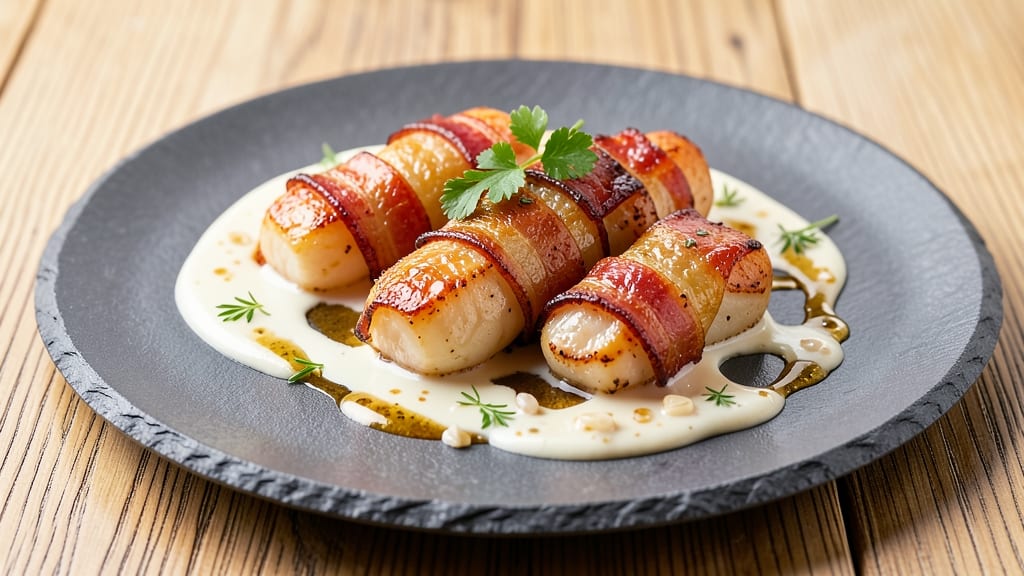
This bacon-wrapped scallops sauce recipe transforms simple ingredients into a luxurious, smoky garlic butter that elevates every bite. The secret lies in balancing rich, caramelized bacon fat with bright garlic and a touch of white wine, creating a sauce that clings perfectly to tender scallops.
I developed this after years of testing—no shortcuts, just layers of flavor that turn a weeknight dinner into something extraordinary.
The sauce starts with crispy bacon rendered into a fragrant, smoky base, then enriched with garlic, shallots, and a splash of white wine to cut through the richness.
A final touch of heavy cream and fresh herbs ties everything together into a velvety, aromatic sauce that’s both restaurant-worthy and surprisingly simple to make. What you’ll end up with is a sauce that’s impossible to resist—savory, slightly sweet, and packed with umami depth.
What makes this sauce truly perfect is its versatility. Drizzle it over your bacon-wrapped scallops for an elegant finish, or serve it alongside grilled fish, steak, or even roasted vegetables.
The garlic butter base ensures every spoonful is rich and satisfying, while the wine and herbs keep it bright and balanced. This isn’t just a sauce—it’s the star of the plate.
The best part? It comes together in just 15 minutes, with ingredients you likely already have on hand. No fancy techniques required—just patience and attention to detail.
Once you taste the way the smoky bacon fat melds with the garlic and wine, you’ll never go back to store-bought sauces again. Let’s get started.
Ingredients for bacon wrapped scallops sauce
Nine ingredients. One luxurious sauce. Elevate your scallops with this smoky, velvety masterpiece.
| Ingredient | Amount | Notes |
|---|---|---|
| Thick-Cut Bacon 🥓 | 6 oz | High-quality, thick-cut preferred |
| Fresh Garlic Cloves 🧄 | 4 cloves | Peeled and lightly smashed |
| Shallots 🧅 | 2 whole | Minced finely for sweetness |
| White Wine 🍷 | ¼ cup | Dry variety like Sauvignon Blanc |
| Heavy Cream 🥛 | ½ cup | Full-fat for richness |
| Unsalted Butter 🧈 | 2 tbsp | Cold, cubed for finishing |
| Fresh Parsley 🌿 | ¼ cup | Chopped finely for brightness |
| Fresh Chives 🌿 | 2 tbsp | Snipped for delicate flavor |
| Diamond Crystal Kosher Salt 🧂 | ½ tsp | For seasoning balance |
| Freshly Ground Black Pepper 🌶️ | ¼ tsp | Freshly cracked for heat |
The bacon is non-negotiable here—thick-cut from Oscar Mayer or Applegate gives the best flavor and texture. Look for 100% pork with no added sugars or nitrates if you're picky about ingredients. I always buy mine from the butcher section at Whole Foods or Costco for the freshest cut. The shallots? Organic ones from the produce section have the best sweetness, but regular ones work fine. Fresh garlic should smell pungent and have tight cloves—no sprouts or soft spots. The white wine is where you can splurge or save: a $10 bottle of Sauvignon Blanc works just as well as a $50 one.
No thick-cut bacon? Regular bacon cut into strips works, but it won't be as crispy or flavorful. Short on fresh herbs? Dried parsley at one-third the amount gets you close, though it won't have the same brightness. The white wine can be swapped for chicken stock plus a splash of lemon juice if you're avoiding alcohol—just reduce the liquid by half to keep the sauce thick. For extra richness, add 1 tbsp of crème fraîche at the end. The butter should be cold and cubed when adding it at the finish—this creates those beautiful, glossy ribbons. If you're feeling fancy, swap the parsley for tarragon or chervil for a different herbal note.
This sauce tastes even better the next day—honestly, it develops more depth as the flavors meld. Store it in an airtight container in the fridge for up to 5 days, or freeze for 3 months in ice cube trays for single-use portions. I like to reheat it gently in a saucepan with a splash of water or milk to restore its silky texture. A drizzle of this sauce turns simple grilled shrimp or roasted Brussels sprouts into something restaurant-worthy. The key is keeping it warm—cold sauce loses that velvety sheen and richness.
Why You'll Love This Recipe
- Here’s what sold me: it’s equally impressive for guests or when you’re in sweatpants. The wine and cream make it feel fancy, but the prep is so unfussy you’ll make it on a Tuesday night. (Yes, even on a Tuesday night.) Plus, the leftovers reheat beautifully—just a quick warm in the sauce, and it’s like you made it fresh.
- Fewer Ingredients, More Magic: I swear by this recipe because it’s all about the impact, not the effort. You’re basically wrapping scallops in bacon, searing them until that fat renders into crispy perfection, then tossing in garlic, shallots, and a splash of white wine—no fancy techniques, just pure flavor payoff. The heavy cream ties it all together without demanding your attention.
- Crispy-Creamy Obsession: That first bite? Chef’s kiss. The bacon stays crisp while the scallops melt inside, and the sauce—rich from the cream, brightened by the wine—coats everything like a hug. Honestly, the contrast is what makes it ridiculous good, and it’s the kind of dish that disappears faster than I can say “second helping.”
- Date Night or Lazy Night: Here’s what sold me: it’s equally impressive for guests or when you’re in sweatpants. The wine and cream make it feel fancy, but the prep is so unfussy you’ll make it on a Tuesday night. (Yes, even on a Tuesday night.) Plus, the leftovers reheat beautifully—just a quick warm in the sauce, and it’s like you made it fresh.
Step-by-step instructions for bacon-wrapped scallops sauce
This smoky garlic butter sauce transforms simple ingredients into a luxurious pairing for your scallops.
Cook the Bacon Until Crispy
Cut the 6 oz thick-cut bacon into ¼-inch thick strips and place them in a cold, dry skillet over medium heat. Let the bacon render slowly without stirring for the first 3-4 minutes—this allows the fat to pool and create that signature crispy texture. You'll know it's ready when the edges turn deep golden brown and the fat begins to sizzle.
Once crispy, use a slotted spoon to transfer the bacon to a paper towel-lined plate, leaving the rendered fat in the skillet. Reserve 2 tablespoons of this fat for later—it's packed with flavor. If you need more fat, you can add 1 tablespoon of the 2 tbsp unsalted butter to the skillet now, but don't melt it completely yet. Keep the heat at medium for the next steps.
Sauté Shallots and Garlic
Add the 2 whole shallots (minced finely) to the skillet with the reserved bacon fat and cook for 3-4 minutes until they become translucent and just begin to soften. The shallots should release their sweetness without browning—this is when they're perfectly cooked.
Next, add the 4 cloves fresh garlic cloves (peeled and lightly smashed) to the skillet. Stir them in for 30 seconds until they become fragrant and just start to turn golden. Be careful not to let them burn—garlic turns bitter quickly. Remove the skillet from heat for 1 minute to let the raw garlic aroma mellow slightly.
Deglaze with Wine and Reduce
Return the skillet to medium heat and carefully pour in the 0.25 cup white wine, scraping up any browned bits from the bottom of the pan with a wooden spoon. These bits are packed with flavor and are essential for building depth in the sauce. Let the wine simmer for 3-4 minutes until it reduces by half and the alcohol smell dissipates—you'll notice the aroma shift from sharp to mellow.
Once the wine has reduced, stir in the 0.5 cup heavy cream and the remaining 1 tablespoon unsalted butter (if you haven't already added it). Bring the mixture to a gentle simmer and cook for 2-3 minutes until it thickens slightly. The sauce should coat the back of a spoon smoothly but still have a velvety texture.
Finish with Herbs and Seasoning
Remove the skillet from heat and stir in the 0.25 cup fresh parsley (chopped finely) and 2 tbsp fresh chives (snipped). These herbs add brightness and freshness that balance the richness of the bacon and cream. Taste the sauce and adjust the seasoning with the 0.5 tsp diamond crystal kosher salt and 0.25 tsp freshly ground black pepper as needed.
For the perfect finish, return the skillet to low heat and stir in the crispy bacon you set aside earlier. Let it warm through for 1 minute, just enough to meld the flavors without overcooking. The sauce should now have a luxurious, smoky-sweet profile with layers of garlic and herbs.
Serve Immediately
Transfer the sauce to a warm serving bowl or directly over the bacon-wrapped scallops. The sauce should be thick enough to coat the scallops beautifully but still flow gracefully. Serve immediately while the scallops are still warm and the sauce is at its peak flavor.
This sauce is designed to complement the delicate sweetness of scallops while adding a robust, smoky depth. The combination of crispy bacon, aromatic garlic, and creamy richness creates a harmonious balance that elevates the dish from simple to extraordinary.
Pro Tips For Making Bacon Wrapped Scallops Sauce
- CRISP THE WRAPS FIRST: Thick-cut bacon takes forever to render fat and crisp—don’t wait until the scallops are seared. Cook the bacon strips alone in a cold pan over medium-low heat until the edges curl and the fat pools nicely (about 10-12 minutes). This shortcut means you won’t have to babysit a greasy pan while your scallops cook, and the bacon’s flavor infuses the sauce better when added later.
- MINCE SHALLOTS SMALL: I used to chop shallots into rough dice, thinking it looked "restaurant-style." Wrong. For this sauce, you want them so fine they practically dissolve—think "almost paste" texture. A food processor does this in 10 seconds, and the result is a silky sauce instead of one with chewy bits. (Yes, even if you’re impatient like me.)
- DEGLAZE WITH WINE IMMEDIATELY: As soon as you remove the scallops and bacon from the pan, pour in the white wine before scraping up any browned bits. Let it simmer for 30 seconds to cook off the alcohol, then scrape—this guarantees a richer, more flavorful base for your cream. Skipping this step leaves you with a sauce that tastes like it’s missing something.
- TEMPER THE CREAM: Cold heavy cream straight from the fridge will shock your sauce and cause it to split. Warm the cream in a separate small saucepan until it’s just steaming (not boiling), then whisk it into the wine reduction slowly. This keeps the sauce velvety instead of breaking into curds. (I learned this the hard way after ruining three batches.)
Flavor customization for this recipe
Smoky Sweet Variations
For a caramelized twist, add 1 tbsp brown sugar when cooking the bacon—this creates a deeper, slightly sweet-smoky profile that pairs beautifully with the scallops. I like to sprinkle ½ tsp smoked paprika into the pan with the shallots for an extra layer of warmth. 🔥
Swap the white wine for ½ cup apple cider and reduce it with 1 tsp maple syrup instead. This adds a subtle fruitiness that balances the bacon's saltiness while keeping the sauce rich and velvety. Trust me, it's a game-changer for fall dinners.
Herbal Freshness Boost
Replace the parsley and chives with 2 tbsp fresh thyme leaves and 1 tbsp chopped tarragon for a more sophisticated herbal note. The thyme adds earthiness while tarragon brings a subtle anise-like brightness. I find this works especially well with lemon butter scallops.
For a Mediterranean twist, stir in 1 tsp dried oregano with the garlic and finish with 1 tbsp chopped dill. This combination creates a bright, almost Greek-inspired sauce that's perfect for summer seafood dishes.
Spicy Heat Options
Add ½ tsp cayenne pepper when deglazing with wine for a subtle kick that lingers on the tongue. For more heat, stir in 1 tsp hot honey at the very end—this sweet-spicy contrast elevates the sauce to new heights. 🌶️
Infuse the cream with ½ tsp chipotle powder while heating it (strain before adding to the sauce). This smoky, spicy depth works surprisingly well with the bacon's richness, creating a sauce that's both complex and approachable.
Creamy Alternatives
For a lighter option, replace half the heavy cream with ½ cup coconut cream—it adds a subtle tropical note that complements the bacon beautifully. I've also had great success using ½ cup Greek yogurt for a tangy twist that cuts through the richness.
Dairy-free? Use ½ cup cashew cream (blend soaked cashews with water) instead of heavy cream. The sauce will still be rich and velvety, though slightly lighter in texture. The nutty depth actually enhances the bacon's smokiness.
Nutrition facts
Frequently asked questions
Can I make this sauce without wine?
Replace the white wine with ½ cup chicken or fish stock plus 1 tablespoon lemon juice to mimic the acidity. Reduce the liquid by half before adding cream—this keeps the sauce thick and flavorful. The lemon adds brightness that balances the bacon's richness perfectly.
How do I prevent the sauce from breaking or curdling?
Never let the sauce boil vigorously—keep it at a gentle simmer (medium-low heat) when adding cream. If it starts to separate, whisk in 1 teaspoon cold butter or 1 tablespoon heavy cream to restore its velvety texture. Also, avoid adding cold ingredients to hot sauce abruptly.
What's the best way to reheat leftover sauce?
Gently reheat in a saucepan over low heat with 1 tablespoon water or milk to prevent drying. Stir constantly until warmed through (2-3 minutes). For extra richness, whisk in 1 teaspoon butter at the end. Microwaving can make the sauce greasy, so stovetop is ideal.
Can I use this sauce with other proteins?
This sauce works beautifully with grilled shrimp, chicken breast, or even roasted vegetables like Brussels sprouts. The smoky garlic butter pairs especially well with seared scallops or pan-seared fish fillets. For heartier dishes, add 1 tablespoon flour when deglazing to thicken it further.
Why did my sauce turn out too thin?
Sauce thins when overcooked or when too much liquid is added. To fix it, remove from heat and whisk in 1 teaspoon cornstarch mixed with 1 tablespoon cold water, then return to low heat for 1 minute until thickened. For prevention, reduce the wine longer (5 minutes) and use ½ cup heavy cream instead of full cup.