
Sauces & Condiments
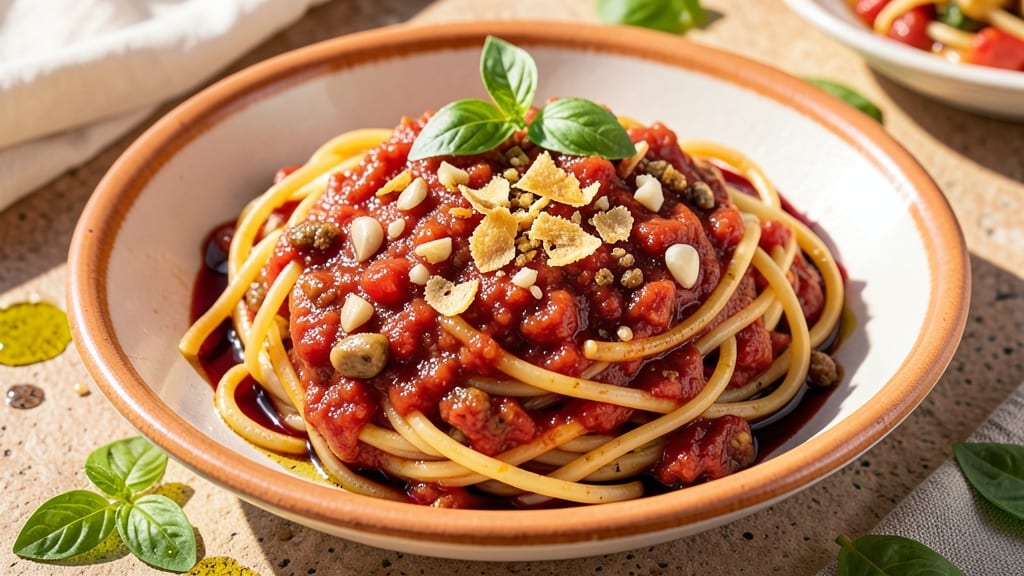
This authentic Sicilian spaghetti sauce captures the sun-drenched flavors of Sicily with its slow-simmered tomatoes, fragrant garlic, and bright basil. The secret lies in balancing sweetness and acidity—just like the island’s famous agrodolce—while letting the sauce develop deep, umami-rich layers over time.
Unlike rushed recipes, this version respects tradition with a method that transforms simple ingredients into something extraordinary.
What sets this sauce apart is its Sicilian technique: high-quality tomatoes (San Marzano if possible) are simmered low and slow, allowing their natural sugars to caramelize while olive oil and red wine deepen the flavor.
Fresh basil is added at the end to preserve its bright aroma, while anchovies (a Sicilian staple) provide that signature umami punch without overpowering. The result? A sauce that’s rich, complex, and perfectly balanced—never too heavy or one-dimensional.
The beauty of this recipe is its versatility. Use it as a classic pasta alla Norma with eggplant, or toss it with spaghetti for a comforting weeknight meal. The sauce also reheats beautifully, making it ideal for meal prep.
Whether you’re serving it with crusty bread or al dente pasta, every bite will taste like a trip to Sicily.
Ready in about 2 hours (mostly hands-off simmering), this sauce proves that authenticity doesn’t require shortcuts—just patience and the right ingredients. Let’s get started on creating a sauce that tastes like home.
Ingredients for authentic sicilian spaghetti sauce
Nine ingredients transform into Sicily's most beloved sauce when simmered low and slow.
| Ingredient | Amount | Notes |
|---|---|---|
| San Marzano Tomato Paste 🍅 | ½ cup | High-quality, no sugar added |
| Canned San Marzano Tomatoes 🍅 | 28 oz | Whole, crushed or diced |
| Extra-Virgin Olive Oil 🫒 | ½ cup | Fruity, peppery variety |
| Dry Red Wine 🍷 | ½ cup | Bold, dry variety like Nero d'Avola |
| Garlic Cloves 🧄 | 4 cloves | Fresh, peeled and minced |
| Anchovy Fillets 🐟 | 2 whole | High-quality, rinsed |
| Fresh Basil Leaves 🌿 | ½ cup | Packed, stems removed |
| Red Wine Vinegar 🍋 | 1 tbsp | For acidity balance |
| Granulated Sugar 🍬 | 1 tsp | For subtle sweetness |
| Diamond Crystal Kosher Salt 🧂 | 1 ½ tsp | Adjust to taste |
The tomatoes are the foundation—San Marzano is non-negotiable for that perfect balance of sweetness and acidity. Grab a 28-ounce can from the Italian market section (or Whole Foods if you're in the U.S.), not the generic brands. The paste should be thick and vibrant, not watery or dull. Anchovies might seem odd, but they're essential for that authentic umami depth—Italian anchovy fillets from Eataly or your local specialty shop are ideal. If you can't find them, high-quality canned anchovies work in a pinch, but rinse them thoroughly to remove excess salt. The olive oil should be extra-virgin, with a distinct peppery finish—California or Italian brands like Colavita or Bertolli are excellent choices.
No red wine? Dry vermouth or even apple cider vinegar can substitute, though the flavor will differ slightly. Fresh basil is crucial—dried won't cut it—but if you're out, fresh oregano at half the amount adds a similar brightness. The sugar might seem unnecessary, but it's traditional in Sicilian cooking to balance the acidity of the tomatoes and vinegar. For the garlic, roast it first for a sweeter, deeper flavor—toss peeled cloves in olive oil and roast at 400°F for 10 minutes. The anchovies should be rinsed and dissolved into the olive oil first, creating a flavorful base before adding the tomatoes. If you're making this ahead, freeze the sauce in portions—it reheats beautifully and tastes even better the next day.
This sauce develops over time, so patience is key—at least 2 hours of simmering is ideal. Store any leftovers in an airtight container in the fridge for up to 5 days, or freeze for up to 3 months. The sauce thickens as it cools, so you may need to add a splash of water or broth when reheating. For meal prep, double the recipe and freeze half—perfect for busy weeknights. The basil should be added just before serving to preserve its bright aroma, but if you're prepping ahead, blanch and freeze it separately, then add it back in when reheating. Every batch tastes better the second day as the flavors meld.
Why You'll Love This Recipe
- No-Fuss Simplicity: I swear by this sauce because it’s actually easy—just a pan, a few minced garlic cloves, and 10 minutes of simmering. The San Marzano tomatoes do all the heavy lifting; you just let them shine.
- Deep, Wine-Kissed Richness: That splash of dry red wine? It’s the secret weapon—balancing the sweetness of the tomatoes with a bold, earthy depth. Honestly, it’s the kind of flavor that makes you pause mid-bite, like, "Wait, is this really just sauce?"
- Weeknight to Weekend Hero: Make a big batch on Sunday (it tastes even better the next day) and freeze portions for lazy nights. Or bring it to a potluck—it’s the one dish everyone asks for seconds of.
- Budget-Friendly Luxury: San Marzano tomatoes might sound fancy, but they’re cheaper than you’d think, and a jar lasts forever. Plus, the olive oil and wine stretch thin, so you’re getting restaurant-quality flavor without the price tag.
Step-by-step instructions for authentic Sicilian spaghetti sauce
This method captures the essence of Sicilian cooking—bold flavors developed through slow simmering.
Bloom the Anchovies and Garlic in Olive Oil
Heat the 0.5 cup extra-virgin olive oil in a heavy-bottomed Dutch oven over medium-low heat. Add the 2 whole anchovy fillets, breaking them into small pieces as they melt into the oil. This process, called "blooming," extracts their deep umami flavor without overpowering the sauce.
After 2-3 minutes, when the anchovies have completely dissolved and the oil shimmers, add the 4 cloves minced garlic cloves. Cook for another 30 seconds until the garlic is fragrant but not browned. The key here is patience—burnt garlic will make your sauce bitter. Remove the pot from heat temporarily while you prepare the next ingredients.
Toast the Tomato Paste for Rich Flavor
Return the pot to medium-low heat and add the 0.5 cup San Marzano tomato paste. Stir constantly for 3-4 minutes until it darkens slightly and develops a nutty aroma. This step, called "toasting," deepens the tomato flavor and creates a rich foundation for your sauce. You'll see the paste transform from bright red to a deeper, almost mahogany color.
I like to use a wooden spoon for this step—the heat conduction is gentler than metal. If the paste starts to stick, add 1 tablespoon water to loosen it while continuing to stir. The goal is to create a smooth, velvety base that will carry all the other flavors.
Deglaze with Wine and Reduce
Pour in the 0.5 cup dry red wine and scrape up any browned bits from the bottom of the pot with a wooden spoon. This deglazing step captures all the flavor that would otherwise burn. Let the wine simmer for 3-4 minutes until it reduces by half and the alcohol cooks off—you'll smell it evaporating.
The sauce should now have a thick, syrupy consistency. If it's too thick at this point, add 2 tablespoons water to help incorporate the tomatoes later. This is where the sauce begins to develop its signature Sicilian depth—complex, layered, and full of umami from the anchovies and wine.
Simmer with Tomatoes and Seasonings
Add the 28 oz canned San Marzano tomatoes, crushed by hand if they're whole. Stir in the 1 tbsp red wine vinegar, 1 tsp granulated sugar, and 1.5 tsp Diamond Crystal kosher salt. Bring the mixture to a gentle simmer over medium-low heat, then reduce to the lowest setting that maintains a steady bubble.
Let the sauce simmer uncovered for 45-60 minutes, stirring occasionally. You're looking for a sauce that reduces significantly—it should coat the back of a spoon with a thick, glossy consistency. The tomatoes will break down completely, and the flavors will meld into a harmonious balance. Real talk: This is where the magic happens, so don't rush it.
Finish with Fresh Basil and Adjust Seasoning
Once the sauce has thickened to your desired consistency, remove it from heat. Stir in the 0.5 cup fresh basil leaves, stems removed. The basil should wilt and infuse the sauce with its bright, aromatic flavor. Taste and adjust the seasoning—you may need to add a pinch more salt or a splash of vinegar to balance the flavors.
Let the sauce sit at room temperature for 10-15 minutes before serving. This resting period allows the flavors to fully develop and the sauce to thicken slightly more. Serve over al dente spaghetti, reserving some pasta water to adjust the sauce consistency if needed. The result should be a sauce that clings beautifully to the pasta, with layers of sweet, tangy, and umami flavors in every bite.
Pro Tips For Making Authentic Sicilian Spaghetti Sauce
- Sweat the Garlic Low: Start with the olive oil on medium-low heat—garlic burns faster than you think, and scorched garlic turns your sauce bitter. After 3 minutes, add the wine to deglaze before the garlic even gets pale, or you’ll lose that sweet, mellow flavor.
- Bloom the Tomato Paste: Cook the San Marzano paste in the same oil for 5 minutes before adding anything else—this removes the raw starch and deepens the flavor. I used to skip this, and the sauce always tasted thin and underdeveloped.
- Deglaze with Wine First: Pour the dry red wine into the pan before adding the tomatoes. The alcohol burns off first, leaving behind a richer, more complex base for the sauce. If you add the wine last, you’ll just be steaming it and wasting its potential.
- Crush the Tomatoes by Hand: Skip the blender and crush the San Marzano tomatoes with your fingers or a wooden spoon—this keeps the texture rustic and lets the natural juices blend into the sauce gradually. I tried puréeing once, and the sauce lost that fresh, bright character.
Perfect pairings for this recipe
Classic Pasta Pairings
This sauce shines brightest with al dente spaghetti, but don't limit yourself—bronze-cut rigatoni or pappardelle work beautifully too. I like using Barilla #5 spaghetti for its perfect texture.
For a true Sicilian touch, try pasta alla Norma with fried eggplant slices and a sprinkle of pecorino cheese on top. 🍝
Bread and Appetizers
Serve with crusty Italian bread (like Focaccia di Recco) to soak up any extra sauce. For appetizers, try arancini with ragù-stuffed centers or fried calamari with lemon wedges. The sauce's balance of sweet and tangy makes it perfect for dipping—just warm it slightly if serving cold. 🍞
Wine Pairings
A bold Nero d'Avola from Sicily is ideal—its rich berry notes complement the sauce's depth. For white wine lovers, try a crisp Grillo or Catarratto to cut through the richness. Avoid heavy reds like Cabernet, as they'll overpower the delicate basil and tomato flavors. 🍷
Beer and Non-Alcoholic Options
A Sicilian lager like Peroni or Moretti keeps things light and refreshing. For craft beer fans, a Belgian witbier with its citrusy notes pairs wonderfully. Non-alcoholic? Sparkling San Pellegrino Aranciata or blood orange soda adds a refreshing contrast. 🍺
Unexpected Toppings
Finish with toasted pine nuts for crunch or crumbled feta cheese for a salty contrast. A drizzle of high-quality balsamic glaze (like Giovanni Rossi) adds a sweet-tangy finish. For heat lovers, a pinch of Calabrian chili flakes brings authentic Sicilian spice. 🌶️
Meal Prep Pairings
Double the sauce and freeze half for quick weeknight meals. Pair with grilled chicken thighs or sausage links for a hearty dinner. For a vegetarian option, serve with roasted eggplant and cherry tomatoes. The sauce reheats beautifully—just add a splash of water if it thickens too much. ⏰
Nutrition facts
Frequently asked questions
Why does this sauce use anchovies if it's not fishy?
Anchovies dissolve completely into the sauce, adding a deep umami flavor without any fishy taste. The secret is rinsing them first and cooking them low and slow in olive oil. This Sicilian technique creates that signature richness found in many traditional Italian sauces.
Can I make this sauce without wine?
Yes! Substitute with dry vermouth or apple cider vinegar—just use 1/4 cup instead of 1/2 cup wine. The acidity helps balance the tomatoes, though wine adds more complexity. For a non-alcoholic version, use white grape juice reduced by half.
How do I fix a sauce that's too thick or too thin?
For thick sauce, add 1-2 tablespoons water or pasta water while reheating. For thin sauce, simmer uncovered for 5-10 more minutes to reduce. The key is patience—Sicilian sauces should coat the back of a spoon but remain silky, not gluey.
What's the best way to store leftovers?
Let the sauce cool completely, then transfer to an airtight container. It keeps in the fridge for 5 days or freezes for 3 months. When reheating, add a splash of water or broth to restore texture. Pro tip: Freeze in portions for easy meal prep!
Can I use regular canned tomatoes instead of San Marzano?
While San Marzano tomatoes are ideal for their sweetness and low acidity, you can use other high-quality canned tomatoes. Look for brands without added salt or sugar. For best results, crush them by hand to release more flavor. If using regular tomatoes, you may need to add 1/2 teaspoon extra sugar to balance acidity.