
Sauces & Condiments
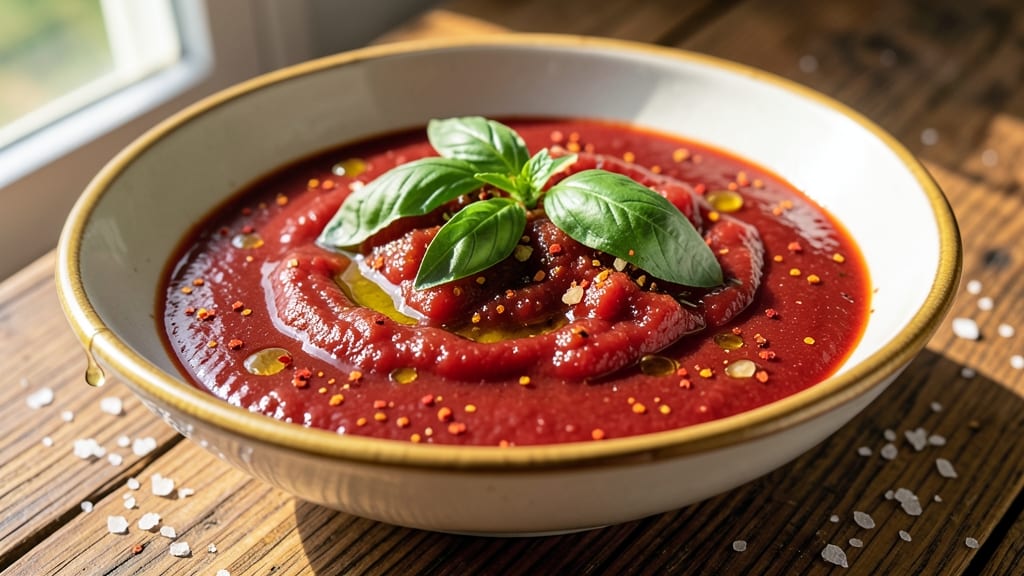
This authentic Italian tomato sauce recipe from scratch transforms simple ingredients into restaurant-quality depth that canned versions simply can't match. The secret lies in slow-simmering fresh tomatoes with aromatics until their natural sweetness concentrates into rich, velvety sauce—no shortcuts, no artificial flavors.
After years of perfecting this technique, I've developed a method that delivers the complex, balanced flavor of traditional Italian sugo without requiring hours at the stove.
The foundation begins with high-quality tomatoes—whether fresh or high-grade canned—and a simple combination of garlic, onion, and olive oil that forms the aromatic base. What sets this sauce apart is the patience of simmering at low heat, allowing the tomatoes to break down gradually while developing layers of flavor.
The result is a sauce that's deeply savory, slightly sweet, and perfectly balanced—ideal for coating pasta, drizzling over grilled meats, or preserving in jars.
By the time you're done, you'll have a slow-simmered tomato sauce with a texture that's neither watery nor overly thick, and a taste that's authentically Italian without being heavy.
The aroma alone will transport you to a bustling Roman kitchen, where fresh basil and a touch of red pepper flakes finish the sauce just before serving. This is the kind of sauce that transforms ordinary meals into something special.
Store it in the refrigerator for up to 5 days or freeze for months—its flavor only improves with time. Whether you're making it for a family dinner or meal prepping for the week, this sauce delivers the depth and authenticity that canned versions simply can't replicate.
Let's get started on creating the perfect sugo from scratch.
Ingredients for authentic italian tomato sauce recipe from scratch
Nine simple ingredients transform into restaurant-quality Italian tomato sauce—no shortcuts, just pure flavor.
| Ingredient | Amount | Notes |
|---|---|---|
| Extra-Virgin Olive Oil 🫒 | ½ cup | High-quality, fruity variety preferred |
| Yellow Onion 🧅 | 1 whole | Finely chopped, not too small |
| Garlic Cloves 🧄 | 6 cloves | Peeled and lightly crushed |
| San Marzano Tomatoes 🍅 | 28 oz | Canned, whole or crushed |
| Fresh Basil Leaves 🌿 | ¼ cup | Packed, stems removed |
| Red Pepper Flakes 🌶️ | ½ tsp | Adjust for desired heat |
| Salt 🧂 | 1 tsp | Diamond Crystal preferred |
| Black Pepper 🌶️ | ½ tsp | Freshly cracked |
| Dried Oregano 🍃 | ½ tsp | Italian variety preferred |
| Tomato Paste 🍅 | 2 tbsp | High-quality, no sugar added |
The tomatoes are non-negotiable here. San Marzano is the gold standard—sweet, meaty, and consistent. If you can't find them, whole peeled tomatoes from a reputable brand like Muir Glen work in a pinch. The olive oil? Extra-virgin is a must—cheap oil makes cheap sauce. I grab mine from Whole Foods or Trader Joe's; look for bottles labeled 'cold-pressed' and 'first cold press'. The garlic and onion form the aromatic base—don't rush this step. Sauté them low and slow until they're soft but not browned, or you'll get bitter notes. Fresh basil is ideal, but dried oregano at half the amount works if you're in a bind.
No San Marzano tomatoes? Fresh vine-ripened tomatoes (like Roma) can work if you're willing to peel and crush them yourself—just remove the skins first. Short on basil? Fresh parsley at the same amount adds brightness without overpowering. The red pepper flakes are optional but worth it for that authentic kick; if you skip them, add an extra pinch of black pepper for depth. Tomato paste is your flavor concentrator—don't skimp. Bertolli or Barilla are solid choices, but the squeeze tubes from Trader Joe's are perfect for small batches. Want more richness? Stir in a splash of dry white wine after the onions soften—it cooks off completely but adds complexity.
This sauce tastes better the next day—trust the process. Store it in the fridge for up to 5 days in an airtight container, or freeze for 3 months in portions. For freezing, cool it completely first, then portion into ice cube trays or small jars. When reheating, do it gently on low heat to avoid breaking down the texture. The sauce thickens as it cools, so if it seems too thick after chilling, just add a splash of water or pasta water when reheating. And if you make extra? Freeze half—you'll thank yourself later.
Why You'll Love This Recipe
- Same sauce, endless uses: toss it with pasta, slather it on bruschetta, or serve it alongside grilled chicken. Honestly, I’ve made this for lazy Mondays and Sunday suppers—it’s that adaptable.
- No-Fuss Technique: I swear by the low-and-slow method—just a gentle simmer in that same olive oil until the tomatoes break down. No blenders, no stress, just pure, velvety goodness that takes zero effort to achieve.
- Garlic-Basil Magic: That first whiff of garlic sizzling in olive oil? Chef’s kiss. Then the San Marzano tomatoes—sweet, rich, with just the right acidity—and a handful of fresh basil at the end? It’s the kind of flavor that makes you pause mid-bite.
- Weeknight to Dinner Party: Same sauce, endless uses: toss it with pasta, slather it on bruschetta, or serve it alongside grilled chicken. Honestly, I’ve made this for lazy Mondays and Sunday suppers—it’s that adaptable.
Step-by-step instructions for authentic Italian tomato sauce
This is how Nonnas make it—slow, simple, and packed with real Italian flavor.
Sauté Onion and Garlic Until Translucent
Heat the 0.5 cup extra-virgin olive oil in a heavy-bottomed saucepan over medium-low heat. Add the finely chopped yellow onion and cook for 8-10 minutes until completely soft and translucent. You're not looking for browning here—just a gentle sweetness developing.
I like to stir occasionally with a wooden spoon, making sure the onions caramelize just enough to build flavor without burning. Once they're tender, add the 6 lightly crushed garlic cloves and cook for another 1-2 minutes until fragrant but not browned. Garlic burns fast—watch it like a hawk. The moment it turns golden, you've gone too far.
Build the Sauce Base with Tomato Paste
Reduce the heat to low and stir in the 2 tablespoons tomato paste, spreading it evenly around the pan. Cook for 3-4 minutes until the paste darkens slightly and the raw taste disappears. This step is crucial—it deepens the flavor and prevents the sauce from tasting flat later.
Here's where the magic happens: the paste creates a rich, concentrated base that carries all the other flavors. I like to use a heatproof spatula to scrape up any browned bits from the bottom—those are packed with flavor. Don't rush this; let the paste cook until it loses its bright color and becomes more integrated with the onions and garlic.
Add Tomatoes and Seasonings
Pour in the 28 oz San Marzano tomatoes (whole or crushed) and stir to combine. Add the 1 teaspoon salt, 0.5 teaspoon black pepper, 0.5 teaspoon dried oregano, and 0.5 teaspoon red pepper flakes. Bring the mixture to a gentle simmer over medium heat—you should see small bubbles forming at the edges.
The reason we start with a simmer is to break down the tomatoes naturally without scorching. I let it cook uncovered for 20-25 minutes while stirring occasionally. This allows the acidity to mellow and the flavors to meld. You'll notice the sauce thickens slightly as it reduces—this is exactly what we want for that authentic Italian texture.
Simmer Low and Slow for Deep Flavor
Once the sauce begins to thicken and coat the back of a spoon, reduce the heat to lowest setting. Let it simmer uncovered for 30-40 minutes, stirring every 10 minutes to prevent sticking. The sauce should reduce until it's thick enough to coat the back of a spoon but still pour easily.
This long, slow cook is what separates homemade sauce from canned. The flavors develop complexity, the acidity mellows, and the texture becomes velvety. I know it's tempting to speed this up, but patience here makes all the difference. You'll know it's ready when the sauce has a deep red color and a rich, concentrated aroma that makes your mouth water.
Finish with Fresh Basil and Adjust Seasoning
Remove the sauce from heat and stir in the 0.25 cup packed fresh basil leaves. Let it steep for 5 minutes to infuse the flavor—don't skip this! The basil will brighten the sauce and add that fresh, aromatic quality that's so characteristic of Italian cooking.
Taste and adjust the seasoning if needed. I usually find the sauce needs just a touch more salt at this point—remember, the tomatoes themselves are quite salty. The sauce should be balanced: sweet from the tomatoes, bright from the basil, with just a hint of heat from the red pepper flakes. If it's too acidic, a pinch more salt helps balance it. If it's too mild, a splash of lemon juice can brighten it up.
Pro Tips For Making Authentic Italian Tomato Sauce Recipe From Scratch
- Sweat the Onion Slowly: I learned this the hard way—chopping onions into tiny dice and frying them fast just makes them bitter. Instead, cut them into ¼-inch slices, cook them on medium-low with a pinch of salt for 8-10 minutes until translucent but not browned. That deep, caramelized flavor builds the sauce’s base without overpowering it.
- Crush Garlic Like a Pro: Skip the mincer—peel the cloves first, then smash them flat with the side of your knife before adding them to the pot. This releases their oils gently and prevents that harsh, raw bite that ruins the sauce. (Yes, even if you’re impatient like me.)
- Simmer Tomatoes Gently: This isn’t the prettiest method, but it’s the tastiest: After adding crushed tomatoes, reduce heat to the lowest setting that keeps a gentle bubble at the edges. Let it cook uncovered for 45-60 minutes—no stirring, no peeking. The sauce thickens and deepens without breaking down the texture.
- Salt the Water First: I was skeptical until I tried it: Add a teaspoon of salt to the pot before crushing the tomatoes. It seasons the whole batch more evenly and cuts through the acidity as the sauce reduces. (Your future self will thank you—trust me.)
Dietary considerations for this authentic italian tomato sauce recipe from scratch
Gluten-Free Adaptation
This sauce is naturally gluten-free as written, but always double-check your ingredients—especially tomato paste and seasonings. I use Bertolli no-sugar-added tomato paste, which is certified gluten-free, and Diamond Crystal salt (which is gluten-free, unlike some kosher salts with anti-caking agents).
For extra assurance, look for a gluten-free certification label on your San Marzano tomatoes or Muir Glen canned tomatoes. 🌱
Low-Sodium Options
If you're watching your sodium intake, reduce the 1 teaspoon salt to just ½ teaspoon and let the tomatoes' natural sweetness shine. For deeper flavor without extra salt, add a splash of dry white wine (about ¼ cup) when sautéing the onions—it cooks off completely but adds complexity.
I also recommend using no-salt-added canned tomatoes like Muir Glen Organic for better control over seasoning.
Vegetarian and Vegan
This recipe is already vegetarian, but for a vegan version, simply ensure your extra-virgin olive oil is certified vegan (most are) and verify your tomato paste and oregano contain no animal-derived additives. I use Trader Joe's tomato paste, which is reliably vegan.
For extra richness, stir in 1 tablespoon nutritional yeast at the end—it adds a cheesy, umami depth that pairs perfectly with the tomatoes. 💛
Allergen-Friendly
For nut allergies, this recipe is already safe—just avoid cross-contamination if you're using shared utensils or pans. If you're sensitive to garlic or onions, substitute with asafetida powder (a tiny pinch, about ⅛ teaspoon) for a savory depth without the allergens.
For basil allergies, replace it with fresh parsley at the same amount. Always check labels on canned tomatoes and tomato paste for potential hidden allergens.
Sugar-Free Considerations
This recipe avoids added sugars, but some canned tomatoes contain hidden sugars. Opt for no-sugar-added brands like Muir Glen Organic or San Marzano tomatoes labeled "no added sugar." If you're using fresh tomatoes, skip the tomato paste entirely—its natural sugars can be higher.
Instead, add an extra 1 tablespoon balsamic vinegar during the final simmer to enhance sweetness without sugar. 🍅
Nutrition facts
Frequently asked questions
Why does this recipe specify San Marzano tomatoes?
San Marzano tomatoes are the gold standard for Italian tomato sauce because of their sweet, meaty texture and low acidity. Their unique shape and flavor create a sauce that's naturally balanced and rich—unlike many commercial canned tomatoes that can be watery or overly acidic.
Can I use fresh tomatoes instead of canned?
Yes, but you'll need to prep them first! Use 4-5 ripe Roma tomatoes (about 1.5 pounds), peel and crush them, then remove seeds. Simmer them for 15 minutes to break down before adding to the sauce. Fresh tomatoes work best when combined with 1 tablespoon tomato paste to concentrate flavor.
How do I know when the sauce is done?
The sauce is ready when it coats the back of a spoon smoothly but still pours easily. Look for a deep red color and a rich aroma—it should smell like concentrated tomatoes, not raw. The total cooking time should be about 1 hour 15 minutes from start to finish.
Can I make this sauce in a slow cooker?
Sauté the onions and garlic first, then transfer everything to the slow cooker and cook on low for 6-7 hours or high for 3-4 hours. The texture will be slightly thinner, so reduce it on the stovetop afterward if needed. The slow cooker method is perfect for hands-off prep.
What if my sauce tastes too acidic?
A pinch of sugar (½ teaspoon) or a splash of dry white wine (¼ cup) can help balance acidity. For a natural fix, add a small piece of bacon or pancetta (about 2 oz) while cooking—it adds smoky depth that complements the tomatoes.