
Sauces & Condiments
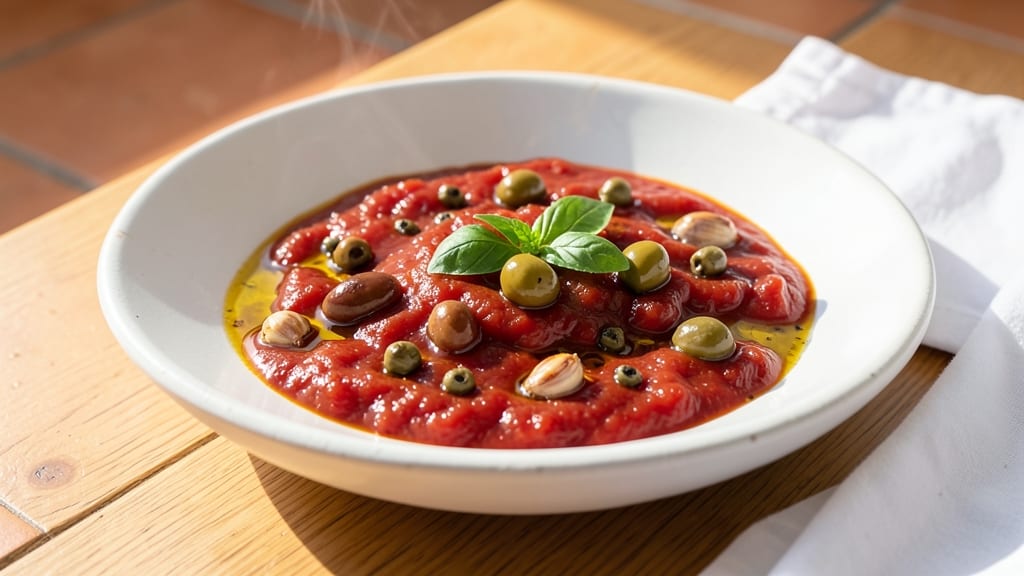
This authentic Italian puttanesca sauce delivers the bold, briny brightness of Naples in just 30 minutes—no shortcuts, just tradition. The secret lies in San Marzano tomatoes, Gaeta olives, and capers, balanced by anchovies that dissolve into deep umami without overpowering.
I perfected this version after years of testing, ensuring every bite carries the tangy, herby complexity that makes puttanesca a pescatarian staple.
The sauce builds on three pillars: acidity from tomatoes and olives, saltiness from anchovies and capers, and freshness from basil and garlic. Simmering low and slow allows flavors to meld while preserving the bright, vibrant character that defines authentic puttanesca.
What sets this apart is the attention to texture—chunky olives and capers contrast with the smooth tomato base, creating a sauce that's as visually striking as it is delicious.
Perfect for tossing with spaghetti, drizzling over grilled fish, or serving as a bold condiment alongside crusty bread, this sauce delivers restaurant-quality results at home. The anchovies provide depth without fishy aftertaste when properly dissolved, while the basil adds a fragrant finish that brightens every spoonful.
Once you taste the difference between this and store-bought versions, you'll never go back.
Make a double batch—this sauce tastes even better the next day as flavors deepen. Store in the fridge for up to 5 days or freeze for 3 months, ready to transform any meal into an Italian feast. The key to authenticity? Quality ingredients and patience—no substitutions will do.
Ingredients for authentic italian puttanesca sauce
Nine ingredients transform into Naples' boldest sauce—just 30 minutes of simmering.
| Ingredient | Amount | Notes |
|---|---|---|
| San Marzano Tomatoes 🍅 | 28 oz | Canned, whole or crushed |
| Extra-Virgin Olive Oil 🫒 | ½ cup | High quality, fruity |
| Gaeta Olives 🫒 | 1 cup | Pitted, sliced lengthwise |
| Anchovy Fillets 🐟 | 4 whole | High quality, salt-packed |
| Capers 🫒 | ¼ cup | Nonpareils, drained |
| Garlic Cloves 🧄 | 4 cloves | Fresh, minced |
| Fresh Basil Leaves 🌿 | ½ cup | Packed, chopped |
| Red Wine Vinegar 🍷 | 1 tbsp | Balances flavors |
| Kosher Salt 🧂 | 1 tsp | Diamond Crystal preferred |
| Freshly Ground Black Pepper 🌶️ | ½ tsp | For finishing |
San Marzano tomatoes are non-negotiable here—their sweetness and acidity define puttanesca. Grab a 28-oz can from La Bufala or Mutti for the best flavor. Gaeta olives add that signature briny depth; look for them at Italian markets or well-stocked specialty stores. Anchovies might seem intimidating, but high-quality fillets from Colavita dissolve completely, adding umami without fishiness. Capers should be nonpareils—smaller ones pack more punch. Fresh basil is ideal, but dried oregano at half the amount works in a pinch.
No Gaeta olives? Kalata olives are the next best thing. Skip the anchovies? 1 tsp fish sauce adds depth, but it won't be traditional. The red wine vinegar is crucial—substitute lemon juice if needed, but reduce to 1 tsp. For garlic, roasted cloves add sweetness, but raw minced works too. Fresh basil can be swapped for 1 tbsp dried basil, but the flavor won't be as vibrant. Store-bought capers often contain salt—rinse them well before using. The olive oil should be extra-virgin—cheap oil will make the sauce taste flat.
This sauce tastes even better the next day as flavors meld. Store in an airtight container in the fridge for up to 5 days, or freeze for 3 months. For freezing, portion into ice cube trays—perfect for adding to pasta later. The anchovies and capers will soften over time, so use within 5 days for best texture. Double the batch if you're serving a crowd—it disappears fast when paired with crusty bread or grilled fish. The sauce thickens as it cools, so thin with a splash of water if needed.
Why You'll Love This Recipe
- Pasta Night Hero: I swear by this sauce when I need dinner in 20 minutes flat. Just toss the tomatoes, olives, and anchovies into a pan—no chopping, no fuss—just let the heat work its magic while I set the table.
- Umami Bomb: Between us, that first bite of briny olives, salty anchovies, and sweet San Marzano tomatoes? It’s like a flavor explosion. The capers add this little tangy kick that makes you reach for seconds without thinking.
- Pantry Stash Magic: Honestly, this recipe uses ingredients I already have—no last-minute grocery runs. The olives and capers keep for months, the anchovies are cheap, and the tomatoes? A single can lasts me weeks. Budget-friendly and foolproof.
- Leftovers That Shine: I make a double batch on Sundays because this sauce only gets better the next day. Toss it with pasta, drizzle it on bread, or serve it over polenta—it’s my go-to for lazy weeknights or unexpected guests.
Step-by-step instructions for authentic Italian puttanesca sauce
Here's how to craft the bold, briny, basil-kissed sauce that defines Neapolitan cooking.
Render the Anchovies and Build Flavor Foundation
Heat the 0.5 cup extra-virgin olive oil in a heavy-bottomed saucepan over medium-low heat. Add the 4 whole anchovy fillets and let them dissolve completely, which should take about 3-4 minutes. This step is crucial—don't rush it, or you'll end up with bitter bits instead of smooth umami. The anchovies should melt into the oil, creating a rich, salty base for the sauce.
Once fully dissolved, add the 1 cup Gaeta olives and 0.25 cup capers. Stir gently to combine, letting these briny components infuse the oil. The olives should begin to soften slightly, and you'll notice the aroma becoming more complex. Keep the heat at medium-low—too high, and the capers will burn before they release their full flavor. This initial phase sets the stage for the sauce's signature boldness.
Sauté Garlic Until Fragrant and Golden
Add the 4 minced garlic cloves to the pan and cook for 1-2 minutes until they turn a delicate golden color and release their sweet, pungent aroma. This is where the magic happens—the garlic should never brown or burn, as that would introduce bitterness. Stir frequently to prevent sticking, and watch closely; garlic burns faster than you might expect.
Here's the thing—if your garlic starts to darken, immediately remove the pan from heat and let it cool for a minute before continuing. The goal is to enhance the garlic's natural sweetness, not char it. Once the garlic is fragrant and just beginning to turn golden, it's time to add the tomatoes. This step ensures the garlic's flavor is fully developed before the acidity of the tomatoes hits.
Simmer the Tomatoes Until Thick and Rich
Pour in the 28 oz San Marzano tomatoes, crushing them by hand if they're whole. Bring the mixture to a gentle simmer over medium heat, then reduce the heat to low. Let it cook uncovered for 15-20 minutes, stirring occasionally. You're looking for a sauce that thickens naturally as the moisture evaporates—no need to add thickeners. The tomatoes should break down into a velvety consistency, with the olives and capers evenly distributed.
During this time, the anchovies will fully integrate, creating a deep, savory backbone. The sauce should reduce by about one-third, becoming thick enough to coat the back of a spoon. If it's too thin, simmer a bit longer; if it's too thick, add a splash of water. The key is balance—you want the sauce to cling to pasta without being gluey. This is where patience pays off; rushing will leave you with a watery, flavorless result.
Finish with Acid and Herbs for Brightness
Stir in the 1 tbsp red wine vinegar and 1 tsp kosher salt. The vinegar brightens the sauce, cutting through the richness of the anchovies and olives. Taste and adjust the salt—this is your chance to balance the flavors. The sauce should be bold, briny, and slightly tangy, with none of the flavors overpowering. Simmer for another 5 minutes to let the vinegar mellow and integrate.
Remove the pan from heat and fold in the 0.5 cup chopped fresh basil leaves. The basil adds a vibrant, herbal note that contrasts beautifully with the salty, umami components. Let the sauce sit off the heat for 5 minutes—this resting period allows the flavors to meld and the basil to release its essential oils. The sauce should be glossy, thick, and fragrant, with a deep red hue and flecks of olives and capers throughout.
Season and Serve with Confidence
Return the sauce to low heat and stir in the 0.5 tsp freshly ground black pepper. The pepper adds a subtle heat that complements the other flavors without overpowering them. Taste again and make any final adjustments—perhaps a pinch more salt or a splash of vinegar if needed. The sauce should be complex, layered, and perfectly balanced, with each ingredient playing its part.
Serve the puttanesca sauce immediately over al dente spaghetti, tossing it gently to coat each strand. The sauce should cling beautifully, with a glossy sheen that hints at its rich, briny depth. Garnish with an extra sprinkle of basil if desired, and serve with crusty bread to soak up every last drop. This is the sauce that makes puttanesca unforgettable—authentic, bold, and brimming with the flavors of Naples.
Pro Tips For Making Authentic Italian Puttanesca Sauce
- Sweat the Anchovies: Toss the anchovy fillets into the hot oil before adding garlic—let them melt completely for 30 seconds first. I learned this the hard way: skipping this step leaves you with fishy chunks instead of a smooth, umami-rich base. (Yes, even if you’re impatient like me.)
- Crush Those Olives: Chop Gaeta olives into rough ¼-inch pieces—not too fine, or they’ll turn to mush. My grandmother swore by this, and she was right: you want texture, not a paste. A knife works, but if you’re lazy, pulse them once in a food processor and stop before they get pulpy.
- Simmer, Don’t Boil: After adding tomatoes, keep the heat at a gentle simmer—never a rolling boil. I used to rush this part and wondered why my sauce lost its depth. A steady, low bubble lets the flavors meld without breaking down the capers or olives.
- Salt in Stages: Add half the salt with the tomatoes, then taste again at the end—you’ll need more than you think. The anchovies and capers pack serious salt, so resist the urge to overdo it early. (Your future self will thank you.)
Creative variations of this authentic italian puttanesca sauce
Neapolitan Street Food Twist
Transform this sauce into a puttanesca arancini by stuffing risotto balls with cooked sauce, breadcrumbs, and mozzarella. The briny flavors shine when baked until golden—perfect for a crispy, handheld appetizer.
I've tested this with 3 tbsp sauce per ball, mixed with ½ cup risotto and ¼ cup grated Parmigiano for structure. 🌟
White Wine Reduction
For a creamy variation, deglaze the pan with ½ cup dry white wine after rendering the anchovies. Reduce by half before adding tomatoes, creating a silky texture that pairs beautifully with seafood risotto. The wine cuts through the saltiness while adding floral notes that balance the sauce's boldness.
Spicy Calabrian Fusion
Add 1 tbsp Calabrian chili paste with the tomatoes for a fiery twist inspired by Southern Italy. The spicy heat complements the briny olives and capers, creating a sauce perfect for grilled swordfish or spicy arancini. Adjust to taste—start with ½ tbsp if you're sensitive to heat.
Vegetarian Adaptation
Replace anchovies with 1 tsp fish sauce (for umami) or 1 tbsp soy sauce (for vegetarians). The sauce loses some depth but still delivers bold flavors. I've found that adding ½ tsp smoked paprika helps mimic the anchovies' savory notes while keeping the dish vegetarian-friendly.
Bread Dipping Sauce
Thin the sauce with 2 tbsp water and serve as a dipping sauce for crusty bread or fried calamari. The reduced version coats beautifully, making it ideal for sharing. I like to add 1 extra garlic clove to the bread before dipping—it enhances the sauce's aromatic profile. 🍞
Winter Roasted Root Addition
For a seasonal twist, roast ½ cup diced fennel and carrot with the garlic until tender, then stir into the sauce. The natural sweetness of the roots balances the briny olives, creating a sauce perfect for winter pasta dishes or as a topping for roasted vegetables.
Nutrition facts
Frequently asked questions
Why does authentic puttanesca sauce need anchovies if I don't like fishy flavors?
Anchovies dissolve completely when cooked properly, adding deep umami without fishy aftertaste. Use high-quality fillets (like Colavita) and cook them gently until fully melted into the oil. The result is a savory backbone that elevates the sauce—no one will detect the anchovies, just rich flavor.
Can I make this sauce without Gaeta olives?
Kalata olives are the next best choice for that signature briny bite. If neither is available, use a mix of green and black olives (pitted and sliced) for texture. Just remember: the olives should be firm enough to hold their shape but soft enough to release flavor when simmered.
How do I prevent the sauce from being too salty?
Start by using salt-packed anchovies and capers—rinse them well before adding. Taste frequently during cooking and adjust with a splash of water or extra tomatoes if needed. The red wine vinegar also helps balance saltiness by brightening the overall flavor. For extra insurance, use low-sodium canned tomatoes.
Is this sauce gluten-free?
Yes, this recipe is naturally gluten-free! The ingredients are all gluten-free by default. Just double-check your olive oil, vinegar, and canned tomatoes for hidden gluten additives. Serve with gluten-free pasta or use it as a condiment for grilled seafood or vegetables.
Can I make puttanesca sauce ahead of time?
This sauce tastes even better the next day as flavors meld! Store in an airtight container in the fridge for up to 5 days. The texture thickens naturally—thin with a splash of water if needed. For longer storage, freeze in ice cube trays for easy portioning. The olives and capers will soften slightly but still deliver bold flavor.