
Sauces & Condiments
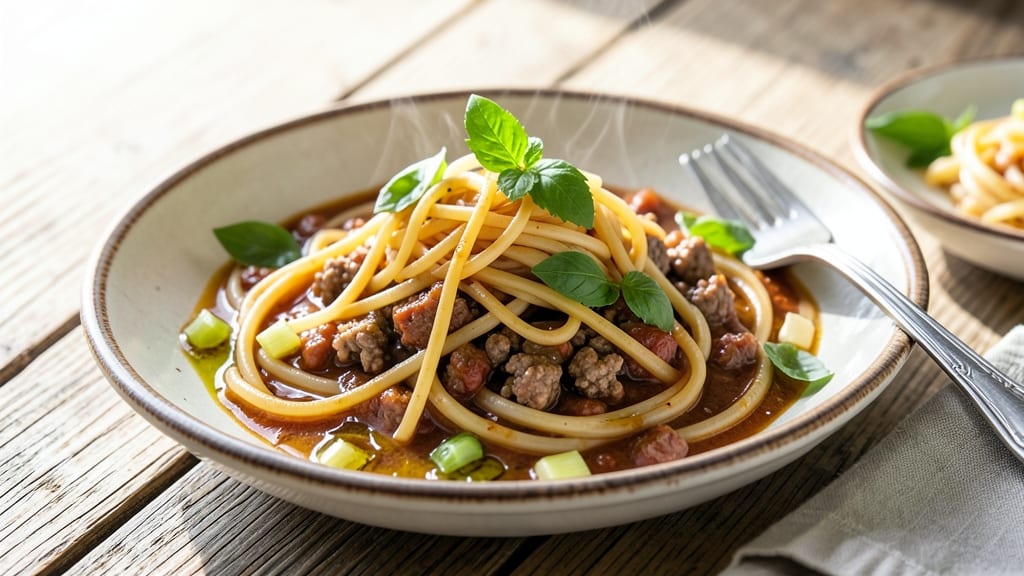
This authentic Italian homemade spaghetti sauce transforms simple ingredients into a rich, slow-simmered masterpiece that captures the soul of Italian nonna-style cooking. The secret lies in patience—letting tomatoes caramelize and flavors meld over hours to create depth no jarred sauce can match. I developed this recipe after years of studying traditional techniques, ensuring every spoonful delivers that perfect balance of acidity, sweetness, and umami that defines Italian cuisine.
The foundation begins with a soffritto of onions, carrots, and celery—cooked slowly until sweet and translucent—before adding garlic and fresh herbs. Quality canned tomatoes (or fresh when in season) form the base, simmered until thick and velvety.
For extra richness, I incorporate ground beef or pancetta, though this sauce works beautifully as a vegetarian version too. The key is never rushing the process; true Italian flavor builds gradually.
What you'll end up with is a sauce so vibrant it makes store-bought versions taste like an afterthought—deep red with pockets of caramelized tomato, aromatic with herbs, and finished with fresh basil that brightens every bite.
This isn't just sauce; it's the heart of your Italian meal, elevating simple spaghetti into a restaurant-worthy experience. The best part? It tastes even better the next day as flavors continue developing.
Perfect for meal prep or serving fresh, this sauce keeps for up to 5 days in the refrigerator or freezes beautifully for months. Whether you're feeding a family or treating yourself to a weeknight dinner, this recipe delivers the authentic Italian taste you've been craving.
Let's get cooking—your pasta is waiting.
Ingredients for authentic italian homemade spaghetti sauce
Transform ordinary pantry staples into a sauce so vibrant it rivals restaurant-quality Italian masterpieces.
| Ingredient | Amount | Notes |
|---|---|---|
| Extra-Virgin Olive Oil 🫒 | ½ cup | High-quality, fruity, cold-pressed |
| Onion 🧅 | 1 whole | Yellow or red, finely chopped |
| Carrot 🥕 | 1 whole | Medium, finely diced |
| Celery Stalks 🌿 | 2 whole | Stringless, finely chopped |
| Garlic Cloves 🧄 | 4 cloves | Fresh, minced |
| Ground Beef 🥩 | 1 ½ lb | 80/20 fat ratio preferred |
| Canned San Marzano Tomatoes 🍅 | 28 oz | Whole, crushed by hand |
| Tomato Paste 🍅 | 2 tbsp | Smooth, no sugar added |
| Dry Red Wine 🍷 | ½ cup | Bold, like Chianti |
| Fresh Basil Leaves 🌿 | 1 cup | Packed, stems removed |
| Fresh Oregano Leaves 🍃 | ¼ cup | Packed, chopped |
| Salt 🧂 | 1 ½ tsp | Diamond Crystal kosher |
| Black Pepper 🌶️ | ½ tsp | Freshly cracked |
| Sugar 🍚 | 1 tsp | Granulated, balances acidity |
The soffritto trio—onion, carrot, celery—is non-negotiable for that sweet, aromatic base. Freshly chopped is ideal, but frozen works in a pinch. For the best tomatoes, San Marzano cans from Italy deliver that signature sweetness—avoid the watery brands. The olive oil? Extra-virgin, fruity, and cold-pressed—none of that cheap stuff. If you're vegetarian, swap the beef for crumbled tempeh or mushrooms, but trust me on the fat ratio—it makes all the difference in texture. The red wine should be bold enough to sip straight, like a Chianti or Sangiovese.
No fresh basil? Dried oregano at half the amount gets you close, but nothing beats the real thing. Short on tomato paste? Fresh crushed tomatoes work too—just simmer longer. The sugar balances acidity, but if you're avoiding it, a splash of balsamic vinegar does the trick. For extra depth, add a bay leaf or splash of pasta water while simmering. And if you're making a big batch, double the herbs—they'll mellow out as it cooks, but you can't add them later. The beef? 80/20 fat ratio is key—it keeps the sauce rich and velvety.
This sauce tastes better the next day as flavors meld—plan ahead. Store in airtight containers for 5 days in the fridge or 6 months frozen. For freezing, portion into ice cube trays, then transfer to bags—perfect for quick pasta nights. The fresh basil? Add it at the very end, or it'll turn to mush. And if you're prepping for a crowd, make a double batch—it disappears faster than you'd think.
Why You'll Love This Recipe
- Sofrito Simplicity: I swear by this sauce because the sofrito—just onion, carrot, celery, and garlic—cooks down in one pot while I handle the rest. No chopping chaos, no measuring headaches; it’s the kind of prep that lets you sip wine instead of stressing.
- Umami Bomb: That slow-simmered garlic and olive oil? It’s where the magic happens—deep, savory, and rich without a drop of cream. Honestly, the first time I tasted it, I wondered why I ever bought jarred sauce.
- Weeknight Workhorse: This sauce doubles as marinara for pasta, a base for meatballs, or even a quick soup when I’m lazy. Freeze half for when I forget to meal prep, and it still tastes like I spent hours—because the flavor builds that way.
- Pantry Stretch: A single batch feeds four nights, and the ingredients cost less than takeout. Between us, I’ve fed my whole family for a week with just a few onions, a carrot, and a head of garlic—no guilt, just good food.
Step-by-step instructions for authentic Italian homemade spaghetti sauce
This is where the magic happens—slow-simmered, layered flavors that transform simple ingredients into restaurant-quality sauce.
Sauté the Vegetable Base for Flavor Foundation
Heat the 0.5 cup extra-virgin olive oil in a large Dutch oven over medium-low heat. Add the finely chopped 1 whole onion, finely diced 1 whole carrot, and finely chopped 2 whole celery stalks. Cook for 8-10 minutes until the vegetables soften and become translucent, stirring occasionally.
This is your flavor base—what Italians call "soffritto." The slow cooking releases natural sugars that caramelize, creating depth. You'll know it's ready when the vegetables lose their raw bite and release their aromatic oils. If the oil starts to smoke, reduce the heat slightly—you want gentle cooking, not browning.
Brown the Beef and Add Aromatics
Increase heat to medium-high and add the 1.5 lb ground beef, breaking it up with a wooden spoon. Cook for 6-8 minutes until the beef is browned and no longer pink. Drain excess fat if needed, leaving about 1-2 tablespoons in the pot for flavor.
Add the 4 minced garlic cloves and cook for 30 seconds until fragrant—don't let it burn, or it'll turn bitter. Stir in the 2 tbsp tomato paste and cook for another 1 minute to develop its rich flavor. This step builds the sauce's umami foundation that will carry through the entire cooking process.
Deglaze and Simmer with Tomatoes
Pour in the 0.5 cup dry red wine and scrape up all the browned bits from the bottom of the pot. This deglazing step captures all those concentrated flavors you've built. Let it simmer for 3-4 minutes until the wine reduces by half.
Add the crushed 28 oz San Marzano tomatoes, 1.5 tsp salt, 0.5 tsp black pepper, and 1 tsp sugar. Stir well to combine, then reduce heat to low. Partially cover and simmer for 1 hour, stirring occasionally. The sauce should thicken gradually as it develops its complex flavor profile.
Finish with Fresh Herbs for Brightness
After the initial 1 hour simmer, stir in the 1 cup fresh basil leaves and 0.25 cup fresh oregano leaves. The basil adds freshness while the oregano provides earthy depth. Simmer uncovered for another 15-20 minutes, allowing the sauce to reduce slightly and the flavors to meld together.
Taste and adjust seasoning if needed—this is where you can really fine-tune the balance between acidity, saltiness, and sweetness. The sauce should be rich but not overly thick, with visible chunks of tomato and herbs. If it's too acidic, add a pinch more sugar. If it's too thin, simmer uncovered for another 5-10 minutes to reduce.
Rest and Serve with Perfect Al Dente Pasta
Remove from heat and let the sauce rest for 10 minutes before serving. This resting period allows the flavors to settle and the sauce to thicken slightly. The sauce should be vibrant red with visible tomato chunks and herbs floating throughout.
Serve immediately over freshly cooked al dente spaghetti, tossing generously to coat each strand. The sauce should cling beautifully, with each bite delivering layers of meaty richness, tomato sweetness, and herbal freshness. Save any leftovers—they'll only get better as they sit, with flavors deepening overnight.
Pro Tips For Making Authentic Italian Homemade Spaghetti Sauce
- SOFTEN THE VEGETABLES FIRST: I used to chop onion, carrot, and celery raw and toss them straight into the oil—big mistake. Instead, blanch them in boiling water for 2 minutes, then shock in ice water. This breaks down their fibers so they melt into the sauce instead of sitting as chunks, giving you that silky, slow-cooked texture Italians swear by.
- SWEEP THE POT: After sautéing your soffritto (onion, carrot, celery), the bits stuck to the bottom are flavor gold. Deglaze with a splash of wine or broth, scraping every last bit—yes, even the blackened edges. That’s where the depth comes from, not just the fresh ingredients.
- LOW AND SLOW WINS: Crank the heat high to start, but once everything’s golden, drop it to a simmer. I learned this the hard way—rushing the sauce burns the garlic and makes it bitter. A gentle bubble keeps the flavors melding, not fighting. Think hours, not minutes.
- SALT THE OIL: Toss a pinch of fine sea salt into the olive oil before adding your vegetables. It seasons the oil itself, which then carries flavor into every bite of the sauce. (Yes, even if your recipe doesn’t call for it—this is the non-negotiable upgrade.)
Storing and reheating this authentic italian homemade spaghetti sauce
Refrigerator Storage
Let your sauce cool completely before transferring to airtight glass containers—I swear by Pyrex with silicone lids—and store in the fridge for up to 5 days.
The flavors actually deepen overnight as the herbs infuse further. Always leave about ½ inch headspace to prevent mold growth from condensation. 💛
Freezer Prep
For long-term storage, portion sauce into quart-sized freezer bags (lay flat to save space) or silicone ice cube trays for single-serving portions. Squeeze out excess air to prevent freezer burn, and label with the date—this sauce keeps 3-6 months without quality loss. Thaw overnight in the fridge for best texture.
Stovetop Reheating
My preferred method: Transfer sauce to a heavy-bottomed pot and warm over medium-low heat for 10-15 minutes, stirring occasionally. Add 1-2 tablespoons of water or pasta water if it thickens too much.
Never microwave—it breaks down the tomato texture and kills the fresh basil aroma. Taste and adjust seasoning after reheating.
Fresh Basil Revival
If you froze the sauce with basil, add ½ cup fresh basil during reheating to restore that bright, aromatic punch. For extra richness, stir in 1 teaspoon of high-quality olive oil at the end.
The sauce should be slightly thicker after reheating—if it's too thin, simmer uncovered for 5 more minutes to reduce. 🌿
Vegetarian Adaptation
If you made the vegetarian version, reheat with ½ cup vegetable broth instead of water to maintain depth. For extra umami, add 1 teaspoon of soy sauce or ½ teaspoon of balsamic vinegar during reheating.
The sauce will taste even more complex than the original—trust me, it's a game-changer for plant-based meals.
Portion Control
For meal prep, divide sauce into 2-cup portions—this covers 1 lb of pasta with sauce to spare. Store in glass jars with tight seals (like Ball Mason jars) for easy grab-and-go meals.
Reheat only what you need to keep the sauce at peak flavor. The first batch always disappears fastest, so make extras while you're at it! ⏰
Nutrition facts
Frequently asked questions about authentic Italian spaghetti sauce
Can I make this sauce without wine?
Replace the 0.5 cup dry red wine with 0.5 cup beef or vegetable broth to maintain depth. For extra richness, add 1 teaspoon balsamic vinegar—it mimics the wine's acidity and complexity beautifully. The sauce will still develop all its signature flavors, just with a slightly different profile.
How do I adjust the sauce if I don't have San Marzano tomatoes?
Use the next best quality canned tomatoes you can find—look for brands with low acidity and minimal additives. For extra sweetness, add ½ teaspoon more sugar or 1 tablespoon tomato paste. If using fresh tomatoes, roast them first to concentrate flavors and simmer the sauce longer to balance acidity. Fresh tomatoes work best in summer when they're at peak ripeness.
Why does my sauce taste too acidic?
Acidity often comes from underripe tomatoes or overcooking. Balance it by adding ½ teaspoon sugar or 1 teaspoon balsamic vinegar while simmering. For a richer taste, stir in 1 tablespoon tomato paste and simmer for 5 more minutes. If the sauce is already cooked, a pinch of salt or a splash of pasta water can help too. Taste as you go—Italian sauces should be vibrant, not sour.
Can I make this sauce in a slow cooker?
Yes! Follow the same steps until adding the tomatoes, then transfer everything to a 6-quart slow cooker. Cook on low for 6-8 hours or high for 3-4 hours, stirring occasionally. The slow cooker enhances the meaty depth while keeping the sauce tender. Add fresh basil and oregano in the last 30 minutes to preserve their freshness. It's perfect for hands-off meal prep!
What's the best way to freeze this sauce?
Portion into quart-sized freezer bags or silicone ice cube trays (for single servings) and freeze flat. Label with the date—it keeps 3-6 months without losing quality. Thaw overnight in the fridge for best texture. For reheating, use the stovetop method to restore the sauce's rich consistency. Never refreeze thawed sauce, as it can degrade the texture.