
Sauces & Condiments
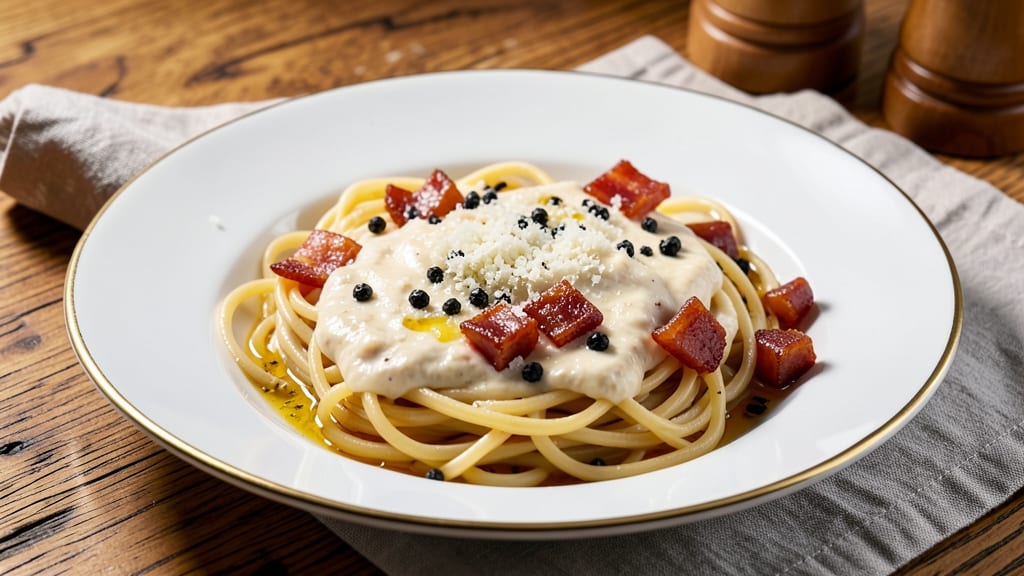
This authentic carbonara sauce recipe delivers the creamy, peppery perfection of Rome’s most famous pasta dish—no heavy cream needed. The secret lies in a silky egg-yolk emulsion that clings to crispy pancetta bits, creating a sauce so rich it transforms simple spaghetti into a restaurant-worthy masterpiece.
I’ve perfected the technique over years of testing, ensuring the sauce never curdles or breaks, no matter how hot the pasta water gets.
What sets this sauce apart is the balance of textures and flavors: crispy pancetta adds savory depth, sharp Pecorino Romano brings umami richness, and freshly cracked black pepper delivers that signature kick.
The key is working quickly but deliberately—whisking the eggs just until they’re warm enough to emulsify smoothly with starchy pasta water, creating a velvety sauce that coats every strand of pasta without weighing it down.
By the time you twirl your fork through the first bite, you’ll taste why carbonara stands apart from other pasta sauces: no cream, no butter overload, just pure, unadulterated flavor.
The sauce clings to the pasta like a second skin, with pockets of crispy pancetta and flecks of pepper in every mouthful. This is the kind of sauce that makes you forget you’re eating a weeknight dinner.
The beauty of this recipe extends beyond the plate—it’s foolproof for beginners and flexible enough for variations (like adding a splash of pasta water or adjusting cheese ratios).
Store leftovers in the fridge for up to 3 days, or freeze for later use. Here’s how to make it without a single mistake.
Ingredients for authentic carbonara sauce
Seven ingredients transform simple pasta into Rome's most famous dish—crispy, creamy, and peppery perfection.
| Ingredient | Amount | Notes |
|---|---|---|
| Pancetta 🥓 | 6 oz | Diced into small pieces |
| Large Egg Yolks 🥚 | 4 whole | Freshly separated, room temperature |
| Pecorino Romano Cheese 🧀 | 1 ½ cups | Freshly grated, coarse texture |
| Freshly Ground Black Pepper 🌶️ | 1 tsp | Cracked over eggs, not pre-ground |
| Spaghetti 🍝 | 12 oz | Dry weight, al dente preferred |
| Reserved Pasta Water 💧 | 1 cup | Starchy water from cooking pasta |
| Extra-Virgin Olive Oil 🫒 | 2 tbsp | For crisping pancetta |
The pancetta is non-negotiable here—look for thick-cut slices at Italian markets or the deli counter, not the pre-diced kind. Trader Joe's has great Italian pancetta if you're short on time. Freshly grind the black pepper right over the eggs (the good kind, not the dusty jarred stuff)—it makes all the difference. For the Pecorino Romano, grate it yourself from a wedge, not the pre-grated kind. It's pricier but worth it for that sharp, salty bite. The spaghetti? Bronze-die cuts hold up better to the sauce's richness—De Cecco is my go-to brand when I can find it.
No pancetta? Guanciale works perfectly—it's the traditional Roman choice. Short on Pecorino? Parmigiano-Reggiano at half the amount gets you close, but you'll miss that tangy kick. Running out of egg yolks? Whole eggs at 2 yolks per egg works, but the sauce will be slightly lighter. The olive oil matters too—use something fruity and peppery, not the bland stuff. For the pasta water, reserve 1 cup of the starchy water before draining—it's the secret to a silky sauce. No need to stress about exact measurements here; eyeball the cheese and adjust to taste.
This sauce is best made fresh, but leftovers keep 3 days in the fridge—reheat gently with a splash of pasta water. Freezes beautifully for up to 1 month if you portion it into airtight containers. Pro tip: Make a double batch—it disappears fast. If the sauce seems too thick, just whisk in more pasta water, a little at a time. And for the love of all things holy, don't add cream. That's not authentic carbonara.
Why You'll Love This Recipe
- No Egg Scramble: I’ll admit—first time, I overcooked the yolks and ended up with something closer to custard than sauce. But once you get the heat right? That silky, peppery ribbon of sauce clinging to the pasta? Pure magic. Pancetta renders in minutes, and the yolks just need a gentle hand—no whisking marathon required.
- Peppery Umami Bomb: Honestly, the combo of pancetta and Pecorino Romano is what makes this dish dangerously good. The saltiness cuts through the richness, while the black pepper adds this sharp, almost smoky kick that lingers. It’s the kind of flavor that makes you reach for a second helping without even thinking.
- Weeknight to Dinner Party: Between us, this is my go-to when I have zero energy but still want to impress. For a weeknight, I toss it with spaghetti and call it done. For company? Add a handful of peas or roasted cherry tomatoes—suddenly, it’s fancy. The sauce doubles easily, so I always make extra.
- Leftovers That Lie: I make a big batch on Sundays because the truth is, reheated carbonara is still amazing. The sauce clings to the pasta, so it doesn’t dry out like other sauces. Plus, it’s budget-friendly—Pecorino and pancetta stretch far, and you’ll be too busy eating to notice the cost. (Yes, even on a Tuesday night.)
Step-by-step instructions for authentic carbonara sauce
Here's how to make the real deal—creamy, rich, and packed with crispy pancetta.
Crisp the Pancetta Until Golden
Heat a large skillet over medium heat and add the 2 tablespoons extra-virgin olive oil. Once shimmering, add the 6 oz diced pancetta and cook undisturbed for 5-6 minutes until the fat renders out and the pieces become deep golden brown and crispy.
Stir occasionally to prevent burning, but let the pancetta develop that beautiful crust. The rendered fat will form the base of your sauce, so don't drain it—this is where all the flavor lives. If the fat gets too hot and starts to smoke, reduce the heat slightly. You want crispy bits, not burnt edges.
Prepare the Egg-Yolk Emulsion
While the pancetta cooks, whisk together the 4 whole large egg yolks in a bowl until smooth. Add the 1.5 cups freshly grated Pecorino Romano cheese and 1 teaspoon freshly ground black pepper, whisking until fully combined. The mixture should be thick and pale yellow—almost like a custard.
I like to use a fork for this step because it gives me better control. The key here is to keep the eggs at room temperature—they'll emulsify better and won't scramble when they hit the hot pasta. If the mixture looks too thick, you can add a splash of water to loosen it slightly, but don't overdo it.
Cook the Spaghetti Al Dente
Bring a large pot of well-salted water to a rolling boil and add the 12 oz spaghetti. Cook until 1 minute shy of the package directions for al dente—you want the pasta slightly underdone because it'll finish cooking in the sauce.
Before draining, reserve 1 cup of the starchy pasta water in a measuring cup. This water is pure gold—it helps create the creamy sauce and prevents the eggs from scrambling. Drain the pasta, but don't rinse it. The surface starch helps the sauce cling to every strand of spaghetti.
Combine Everything Off the Heat
Remove the skillet with pancetta from the heat and let it cool for 1 minute. Add the drained spaghetti to the skillet and toss to coat in the rendered fat. Then, add ½ cup of the reserved pasta water and toss vigorously for 30 seconds to heat the pasta through.
Now here's the crucial part: add the egg-yolk mixture to the skillet and toss constantly for 1-2 minutes until the sauce thickens and coats the pasta. The pan should be off heat—if it's too hot, you'll scramble the eggs. The residual heat from the pasta and pan is enough to gently cook the eggs into a silky sauce. If it's too thick, add more pasta water 1 tablespoon at a time until it reaches your desired consistency.
Finish and Serve Immediately
Transfer the carbonara to warmed serving plates immediately—this dish doesn't wait. Each bite should deliver rich, salty pancetta, sharp Pecorino, and a creamy egg sauce that clings to every strand of spaghetti. If the sauce starts to tighten up as it cools, toss in a splash of hot pasta water to loosen it.
Top with additional grated Pecorino Romano cheese and freshly cracked black pepper. Serve with crusty bread on the side to soak up any extra sauce. The real magic of authentic carbonara lies in the simplicity—just crispy pancetta, creamy eggs, and sharp cheese, all coming together in perfect harmony.
Pro Tips For Making Authentic Carbonara Sauce
- CRISP THE PANCETTA RIGHT: Cook the pancetta until it’s golden and crispy—not just pink. I used to stop when it looked done, but those soft bits make the sauce greasy instead of rich. High heat, 8-10 minutes, stirring often, until it’s sizzling like bacon should.
- GRATE PECORINO FINE: Use a microplane or fine grater for the Pecorino—no chunks, no dust. I learned this after serving a plate with a gritty bite that ruined the whole dish. The cheese should melt into silk, not require chewing.
- LOW AND SLOW WITH PASTA: Reserve a cup of pasta water, then cook the spaghetti al dente in salted water. Drain it, but don’t shock it—just toss it back into the pot off the heat. Cold water kills the sauce’s emulsification before it even starts.
- TEMPER THE EGGS FIRST: Warm the egg yolks with a splash of pasta water (about 1 tablespoon) before mixing them into the sauce. This prevents scrambling—trust me, I’ve made scrambled carbonara more times than I’d admit. The heat from the pasta water cooks the eggs gently.
Best sauces and condiments for authentic carbonara sauce
Pasta Water Magic
The starchy pasta water is the unsung hero of carbonara—it’s what transforms scrambled eggs into a silky sauce. Reserve 1 cup of that golden liquid before draining, and keep it hot.
When you add the egg-yolk mixture, the starch acts like an emulsifier, binding fat and water into a velvety texture. If your sauce starts to break, just whisk in another 1-2 tablespoons of reserved water. Trust me, this is the secret to restaurant-quality carbonara every time. 💧
Cheese Variations
While Pecorino Romano is the gold standard, a 50/50 mix with Parmigiano-Reggiano works in a pinch—just use 1 cup total. For a creamier texture, add ¼ cup grated Grana Padano to the mix.
Avoid pre-shredded cheese; the anti-caking agents prevent proper emulsification. I’ve even seen recipes call for Pecorino Toscano, which adds a nutty depth that pairs beautifully with pancetta.
Egg Temperature Tips
Room-temperature eggs are non-negotiable—they emulsify smoothly without scrambling. If your kitchen is cold, let the yolks sit in warm water for 5 minutes before whisking. I’ve ruined carbonara more times than I’d like to admit by using cold eggs straight from the fridge.
Pro tip: Use a thermometer to check the pasta water—it should be 180-190°F when the sauce comes together. The residual heat gently cooks the eggs into a creamy sauce.
Pancetta Alternatives
No pancetta? Guanciale is the traditional Roman choice—its marbled fat renders beautifully. If you’re in a hurry, thick-cut bacon works, but it’s smokier and less refined. For a vegetarian twist, crisp mushroom caps in olive oil and use them as the base.
Just remember: the fat is the foundation of flavor, so whatever you use, render it until golden and crispy. 🥓
Sauce Thickness Control
If your sauce is too thick, add reserved pasta water 1 tablespoon at a time until it reaches a creamy consistency. Too thin? Let it sit for 1-2 minutes off the heat—the starch will thicken naturally.
I’ve even seen chefs add a splash of white wine (just ½ tablespoon) to loosen the sauce while adding brightness. The key is patience; rush it, and you’ll end up with scrambled eggs instead of a silky sauce.
Storage Secrets
Leftovers keep for 3 days in the fridge, but reheating is tricky—add a splash of hot pasta water and warm gently on low heat. For freezing, portion into airtight containers and thaw in the fridge overnight.
Microwaving leftovers? Cover with a damp paper towel and heat in 20-second bursts to avoid breaking the emulsion. I like to freeze carbonara in single-serving portions so I can reheat just what I need. 🧊
Nutrition facts
Frequently asked questions
Why does authentic carbonara never use cream?
Traditional Roman carbonara relies on the natural richness of egg yolks and Pecorino Romano combined with crispy pancetta fat—no cream needed! The eggs emulsify with starchy pasta water to create a velvety texture, while the rendered fat from pancetta adds depth. Cream would make the sauce too heavy and mask the authentic flavors.
Can I make carbonara with whole eggs instead of just yolks?
Yes, but you'll need to adjust the ratio. Use 2 whole eggs for every 4 yolks in the recipe, but keep the total egg quantity the same. Whole eggs will make the sauce slightly lighter, but the technique remains identical. The key is still keeping the eggs warm and working off the heat.
What's the best pasta shape for carbonara?
While spaghetti is traditional, any long, thin pasta works—tonnarelli, bucatini, or even linguine. The long strands help the sauce cling perfectly. For shorter shapes like penne or rigatoni, you'll need to toss more vigorously to coat each piece evenly. Avoid thick, dense pastas—they can't absorb the sauce as well.
How do I fix scrambled eggs in my carbonara? Don't panic! Remove from heat immediately and whisk in 1-2 tablespoons of hot pasta water. The starch will help re-emulsify the sauce. If it's still too thick, add more pasta water gradually. For next time,
Can I make carbonara ahead of time?
Not the sauce itself—but you can prep components! Cook the pancetta and store it in the fridge for 2 days. Make the egg-cheese mixture separately and keep it at room temperature until ready to use. For leftovers, reheat gently with a splash of pasta water. The magic happens fresh, but you can assemble it up to 4 hours ahead if everything is prepped properly.