
Sauces & Condiments
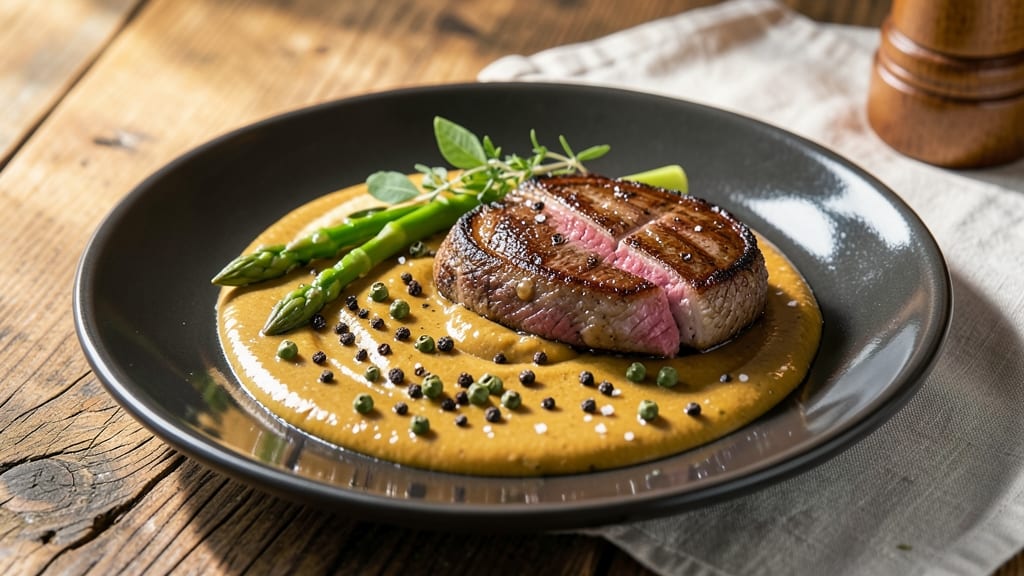
Au poivre sauce recipe with green peppercorns transforms ordinary steak into a steakhouse masterpiece with just five ingredients and 15 minutes of hands-on time. The secret lies in tempering the peppercorns properly—too much heat ruins their delicate flavor, while gentle warmth unlocks their aromatic potential. This sauce delivers that signature peppery punch without overwhelming the dish, making it the perfect finishing touch for beef, chicken, or even creamy mashed potatoes.
The technique is simpler than it sounds: start with cold butter to prevent burning, then gradually warm it while toasting the peppercorns until they release their fragrant oils. A splash of vinegar brightens the sauce, while heavy cream creates that velvety texture that clings to every bite.
What makes this version special is the balance—enough pepper to wake up your palate, but never so much that it becomes harsh.
What you'll end up with is a glossy, pepper-kissed sauce that adds depth and sophistication to any protein. The peppercorns infuse the butter with their signature bite, while the cream creates a luxurious, restaurant-quality finish.
This sauce keeps beautifully in the fridge for up to 5 days, so you can make a batch ahead and have it ready whenever steak night calls.
Perfect for elevating weeknight dinners or impressing guests, this au poivre sauce proves that professional-level flavor doesn't require complicated techniques. The key is patience—letting the peppercorns toast gently and allowing the sauce to emulsify properly. Once you master this method, you'll never buy store-bought sauce again.
Ingredients for au poivre sauce recipe with green peppercorns
Five ingredients, one luxurious sauce—transforming steakhouse flavors at home with precision.
| Ingredient | Amount | Notes |
|---|---|---|
| Unsalted Butter 🧈 | ½ cup | Cold, cubed for even melting |
| Green Peppercorns 🌿 | 2 tbsp | Whole, preferably fresh or frozen |
| Heavy Cream 🥛 | ½ cup | Full-fat for velvety texture |
| White Wine Vinegar 🍶 | 1 tbsp | Brightens the sauce |
| Diamond Crystal Kosher Salt 🧂 | ¼ tsp | Adjust to taste |
| Black Peppercorns 🌶️ | ½ tsp | Freshly cracked for depth |
| Freshly Ground Black Pepper 🌶️ | ¼ tsp | Optional finishing touch |
The butter and peppercorns are your foundation. Unsalted butter ensures clean flavor without salt interference, while green peppercorns should be whole and preferably fresh or frozen (the grocery store pre-packaged kind works in a pinch). For the best quality, source green peppercorns from Penzeys or specialty spice shops—they carry the most aromatic varieties. The heavy cream must be full-fat; whipping cream won't emulsify properly. Toast the peppercorns gently—this releases their oils without burning, which is where most home cooks go wrong.
No green peppercorns? Black peppercorns toasted longer create a similar depth, though the flavor profile shifts. Substitute heavy cream with half-and-half for a lighter texture, but expect slightly less richness. Vinegar can be swapped for lemon juice at half the amount, though it adds a brighter tang. If you're using salted butter, reduce the kosher salt by half a pinch—trust me, it adds up. The black peppercorns in the final step are optional but recommended; they add another layer of complexity that elevates the sauce from good to exceptional.
This sauce keeps beautifully for 5 days in the fridge, stored in an airtight container with a thin layer of plastic wrap pressed directly onto the surface to prevent a skin from forming. For longer storage, freeze in 1-tablespoon portions—perfect for drizzling over individual steaks. Reheat gently over low heat, stirring constantly until just melted. The sauce thickens as it cools, so if it seems too stiff, add a splash of warm cream to restore its silky consistency.
Why You'll Love This Recipe
- Here’s what sold me: this sauce works on everything. Drizzle it over grilled chicken, toss it with mashed potatoes, or—my favorite—use it as a dressing for a hearty winter salad. It’s the kind of recipe that makes you feel like a chef without trying too hard.
- Few Ingredients, Big Payoff: I swear by this recipe because it’s one of those rare sauces where you don’t need a pantry full of spices. Just butter, peppercorns, cream, and a splash of vinegar—no fancy gadgets or last-minute grocery runs. That first crack of peppercorn against the pan? Pure satisfaction.
- Umami Bomb in Minutes: The moment those toasted peppercorns hit the cream, your kitchen smells like a Parisian bistro. The vinegar cuts through the richness just enough to keep it bright, while the salt—don’t skimp here—makes every bite taste like it’s been simmered for hours. (Between us, it’s my go-to for steak night.)
- Steak Night or Salad Topper: Here’s what sold me: this sauce works on everything. Drizzle it over grilled chicken, toss it with mashed potatoes, or—my favorite—use it as a dressing for a hearty winter salad. It’s the kind of recipe that makes you feel like a chef without trying too hard.
Step-by-step instructions for au poivre sauce
Master this classic French sauce with precise technique and bold peppery flavor.
Render Butter and Toast Peppercorns
Melt the 0.5 cup unsalted butter in a medium saucepan over medium-low heat. I use a heavy-bottomed pan to prevent scorching—this sauce should develop rich, nutty flavors, not burn. Once the butter has completely melted and begins to foam, add the 2 tbsp green peppercorns and 0.5 tsp black peppercorns. Stir gently and cook for 3-4 minutes until the peppercorns begin to sizzle and release their aromatic oils.
Watch closely as the butter turns a pale golden hue—this indicates the peppercorns are properly toasted. If you see any brown spots, immediately reduce the heat to low. The goal is to infuse the butter with peppery depth without burning the delicate corn kernels. Remove the pan from heat once you hear the peppercorns crackling audibly—this is your signal they're ready.
Deglaze with Vinegar
Return the pan to medium heat and carefully pour in the 1 tbsp white wine vinegar. The vinegar will react vigorously with the hot butter, creating a sizzling, aromatic mist. Use a wooden spoon to scrape up any browned bits from the bottom of the pan—these fond particles carry concentrated flavor that will form the sauce's velvety base. Let the mixture simmer gently for 1-2 minutes until the vinegar has mostly evaporated and the liquid reduces by half.
This deglazing step is critical—it brightens the sauce with acidity while dissolving the toasted peppercorn oils into the butter. If you smell a sharp vinegar aroma lingering, let it cook slightly longer until the scent mellows into a balanced tang. The sauce should now have a glossy, emulsified appearance with visible peppercorn flecks suspended throughout.
Incorporate Cream and Season
Reduce the heat to low and gradually whisk in the 0.5 cup heavy cream. The temperature difference will cause the cream to steam gently, so work slowly to prevent curdling. Add the 0.25 tsp Diamond Crystal kosher salt and stir continuously for 3-4 minutes until the sauce thickens to a luxurious, coatable consistency. You're aiming for a texture similar to heavy cream—smooth enough to cling to proteins but with enough body to hold its shape.
Taste and adjust seasoning if needed. The peppercorns should provide a bright, slightly spicy kick, while the vinegar adds a subtle acidity that cuts through the richness. If the sauce tastes flat, add a pinch more salt or a few more cracked peppercorns. For an extra layer of complexity, you can now incorporate the 0.25 tsp freshly ground black pepper—this adds a different texture and more heat without overpowering the delicate peppercorn flavor.
Finish and Serve Immediately
Remove the sauce from heat and let it rest for 2-3 minutes to allow the flavors to meld. This brief resting period lets the peppercorns fully infuse their oils into the sauce. Strain the sauce through a fine-mesh sieve if you prefer a smoother texture, though I prefer leaving the peppercorns visible for their visual appeal and textural contrast. The finished sauce should be glossy, velvety, and aromatic with a peppery aroma that fills the kitchen.
Serve immediately over grilled steaks, roasted meats, or even as a luxurious drizzle over mashed potatoes. The sauce pairs beautifully with rich proteins where its peppery brightness can cut through the fat. For best results, keep the sauce warm in a thermos or small saucepan on low heat—au poivre sauce doesn't reheat well, so serve it fresh from the stove for optimal texture and flavor.
Pro Tips For Making Au Poivre Sauce Recipe With Green Peppercorns
- TOAST THE PEPPERCORNS: Crisp them in a dry pan for 30 seconds before adding to the butter—this deepens their flavor and prevents bitterness. I used to skip this, and the sauce always tasted flat until I tried it.
- USE COLD CREAM: Pour cold heavy cream into the warm butter mixture instead of hot—it slows the emulsification and keeps the sauce from breaking. After burning three batches, I finally figured out this was the missing piece.
- SALT THE BUTTER: Add a pinch of kosher salt to the melted butter before adding cream—it balances the acidity of the vinegar and peppercorns. Sounds weird, but it works: the sauce stays bright and cohesive.
- STRAIN THE PEPPERCORNS: Line a fine-mesh sieve with cheesecloth and press the cooked peppercorns through—this removes grit and lets the oil infuse smoothly. Does it look like overkill? Yes. Is it worth it? Every time.
Dietary considerations for au poivre sauce recipe with green peppercorns
Gluten-Free Adaptation
This sauce is naturally gluten-free since it relies on butter, cream, vinegar, and peppercorns—all gluten-free ingredients. The only potential concern is if your vinegar contains gluten additives, which is rare but possible. I always check labels on white wine vinegar to confirm it's gluten-free certified.
For extra caution, use a dedicated gluten-free vinegar like Bragg Apple Cider Vinegar, which is certified safe for gluten-sensitive diets. 🌱
Dairy-Free Substitution
For a dairy-free version, replace the butter and heavy cream with coconut oil and full-fat coconut milk. Here’s how: Melt ½ cup coconut oil over low heat, then toast the peppercorns in it just like the original method.
Deglaze with vinegar as directed, then whisk in ½ cup coconut milk and simmer until thickened. The flavor will be subtly different—less rich but still peppery and vibrant. This works especially well over grilled chicken or fish.
Low-Fat Adjustments
If you’re watching fat content, you can reduce the butter to ¼ cup and use low-fat Greek yogurt instead of heavy cream. The texture will be lighter but still creamy. Add 1 tbsp cornstarch to the yogurt before mixing to help thicken the sauce properly.
Taste as you go—you may need an extra splash of vinegar to balance the reduced fat. This version still delivers that signature peppery punch without the heaviness. 💪
Spice Sensitivity
Green peppercorns pack a mild but distinctive heat, but if you or your guests are sensitive to spice, you can reduce the amount to 1 tbsp instead of 2 tbsp. For a milder kick, use white peppercorns instead—they have a similar aroma but less bite.
If you still want that peppery depth without the heat, add ½ tsp honey to the final sauce to mellow the flavor slightly. The sauce will still shine, just with a gentler profile.
Nut-Free Considerations
This recipe is inherently nut-free, but always double-check your butter and cream labels if you have severe allergies. Some brands add trace amounts of nuts during processing. For added safety, use Earth Balance vegan butter (nut-free) and Oatly full-fat coconut cream as substitutes.
The flavor remains rich and peppery, just with a plant-based twist. Keep an eye on the sauce while heating—plant-based fats can separate more easily than dairy.
Nutrition facts
Frequently asked questions
Can I use black peppercorns instead of green?
You can substitute black peppercorns, but the flavor will be stronger and slightly more bitter. Use 1 tbsp black peppercorns instead of 2 tbsp green, and toast them for 1-2 minutes longer to develop their oils. For a milder version, try white peppercorns—they have a similar aroma but less heat. The sauce will still taste delicious, just with a different peppery profile.
Why did my sauce separate?
Sauce separation usually happens when the cream curdles from overheating or too rapid temperature changes. To fix it, whisk in 1 tsp cold water or 1 tbsp heavy cream while stirring constantly over low heat until smooth. For prevention, always add cream gradually to the warm butter and avoid boiling the mixture. If the sauce still looks broken, strain it through a fine-mesh sieve to remove any lumps.
How do I make this sauce spicier? For extra heat, add ½ tsp cayenne pepper or 1 tsp hot sauce to the final sauce. You can also increase the green peppercorns to 3 tbsp and toast them for an extra 1 minute to intensify their flavor. For a smoky kick, stir in ¼ tsp smoked paprika at the end.
Can I make this sauce ahead of time?
Yes! Store the sauce in an airtight container in the fridge for up to 5 days. For longer storage, freeze in 1-tablespoon portions—perfect for single servings. Thaw overnight in the fridge and reheat gently over low heat, stirring constantly. The texture may thicken slightly when chilled, so add a splash of warm cream if needed. The flavors actually improve after resting overnight as the peppercorns infuse further.
What's the best way to serve this sauce?
This sauce pairs perfectly with grilled or pan-seared steaks, but it also works over roasted chicken, pork chops, or even creamy mashed potatoes. For extra drama, drizzle it over a steak tartare or use it as a dip for crusty bread. The peppery brightness cuts through rich, fatty proteins beautifully. Serve immediately after making for the best texture—au poivre sauce doesn't reheat as well as it performs fresh from the stove.