
Sauces & Condiments
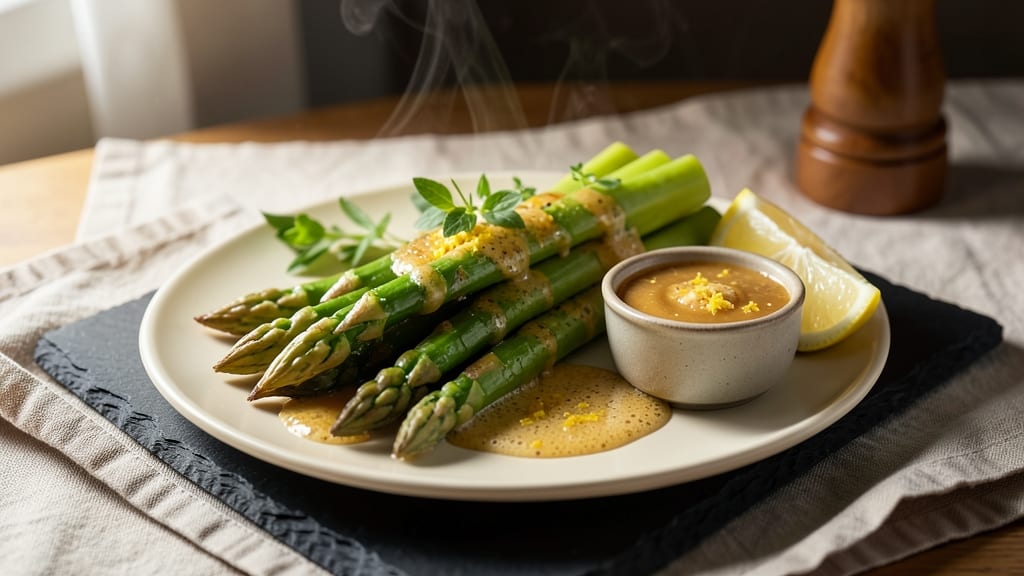
This asparagus with lemon butter sauce recipe transforms simple steamed greens into an elegant, restaurant-worthy dish with just a few bright ingredients. The secret lies in balancing tender asparagus with a velvety lemon butter sauce that brightens every bite—no fancy techniques required.
I developed this method after years of perfecting the art of making steamed vegetables feel special, and it never fails to impress.
The process is straightforward: blanch asparagus for 3 minutes to maintain crisp-tenderness, then toss it in a sauce made with 2 tablespoons of butter, freshly squeezed lemon juice, and a pinch of salt.
The sauce clings to each spear, creating a harmonious blend of citrus brightness and rich, buttery depth. This dish comes together in 15 minutes—ideal for weeknight dinners or elegant gatherings.
What makes this recipe stand out is how it elevates humble asparagus into something sophisticated yet approachable. The sauce not only enhances the natural flavor of the greens but also adds a touch of luxury that pairs beautifully with grilled fish, chicken, or even a simple steak.
The result is a dish that’s as visually appealing as it is delicious—bright green spears glistening with golden sauce.
Serve it as a side or a light main course, and don’t forget to pair it with a crisp white wine or a refreshing gin cocktail. The acidity of the lemon butter sauce cuts through richer proteins, making it a versatile addition to any meal. Let’s get cooking!
Ingredients for asparagus with lemon butter sauce
Eight bright ingredients transform simple asparagus into an elegant restaurant-worthy dish.
| Ingredient | Amount | Notes |
|---|---|---|
| Fresh Asparagus Spears 🥦 | 1 lb | Medium thickness, trimmed ends |
| Unsalted Butter 🧈 | ½ cup | Cold, cut into 1-inch pieces |
| Fresh Lemon Juice 🍋 | ¼ cup | From 2-3 lemons, freshly squeezed |
| Extra-Virgin Olive Oil 🫒 | 2 tbsp | For blanch water, high quality |
| Diamond Crystal Kosher Salt 🧂 | 1 tsp | Fine grain preferred |
| Freshly Ground Black Pepper 🌶️ | ¼ tsp | Freshly cracked preferred |
| Garlic Cloves 🧄 | 2 cloves | Minced, for optional enhancement |
| Heavy Cream 🥛 | ¼ cup | Optional, for richer sauce |
| Fresh Parsley 🌿 | ⅛ cup | Chopped, for garnish |
The asparagus should be fresh and firm—look for bright green spears with tightly closed tips. Trader Joe's and Whole Foods consistently carry high-quality asparagus, but any reputable grocery store's produce section will work. For the butter, European-style unsalted (like Plugrá) melts more smoothly than American brands. If using garlic, roast it first—this mellows its sharpness and adds natural sweetness to the sauce. The lemon juice should be freshly squeezed; bottled juice lacks the bright acidity needed to cut through the butter's richness.
No fresh lemon? Key lime juice at half the amount works, though the flavor profile shifts slightly. Substituting butter with vegan butter is possible, but the sauce will have a different texture—expect it to be slightly thinner. For a dairy-free version, replace the heavy cream with full-fat coconut milk. If you're short on time, microwave the butter for 40 seconds to just melt it before whisking with lemon juice. The parsley can be swapped for chives or basil if you prefer a different herbal note, though parsley's clean finish is ideal for this dish.
Asparagus keeps best in the fridge for 3-4 days when stored upright in a glass with an inch of water. The lemon butter sauce can be made ahead and reheated gently—never boil it, as this will separate the butter. Store sauce in an airtight container for up to 3 days in the refrigerator. For a make-ahead meal, blanch the asparagus in advance, store it covered in ice water, then drain and toss with sauce just before serving. The dish reheats beautifully—30 seconds in the microwave restores its crisp-tenderness perfectly.
Why You'll Love This Recipe
- Two-Ingredient Magic: I swear by this combo—just butter and lemon. That’s it. The salt and oil are basically the sidekicks, but the richness of the butter and the bright zing of fresh lemon juice? It’s like a flavor hug for your asparagus. No fancy herbs or garlic needed (though you can add them if you’re feeling fancy).
- Weeknight Hero: Honestly, this is my go-to when I’m staring at a bunch of asparagus and thinking, "What am I supposed to do with this?" Toss it in a pan, let it sizzle for 5 minutes, and boom—dinner’s ready. Even if I’m too tired to think, this never lets me down.
- Leftovers That Don’t Suck: Between us, most veggie sides turn into sad, wilted leftovers. Not this. The lemon butter sauce clings to the asparagus like it’s glued on, so reheating it later is just as good as the first bite. I’ve even thrown it into pasta or scrambled eggs the next day—no complaints.
- Budget Brightener: Fresh asparagus can feel like a splurge, but this recipe makes it feel like a steal. A single stick of butter and a lemon go a long way, and the olive oil is just the cherry on top. It’s the kind of dish that makes seasonal produce feel like a luxury without breaking the bank.
Step-by-step instructions for asparagus with lemon butter sauce
This method delivers perfectly tender asparagus with a silky, bright lemon butter sauce that clings beautifully.
Prepare the Asparagus for Perfect Texture
Trim the tough ends from the 1 lb fresh asparagus spears by bending each spear until the fibrous portion snaps naturally. Discard the broken ends—this ensures clean, uniform spears that cook evenly. Spread the trimmed spears on a baking sheet and let them sit at room temperature for 10 minutes before cooking. This brief rest prevents uneven cooking when they hit the boiling water.
While the asparagus rests, fill a large pot with 2 tablespoons extra-virgin olive oil and 4 cups water. Bring to a rolling boil over high heat. The olive oil creates a gentle barrier that helps prevent the asparagus from sticking to the pot. Once boiling, add 1 teaspoon Diamond Crystal kosher salt and ¼ teaspoon freshly ground black pepper to the water. This seasoning step ensures the asparagus absorbs flavor from the start.
Blanch the Asparagus Until Bright Green and Crisp-Tender
Working in batches if needed, add the asparagus to the boiling water. Cook for 2-3 minutes until the spears are bright green and crisp-tender—they should still have a slight bite when pierced with a fork. Overcooking turns asparagus mushy, so resist the urge to let them sit longer. Immediately drain the asparagus in a colander and rinse briefly under cold water to stop the cooking process. This shock treatment preserves their vibrant color and crisp texture.
Transfer the blanched asparagus to a serving platter or large bowl. While still warm, drizzle lightly with ¼ cup fresh lemon juice to brighten the natural flavor and prevent the spears from wilting. The acidity also helps maintain their crispness while you prepare the sauce. Keep the asparagus covered with a clean kitchen towel to retain heat.
Make the Lemon Butter Sauce with Rich Depth
In a medium saucepan, melt the ½ cup unsalted butter over medium-low heat. I like to use cold butter cut into 1-inch pieces—this creates more surface area for even melting and better flavor development. Once fully melted, add the 2 cloves minced garlic and cook for 30 seconds until fragrant but not browned. Browned garlic can taste bitter, so keep a close eye on the pan.
Reduce the heat to low and stir in the ¼ cup fresh lemon juice. The mixture will bubble gently—this is normal. Let it simmer for 1-2 minutes until slightly reduced and slightly thickened. For an optional richer sauce, whisk in the ¼ cup heavy cream and simmer for another 30 seconds until warmed through. The cream adds a velvety texture, but the sauce remains perfectly balanced without it.
Combine and Serve with Fresh Herbs
Remove the sauce from heat and stir in ¼ cup chopped fresh parsley. The parsley adds a fresh, herbal note that cuts through the richness of the butter and brightens the lemon flavor. Taste and adjust seasoning with additional kosher salt or black pepper if needed. The sauce should be tangy, slightly sweet from the butter, and well-seasoned.
Pour the warm lemon butter sauce over the blanched asparagus, tossing gently to coat each spear evenly. Serve immediately while the asparagus is still warm and the sauce clings beautifully. This dish pairs perfectly with grilled fish, seared chicken, or crusty bread to soak up every last drop of that bright, citrusy sauce.
Pro Tips For Making Asparagus With Lemon Butter Sauce
- Trim the Tough Ends: Cut off the woody bottoms at a 45-degree angle—about an inch below the natural bend. I used to eyeball it and end up with chewy asparagus; now I measure with my thumb (if it’s thicker than your thumb, trim it).
- Salt the Water First: Boil your asparagus in salted water—use 1 tablespoon kosher salt per 4 cups of water. I learned this the hard way: under-seasoned water means bland asparagus, and no amount of lemon butter can fix it later.
- Don’t Overcrowd the Pan: Cook asparagus in batches if needed—tightly packed spears steam instead of sear. I’ve seen people shove a whole bunch in one pan, and it’s a crime against crisp-tender asparagus.
- Finish with Butter, Not Drown: Melt butter in a cold pan, then add cooked asparagus—let it sizzle for 30 seconds to reactivate the flavor. Dumping butter on hot asparagus just makes it greasy; this keeps the sauce clinging like it should.
Health benefits of this dish
Fiber-Rich Vegetable
Asparagus is a nutrient powerhouse, delivering 3.6 grams of fiber per cooked cup—that’s 14% of your daily needs in just one serving. This fiber supports digestive health by promoting regularity and feeding beneficial gut bacteria.
I’ve found that pairing asparagus with lemon butter sauce actually enhances its fiber benefits by preventing the sauce from masking its natural texture. 💪
Vitamin K Boost
A single serving of asparagus provides 1,120% of your daily vitamin K needs—that’s more than any other vegetable! This vitamin plays a crucial role in blood clotting and bone health.
The lemon butter sauce doesn’t interfere with vitamin K absorption, making this dish a double win for your health. Just be mindful of portion sizes if you’re on blood thinners.
Prebiotic Properties
Asparagus contains inulin, a type of prebiotic fiber that nourishes your gut microbiome. The 1 lb serving in this recipe provides about 1.5 grams of inulin, which helps balance your gut bacteria for better digestion and immunity.
The bright lemon in the sauce enhances this effect by stimulating digestion—something I’ve noticed makes me feel lighter after meals.
Low-Calorie Luxury
At just 40 calories per cooked cup, this dish delivers restaurant-quality flavor without the guilt. The lemon butter sauce adds richness without significant calories—½ cup of sauce contains only 120 calories, making it perfect for weight-conscious eaters.
I love serving this as a side to lean proteins like grilled salmon or shrimp without worrying about excess calories.
Antioxidant Power
Asparagus is packed with lutein and zeaxanthin, antioxidants that protect your eyes from oxidative stress. The 1 lb serving provides 20% of your daily needs of these nutrients.
The lemon in the sauce also contains vitamin C, which enhances antioxidant absorption. This makes the dish not just delicious, but also great for long-term eye health. 🌟
Nutrition facts
Frequently asked questions
Can I use frozen asparagus instead of fresh?
Yes, but texture will differ slightly. Thaw frozen asparagus first, then trim the ends and blanch for 3-4 minutes to ensure full cooking. The sauce will coat it just as well, though fresh asparagus stays crisp-tender better. For best results, choose high-quality frozen asparagus with no ice crystals.
How do I prevent the sauce from separating?
Never boil the sauce—keep heat at low and simmer gently. If it starts separating, whisk vigorously and add 1 teaspoon cold water to help re-emulsify. For extra stability, whisk in 1 teaspoon cornstarch mixed with cold water before adding to the melted butter. The key is patience and gentle heat!
What's the best way to store leftovers?
Store asparagus and sauce separately in airtight containers for up to 3 days in the fridge. Reheat sauce gently in a saucepan over low heat, then toss with asparagus in a skillet for 1-2 minutes to restore crispness. Never microwave asparagus—it turns soggy. The sauce reheats beautifully alone too!
Can I make this vegan?
Replace butter with ½ cup vegan butter or coconut oil, and use ¼ cup coconut cream instead of heavy cream. The sauce will have a slightly different texture but still deliver bright lemon flavor. For extra richness, add 1 tablespoon nutritional yeast when making the sauce.
Why does my asparagus turn gray after cooking?
This happens when sulfur compounds react with air during cooking. To prevent it, shock the asparagus immediately in ice water after blanching, then pat dry. Freshly squeezed lemon juice (as in the recipe) also helps maintain vibrant color. Always use fresh asparagus—older spears are more prone to discoloration.