
Sauces & Condiments
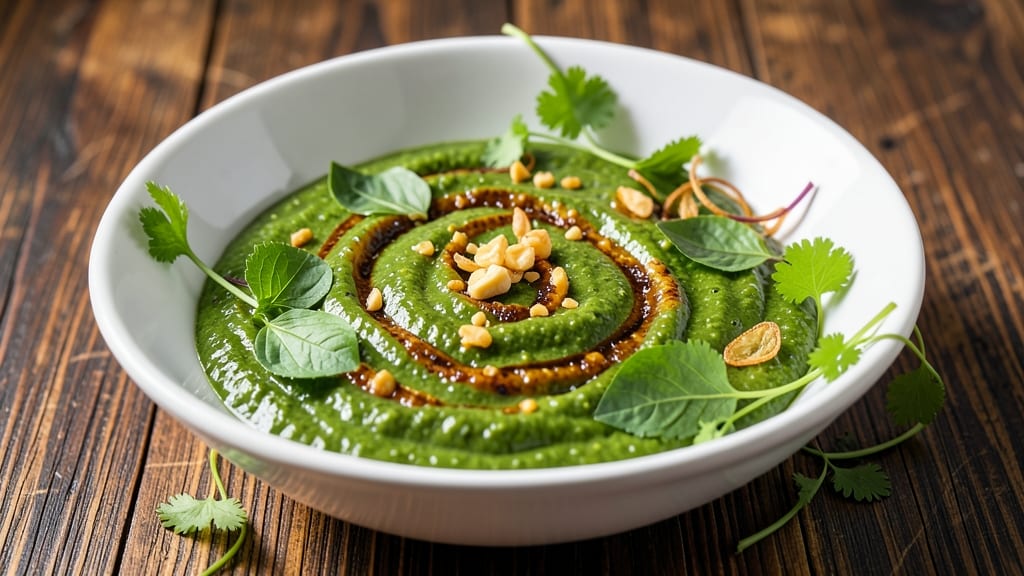
This Asian pesto sauce recipe transforms traditional Italian pesto with bold Asian flavors—nutty, aromatic, and packed with umami in just 10 minutes. The secret lies in blending fresh cilantro, Thai basil, and toasted peanuts with garlic, lime, and a touch of soy sauce for that signature depth.
Unlike its Italian cousin, this version delivers a vibrant, tangy-sweet profile that elevates everything from noodles to grilled proteins.
The magic happens in the balance: toasted peanuts add crunch and richness, while lime juice and fish sauce (or soy sauce) bring the sauce to life with bright acidity.
I developed this recipe after craving something fresh, herby, and adaptable—perfect for drizzling over summer rolls, tossing with stir-fried vegetables, or using as a dipping sauce. The best part?
It keeps well in the fridge for up to a week, so you can make a batch and use it all week.
What sets this sauce apart is its versatility. Use it as a marinade for chicken or shrimp, a dressing for salads, or a dip for spring rolls. The texture is creamy yet slightly textured from the peanuts, and the flavors deepen as it sits.
For extra richness, stir in a spoonful of peanut butter or sesame oil before serving—trust me, it takes this sauce to the next level.
Ready in minutes, this sauce is your secret weapon for adding authentic Asian flair to any dish. Whether you're prepping for a weeknight dinner or hosting a gathering, this vibrant, nutty sauce will bring bold, restaurant-quality flavor to your table without the fuss. Let’s get blending!
Ingredients for asian pesto sauce
Fresh herbs, toasted peanuts, and zesty lime come together for this bold Asian twist on pesto.
| Ingredient | Amount | Notes |
|---|---|---|
| Fresh Cilantro 🌿 | 1 cup | Stems removed, loosely packed |
| Thai Basil Leaves 🌿 | ½ cup | Fresh, loosely packed |
| Raw Peanuts 🥜 | ½ cup | Toasted until fragrant |
| Garlic Cloves 🧄 | 4 cloves | Peeled, roughly chopped |
| Lime Juice 🍋 | ¼ cup | Freshly squeezed |
| Fish Sauce 🍶 | 1 tbsp | Red Boat preferred |
| Extra-Virgin Olive Oil 🫒 | ½ cup | High quality, fruity |
| Sesame Oil 🫒 | 1 tbsp | Toasted sesame oil |
| Sesame Seeds 🌾 | 1 tbsp | Toasted lightly |
| Salt 🧂 | ½ tsp | Diamond Crystal preferred |
The herbs are the heart of this sauce. Thai basil gives that signature anise-like flavor, while cilantro adds freshness. Grab both at your local Asian market—they usually have Thai basil year-round, and the cilantro there is fresher than the grocery store. Look for vibrant green leaves with no wilt. The peanuts? Raw, unsalted are best—they toast up perfectly and give that nutty depth. Toast them in a dry pan until fragrant, about 5-7 minutes. Don't skip this step—it's what makes the sauce sing.
No Thai basil? Regular basil or mint can work in a pinch, but the flavor won't be quite the same. Fish sauce giving you pause? Soy sauce or coconut aminos are great substitutes, though you'll lose some umami depth. Running out of peanuts? Cashews or almonds toasted work beautifully—just adjust the amount to taste. The lime juice is non-negotiable for that bright tang, but if you're out, lemon juice works too. Just remember: fresh is always better, but dried herbs at half the amount will do in a bind.
This sauce keeps beautifully. Store it in a glass jar with a thin layer of olive oil on top to preserve freshness. It'll stay good in the fridge for up to a week. For longer storage, freeze it in ice cube trays—perfect for single portions. The flavors actually deepen over time, so leftovers often taste even better. Double the batch and use it all week—it's that good.
Why You'll Love This Recipe
- No Food Processor Needed: I swear by this—just a knife and a bowl. Toss in the cilantro, Thai basil, raw peanuts, and garlic, then smash it all with the flat side of your knife until it’s chunky but smooth. No fancy gadgets, no cleanup nightmare.
- Bright & Nutty Magic: That lime juice cuts through the richness while the toasted peanuts add crunch. Honestly, it’s the kind of flavor that makes you pause mid-bite—like a wake-up call for your taste buds.
- Dresses Up Anything: Slather it on grilled chicken, toss it with noodles, or drizzle it over summer rolls. Between us, I’ve even used it as a marinade for shrimp—it’s my go-to for quick, flavor-packed meals.
- Lasts All Week: Store it in the fridge for up to five days, and it only gets better. I make a double batch on Sundays so I’m not scrambling midweek—plus, it’s cheap to boot. Peanuts and herbs stretch far!
Step-by-step instructions for Asian pesto sauce
Here's how to blend vibrant herbs, nutty peanuts, and zesty citrus into a versatile sauce that's ready in minutes.
Toast the Peanuts and Sesame Seeds
Heat a dry skillet over medium heat and add the 0.5 cup raw peanuts. Toast them for 3-4 minutes, stirring constantly, until they turn a light golden brown and release their nutty aroma. You'll know they're ready when they stop rattling in the pan and smell deeply fragrant.
Transfer the toasted peanuts to a plate to cool slightly, then add the 1 tablespoon sesame seeds to the same skillet. Toast them for 1-2 minutes until they turn a rich golden color and smell toasty. This step enhances their flavor and prevents a raw taste in your sauce. Let the sesame seeds cool for 2 minutes before proceeding.
Pulse the Herbs and Garlic
In a food processor, combine the 1 cup fresh cilantro and 0.5 cup Thai basil leaves. Pulse them together for 5-6 seconds until they're finely chopped but not completely pureed. You want to preserve some texture for a vibrant, fresh finish in your sauce.
Add the 4 cloves garlic cloves and pulse again for 2-3 seconds until the garlic is minced. Avoid over-processing—you want small, even pieces that'll distribute evenly throughout the sauce. At this stage, your mixture should look like a chunky, aromatic herb blend with visible flecks of garlic.
Add Wet Ingredients and Process
With the food processor running, slowly drizzle in the 0.5 cup extra-virgin olive oil and 1 tablespoon sesame oil through the feed tube. This gradual addition prevents the oils from splattering and ensures even distribution. Process for 20-30 seconds until the mixture becomes smooth and creamy.
Add the 0.25 cup lime juice, 1 tablespoon fish sauce, and 0.5 teaspoon salt. Pulse again for 10-15 seconds until everything is fully incorporated. Taste the mixture and adjust the seasoning if needed—you might want to add a bit more lime for brightness or fish sauce for umami depth.
Combine and Finish
Transfer the herb-oil mixture to a bowl and stir in the toasted peanuts and sesame seeds. Use a rubber spatula to fold everything together until you achieve a uniform texture with visible nut and seed pieces throughout. This step ensures each bite delivers that satisfying crunch and nutty depth.
Let the sauce sit for 5 minutes before using. This resting time allows the flavors to meld together, creating a cohesive, well-balanced sauce. Store any leftovers in an airtight container in the refrigerator for up to 5 days, or freeze for up to 3 months. The sauce will keep well and maintain its vibrant flavor over time.
Pro Tips For Making Asian Pesto Sauce
- TOAST PEANUTS LOW: I learned this the hard way—blasting peanuts in a dry pan until they’re golden brown and fragrant takes about 3-4 minutes on medium-low. High heat turns them bitter fast, and you’ll taste it in every bite. Keep the heat steady and stir like you’re babysitting a toddler.
- STACK GARLIC CLOVES: Peeling garlic cloves is a pain, but this trick saves time: smash the whole head with the flat side of a knife, then pull apart the cloves. No more digging at stubborn skins—just grab what you need. For this pesto, 3-4 cloves is plenty; don’t overdo it unless you love garlic breath.
- PULSE DON’T BLEND: Skip the food processor’s "blend" button—pulse the peanuts, basil, and cilantro in short bursts instead. You want texture, not a paste. Aim for rough, uneven chunks; that’s where the crunch and flavor hide. Over-blending turns this into a sad, gloppy sauce.
- SALT THE PEANUTS: Add a pinch of salt to the raw peanuts before toasting—it enhances their nuttiness and balances the lime’s sharpness later. I know, it sounds counterintuitive, but trust me: the peanuts will taste deeper, and the whole sauce won’t need extra seasoning. Just a tiny pinch, though.
Common mistakes when making your asian pesto sauce
Over-Blending the Herbs
I’ve made this mistake more times than I’d like to admit—pulsing the herbs until they turn into a paste. The result? A sauce that loses its vibrant texture and freshness. The key is to stop processing as soon as the herbs are finely chopped but still retain some texture.
For this recipe, aim for 5-6 seconds total—just enough to break down the leaves without turning them into mush. 🌿
Skipping the Toasting Step
Raw peanuts and sesame seeds can taste bitter and underwhelming in the sauce. Toasting them is non-negotiable—it’s what unlocks their nutty, aromatic potential. If you rush this step, your sauce will lack depth.
Toast the peanuts for 3-4 minutes until fragrant, and the sesame seeds for 1-2 minutes until golden. Trust the process, and your sauce will thank you.
Using Low-Quality Oil
Not all olive oils are created equal. If you use a cheap, flavorless oil, your sauce will taste flat and one-dimensional. Opt for a high-quality, fruity extra-virgin olive oil—brands like California Olive Ranch or Colavita work beautifully.
The same goes for sesame oil: use toasted sesame oil, not the lighter, less flavorful variety. These oils are the backbone of your sauce’s richness.
Ignoring the Resting Time
This sauce needs 5 minutes to rest before using. Skipping this step means the flavors won’t meld properly, and the sauce might taste disjointed. Let it sit while you prep your dish—it’s worth the wait.
The resting time also helps balance the acidity from the lime and the umami from the fish sauce, creating a harmonious flavor profile.
Substituting Without Adjusting
If you swap fish sauce for soy sauce or coconut aminos, the flavor shifts. Fish sauce adds a deep, savory umami that’s hard to replicate. If you must substitute, start with ½ the amount of soy sauce or coconut aminos, taste, and adjust.
Similarly, if you’re out of Thai basil, regular basil or mint won’t give the same anise-like flavor—use them sparingly and be prepared for a different taste.
Overlooking the Crunch
The texture of this sauce is just as important as the flavor. If you blend the peanuts and sesame seeds into the mixture too thoroughly, you’ll lose that satisfying crunch.
Stir them in by hand at the end to ensure each bite has visible nut and seed pieces. This step is what makes the sauce feel special and restaurant-worthy.
Nutrition facts
Frequently asked questions
Can I make this Asian pesto sauce without a food processor?
You can achieve similar results with a sharp knife and a mortar and pestle. Finely chop the cilantro, Thai basil, and garlic by hand, then crush the toasted peanuts and sesame seeds in the mortar. Mix everything with the oils and lime juice, then stir vigorously. The texture will be slightly chunkier, but the flavors will still shine through beautifully.
How can I adjust this sauce for spicy lovers?
Add a pinch of red pepper flakes or a teaspoon of Sriracha for heat, but go slow—it builds up quickly. For a more nuanced spice, blend in 1 teaspoon of chili garlic sauce or a finely minced Thai chili. Always taste as you go, and remember you can always add more, but you can't take it out!
What are the best ways to use leftover Asian pesto sauce?
This versatile sauce works as a marinade for grilled shrimp or chicken, a dressing for summer rolls or salads, or a dip for fresh spring rolls. It also elevates noodle dishes like pad Thai or ramen—just toss it in at the end. For extra richness, stir in a spoonful of peanut butter before serving.
Why does my sauce taste bitter after resting?
Bitterness usually comes from over-toasted peanuts or using too much fish sauce. Try balancing it with an extra splash of lime juice or a teaspoon of honey/sugar. If the peanuts taste burnt, reduce your toasting time next batch—just until fragrant (3-4 minutes max).
Can I make this sauce with dried herbs?
Yes, but use half the amount of dried herbs (like dried basil or cilantro) and add 1 extra tablespoon of sesame oil to compensate for the lost moisture. The flavor won't be as bright, but it's still delicious. For best results, rehydrate dried herbs in warm water for 5 minutes before using.