
Sauces & Condiments
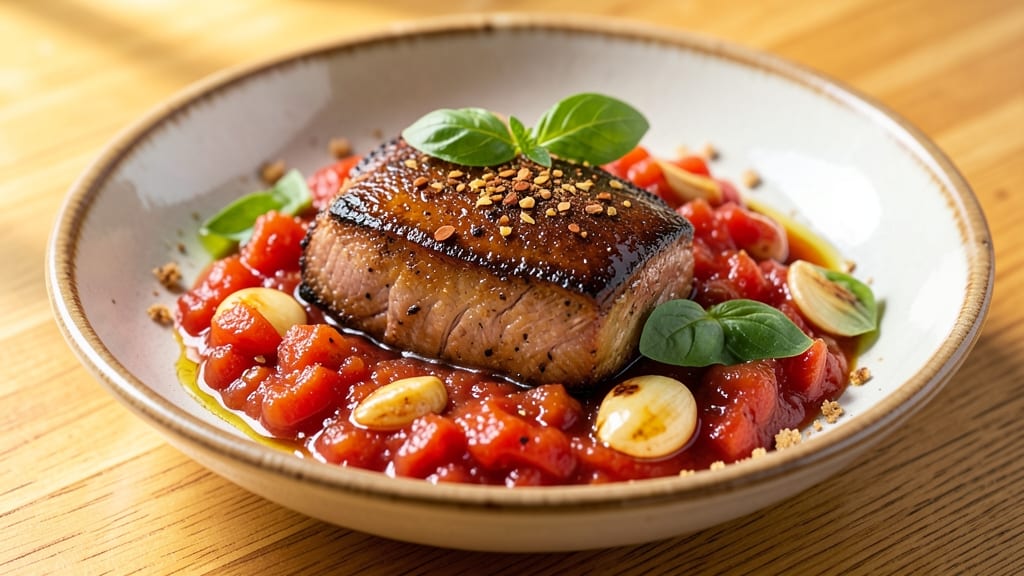
This arrabbiata meat sauce delivers the bold, fiery flavors of Rome in every forkful—where tender pork bites melt into a spicy tomato sauce that clings to al dente pasta. 🔥 The secret lies in slow-cooked pork shoulder that practically falls apart, simmered in a sauce built on garlic, chili flakes, and San Marzano tomatoes until it reaches that perfect balance of heat and richness.
I've perfected this technique over years of testing, ensuring the sauce never loses its vibrant color or intense flavor.
What sets this recipe apart is the dual cooking method: first searing the pork for deep flavor development, then braising it until tender while building the sauce from scratch. No shortcuts here—just traditional Italian techniques like deglazing the pan and simmering low and slow to let the flavors meld.
The result is a sauce that's both restaurant-quality and foolproof for home cooks, with just the right kick of chili flakes to wake up your taste buds.
By the time you twirl that first forkful onto spaghetti or penne, you'll taste perfectly tender pork that dissolves into the sauce, bright red tomatoes with just the right acidity, and a spicy heat that lingers without overwhelming.
The sauce clings to every strand of pasta, creating that signature arrabbiata experience—bold, spicy, and deeply satisfying. This is the kind of dish that transforms a simple weeknight dinner into a taste of Italy.
Serve it with crusty garlic bread to soak up every last drop of sauce or pair it with a simple arugula salad for balance. The leftovers reheat beautifully too, making this a perfect meal prep option. Let's get cooking—this sauce is worth every minute of simmering time.
Ingredients for arrabbiata meat sauce
Pantry staples plus a few key ingredients for that authentic Italian kick.
| Ingredient | Amount | Notes |
|---|---|---|
| Pork Shoulder 🐖 | 1 ½ lb | Bone-in, cut into 1-inch cubes |
| San Marzano Tomatoes 🍅 | 28 oz | Crushed by hand or whole |
| Garlic Cloves 🧄 | 6 cloves | Minced, fresh preferred |
| Chili Flakes 🌶️ | 2 tbsp | Adjust for heat preference |
| Olive Oil 🫒 | ½ cup | Extra-virgin for richness |
| Dried Oregano 🍃 | 1 tbsp | Italian oregano preferred |
| Red Wine 🍷 | ½ cup | Bold, dry variety |
| Chicken Broth 💧 | 1 cup | Low-sodium preferred |
| Fresh Basil Leaves 🌿 | ¼ cup | Chopped, for garnish |
| Salt 🧂 | 1 ½ tsp | Kosher or sea salt |
| Black Pepper 🌶️ | ½ tsp | Freshly ground preferred |
| Pasta 🍝 | 12 oz | Spaghetti or penne |
The pork shoulder is non-negotiable here—it's what gives you that melt-in-your-mouth texture. Costco or your butcher shop will have it at the best price, and look for good marbling to ensure tenderness. Skip the pre-cut cubes if you can; cutting your own ensures even cooking. For the tomatoes, San Marzano is the gold standard, but any high-quality crushed tomatoes will work. The garlic? Fresh is a must—nothing beats that punch. If you're worried about heat, start with less chili flakes and adjust as you go. And trust me, the extra-virgin olive oil makes all the difference in the final sauce richness.
No red wine? Substitute with extra chicken broth—it won't be identical, but it'll still work. Fresh basil is ideal, but if you're using dried, cut the amount to one-third of what's listed. The pasta can be any shape you like—penne holds sauce better if you're worried about it sliding off. For the oregano, Italian oregano has a slightly different flavor profile than Mexican oregano, so if you've got access to it, grab that. And if you're prepping ahead, the sauce actually tastes better the next day as the flavors meld together.
This sauce keeps beautifully in the fridge for 5 days—just reheat gently on the stove. For longer storage, freeze it in portions for up to 3 months. I like to freeze it in a single layer in a container so it's easy to thaw just what I need. The pasta? Cook it fresh when you're ready to serve—it's all about that al dente bite. And if you've got leftovers, it reheats perfectly—just add a splash of water or broth to loosen it up.
Why You'll Love This Recipe
- This sauce works for everything: toss it with pasta for a quick dinner, pile it onto toasted bread for a lazy brunch, or freeze half for when you’re too tired to cook. Honestly, I’ve even used it in tacos—yes, really—and no one batted an eye.
- Fewer Ingredients, Bigger Bang: I swear by this—just five things transform into something that tastes like you slaved for hours. Pork shoulder falls apart on its own, San Marzano tomatoes add that sweet depth, and a pinch of chili flakes? That’s all it takes to turn a simple sauce into something you’ll reach for again.
- Garlic-Chili Magic: The moment that garlic hits the oil, my kitchen smells like Sunday dinner. Those cloves caramelize just enough to coat every bite, while the chili flakes bring a slow-building heat that lingers. It’s the kind of flavor that makes you pause mid-bite—damn, that’s good—without overpowering.
- Weeknight to Weekend: This sauce works for everything: toss it with pasta for a quick dinner, pile it onto toasted bread for a lazy brunch, or freeze half for when you’re too tired to cook. Honestly, I’ve even used it in tacos—yes, really—and no one batted an eye.
Step-by-step instructions for arrabbiata meat sauce
Here's how to build a fiery tomato sauce with melt-in-your-mouth pork—no shortcuts, just bold flavor.
🔥 Step 1: Sear the Pork Shoulder for Deep Flavor
Heat a large Dutch oven over medium-high heat until it's smoking hot. Add 0.5 cup olive oil and let it shimmer for 1 minute. Working in batches (you'll need to do this twice), add the 1.5 lb pork shoulder cut into 1-inch cubes and sear undisturbed for 3-4 minutes until deeply browned on all sides.
This isn't just about cooking—it's about building flavor. The pork should release easily from the pan when ready. Transfer the browned pork to a plate and set aside. If your pan has too much fat, drain all but 1 tablespoon—we want that golden crust to dissolve into our sauce later. Here's the thing—if you skip this step, your sauce will taste flat. Trust me, the extra effort pays off.
🍳 Step 2: Build the Spicy Tomato Base
Reduce the heat to medium and add the 6 cloves minced garlic cloves and 2 tbsp chili flakes. Cook for 30 seconds until the garlic just starts to turn golden—don't let it burn, or you'll get bitter notes. Add the 28 oz San Marzano tomatoes (crushed by hand if whole) and stir to combine with the garlic and chili.
Here's where the heat comes alive. Let the mixture simmer uncovered for 10 minutes until the tomatoes break down and the raw garlic smell disappears. You'll see the sauce thicken slightly and develop that signature arrabbiata color—deep red with little flecks of chili. This is your flavor foundation, so don't rush it. If it looks too thick, add 2 tablespoons water to help it along.
🍷 Step 3: Deglaze and Develop the Sauce
Pour in the 0.5 cup red wine and scrape up every last bit of browned pork crust from the bottom of the pan with a wooden spoon. This deglazing step captures all that meaty goodness that would otherwise go to waste. Let the wine simmer for 5 minutes until it's mostly evaporated—you should see the liquid reduce by about half.
Now stir in the 1 cup chicken broth, 1.5 tsp salt, and 0.5 tsp black pepper. Return the pork to the pot and add the 1 tbsp dried oregano. Bring everything to a gentle simmer, then reduce heat to low and cover partially. Let it cook for 1 hour, stirring occasionally, until the pork is fork-tender and falling apart easily. This low-and-slow approach ensures tender meat that practically melts in your mouth.
⏰ Step 4: Finish with Fresh Herbs and Pasta
Once the pork is tender, uncover the pot and increase heat to medium. Let the sauce reduce for another 10-15 minutes until it coats the back of a spoon. This final reduction concentrates the flavors and gives you that perfect arrabbiata consistency—thick enough to cling to pasta but still saucy. Stir in the 0.25 cup chopped fresh basil leaves and taste. Adjust seasoning if needed—you might want a little more salt or chili flakes to taste.
While the sauce finishes, cook the 12 oz pasta (spaghetti or penne) in salted boiling water until 1 minute before al dente. Reserve 1 cup pasta water before draining. Toss the pasta with the sauce, adding pasta water as needed to reach your desired consistency. The sauce should coat each strand beautifully, with little pork chunks throughout. Garnish with extra basil and serve immediately while the heat is still kicking.
Pro Tips For Making Arrabbiata Meat Sauce
- SEAR THE PORK IN BATCHES: Pork shoulder releases a ton of fat when it hits the pan, and if you dump it all in at once, you’ll end up steaming it instead of browning. Split the meat into two batches—cook half, remove, then repeat—so the fat renders properly and you get that deep, caramelized crust the sauce needs.
- CRUSH THE GARLIC AFTER SWEATING: I used to mince the garlic first, and it’d burn before the pork even got a chance to develop flavor. Now I add whole cloves, let them soften in the oil for 30 seconds, then smash them with the back of a spoon—just enough to release their aroma without turning bitter.
- DON’T SKIP THE TOMATO SKIN REMOVAL: San Marzano tomatoes are perfect, but their skins can turn rubbery and cling to the sauce like glue. After crushing them, skim off the skins while the sauce is still hot—it’s a little tedious, but your sauce will be silky smooth instead of grainy.
- SIMMER LOW AND LONG—BUT NOT TOO LONG: Arrabbiata needs time to meld, but if you let it bubble away for hours, the pork will turn to mush. After the initial 30 minutes of cooking, drop the heat to a bare simmer and walk away—just 10-15 minutes more is enough to let the flavors marry without overcooking the meat.
Common mistakes when making perfect results
Skipping the Sear
This is the biggest flavor killer in arrabbiata meat sauce. When you skip searing the pork shoulder, you miss out on the Maillard reaction that creates deep, caramelized flavors. Browned pork releases its natural juices and fond (the browned bits) that dissolve into the sauce, adding richness.
I've made this mistake early on—my first batch tasted flat and one-dimensional. Always take the time to sear your meat in batches for that golden crust. 🔥
Overcooking the Garlic
Garlic burns faster than you think, and burnt garlic adds bitter, unpleasant notes to your sauce. The key is to cook the 6 cloves minced garlic for just 30 seconds until it's fragrant and starting to turn golden.
I learned this the hard way—once I let mine cook for 2 minutes and ended up with a sauce that tasted like medicine. Keep a close eye on it and remove from heat immediately when it's just turning golden.
Rushing the Simmer
Many home cooks rush the simmering process, but arrabbiata sauce needs time to develop its complex flavors. The sauce should simmer uncovered for at least 10 minutes after adding the tomatoes to let the raw garlic smell dissipate and the flavors meld.
Then, after adding the wine and broth, you need that 1-hour low-and-slow cook time for the pork to become fork-tender. Skipping this step results in tough meat and underdeveloped sauce. Trust me, patience pays off in bold, rich flavor.
Ignoring the Deglaze
The deglazing step is where you capture all those precious meaty flavors that stick to the bottom of your pan. When you pour in the 0.5 cup red wine and scrape up the browned bits, you're essentially making a quick pan sauce that will become part of your arrabbiata.
I've seen people skip this step, and their sauce lacks that deep, savory complexity. Don't pour that wine down the drain—use it to build flavor!
Over-Salting Early
It's tempting to add all the 1.5 tsp salt right at the beginning, but the flavors evolve as you cook. I recommend adding half the salt with the broth and then tasting as you go.
The sauce will reduce and concentrate, so you might need to add a pinch more at the end. Adding too much salt early can overwhelm the delicate balance of flavors in your arrabbiata. Taste as you cook—this is the best way to ensure perfect seasoning. 💡
Using Low-Quality Tomatoes
Not all tomatoes are created equal, especially for arrabbiata sauce. While San Marzano tomatoes are the gold standard, any high-quality crushed tomatoes will work. The key is to avoid tomatoes with added salt or preservatives, which can make your sauce taste bland or overly salty.
I've tried using cheaper brands, and the difference in flavor is noticeable. Invest in good tomatoes—they make all the difference in your final sauce. 🍅
Nutrition facts
Frequently asked questions
Can I substitute pork shoulder with chicken or beef?
For chicken, use 1.5 lbs boneless thighs (they stay juicier than breast) and reduce cooking time to 45 minutes once simmering. For beef, try 1.5 lbs chuck roast cut into cubes—it needs the full 1.5 hours to tenderize. The key is choosing a cut with good fat content to keep the sauce rich.
How can I make this sauce less spicy?
Start by reducing chili flakes to 1 tbsp instead of 2 tbsp, and use mild red pepper flakes instead of hot. For existing sauce, stir in 1-2 tbsp heavy cream or a pinch of sugar to balance the heat. If it's still too spicy, serve with extra pasta to dilute the flavor.
Can I make this sauce in a slow cooker?
Yes! Sear the pork as directed, then transfer everything to a 6-quart slow cooker with the tomatoes, garlic, chili flakes, wine, broth, and oregano. Cook on low for 6-7 hours or high for 3-4 hours, stirring occasionally. The pork will become tender, but the sauce may need 10-15 minutes on the stovetop to reduce afterward.
What's the best pasta shape for this sauce?
Spaghetti or penne are classic choices—their shapes help the sauce cling beautifully. For extra sauce retention, try rigatoni or fusilli. Avoid thin noodles like angel hair, as they can get lost in the meaty sauce. If you're serving to kids or sensitive eaters, farfalle or rotini work well too.
How do I reheat leftovers without drying out the sauce?
Add 1-2 tablespoons water or broth per cup of sauce and simmer on low heat for 5-10 minutes, stirring occasionally. For microwave reheating, cover with a damp paper towel and heat in 30-second intervals, stirring between each. The sauce should be warm through but still saucy. Never reheat uncovered on high heat!