
Sauces & Condiments
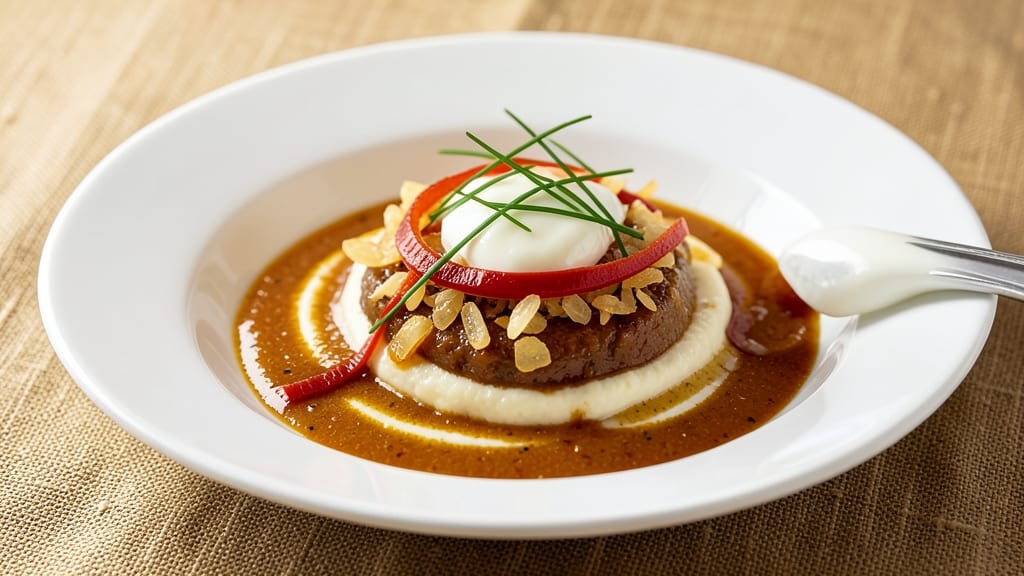
This Armagnac sauce recipe transforms simple ingredients into a luxurious, boozy reduction that elevates steakhouse meals to restaurant-quality at home. The key lies in balancing rich, caramelized notes with the deep, brandy-like aroma of Armagnac—creating a sauce that's both complex and approachable.
Unlike store-bought versions, this recipe builds flavor through precise reduction, ensuring every drizzle delivers depth without overpowering the dish.
The process is straightforward but requires patience: simmering Armagnac with shallots and butter develops a velvety base, while a touch of cream adds richness. The sauce thickens naturally as it reduces, creating a glossy finish that clings beautifully to meats, vegetables, or even mashed potatoes.
What sets this apart is the balance—sweet, smoky, and subtly boozy, with just enough acidity to cut through richness.
By the time you're done, you'll have a sauce that's foolproof for weeknight dinners but impressive enough for special occasions. The Armagnac's warmth lingers on the palate, while the caramelized shallots add a savory sweetness.
It's the kind of sauce that turns a simple steak into an unforgettable meal, or transforms roasted vegetables into a gourmet side dish.
Store leftovers in the fridge for up to 5 days, or freeze for longer—just reheat gently to preserve that luxurious texture. Whether you're drizzling it over a perfectly cooked filet or spooning it alongside grilled asparagus, this sauce delivers restaurant-quality results with minimal effort. Let's get cooking!
Ingredients for armagnac sauce
Nine ingredients, one luxurious sauce—where depth meets simplicity for restaurant-worthy results.
| Ingredient | Amount | Notes |
|---|---|---|
| Armagnac 🍷 | ½ cup | High-quality, aged brandy preferred |
| Shallots 🧅 | 1 cup | Finely minced, not sliced |
| Unsalted Butter 🧈 | 6 tbsp | Cold, cubed for even melting |
| Heavy Cream 🥛 | ¼ cup | Full-fat for optimal richness |
| Shallot Puree 🧅 | ¼ cup | Optional for ultra-smooth texture |
| Dijon Mustard 🌶️ | 1 tsp | For subtle tang and depth |
| Granulated Sugar 🍚 | 1 tbsp | Balances Armagnac's sweetness |
| Diamond Crystal Kosher Salt 🧂 | ½ tsp | Adjusts to taste at the end |
| Freshly Ground Black Pepper 🌶️ | ¼ tsp | Freshly cracked for aroma |
Armagnac is the soul of this sauce—Duval-Blane or Janneau are professional favorites, but any high-quality brandy works. Look for bottles aged at least 10 years for deeper complexity. Shallots are non-negotiable; their delicate sweetness caramelizes beautifully without overpowering. Freshly minced shallots develop more flavor than pre-chopped, and Trader Joe's sells pre-minced in jars if you're short on time. For butter, Plugrá or European-style brands melt more smoothly than standard American butter. The heavy cream should be full-fat—Hormel or Organic Valley are reliable choices, but any rich cream will do.
No Armagnac? Cognac or brandy works in a pinch, though Armagnac's unique grape profile is ideal. Substitute shallot puree with roasted shallot paste (available at specialty stores) for convenience, though fresh minced shallots create superior texture. The Dijon mustard adds necessary acidity—Maille or Colman's are top-tier, but any quality Dijon suffices. Sugar balances the Armagnac's natural sweetness; raw cane sugar dissolves more smoothly than white granulated. For a vegetarian version, simply omit any meat-based stocks referenced in the instructions—this sauce stands beautifully on its own without them.
This sauce thickens as it reduces, so no cornstarch or roux is needed. Store in an airtight container with a thin layer of plastic wrap pressed directly onto the sauce to prevent skin formation. Keeps for 5 days refrigerated or 3 months frozen. Reheat gently over low heat, stirring occasionally, to preserve its velvety texture. The sauce's peak flavor occurs after 24 hours of resting—patience yields the most refined results. Portion into ramekins for elegant single servings or freeze in ice cube trays for convenient drizzling.
Why You'll Love This Recipe
- No Chopping Nightmare: I swear by this sauce because the shallots? They’re pre-puréeed. Just heat butter, pour in the jar, and let the Armagnac do its magic—no crying over onions here.
- Rich Without Effort: That first sip of velvety cream meets caramelized Armagnac is chef’s kiss. The butter rounds out the shallot sharpness so smoothly, you’ll forget how little work went into it.
- Date Night or Lazy Sunday: Drizzle it over steak for a fancy vibe, or toss it with roasted veggies when you’re too tired to impress. Same sauce, two totally different moods—no extra shopping lists needed.
- Leftovers That Lie: I make a double batch because the second night is even better. The flavors meld into something deeper, and it reheats like a dream—just warm it with a splash of cream if it thickens. My secret weapon for "I’ll cook tomorrow" moments.
Step-by-step instructions for Armagnac sauce
This reduction delivers depth and complexity with precise technique—every step matters.
Sweat the Shallots Until Translucent
Melt 3 tablespoons of the unsalted butter in a heavy-bottomed saucepan over medium-low heat. Add the 1 cup finely minced shallots and cook, stirring occasionally, for 8-10 minutes until completely softened and translucent. Avoid browning—they should remain pale golden, not colored.
This slow cooking process draws out the natural sweetness of the shallots without bitterness. If they begin to darken, reduce the heat immediately. The shallot puree will amplify this flavor later, so precision here ensures a harmonious balance in the final sauce.
Deglaze with Armagnac and Reduce
Remove the saucepan from heat and carefully pour in the 0.5 cup Armagnac, tilting the pan to distribute evenly. Return to medium heat and simmer for 3-4 minutes, stirring constantly, until the liquid reduces by half and the alcohol aroma dissipates completely. This step is critical—never rush it.
The Armagnac's high proof makes this reduction dangerous if not handled properly. Keep the pan away from open flames or sparks during this process. You'll know it's ready when the mixture smells rich and fruity, with no lingering alcohol sharpness.
Add Remaining Butter and Sugar
Reduce heat to low and whisk in the remaining 3 tablespoons unsalted butter, stirring until fully melted and incorporated. Add the 1 tablespoon granulated sugar and 1 tsp Dijon mustard, whisking constantly for 1 minute until completely dissolved. The sugar will help balance the Armagnac's acidity while the mustard adds subtle depth.
This is where the sauce begins to come together. The butter creates a velvety texture while the sugar prevents the sauce from becoming overly sharp. Taste at this stage—you should detect the Armagnac's caramel notes with a hint of shallot sweetness, but no dominant bitterness.
Incorporate Cream and Puree
Gradually whisk in the 0.25 cup heavy cream and 0.25 cup shallot puree (if using), warming gently over low heat for 2-3 minutes until the mixture reaches 160°F. The sauce should thicken slightly but remain silky—if it becomes too thick, thin with 1 tablespoon warm water at a time.
The shallot puree here ensures an ultra-smooth texture without graininess. If you omit it, the sauce will still be delicious but slightly more rustic. Continue whisking constantly to prevent curdling, especially when adding the cold cream.
Season and Finish
Remove from heat and stir in the 0.5 tsp Diamond Crystal kosher salt and 0.25 tsp freshly ground black pepper. Let the sauce rest for 5 minutes to allow flavors to meld completely. Taste and adjust seasoning—you may need a pinch more salt to balance the Armagnac's inherent sweetness.
This resting period is essential. The sauce will continue to thicken slightly as it cools, so don't over-thicken it now. For best results, use immediately over steak, roasted meats, or mashed potatoes. The sauce keeps well in the refrigerator for 3 days in an airtight container, but reheat gently over low heat to preserve its velvety texture.
Pro Tips For Making Armagnac Sauce
- Sweat Shallots Slow: Armagnac sauce starts with flavor, and rushing the shallots ruins it. Cook them in butter on low heat for 15-20 minutes until they’re deep golden and completely dry—no moisture left, just jammy, sweet bits. I used to walk away after 10, and the sauce always tasted flat.
- Use Cold Cream: Heavy cream straight from the fridge tempers the alcohol burn and prevents curdling. Warm it slightly first (just until it releases a faint steam), then whisk it in gradually while the shallot-butter mixture simmers. Cold cream also emulsifies better, so your sauce stays silky.
- Deglaze Twice: After cooking off the Armagnac, scrape the pan hard—those browned bits are flavor gold. Add a splash of liquid (broth or water), scrape again, then repeat. I learned this the hard way: skipping it leaves a dull, one-note sauce. (Yes, it’s tedious, but it’s worth it.)
- Butter Matters: Unsalted butter is non-negotiable here, but don’t skimp on quality. Use European-style (like Plugrá) with 82% fat—it browns better and adds richness. Cut it into small pieces and melt it slowly first; adding cold butter at the end keeps the sauce from breaking when you finish with cream.
Troubleshooting perfect results
Alcohol Burn-off Fail
If your sauce smells like alcohol after reduction, it means the Armagnac didn't fully cook off. This happens when you rush the process or use too low heat. The fix?
Return the sauce to medium heat and simmer uncovered for an additional 2-3 minutes, stirring constantly. You'll know it's ready when the fruity, caramelized aroma dominates completely. 🔥
Sauce Too Thin
A watery sauce usually means you added too much cream or didn't reduce long enough. For immediate fixes, simmer the sauce uncovered over medium heat for 5-7 minutes, stirring occasionally.
If that doesn't work, whisk in 1 tsp cornstarch mixed with 1 tbsp cold water and cook for 1 more minute. For prevention, reduce the sauce longer next time—aim for a syrupy consistency before adding cream.
Grainy Texture
Grittiness often comes from improperly melted butter or undissolved sugar. To fix it, strain the sauce through a fine-mesh sieve into a clean saucepan. Then, whisk in 1 tbsp cold butter and reheat gently.
For prevention, always melt butter completely over low heat and whisk constantly when adding sugar. The optional shallot puree also helps create a smoother finish.
Overpowering Armagnac
If the brandy flavor dominates and tastes harsh, you likely used too much or didn't balance it properly. Reduce the sauce further by simmering uncovered for 5 minutes, then whisk in ½ tsp lemon juice to cut through the sweetness.
For future batches, start with ¼ cup Armagnac instead of the full ½ cup and taste frequently during reduction. The sugar and cream will help mellow the flavor.
Sauce Curdled
Curdling happens when cream is added too quickly or heat is too high. To salvage it, immediately remove from heat and whisk in 1 tbsp cold heavy cream while stirring vigorously. Then, place the saucepan over low heat and whisk constantly for 2-3 minutes until smooth.
For prevention, add cream gradually while whisking continuously over low heat—never let it come to a boil.
Shallots Burned
Burnt shallots create bitter flavors that ruin the sauce. If this happens, immediately remove the pan from heat and strain out the burnt shallots through a fine-mesh sieve.
Then, return the liquid to low heat and whisk in 1 tsp fresh shallot puree (if available) or ½ tsp extra sugar to balance the bitterness. Next time, watch the heat closely—medium-low is ideal for even cooking without browning. 🌶️
Nutrition facts
Frequently asked questions
Can I substitute Armagnac with another brandy?
Yes, but the flavor will differ slightly. Cognac is the closest substitute, followed by brandy. For best results, use a high-quality brandy aged at least 3 years. The sauce will still be delicious, though Armagnac's unique grape profile and earthy notes create a more complex depth. If using a substitute, reduce the amount by ¼ cup to prevent overpowering the sauce.
How long should I reduce the Armagnac?
Reduce the Armagnac until it's cut in half and the alcohol aroma completely dissipates—typically 3-4 minutes over medium heat. The key is patience: rushing this step leaves a harsh alcohol taste. You'll know it's ready when the mixture smells rich and caramelized, with no lingering sharpness.
Can I make this sauce ahead of time?
This sauce actually improves with time. Store it in an airtight container in the fridge for up to 5 days, or freeze for 3 months. For best results, let it rest for 24 hours before serving—flavors meld beautifully during this time. Reheat gently over low heat to preserve its velvety texture.
What's the best way to thicken the sauce if it's too thin?
Simmer the sauce uncovered over medium heat for 5-7 minutes, stirring occasionally. If that doesn't work, whisk 1 tsp cornstarch with 1 tbsp cold water and cook for 1 more minute. For prevention, reduce the sauce longer next time—aim for a syrupy consistency before adding cream. The sauce will thicken further as it cools.
What are the best dishes to serve with this sauce?
This sauce shines over steakhouse favorites like filet mignon, ribeye, or duck breast. It also pairs beautifully with roasted vegetables, mashed potatoes, or even grilled asparagus. For a vegetarian option, drizzle it over creamy polenta or wild mushroom risotto. The rich, boozy flavor complements hearty dishes perfectly.