
Sauces & Condiments
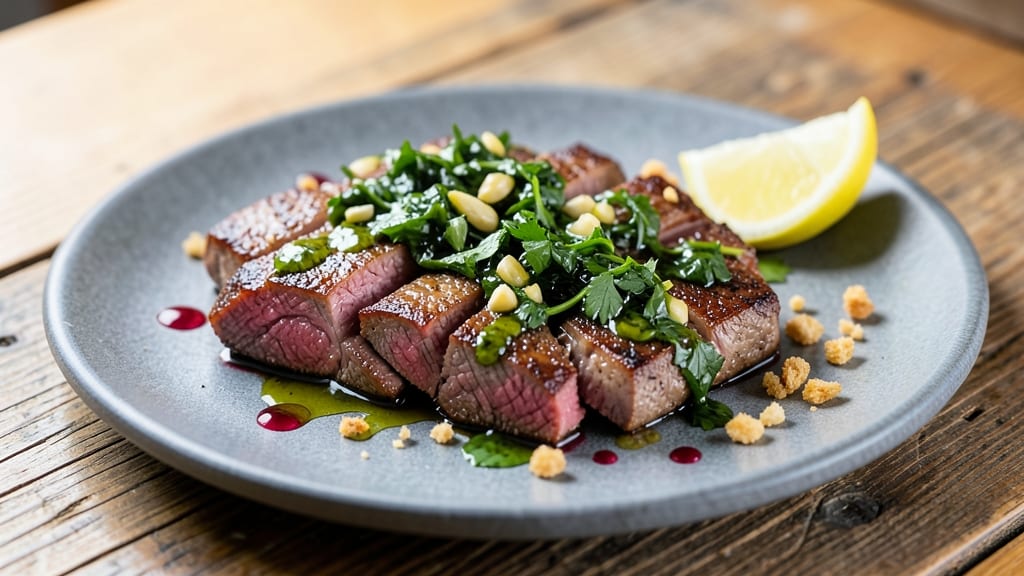
The Argentinian steak with chimichurri sauce recipe transforms a simple cut into a restaurant-worthy masterpiece through bold flavors and precise technique. The secret lies in high-heat searing that creates a perfect crust while keeping the interior tender, paired with vibrant chimichurri that brightens every bite.
This recipe delivers the authentic experience you'd find in Buenos Aires steakhouses—just with your own grill or stovetop.
For this dish, we'll use skirt steak—a classic Argentine choice known for its bold beefy flavor and ideal texture when cooked to medium-rare. The chimichurri sauce, with its fresh parsley, garlic, and vinegar base, cuts through the richness while adding a lively herbaceous note.
What makes this recipe special is the combination of traditional Argentine techniques with approachable home-cooking methods.
By the time you're done, you'll have perfectly seared steak with a caramelized crust and tender interior, served alongside a bright green chimichurri that adds freshness to each forkful. The sauce's acidity and herbaceousness complement the beef's richness, creating a balance that's both satisfying and elegant.
This is the kind of meal that makes weeknight dinners feel like special occasions.
Serve with grilled vegetables or crusty bread to soak up every last drop of that vibrant chimichurri. The presentation is simple but impressive—just sliced steak, a generous drizzle of sauce, and perhaps a sprinkle of flaky salt. Here's how to achieve that authentic Argentine flavor at home.
Ingredients for argentinian steak with chimichurri sauce
Skirt steak and fresh herbs transform into a restaurant-worthy Argentinian feast with just a few pantry staples.
| Ingredient | Amount | Notes |
|---|---|---|
| Skirt Steak 🥩 | 1 ½ lb | Grass-fed preferred, 1-inch thick |
| Fresh Flat-Leaf Parsley 🌿 | 1 ½ cups | Stems removed, loosely packed |
| Garlic Cloves 🧄 | 8 cloves | Fresh, peeled, slightly crushed |
| Red Wine Vinegar 🍷 | ½ cup | Dry, 3% acidity preferred |
| Extra-Virgin Olive Oil 🫒 | ¾ cup | High-quality, fruity |
| Kosher Salt 🧂 | 1 ½ tbsp | Diamond Crystal preferred |
| Ground Black Pepper 🌶️ | 1 tsp | Freshly cracked preferred |
| Red Chili Flakes 🔥 | ½ tsp | Adjust for heat preference |
| Lemon Juice 🍋 | 2 tbsp | Freshly squeezed |
| Fresh Oregano 🌿 | 1 tbsp | Chopped, or 1 tsp dried |
| Cornstarch 🌾 | 1 tbsp | For steak coating |
| Flaky Sea Salt 🧂 | 1 tbsp | For finishing |
Skirt steak is the star here—look for grass-fed cuts if possible, as they have better marbling and flavor. Whole Foods or local butcher shops often carry the best quality, but any grocery store's meat department should have it. If you can't find skirt steak, flank steak works in a pinch—just slice against the grain after cooking. Let the steak sit at room temperature for 30 minutes before cooking to ensure even searing. The parsley needs to be bright green and fresh—no wilted stems, and definitely not dried. I always buy extra because it's so versatile.
No red wine vinegar? White wine vinegar or apple cider vinegar will work, but the color won't be as vibrant. Fresh oregano is ideal, but dried oregano at one-third the amount gets you close. The olive oil should be extra-virgin and fruity—none of that cheap cooking oil stuff. For the steak, the cornstarch coating creates that perfect crust. If you don't have it, all-purpose flour works too. The garlic cloves should be slightly crushed to release their oils without turning to paste—smash them with the flat side of your knife.
The chimichurri keeps for 5 days in the fridge if stored in a sealed jar with a thin layer of olive oil on top. The steak reheats beautifully—sear again in a hot pan for 30 seconds per side to restore that crust. Portion the sauce into small jars for easy drizzling. If you make extra, it freezes well for up to 3 months. The steak is best served immediately after cooking, but leftovers reheat surprisingly well if you give them that quick sear.
Why You'll Love This Recipe
- I swear by this hack: just pulse the parsley, garlic, and vinegar in a food processor—no knife skills required. The olive oil ties it all together while I’m still slicing the steak, and honestly? That bright green sauce is ready before the pan even heats up.
- No-Chop Chimichurri: I swear by this hack: just pulse the parsley, garlic, and vinegar in a food processor—no knife skills required. The olive oil ties it all together while I’m still slicing the steak, and honestly? That bright green sauce is ready before the pan even heats up.
- Garlic-Parsley Magic: That first bite of seared skirt steak with the herby, tangy chimichurri? It’s like a flavor explosion in your mouth. The garlic cloves get finely minced (no burning!), and the red wine vinegar cuts through the richness without overpowering. My husband calls it “the sauce that makes steak taste fancy.”
- Weeknight Hero: Between us, this is my go-to for date nights or lazy Sundays. The steak cooks in 10 minutes flat, and the chimichurri keeps for days in the fridge—perfect for tossing on sandwiches or eggs later. (Yes, even on a Tuesday night.)
Step-by-step instructions for Argentinian skirt steak with chimichurri
Here's how to nail this iconic dish—juicy steak with vibrant, herb-packed chimichurri that brightens every bite.
Prep the Skirt Steak for Maximum Flavor
Pat the 1.5 lb skirt steak completely dry with paper towels—this ensures a perfect sear. Season both sides generously with 1.5 tbsp kosher salt and 1 tsp ground black pepper, pressing the seasoning into the meat so it adheres evenly. Let it sit at room temperature for 30 minutes while you prepare the chimichurri. This resting time guarantees even cooking and prevents uneven doneness.
While the steak rests, mix 1 tbsp cornstarch with 1 tbsp flaky sea salt in a small bowl. This creates a dry coating that helps the steak develop a crispy crust during searing. Lightly coat the steak with this mixture, shaking off any excess. The cornstarch acts as a natural tenderizer while adding texture.
Build the Chimichurri Sauce
In a food processor, combine the 1.5 cups fresh flat-leaf parsley, 8 cloves garlic, 1 tbsp fresh oregano, 0.5 tsp red chili flakes, and 2 tbsp lemon juice. Pulse until finely chopped but not pureed—you want visible texture in the sauce. Transfer to a bowl and slowly whisk in the 0.75 cup extra-virgin olive oil and 0.5 cup red wine vinegar. Taste and adjust seasoning with additional salt if needed.
Let the chimichurri sit for 10 minutes before serving—this allows the flavors to meld. The acidity from the vinegar and lemon brightens the herbs, while the olive oil emulsifies everything into a luscious, herby sauce. If the sauce separates, simply whisk again before using. This vibrant green sauce is what makes Argentinian steak unforgettable.
Sear the Skirt Steak to Perfection
Heat a cast-iron skillet over high heat until smoking hot. Add the steak and sear for 3-4 minutes per side for medium-rare (or until internal temperature reaches 130-135°F). Press down gently on the steak during the first minute to prevent curling—this ensures even contact with the pan. You'll know it's ready when the edges are deeply browned and a crust forms.
Transfer the steak to a cutting board and let it rest for 10 minutes before slicing. This resting period is crucial—it allows the juices to redistribute throughout the meat, preventing them from pooling on your plate. While the steak rests, keep the chimichurri at room temperature so it's ready to drizzle.
Slice and Serve with Chimichurri
Slice the steak against the grain into ¼-inch thick strips. The grain direction is visible as lines running through the meat—cutting against it shortens the muscle fibers for maximum tenderness. Arrange the slices on a warm platter and drizzle generously with the chimichurri. The bright, herby sauce cuts through the richness of the steak, creating a perfect balance of flavors.
Serve immediately with crusty bread or roasted potatoes to soak up the chimichurri. The contrast of the crispy bread against the tender steak and vibrant sauce is what makes this dish so special. Each bite should deliver juicy, perfectly seared steak with a burst of fresh herbs and a tangy kick.
Pro Tips For Making Argentinian Steak With Chimichurri Sauce
- Sear Skirt Steak Fast: Skirt steak is lean—don’t linger. Hit it over high heat for 2-3 minutes per side until deeply browned, then move to indirect heat or a cooler spot. I learned this the hard way: dragging it out turns it tough, and you’ll end up with sad, chewy bites instead of that perfect char.
- Chop Parsley Like a Pro: Stack those flat-leaf stems and slice them thinly with a sharp knife—no need to remove stems, just chop everything together. This keeps the chimichurri bright green and prevents clumps. (Yes, even if you’re impatient like me, take the extra 30 seconds.)
- Rest the Meat Properly: Skip the plate—cover the steak with foil and let it sit for 5-10 minutes. This traps heat and keeps it juicy. I used to cut into it too soon, and the juices would pool on the plate instead of staying inside where they belong.
- Use Cold Olive Oil: Chill the olive oil for the chimichurri before adding it to the parsley mix—it emulsifies better and won’t turn the sauce greasy. I was skeptical until I tried it: the sauce clings to the steak like it’s supposed to, not pooling on the side.
Regional styles of this argentinian steak with chimichurri sauce
Buenos Aires Style
In Buenos Aires, steakhouses like Don Julio or La Cabrera serve skirt steak with chimichurri as a staple—simple yet elegant. The key is high-heat grilling on a parrilla (Argentinian grill) with hardwood charcoal for that signature smoky flavor.
If you don’t have a grill, a cast-iron skillet on the stovetop works perfectly. The steak is traditionally sliced thick (about ½-inch) and served with provoleta (grilled provolone) on the side. 🔥
Patagonian Twist
In Patagonia, where lamb reigns supreme, some chefs adapt chimichurri by adding fresh mint or thyme to complement local game meats. For a regional twist, swap skirt steak for lamb chops and reduce the garlic slightly—Patagonian flavors lean more herbal than robust.
The sauce remains the same, but the smoky wood-fired technique becomes even more pronounced. This version is lighter but equally vibrant.
Uruguayan Chimichurri
Just across the river, Uruguayans take chimichurri in a slightly sweeter direction by adding a pinch of sugar (about ½ tsp) to balance the acidity. They also prefer flank steak over skirt, as it’s more tender and widely available.
The sauce is often served with grilled plantains or sweet potato mash to contrast the beef’s richness. For an authentic touch, use Malbec wine vinegar instead of red wine vinegar—it adds depth without overpowering.
Cordoba’s Spiced Version
In Córdoba, chimichurri gets a warm, spiced kick with the addition of ground cumin (½ tsp) and smoked paprika (½ tsp). This version pairs beautifully with rib-eye steak, which is more common in the region.
The spices deepen the sauce’s complexity, making it ideal for slow-grilled cuts that benefit from extra flavor. Serve with grilled corn on the cob brushed with the same chimichurri for a full Cordoba experience. 🌶️
Asado-Style Chimichurri
The asado (Argentinian barbecue) tradition elevates chimichurri by infusing it with smoke—some chefs finish the sauce with a quick pass over the grill or even drizzle it with grilled olive oil.
For a home version, heat 2 tbsp olive oil in a pan until smoking, then whisk it into the chimichurri just before serving. This adds a charred depth that mirrors the flavors of an open-flame asado. Pair with grilled chorizo or morcilla (blood sausage) for a true fiesta experience.
Nutrition facts
Frequently asked questions
Can I use flank steak instead of skirt steak? Flank steak works beautifully and is often preferred in Uruguay. Just
How do I know when my steak is medium-rare?
Use a meat thermometer for precision—130-135°F for medium-rare. If you don't have one, press your finger on the steak: it should feel slightly soft in the center (like pressing your thumb against your palm). For skirt/flank steaks, 3-4 minutes per side on high heat usually gets you there.
Can I make chimichurri ahead of time?
Yes! Store it in an airtight container in the fridge for up to 5 days. The flavors actually improve as it sits. For best results, let it come to room temperature before serving. If it separates, just whisk vigorously. You can also freeze it for 3 months—thaw in the fridge overnight.
What's the best way to reheat leftover steak?
Reheat in a screaming-hot cast-iron skillet for 30 seconds per side—this restores that perfect crust. Avoid microwaving as it makes the meat tough. For chimichurri, simply whisk it again before using. The steak reheats best when sliced thinly against the grain.
Why does my chimichurri turn brown?
This happens when the parsley oxidizes or if you use too much garlic. For vibrant green chimichurri, keep the garlic finely chopped (not minced) and add the vinegar immediately after processing. Store it covered with a thin layer of olive oil to preserve color. The brown version is still delicious—just less photogenic!