
Sauces & Condiments
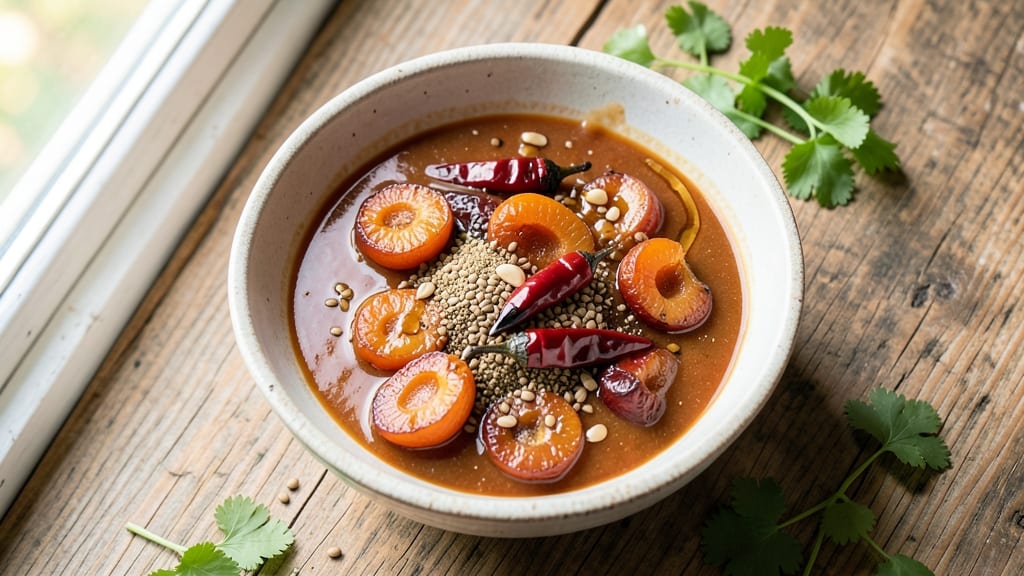
This apricot chili sauce recipe transforms simple pantry staples into a versatile glaze that balances sweet and spicy flavors perfectly. The combination of ripe apricots, chili peppers, and aromatic spices creates a sauce that's ideal for grilled meats, roasted vegetables, or as a bold dip.
I developed this recipe after craving a sauce that could elevate everyday meals with minimal effort, and it quickly became a staple in my kitchen.
The secret lies in simmering the ingredients until they meld into a thick, glossy consistency—just enough to coat proteins or vegetables beautifully. Fresh garlic, cumin, and coriander add depth, while vinegar and sugar create the ideal balance of tang and sweetness.
This sauce isn’t just for grilling; it’s a game-changer for marinades, dipping sauces, or even drizzled over yogurt for a spicy-sweet twist.
What makes this recipe stand out is its versatility—use it as a glaze for chicken, pork, or tofu, or serve it alongside charred vegetables for a smoky-sweet contrast. The sauce thickens as it cools, making it perfect for meal prep.
With just a few ingredients and 30 minutes of active time, you’ll have a sauce that’s far more impressive than anything store-bought.
Store leftovers in an airtight container in the fridge for up to 2 weeks, or freeze for longer shelf life. The flavors only deepen over time, so you’ll find yourself reaching for this sauce again and again. Ready to elevate your meals with this sweet-spicy glaze?
Ingredients for apricot chili sauce
Ten simple ingredients transform into a versatile glaze that balances sweet and spicy perfectly.
| Ingredient | Amount | Notes |
|---|---|---|
| Ripe Apricots 🍑 | 1 ½ cups | Pitted and chopped, fresh or canned |
| Red Chili Peppers 🌶️ | 2 whole | Fresh, seeds removed for mild heat |
| Garlic Cloves 🧄 | 4 cloves | Minced for aromatic depth |
| Ground Cumin 🌿 | 1 tbsp | Toasted for enhanced aroma |
| Ground Coriander 🌿 | 1 tbsp | Freshly ground preferred |
| Apple Cider Vinegar 🍎 | ½ cup | For tangy brightness |
| Granulated Sugar 🍬 | ½ cup | Adjust based on apricot sweetness |
| Extra-Virgin Olive Oil 🫒 | ¼ cup | High quality for richness |
| Salt 🧂 | 1 tsp | Diamond Crystal preferred |
| Water 💧 | ½ cup | For thinning consistency |
The apricots are the foundation—ripe, juicy varieties like Blenheim or Patio work best. Canned apricots in water (not syrup) are a backup, but fresh delivers superior texture and flavor. Trader Joe's and Whole Foods carry excellent fresh apricots in season, while Muir Glen canned apricots are a pantry staple. For the chili peppers, jalapeños or serranos add ideal heat without overpowering the sweetness. Toast the cumin seeds briefly before grinding to deepen their earthy notes—a step that takes 30 seconds but makes a noticeable difference. The garlic should be fresh, never pre-minced, to ensure vibrant flavor throughout the sauce.
No fresh apricots? Dried apricots soaked in warm water work in a pinch, though the texture will differ slightly. Substitute red bell peppers for chili if you prefer mild heat, but reduce to 1 whole pepper to maintain balance. For extra depth, add 1 tsp smoked paprika alongside the cumin. The vinegar is crucial—apple cider vinegar has subtle fruit notes that complement the apricots, while white vinegar works in a bind. If your sauce thickens too much, add water 1 tbsp at a time until you reach a glossy, coatable consistency. For a smoother finish, strain through a fine-mesh sieve after simmering.
This sauce thickens as it cools, so plan to thin it slightly if using immediately. Store in an airtight container in the fridge for up to 2 weeks, where flavors meld beautifully. For longer storage, freeze in ice cube trays—perfect for single-use portions. The sauce reheats well, making it ideal for meal prep. If using as a glaze, brush onto proteins or vegetables just before serving to prevent burning. For dipping, serve at room temperature for optimal texture.
Why You'll Love This Recipe
- Few Ingredients, Big Payoff: I swear by this one—just apricots, chili, and a pinch of cumin. No fancy pantry trips, no last-minute grocery runs. The sauce practically makes itself once you toss everything into a pot and let it simmer.
- Sweet Heat Balance: That first bite? It’s the kind of harmony you don’t expect—juicy apricots cutting through the chili’s kick, with garlic and coriander adding depth. It’s bold but never overpowering, and honestly, I reach for this when I want something that actually tastes like a meal.
- Dips, Glazes, Everything: Slather it on grilled chicken, drizzle it over yogurt with naan, or use it as a marinade. I’ve even thrown it into rice bowls when I’m lazy. The sauce’s versatility means I never get bored, and neither do my taste buds.
- Makes More Than You’ll Use: Between us, I always double the batch. It keeps for weeks in the fridge, and freezing it means I’ve got a quick sauce ready for whenever I crave that sweet-spicy punch. Plus, it’s cheap—apricots in season and spices last forever. Win-win.
Step-by-step instructions for apricot chili sauce
Aromatic, balanced, and effortlessly versatile—this sauce delivers bold sweet-spicy depth with minimal effort.
Char the Apricots and Chili Peppers
Preheat your oven broiler to high. Arrange the 1.5 cups ripe apricots and 2 whole red chili peppers (seeds removed) on a baking sheet lined with parchment paper. Broil for 8-10 minutes, turning once, until the apricots soften and the chili peppers develop deep char marks—this builds smoky complexity. Watch closely: you want caramelized edges, not burning. Transfer the charred fruits and peppers to a cutting board and let cool for 5 minutes before peeling the chili peppers if desired (optional for milder heat).
The charring process unlocks the apricots' natural sugars while adding a smoky dimension that cuts through the sauce's sweetness. Don't skip this step—it transforms ordinary ingredients into something extraordinary.
Build the Spice Base with Garlic and Ground Spices
Heat the 0.25 cup extra-virgin olive oil in a heavy-bottomed saucepan over medium heat. Add the 4 minced garlic cloves and sauté for 1-2 minutes until fragrant but not browned—burnt garlic tastes bitter and overpowers the delicate apricot flavor. Immediately reduce heat to low and stir in the 1 tbsp ground cumin and 1 tbsp ground coriander, toasting for 30 seconds while stirring constantly. This step develops the spices' aromatic oils, creating the sauce's signature depth.
Here's where it gets interesting: the cumin and coriander should smell earthy and warm, not harsh. If you detect any bitterness, your heat was too high. Keep the temperature gentle—this is about coaxing flavor, not forcing it.
Combine Wet Ingredients and Simmer
Add the charred apricots and chili peppers to the pan, followed by the 0.5 cup apple cider vinegar, 0.5 cup granulated sugar, and 1 tsp salt. Stir well to combine, then increase heat to medium-high and bring to a gentle boil. Once boiling, reduce heat to medium-low and simmer uncovered for 15-20 minutes, stirring occasionally, until the mixture thickens and reduces by about one-third. You're looking for a glossy, syrupy consistency that clings to the back of a spoon.
The vinegar's acidity brightens the apricots while the sugar caramelizes, creating a perfect balance between sweet and tangy. If the sauce thickens too quickly, add the 0.5 cup water in 2-tablespoon increments to maintain the right consistency. This sauce should coat a spoon but still flow freely.
Finish and Adjust for Perfection
Remove the pan from heat and let the sauce rest for 5 minutes—this allows flavors to meld and prevents over-thickening when served. Taste and adjust seasoning: add more sugar if you prefer sweeter, or a splash of vinegar for increased tang. For a smoother texture, press the sauce through a fine-mesh sieve to remove any remaining apricot skins or chili bits. The final sauce should be vibrant red-orange with a glossy sheen and a perfect balance of sweet, spicy, and tangy notes.
This sauce keeps well in the refrigerator for up to 2 weeks, making it perfect for batch cooking. Use it as a glaze for grilled meats, a dip for bread or appetizers, or a marinade component. The versatility comes from its ability to complement both rich and delicate flavors equally.
Pro Tips For Making Apricot Chili Sauce
- Char the Chili First: Toss whole dried red chilies in a dry pan over medium-high heat for 30 seconds per side until they darken and smell smoky—this unlocks their depth. I used to skip this, and the sauce always tasted flat; now it’s the thing that makes the apricots sing.
- Pit Those Apricots: Use a paring knife to slice a shallow cross on the flat side of each apricot, then plunge them into boiling water for 30 seconds to loosen the pits—no pitter required. I learned this the hard way after choking on a stubborn pit mid-sauce.
- Toast the Spices Wet: Bloom cumin and coriander in the oil with the garlic, not before—this prevents them from burning and ensures their earthy notes integrate smoothly. Sounds weird, but it works: the sauce tastes richer and less bitter.
- Strain for Smoothness: Reserve 2-3 tablespoons of the cooking liquid before straining, then whisk it back in with the puréed sauce—this keeps it glossy without thinning it out. I was skeptical until I tried it; now I double-check for this step.
Wine and beer pairings for apricot chili sauce
Red Wine Pairings
A medium-bodied Pinot Noir from Oregon or California is my go-to choice—its bright acidity and red fruit notes mirror the apricot's sweetness while the earthy undertones complement the chili's heat. Look for wines with 13-14% ABV like La Crema or Meiomi to avoid overpowering the sauce's delicate balance.
Serve slightly chilled (55-60°F) to enhance the wine's freshness alongside the sauce's vibrant flavors. 🍷
White Wine Options
For those who prefer white, a Gewürztraminer from Alsace delivers a perfect match with its lychee and rose aromas that harmonize with the apricot's sweetness. The wine's natural spice notes also echo the chili's heat.
I recommend Trimbach or Château Ste. Marie for quality options. Serve at 45-50°F to let the wine's crispness cut through the sauce's richness.
Craft Beer Pairings
A wheat beer with a touch of spice, like Blue Moon Belgian White or Allagash White, creates a refreshing contrast to the sauce's sweet-spicy profile. The beer's citrus notes brighten the apricot while its effervescence cleanses the palate.
For a bolder option, try a German Helles Lager—its malty sweetness pairs beautifully with the chili's heat. Serve the beer at 40-45°F for optimal flavor.
Non-Alcoholic Options
For a non-alcoholic pairing, I love serving this sauce with sparkling apple cider like Martinelli's or Woodchuck Hard Cider. The effervescence and apple notes create a delightful echo of the sauce's vinegar and apricot flavors.
Alternatively, a ginger beer with a hint of spice, like Feather Ginger Beer, adds a zesty contrast that enhances the chili's heat.
Regional Wine Adaptations
In Italy, where apricots are used in many sauces, a Chianti with its cherry and herbal notes works beautifully. For a Spanish twist, pair with a Tempranillo—its dark fruit flavors complement the sauce's depth.
In Mexico, where chili plays a central role, a Malbec from Argentina brings rich fruitiness that stands up to the bold flavors. Each wine enhances the sauce's complexity while adding its own regional character. 🌍
Serving Temperature Tips
Wine and beer pairings work best when both the sauce and beverage are served at optimal temperatures. Keep the sauce at room temperature (around 70°F) for dipping or glazing, as cooler temperatures can mute its vibrant flavors.
Chill white wines and wheat beers slightly to enhance their crispness, while serving red wines and lagers at just below room temperature lets their full flavor profiles shine through. 💡
Nutrition facts
Frequently asked questions
Can I substitute dried apricots for fresh in this sauce?
Yes, but you'll need to soak ½ cup dried apricots in warm water for 20 minutes to rehydrate them first. Drain before using, as the extra moisture will affect the sauce's thickness. Adjust the water in the recipe by reducing it to ¼ cup to maintain balance. The flavor will be slightly more concentrated, so you may want to reduce the sugar slightly as well.
How do I make this sauce spicier?
For extra heat, add ½-1 tsp cayenne pepper or 1-2 fresh Thai chili peppers (seeds in for maximum spice) to the simmering sauce. If using canned chili peppers, increase to 1 can (4 oz) for a pronounced kick. Remember, the sauce thickens as it cools, so the heat will feel more intense after resting.
Can I use this sauce as a marinade?
While this sauce is primarily designed as a glaze or dip, you can use it as a marinade for chicken, pork, or tofu. Combine ½ cup sauce with 1 tbsp olive oil and marinate for 2-4 hours (or overnight for deeper flavor). The acidity in the vinegar helps tenderize proteins, making the meat extra juicy when grilled or roasted.
Why did my sauce turn out too thin?
Sauce thinning often happens if you didn't simmer long enough or added too much water. To fix it, return the sauce to low heat and simmer uncovered for an additional 5-10 minutes, stirring occasionally. If it's still too runny, mash 1 tbsp apricot puree into the sauce or mix 1 tsp cornstarch with 1 tbsp water, stir in, and cook for 1-2 minutes until thickened.
How can I use this sauce in vegetarian dishes?
This versatile sauce works beautifully with grilled portobello mushrooms, eggplant, or halloumi cheese. Drizzle it over roasted vegetables like zucchini or bell peppers, or mix it with Greek yogurt for a spicy-sweet dip with pita chips. The sweetness also pairs well with halloumi fries or as a glaze for tofu skewers.