
Sauces & Condiments
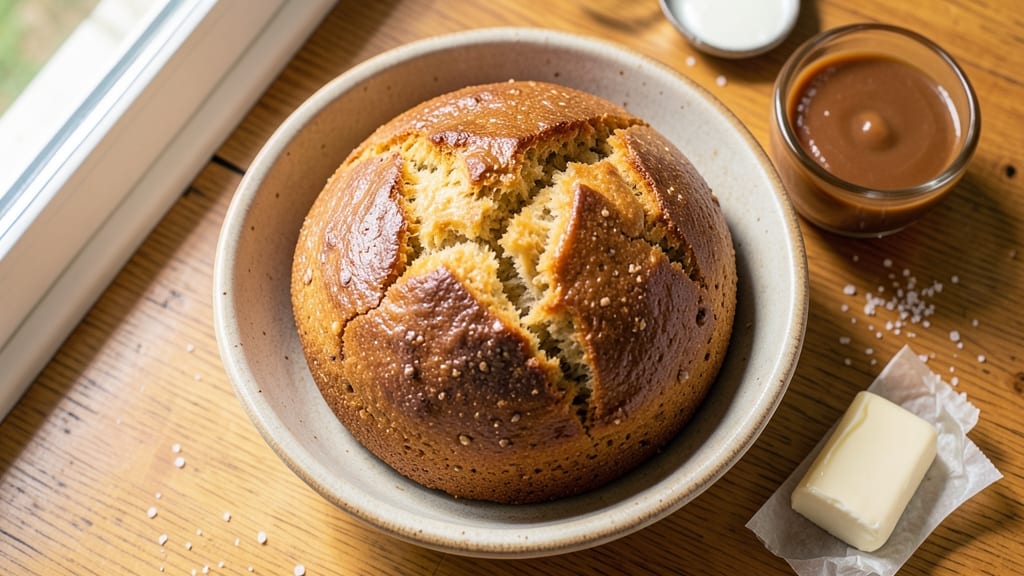
This applesauce bread recipe no sugar delivers all the cozy, spiced warmth of classic bread without any added sweetness. The secret lies in balancing natural applesauce with warm cinnamon, nutmeg, and a touch of vanilla—creating rich, moist crumb and caramelized crust that feels indulgent yet guilt-free.
I developed this version after realizing traditional recipes relied too heavily on sugar, and the result? A loaf so flavorful, no one misses it.
The beauty of this method is how applesauce replaces both sugar and fat, keeping calories in check while adding natural moisture and subtle sweetness. A splash of buttermilk tenderizes the dough, while whole wheat flour gives structure without heaviness.
What you’ll end up with is a golden, fragrant loaf with a crisp exterior and soft, pillowy interior—perfect for toast, sandwiches, or simply enjoying warm from the oven.
No special equipment is needed—just a standard loaf pan and 30 minutes of prep before letting the dough rise. The spices (cinnamon, nutmeg, and cardamom) create layers of warmth that make this bread irresistible, while the applesauce ensures it stays moist for days.
This recipe proves you don’t need sugar to make something special.
Pair it with your favorite jam or spread, or use it as the base for savory paninis. The no-sugar approach works because the spices and applesauce carry the flavor—no artificial sweetness required. Ready to bake bread that’s both comforting and healthy?
Ingredients for applesauce bread recipe no sugar
Eight cozy ingredients transform into a spiced loaf without any sugar guilt.
| Ingredient | Amount | Notes |
|---|---|---|
| Unsweetened Applesauce 🍎 | 1 cup | Unsweetened, no added sugar |
| Whole Wheat Flour 🌾 | 4 cups | For structure and nutrition |
| Buttermilk 🥛 | 1 cup | Ensures tender crumb |
| Granulated Sugar Substitute 🍬 | ¼ cup | Erythritol or monk fruit blend |
| Large Eggs 🥚 | 2 whole | Room temperature preferred |
| Unsalted Butter 🧈 | ½ cup | Cold, cubed for easier mixing |
| Active Dry Yeast 🍞 | 2 ¼ tsp | Instant yeast works too |
| Ground Cinnamon 🌿 | 2 tsp | Freshly ground for warmth |
| Ground Nutmeg 🌿 | 1 tsp | Freshly grated preferred |
| Ground Cardamom 🌿 | ½ tsp | Optional but adds depth |
| Pure Vanilla Extract 🍯 | 1 tsp | High-quality preferred |
| Diamond Crystal Kosher Salt 🧂 | 1 ½ tsp | Fine grain preferred |
| Baking Soda 🧪 | 1 ½ tsp | Ensures proper rise |
| Water 💧 | ¼ cup | Warm, not hot |
The applesauce is the star here—unsweetened, no sugar added. Mott's or local organic brands work best, but any unsweetened variety will do. The whole wheat flour gives structure without heaviness, while the buttermilk tenderizes the dough beautifully. I always grab the King Arthur whole wheat flour from Whole Foods or Amazon—it bakes up lighter than store-brand options. For the sugar substitute, erythritol or monk fruit blend keeps the calorie count low without sacrificing sweetness. If you can't find those, stevia drops work in a pinch, but adjust to taste since they're more potent.
No buttermilk? Mix 1 cup milk with 1 tbsp vinegar or lemon juice—it's a classic swap. Freshly ground spices make all the difference, so if you're using pre-ground, toast them in a dry pan for 30 seconds to wake up the flavors. The vanilla extract should be pure—no imitation stuff. Want extra warmth? Add 1/4 tsp ginger or 1/8 tsp cloves. The baking soda is non-negotiable for proper rise, but if you're short, 1 tbsp baking powder can substitute. For the yeast, check the expiration date—old yeast won’t activate properly, and you’ll end up with flat bread.
This dough keeps in the fridge for up to 24 hours—perfect for overnight prep. Once baked, it stays fresh for 3-4 days at room temperature, wrapped in a towel. For longer storage, slice and freeze—toast straight from frozen for crispy results. The crust gets crunchier as it sits, so reheat slices in the oven for 3-5 minutes at 350°F if you prefer a softer texture. I always make a double batch—one loaf for the week, one for gifts. The spices keep it aromatic for days, making every slice feel special.
Why You'll Love This Recipe
- No-Fuss Mixing: The dough comes together with just five ingredients—no yeast fuss, no kneading marathon. Honestly, I dump the applesauce right into the flour, stir, then fold in the buttermilk like it’s a lazy Sunday. That’s it.
- Moist Without Sugar: The applesauce keeps it tender while the sugar substitute gives just enough caramel notes—no cloying sweetness, just that warm, spiced bread vibe. I’ll be real: my kids grab seconds before I even slice it.
- Breakfast or Snack Hero: Toss a slice in the toaster for a quick breakfast or pack it with peanut butter for a lunchbox staple. Between us, this bread is my go-to when I forget to make muffins—no one ever complains.
- Budget Stretch: Whole wheat flour and applesauce cut costs without sacrificing texture, and a batch lasts me five days. I freeze extras too—because who has time to bake weekly? (Spoiler: me, but I’m lazy.)
Step-by-step instructions for applesauce bread without sugar
Here's how to transform simple ingredients into a moist, spiced loaf that's naturally sweetened and packed with warm flavor.
Activate the Yeast for Maximum Rise
In a small bowl, combine the 0.25 cup warm water (about 105-110°F) with the 2.25 tsp active dry yeast. Let it sit for 5-10 minutes until it becomes frothy and bubbly—this tells you the yeast is alive and ready to work. The warm water should feel comfortably warm to your wrist, not hot.
I always test the water temperature first because yeast dies in water hotter than 120°F. If it doesn't bubble after 10 minutes, your yeast might be old or your water too hot. This step is non-negotiable for proper rise—don't skip it.
Mix Wet Ingredients for Perfect Texture
In a large mixing bowl, combine the 1 cup unsweetened applesauce, 1 cup buttermilk, 0.25 cup granulated sugar substitute, 2 whole large eggs, and the activated yeast mixture. Whisk until smooth and fully incorporated—this creates the base for your bread's moisture and structure.
Next, add the 0.5 cup cold unsalted butter, cut into small cubes. Use a wooden spoon or silicone spatula to work it in until it melts and emulsifies with the wet ingredients. The butter should disappear completely, creating a thick, ribbony batter. This cold butter prevents gluten from developing too much, keeping your bread tender.
Combine Dry Ingredients for Ideal Structure
In a separate bowl, sift together the 4 cups whole wheat flour, 2 tsp ground cinnamon, 1 tsp ground nutmeg, 0.5 tsp ground cardamom, 1.5 tsp diamond crystal kosher salt, and 1.5 tsp baking soda. The sifting aerates the flour and prevents dense pockets in your bread.
Make a well in the center of the dry ingredients and pour in the wet mixture. Using a wooden spoon, gently fold everything together until just combined—you should still see some flour streaks. Overmixing develops gluten, which makes bread tough. Stop when the dough comes together but remains slightly shaggy.
Knead and Rest for Optimal Flavor Development
Turn the dough onto a lightly floured surface and knead gently for 5-7 minutes until smooth and elastic. You're not looking for a windowpane test here—just enough to develop some structure while keeping the whole wheat flour's natural density. The dough should be slightly sticky but manageable.
Place the dough in a lightly greased bowl, cover with a damp towel, and let it rise in a warm place for 1-1.5 hours or until doubled in size. I like to place my bowl on top of my oven with the light on for consistent warmth. The dough should spring back slowly when poked—this indicates proper fermentation and rise.
Shape, Proof, and Bake to Golden Perfection
Preheat your oven to 375°F and grease a 9x5-inch loaf pan generously with butter. Shape the dough into a log and place it seam-side up in the prepared pan. Cover again and let it rise for another 30-45 minutes until it domes slightly above the pan.
Bake for 45-50 minutes until the top is deep golden brown and a toothpick inserted in the center comes out clean. The bread should have a beautiful crackly top with a subtle shine from the applesauce. For even browning, rotate the pan halfway through baking. Let it cool in the pan for 10 minutes before transferring to a wire rack.
Pro Tips For Making Applesauce Bread Recipe No Sugar
- Measure Applesauce Cold: Unsweetened applesauce thickens when warm—use it straight from the fridge. I learned this the hard way when my first batch turned out dense because I grabbed it from the pantry after reheating. Cold applesauce keeps the right consistency for mixing with whole wheat flour without making the dough sluggish.
- Weigh the Flour: Whole wheat flour is deceptive—scooping it leads to uneven batches. Use a kitchen scale for accuracy, especially if you’re substituting part of the flour with oats or almond flour. My first few loaves were either too dense or crumbly until I switched to measuring by weight.
- Don’t Overmix the Dough: Whole wheat flour develops gluten faster than all-purpose, and buttermilk adds moisture that makes it gummy. Mix just until combined—lumpy is fine, but don’t fight it. I used to overwork mine, and the bread turned out tough instead of tender.
- Bake at 350°F, Not Hotter: This recipe relies on the sugar substitute for browning, and high heat burns it before the center cooks. 350°F is the sweet spot—let the oven’s residual heat finish the job. I cranked mine to 375°F once and ended up with a dark crust and a raw middle.
Flavor customization for this recipe
Spice Blend Variations
Swap the cinnamon-nutmeg-cardamom trio for pumpkin pie spice (1.5 tsp) to capture autumn flavors without extra sugar. For a gingerbread twist, add 1 tsp freshly grated ginger and 1/4 tsp cloves—these spices deepen the warmth and pair beautifully with applesauce.
I’ve also tested chai-inspired with 1/2 tsp fennel seeds (toasted) and 1/4 tsp black pepper for complexity. 🌟
Sweetness Adjustments
If you prefer a slightly sweeter loaf, boost the sugar substitute to 1/3 cup (but use monk fruit blend for better control). For a caramelized crust, brush the baked loaf with 1 tbsp melted butter mixed with 1 tsp vanilla extract while still warm.
The applesauce’s natural sweetness shines when balanced with 1/4 tsp sea salt sprinkled on top before baking. 🍯
Texture Tweaks
For a denser, cake-like texture, replace 1 cup whole wheat flour with 1 cup all-purpose flour—this works well for sandwich bread. Need extra moisture? Add 2 tbsp Greek yogurt to the wet ingredients.
For a crustier exterior, bake the shaped loaf on a parchment-lined tray for the first 15 minutes before transferring to the pan. 🥖
Global Flavor Twists
Transform this into Swedish-style bread by adding 1/2 tsp cardamom and 1/4 tsp allspice. For a Mexican-inspired version, swap cardamom for 1/2 tsp cumin and 1/4 tsp oregano, then top with sesame seeds before baking.
I’ve also made a Middle Eastern adaptation with 1/2 tsp coriander and a pinch of sumac for tangy depth. 🌍
Flavor Boosters
Incorporate 1/2 cup chopped walnuts or pecans for crunch—fold them into the dough after kneading. For a citrus kick, zest 1 lemon and add it to the wet ingredients. A honey drizzle (just 1 tsp raw honey) after baking adds subtle sweetness without altering the no-sugar promise. 🍋
Savory Adaptations
Turn this into a cheesy herb loaf by mixing 1/2 cup shredded cheddar into the dough and topping with 1 tbsp chopped rosemary. For a garlic-herb twist, infuse the butter with 2 minced garlic cloves and 1 tsp dried thyme before mixing.
These savory versions work perfectly for sandwiches or as a side to soups. 🧀
Nutrition facts
Frequently asked questions
Can I substitute regular flour for whole wheat in this recipe?
Yes, but expect a slightly different texture. Replace 1 cup whole wheat flour with 1 cup all-purpose flour for a lighter, more tender crumb—ideal for sandwich bread. The whole wheat version has more fiber and nuttiness, while the all-purpose version rises higher and stays fresh longer. For best results, use a 50/50 mix if you want both benefits.
Why does my dough smell like yeast but isn't rising?
This usually means the yeast is inactive or the environment is too cold. First, check your yeast's expiration date—old yeast won't activate. Warm the dough area to 75-80°F (place bowl on oven with light on) and let it rise for another 30 minutes. If no change, your yeast may be dead. For next time, test yeast by dissolving 1 tsp sugar in warm water, adding yeast, and waiting for bubbles (5-10 minutes).
How can I make this bread less dense?
For a lighter texture, try these tweaks:
- Sift your flour to aerate it,
- Whisk egg whites separately and fold them in before baking, or
- Add 1 tbsp baking powder (reduce baking soda to 1 tsp). Also ensure your yeast is fresh and your oven isn't too hot—375°F is ideal. A water bath during baking can also help create steam for a lighter crumb.
Can I use this dough for cinnamon rolls?
Roll out the dough to 1/4-inch thickness and spread with 1/4 cup softened butter mixed with 2 tbsp sugar substitute and 1 tsp cinnamon. Roll tightly, slice into 1-inch pieces, and bake in a 9x13-inch pan at 375°F for 20-25 minutes. For extra gooey filling, add 2 tbsp applesauce to the butter mixture. Brush baked rolls with melted butter for shine.
What's the best way to store leftovers?
Wrap cooled slices in parchment paper and store in an airtight container at room temperature for 3-4 days. For longer storage, freeze slices individually—wrap each in plastic and place in a freezer bag. Toast straight from frozen for 3-5 minutes at 350°F. To revive stale bread, sprinkle with 1 tsp water and microwave for 10-15 seconds. The crust stays crispy when properly stored.