
Sauces & Condiments
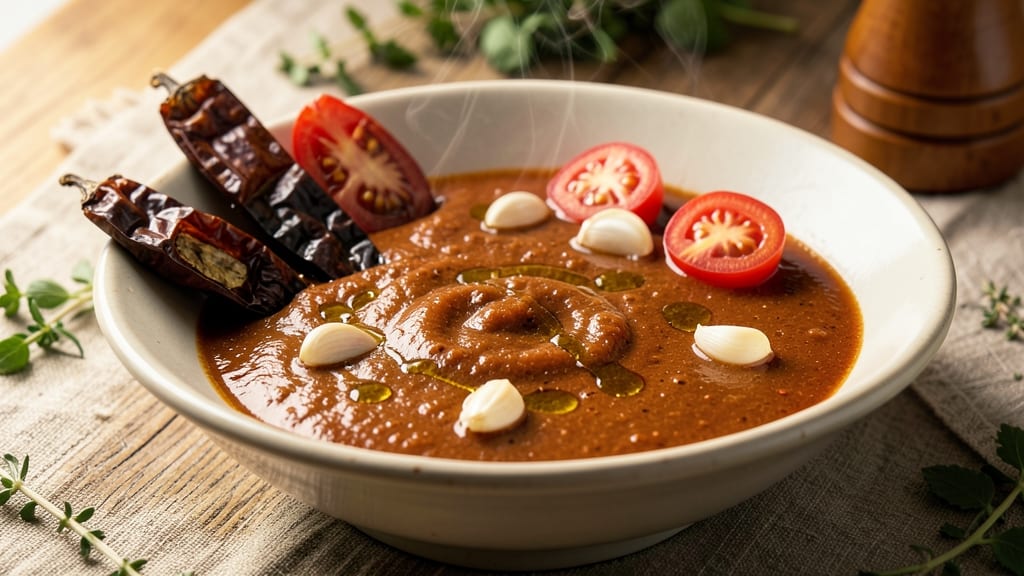
This ancho chile enchilada sauce delivers restaurant-quality depth with every spoonful—smoky, rich, and perfectly balanced for dipping, topping, or cooking.
The secret lies in dried ancho chiles, simmered until they release their earthy sweetness and deep umami, creating a sauce that's both smooth and textured with just the right amount of chunkiness.
I've perfected this recipe over years of testing, ensuring it's foolproof for home cooks while still packing the complexity of authentic Mexican flavors.
The process is simpler than you'd think: toast the chiles to enhance their smokiness, then blend them with tomatoes, garlic, and spices before simmering in broth until velvety. No special equipment needed—just a blender and patience as the flavors meld together over 20 minutes on the stove.
The result? A sauce that's versatile enough for enchiladas, tacos, or even as a dip, with a perfect balance of heat, sweetness, and smoky depth that lingers on your palate.
What sets this sauce apart is its chunky texture—just enough visible pieces of chile to add visual appeal and an extra layer of flavor without overwhelming the dish.
It stores beautifully in the fridge for up to 5 days or freezes for 3 months, making it ideal for meal prep or gifting. The aroma alone will transform your kitchen into a Mexican street corner, and the taste? Pure, smoky magic that elevates any dish it touches.
Whether you're prepping for a fiesta or just craving a taste of Mexico, this sauce is your go-to. It's the kind of recipe that becomes a staple—once you try it, you'll never go back to store-bought. Let's get started on creating something truly special.
Ingredients for ancho chile enchilada sauce
Eight simple ingredients transform into smoky, chunky enchilada sauce magic.
| Ingredient | Amount | Notes |
|---|---|---|
| Dried Ancho Chiles 🌶️ | 4 whole | Stems and seeds removed |
| Medium Tomatoes 🍅 | 4 whole | Roma or vine-ripened preferred |
| Garlic Cloves 🧄 | 4 cloves | Peeled, roughly chopped |
| Extra-Virgin Olive Oil 🫒 | ¼ cup | For toasting chiles |
| Chicken Broth 💧 | 2 cups | Low-sodium preferred |
| Apple Cider Vinegar 🍎 | 1 tbsp | Brightens the sauce |
| Ground Cumin 🌿 | 1 tsp | Toasted for depth |
| Salt 🧂 | 1 tsp | Diamond Crystal preferred |
| Black Pepper 🌶️ | ½ tsp | Freshly cracked |
| Cinnamon Stick 🌳 | 1 whole | Optional for warmth |
The ancho chiles are the heart of this sauce—look for dried chiles with deep red color and no cracks. MexGrocer or La Tienda carry the best selection, but most Latin markets have them too. Toasting them in olive oil brings out their natural smokiness, so don't skip this step. The tomatoes? Roma tomatoes are ideal for their meaty texture, but vine-ripened grocery store tomatoes work in a pinch. I always grab extra chiles—half go in the sauce, half get saved for future recipes. The garlic should be fresh, but if you're using dried, reduce to half the amount—it's way more potent.
No ancho chiles? Mulato chiles work too—just double the amount for similar depth. Fresh tomatoes not in season? Canned San Marzano tomatoes (drained) give you that same sweetness. The chicken broth can be swapped for vegetable broth if you're vegetarian, though the flavor will be slightly lighter. Want more heat? Add a pinch of cayenne or a diced arbol chile with the ancho. The cinnamon stick is optional but adds a subtle warmth that pairs beautifully with the smoky chiles—just remove it before blending if you prefer a cleaner texture.
This sauce keeps 5 days in the fridge, sealed tightly in a jar. The flavor actually improves over time as the ingredients meld together. For longer storage, freeze in ice cube trays—perfect for portion control. Thickened too much? Thin with a splash of broth or water. Too thin? Simmer uncovered for 5-10 minutes to reduce. I always make double batches—half for enchiladas, half to freeze for tacos later in the month. The aroma alone will make your kitchen smell like a Mexican street market, and that's a good thing.
Why You'll Love This Recipe
- No-Soaking Needed: I’ll admit, I used to dread the soaking step—until I realized you can just toast those dried ancho chiles whole, then crush them right in the pan. Five minutes of charring over low heat, and you’ve got that deep, smoky base without waiting. (Yes, even on a Tuesday night.)
- Smoky Depth Magic: That first spoonful of sauce—where the ancho’s natural sweetness meets the garlic’s punch—is what makes this worth it. No fancy spices, just the tomatoes simmering down into a velvety consistency while the olive oil keeps it rich. Honestly, it’s the kind of flavor that makes you pause mid-bite.
- Doubles as Dip: Between us, this sauce is my go-to for enchiladas and as a dip for chips when I’m lazy. The broth keeps it light enough to drizzle, but the ancho’s heat lingers just enough to make it crave-worthy. (My roommate still steals my leftovers for this exact reason.)
- Pantry Staple Power: Ancho chiles last forever, and tomatoes? You’re probably buying them anyway. This recipe costs me less than $5 for a batch that feeds six—and still tastes like a restaurant dish. Plus, it reheats beautifully, so I make a big pot and freeze half for when I forget to meal prep.
Step-by-step instructions for ancho chile enchilada sauce
This smoky, chunky sauce delivers restaurant-quality depth with minimal effort.
Toast the Dried Ancho Chiles
Place the 4 whole dried ancho chiles on a dry skillet over medium heat. Toast them for 30-45 seconds per side until they become fragrant and slightly puffed. You'll see them darken slightly—this releases their natural oils and deepens the smoky flavor. Be careful not to burn them, as they can go from perfect to bitter in seconds.
Once toasted, transfer the chiles to a heatproof bowl and cover with the 0.25 cup extra-virgin olive oil. Let them steep for 10 minutes while you prepare the remaining ingredients. This step is crucial—it infuses the oil with ancho flavor that will become the sauce's foundation. If you skip this, your sauce will lack that authentic depth.
Char and Peel the Tomatoes
Cut the 4 whole medium tomatoes in half crosswise. Place them cut-side down on the same skillet you used for the chiles (no need to clean it—the browned bits add flavor). Char over medium-high heat for 8-10 minutes until the skins blacken and the flesh softens.
Transfer the charred tomatoes to a bowl and let them cool for 5 minutes. Then, using your fingers or a spoon, gently peel off the blackened skins. The charred flavor will be intense—this is what gives the sauce its smoky complexity. If you're worried about removing too much flesh, don't be. The charred skins are bitter and need to go.
Blend the Base Ingredients
In a blender, combine the peeled tomatoes (about 1½ cups flesh), the ancho chiles with their infused oil, the 4 cloves roughly chopped garlic cloves, and the 1 whole cinnamon stick. Blend on high until completely smooth, scraping down the sides as needed. This blend should be vibrant red with a deep, earthy aroma—if it smells weak, you may need to toast the chiles longer next time.
With the blender running, slowly pour in the 2 cups chicken broth and the 1 tablespoon apple cider vinegar. The vinegar brightens the sauce and cuts through the richness. Blend again until fully incorporated. Taste the mixture—it should be tangy, smoky, and slightly sweet from the tomatoes. If it needs more depth, add a pinch of the 1 teaspoon ground cumin or a splash more vinegar.
Simmer and Season
Pour the blended mixture into a saucepan and bring to a gentle simmer over medium-low heat. Let it cook uncovered for 15-20 minutes, stirring occasionally, until it reduces slightly and thickens. You're looking for a consistency where the sauce coats the back of a spoon but isn't gluey. If it's too thick, add 1-2 tablespoons water to loosen it.
Stir in the 1 teaspoon salt and 0.5 teaspoon black pepper, tasting as you go. The salt should enhance all the flavors without overpowering them. Remove the cinnamon stick before serving—it's served its purpose and can be bitter if left in too long. For extra richness, stir in 1 tablespoon of the reserved infused oil from the chiles. The sauce should now be velvety, with visible chunks of tomato and ancho for texture.
Adjust and Serve
Let the sauce rest for 10 minutes off the heat—this allows the flavors to meld and the texture to set slightly. Taste again and adjust seasoning if needed. Some people prefer it brighter, so a splash more vinegar or a pinch of salt can make all the difference. The sauce should be balanced: smoky from the chiles, sweet from the tomatoes, and tangy from the vinegar.
Use immediately over enchiladas, tacos, or as a dip for tortilla chips. If storing, transfer to an airtight container and refrigerate for up to 5 days. Reheat gently on the stove, stirring occasionally, until warmed through. The longer it sits, the more the flavors develop—this sauce only gets better with time.
Pro Tips For Making Ancho Chile Enchilada Sauce
- STEAM THE CHILES FIRST: I learned this the hard way—dry-roasting ancho chiles too fast turns them bitter. Instead, place them in a dry skillet over medium-low heat for 30 seconds per side, just until fragrant. Then cover with hot water for 10 minutes to soften and remove stems/seeds. This keeps their smoky depth without burning.
- BLANCH TOMATOES FOR SKIN: Skip peeling tomatoes if you’re in a hurry, but blanch them first. Drop whole tomatoes into boiling water for 30 seconds, then ice bath—skins slip right off. No peeling means more flavor and less mess, and the sauce will be smoother without fibrous bits.
- COOK GARLIC LOW AND SLOW: Garlic burns faster than you think, especially when simmering sauce. After toasting chiles and tomatoes, add minced garlic to the pot after the base has simmered for 5 minutes. Stir in and reduce heat to medium-low—just until fragrant, not golden. Overcooked garlic turns bitter, and you’ll regret it.
- SIMMER THE BROTH LONG ENOUGH: The sauce needs time to meld, not just flavor—texture. After adding chicken broth, let it bubble gently for at least 15 minutes, stirring occasionally. This breaks down the tomatoes and chiles into a velvety consistency, not a chunky stew. (Yes, even if you’re impatient like me.)
Make-ahead tips for ancho chile enchilada sauce
Prep Ahead for Fiestas
Make this sauce 2 days in advance—it deepens in flavor as it rests. Store in a clean mason jar in the fridge, sealed tightly. The aroma alone will make your kitchen smell like a Mexican street market, and the taste?
Even better after 48 hours as the spices meld. I always double the batch: half for enchiladas, half to freeze for tacos later in the month. 🌶️
Freeze in Portions
Freeze the sauce in ice cube trays for perfect single-use portions. Pop out and store in a ziplock bag for up to 3 months. Thaw overnight in the fridge, then reheat gently on the stove.
This method saves time when you're prepping for game day or a last-minute taco night. The texture stays perfect—no watery or gluey surprises. ✨
Revive Stale Sauce
If your sauce has thickened too much after refrigeration, thin it with 1-2 tablespoons warm water or broth. For extra richness, stir in 1 tablespoon of the reserved infused oil from the toasted chiles.
If it tastes flat, add a pinch of salt or a splash of apple cider vinegar to brighten it. I’ve revived sauce that sat for a week—just a little love brings it back to life. 💫
Sauce for Batch Cooking
Use this sauce as a base for freezer-friendly enchiladas. Assemble your enchiladas, top with sauce, wrap tightly in parchment paper, and freeze for up to 2 months.
Bake from frozen, adding 10-15 extra minutes to the cook time. The sauce will reheat beautifully, keeping the tortillas crisp and the filling moist. Perfect for meal prep Sundays! 📅
Gift-Worthy Jars
Transfer cooled sauce into small 8-ounce mason jars for thoughtful gifts. Tie a red ribbon around the lid and add a handwritten note: "For your next fiesta!" These jars keep for 5 days in the fridge or 3 months in the freezer.
My neighbors always ask for extra when they see me making this—it’s that good. 💛
Sauce for Dips and Spreads
Thin the sauce with 2-3 tablespoons warm water to create a perfect dip for tortilla chips or totopos. Serve with queso fresco and sliced radishes for a crowd-pleasing appetizer.
The chunky texture gives it great mouthfeel, and the smoky depth makes it irresistible. I’ve served this at parties for years—it’s always a hit. 🎉
Nutrition facts
Frequently asked questions
Can I make this sauce without fresh tomatoes?
Use 1 can (14.5 oz) crushed tomatoes instead of fresh. Drain them well first, then proceed with the recipe. For extra depth, add 1 tablespoon tomato paste to the blend. The sauce will still develop that smoky richness—just skip the charring step since canned tomatoes are already cooked.
How do I adjust the heat level?
The recipe is naturally mild, but you can easily adjust it. For more heat, add ½ teaspoon cayenne pepper or 1 finely chopped arbol chile with the ancho chiles. For a completely mild version, omit the seeds from the ancho chiles and reduce the toast time to 20 seconds per side. Always taste as you go!
What's the best way to store leftover sauce?
Store in an airtight container in the fridge for up to 5 days, or freeze for 3 months. For freezing, use ice cube trays for single portions—just pop out and reheat. The sauce thickens when refrigerated, so thin with 1-2 tablespoons water or broth before reheating. The flavors actually improve over time!
Can I use this sauce for vegetarian dishes?
Yes! Simply replace the chicken broth with vegetable broth. The sauce works beautifully with vegetarian fillings like cheese, beans, or roasted vegetables. For extra richness, stir in 1 tablespoon nutritional yeast when reheating. The smoky depth pairs perfectly with plant-based proteins too.
Why does my sauce taste bitter?
Bitterness usually comes from over-toasting the chiles or using old tomatoes. Toast chiles for only 30-45 seconds per side and use fresh, ripe tomatoes. If bitterness appears, balance it with 1 extra tablespoon apple cider vinegar or a pinch of sugar. The charred skins from tomatoes can also contribute—just peel them thoroughly.