
Sauces & Condiments
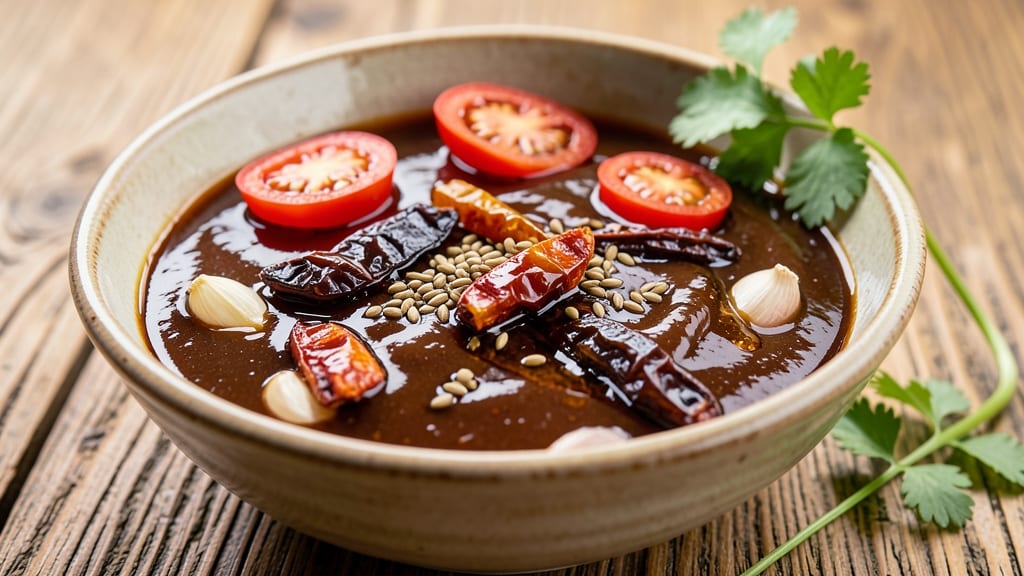
This ancho BBQ sauce recipe transforms smoky ancho chiles into a versatile, vegetarian-friendly sauce that brings depth to any dish. 🔥 The secret lies in balancing sweetness, acidity, and smokiness—creating a sauce that's rich enough for ribs but bright enough for tacos.
I developed this during a trip to Oaxaca, where I learned how properly charred chiles elevate even the simplest ingredients.
The process is straightforward: toast and soak the chiles to unlock their smoky essence, then blend them with tomatoes, vinegar, and spices before simmering until thick and glossy.
The result is a sauce with chunky texture and layers of flavor that cling beautifully to grilled meats, roasted vegetables, or even as a marinade. Unlike store-bought versions, this recipe delivers authentic Mexican-inspired depth without artificial additives.
What makes this sauce special is its versatility—use it as a glaze for grilled vegetables, a marinade for tofu or chicken, or a dipping sauce for fries. The recipe can easily be adapted to vegan by substituting honey with agave or maple syrup.
With just 15 minutes of active prep and 30 minutes of simmering, you'll have a sauce that transforms ordinary meals into something extraordinary.
Store it in the fridge for up to two weeks or freeze for longer shelf life. The flavors only deepen over time, making this a pantry staple worth repeating.
Whether you're slow-cooking brisket or tossing it with roasted potatoes, this ancho BBQ sauce will become your go-to for adding smoky-sweet complexity to any dish.
Ingredients for ancho bbq sauce
Eleven ingredients blend smoky depth, sweetness, and acidity for a sauce that works on everything from ribs to tacos.
| Ingredient | Amount | Notes |
|---|---|---|
| Dried Ancho Chiles 🌶️ | 4 whole | Stemmed, seeded, toasted until fragrant |
| Roma Tomatoes 🍅 | 1 ½ lb | Ripe, halved for simmering |
| Apple Cider Vinegar 💧 | ½ cup | For bright acidity balance |
| Dark Brown Sugar 🍯 | ½ cup | Packed, for caramel depth |
| Garlic Cloves 🧄 | 6 cloves | Peeled, lightly toasted |
| Cumin Seeds 🌿 | 1 tbsp | Toasted for earthy aroma |
| Ground Cinnamon 🌶️ | ½ tsp | For subtle warmth |
| Smoked Paprika 🌶️ | 1 tbsp | Enhances smoky profile |
| Vegetable Oil 🫒 | 2 tbsp | For simmering base |
| Salt 🧂 | 1 ½ tsp | Diamond Crystal preferred |
| Water 💧 | ½ cup | For blending consistency |
The ancho chiles are non-negotiable—look for dried, not canned—and toasting them in a dry skillet until fragrant unlocks their full smoky potential. La Tienda or Mexican markets carry the best quality, but most grocery stores stock them too. Roma tomatoes should be vine-ripened for natural sweetness, and avoid the pre-sliced kind—they oxidize fast. For the brown sugar, Muscovado adds molasses depth if you want to splurge, but regular dark works perfectly fine. Toast the cumin seeds in the same skillet as the chiles—they release their aroma instantly, which is crucial for that authentic Mexican flavor.
No ancho chiles? Ancho powder at half the amount works in a pinch, but you'll lose the smoky complexity. Substitute Roma tomatoes with fire-roasted canned tomatoes (drained) if fresh aren't available, though the texture will be smoother. For a vegan version, replace the honey with agave nectar or maple syrup—the sauce stays vibrant. The vinegar can be swapped for lime juice if you prefer citrus brightness, though apple cider gives that classic BBQ tang. If your sauce turns out too thick, a splash of water or broth thins it beautifully—just don't rush the simmering.
This sauce thickens as it cools, so don't over-simmer—it should coat the back of a spoon but still be pourable. Store in a clean glass jar in the fridge for up to 2 weeks, or freeze in ice cube trays for 6 months. The flavors actually improve over time, so make a double batch. For a chunkier texture, blend only half the sauce and leave the rest whole—perfect for drizzling over tacos or grilled veggies. The sauce reheats beautifully, so keep some in the fridge for quick weeknight meals.
Why You'll Love This Recipe
- Fewer Ingredients, Bigger Impact: I swear by this—just five pantry staples (yes, including that dusty bottle of vinegar) transform into something that tastes like a restaurant secret. No fancy blends or hard-to-find spices here; the ancho chiles and brown sugar do all the heavy lifting while I sip my coffee.
- Smoky-Sweet Magic: That deep, smoky heat from the dried ancho chiles? It’s the star. Then the brown sugar hits—just enough to balance the tang without turning it cloying. Honestly, I’ve made BBQ sauces that cost twice as much, and this one still wins every time.
- Weeknight to Weekend: Slather it on grilled chicken for Taco Tuesday, toss it with roasted potatoes for game day, or drizzle it over brisket for a Sunday feast. Between us, I’ve even used it as a marinade for shrimp when I was too tired to plan. It just works.
- Make-Once, Use-Twice: A single batch lasts me nearly two weeks—no exaggeration. The vinegar keeps it fresh, and the texture thickens beautifully over time. Plus, it’s cheap to make: a jar of dried ancho chiles and a few tomatoes stretch further than store-bought sauce, and my wallet notices.
Step-by-step instructions for ancho BBQ sauce
Transform dried ancho chiles into a rich, smoky-sweet sauce with balanced depth and chunky texture.
🔥 Step 1: Toast and Rehydrate the Ancho Chiles
Preheat your oven to 350°F. Place the 4 whole dried ancho chiles on a baking sheet and toast for 3-4 minutes until fragrant and slightly darkened. This step deepens their smoky flavor—don't walk away, they burn quickly.
Transfer the toasted chiles to a heatproof bowl and pour 1 cup of hot water (just boiled) over them. Cover with a plate and let steep for 20 minutes until completely softened. The water will turn deep red and take on an intense, earthy aroma. Strain through a fine-mesh sieve, pressing gently to extract every bit of flavor—this liquid is the foundation of your sauce.
🍳 Step 2: Simmer Tomatoes and Aromatics
Heat 2 tablespoons vegetable oil in a large saucepan over medium heat. Add the 6 peeled garlic cloves and 1 tablespoon toasted cumin seeds, cooking for 1-2 minutes until the garlic is fragrant but not browned. Add the 1.5 pounds halved Roma tomatoes and cook for 5 minutes until they begin to break down.
Stir in the 0.5 cup apple cider vinegar, 0.5 cup dark brown sugar, 1 tablespoon smoked paprika, 0.5 teaspoon ground cinnamon, and 1.5 teaspoons salt. Bring to a simmer, then reduce heat to low and cook uncovered for 20-25 minutes, stirring occasionally, until the tomatoes have completely collapsed and the mixture thickens slightly. You're building layers of flavor here—let it develop without rushing.
🥘 Step 3: Blend for Smooth Texture
Transfer the tomato mixture to a blender or food processor. Add the 0.5 cup reserved ancho chile liquid (from Step 1) and 0.5 cup water. Blend until completely smooth, scraping down the sides as needed. The sauce should be velvety with no visible chunks at this stage.
Return the blended sauce to the saucepan and simmer over low heat for another 15-20 minutes, stirring frequently, until it reaches your desired consistency. For a thicker sauce, simmer longer; for a thinner one, add 1-2 tablespoons water at a time. Taste and adjust seasoning—you might need a touch more salt or vinegar to balance the sweetness.
⏰ Step 4: Cool and Adjust for Perfect Balance
Remove from heat and let the sauce cool completely—this allows flavors to meld and prevents curdling. Once cooled, taste again and make final adjustments: a splash of vinegar for brightness, a pinch of salt for depth, or a touch more sugar if needed. The sauce should sing with smoky, sweet, and tangy notes in perfect harmony.
Transfer to a clean jar and refrigerate for at least 4 hours (or up to 1 week) before using. The flavors will deepen and the texture will thicken further. This sauce is versatile—use it as a marinade, glaze, or finishing touch for grilled meats, roasted vegetables, or even as a dip for tortilla chips.
Pro Tips For Making Ancho Bbq Sauce
- STEAM THE CHILES: Toss dried ancho chiles in a bowl of hot water for 10 minutes before seeding—this softens them enough to peel stems cleanly without tearing the flesh. I used to just soak them dry, but the steam loosens the skins better, and you’ll get more usable chile surface area for that deep, smoky flavor.
- ROAST THE TOMATOES: Char the Roma tomatoes under a broiler for 5 minutes until blistered—it’s worth the extra step. The caramelized edges add a smoky depth that no raw tomato can match, and they’ll puree more easily afterward. (Yes, even if you’re impatient like me.)
- SALT THE GARLIC: Toss minced garlic cloves in ½ teaspoon salt before cooking—it prevents burning and keeps them tender. I learned this the hard way after scorching three batches of sauce; salting the garlic first makes it behave like a pro.
- SIMMER LOW AND SLOW: Reduce the sauce to a thick consistency at a bare simmer (180°F/82°C), not a rolling boil—this prevents the sugar from crystallizing and turns the sauce glossy. Skimp on the heat, and you’ll end up with a grainy mess instead of that perfect, velvety finish.
Dietary considerations for these flavors
Vegetarian-Friendly
This ancho BBQ sauce is naturally vegetarian, thanks to its plant-based ingredients like dried ancho chiles, Roma tomatoes, and apple cider vinegar. The sauce relies on spices like cumin and cinnamon for depth, rather than meat-based additives like Worcestershire sauce or anchovies.
Even the sweetener—dark brown sugar—keeps it vegetarian, though you can easily swap it for agave nectar or maple syrup for a vegan version. 🌱
Gluten-Free
The recipe is inherently gluten-free, as it doesn’t contain any wheat-based ingredients like flour or malt vinegar. However, always double-check the labels on your spices—some brands include anti-caking agents with gluten.
I recommend sticking to spice blends labeled gluten-free, like those from Penzeys or Simply Organic. The sauce’s thick texture comes from simmering, not gluten, so no substitutions are needed.
Allergen Considerations
For those with nightshade allergies, this sauce contains tomatoes and ancho chiles, both part of the nightshade family. If you need to avoid them, substitute with roasted red bell peppers (for sweetness) and smoked paprika (for depth).
For nut allergies, the recipe is already safe—just ensure your spices are processed in nut-free facilities. Always verify ingredient labels if you have specific concerns.
Dairy-Free
Completely dairy-free, this sauce relies on plant-based ingredients for richness. The blend of tomatoes, vinegar, and spices creates a velvety texture without any dairy. If you’re using it as a marinade for dairy-free dishes (like tofu or grilled veggies), it’s a perfect match.
The sauce’s smoky-sweet profile also pairs beautifully with dairy-free cheeses if you’re serving it with tacos or nachos.
Nut-Free Adaptations
No nuts are used in this recipe, but if you’re concerned about cross-contamination, prepare the sauce in a clean workspace and use dedicated utensils. The spices and ingredients are typically nut-free, but always check labels—some brands process spices in facilities that handle nuts.
For extra safety, I recommend purchasing spices from specialty stores that offer allergy-friendly certifications.
Sweetener Swaps
The dark brown sugar adds caramel depth, but it can be swapped for coconut sugar (for a lower glycemic impact) or date syrup (for a more liquid consistency). If you’re avoiding refined sugars entirely, monk fruit sweetener works well—just use half the amount since it’s much sweeter.
The sauce’s balance of sweet, smoky, and tangy flavors makes it adaptable to any dietary preference while keeping its signature taste. 💛
Nutrition facts
Frequently asked questions
Can I make this ancho BBQ sauce spicier?
For extra heat, add 1-2 teaspoons of cayenne powder or finely chopped chipotle peppers when simmering the tomatoes. Start with ½ teaspoon and adjust to taste—chipotles in adobo sauce work beautifully for smoky heat.
How do I adjust the thickness of the sauce?
If your sauce is too thick after simmering, thin it with 1-2 tablespoons of water or broth at a time while stirring constantly. For a thicker sauce, simmer uncovered for 5-10 more minutes or reduce the initial water amount by 2 tablespoons. The sauce will naturally thicken as it cools, so don't rush the process.
What's the best way to store leftover sauce?
Transfer cooled sauce to a clean glass jar and store in the fridge for up to 2 weeks. For longer storage, freeze in ice cube trays or small jars for 6 months. Thaw overnight in the fridge—never microwave directly from frozen. The flavors actually improve with time, so make extra!
Can I use this sauce as a marinade?
Yes! This sauce makes an excellent marinade for chicken, tofu, or even shrimp. For best results, marinate for 2-4 hours (never overnight with raw meat). The acidity in the vinegar helps tenderize while the smoky flavors penetrate beautifully.
Why did my sauce turn out too tangy?
This usually happens when the vinegar overpowers the other flavors. Balance it by adding 1-2 teaspoons of brown sugar or a pinch of salt. For a smoother taste, simmer the sauce for 5 more minutes to let the flavors meld. If needed, a splash of tomato paste can help round out the acidity.