
Sauces & Condiments
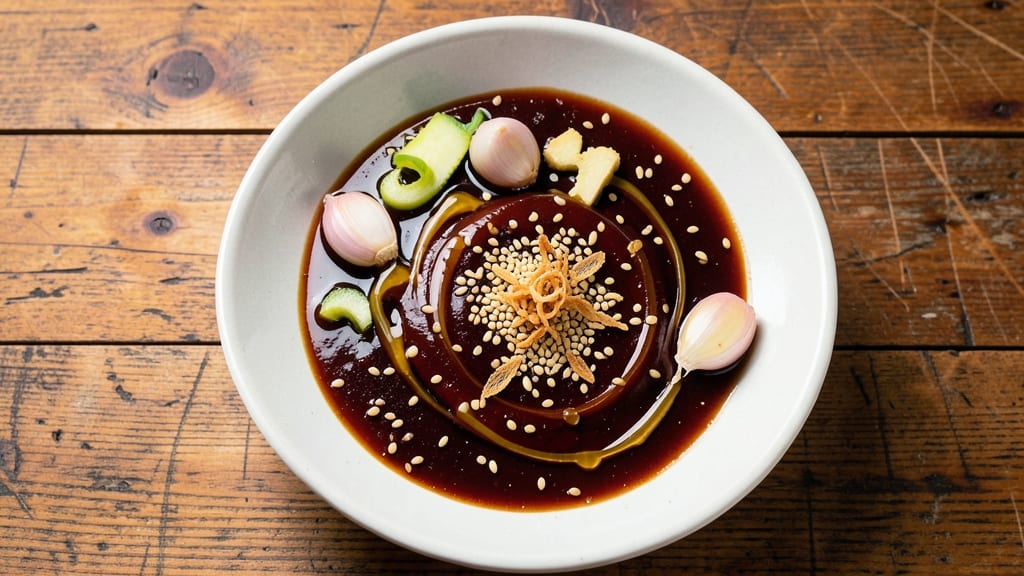
Aloha Poke Samurai Sauce transforms simple ingredients into a complex, umami-packed condiment that elevates every bite of fresh poke bowls. This recipe delivers a perfect balance of salty, sweet, and spicy flavors with just 8 ingredients and 10 minutes of prep time. The secret lies in toasting sesame seeds for nutty depth and combining them with fermented soy sauce for authentic umami richness.
What sets this sauce apart is its layered complexity—garlic and ginger provide aromatic warmth, while a touch of honey balances the saltiness. The optional sriracha or chili flakes let you control the heat, making it versatile for any bowl.
This sauce isn't just for poke; it's a game-changer for grilled fish, noodles, or even drizzled over avocado toast.
The process is straightforward: whisk all ingredients together until smooth, then let it sit for 15 minutes to allow flavors to meld. The result is a glossy, aromatic sauce with a perfect balance of sweet, salty, and spicy notes that clings beautifully to rice, fish, and vegetables.
Its bold flavor profile makes it a standout condiment that will become a staple in your kitchen.
Store it in an airtight container in the refrigerator for up to 2 weeks, where the flavors continue to deepen over time. This sauce is the perfect way to add restaurant-quality depth to your dishes with minimal effort. Let's get started!
Ingredients for aloha poke samurai sauce
Eight bold flavors come together for this restaurant-quality poke sauce.
| Ingredient | Amount | Notes |
|---|---|---|
| Fermented Soy Sauce 🍶 | ½ cup | Japanese tamari for gluten-free option |
| Sesame Oil 🫒 | 2 tbsp | Toasted for nutty aroma |
| Toasted Sesame Seeds 🌾 | 2 tbsp | Lightly browned in dry pan |
| Fresh Garlic Cloves 🧄 | 4 cloves | Minced for aromatic punch |
| Fresh Ginger 🌿 | 1 tbsp | Grated, not powdered |
| Honey 🍯 | 1 tbsp | Wildflower preferred |
| Sriracha or Chili Flakes 🌶️ | 1 tbsp | Adjust for heat preference |
| Rice Vinegar 🍶 | 1 tbsp | Seasoned preferred |
The fermented soy sauce is your umami powerhouse—Kikkoman or Yamasa are my go-tos, but any Japanese tamari works too. Toast those sesame seeds in a dry pan until they smell nutty (about 2 minutes)—don't burn them. Fresh garlic and ginger are non-negotiable here; powdered versions just won't cut it. For the sesame oil, Kadoya or La Tourangelle brands have the best toasted flavor. Pro tip: Toast the seeds while you're mincing the garlic and ginger—the kitchen will smell amazing.
No sriracha? Red pepper flakes at half the amount work in a pinch, but you'll lose some of that tangy heat. Want to make it gluten-free? Swap the soy sauce for tamari. Short on honey? Maple syrup works 1:1. The rice vinegar adds brightness—if you've only got white vinegar, reduce to 1 teaspoon and add a pinch of sugar. For extra depth, a splash of mirin (1 teaspoon) takes this sauce to the next level. And if you're feeling fancy, add a pinch of white pepper for that authentic poke bowl kick.
This sauce gets better with time—15 minutes minimum before serving lets flavors meld. Store it in a small glass jar in the fridge for up to 2 weeks, where it'll keep developing that rich, complex flavor. I like to make a double batch—one for poke bowls, one to drizzle over grilled salmon or avocado toast. The sesame seeds will separate slightly, so give it a quick whisk before using. Freezes beautifully for 3 months if you want to prep ahead.
Why You'll Love This Recipe
- Pantry Magic: I swear by this sauce—no specialty shopping, just what’s already lurking in my cupboard. Fermented soy sauce and sesame oil? That’s my umami dream team, and the toasted seeds add crunch without extra effort.
- Garlic-Ginger Punch: Between us, that fresh garlic and ginger combo is chef’s kiss—bright, zesty, and just sharp enough to cut through anything. One whiff of the sizzling garlic in the pan, and I’m already licking the spoon.
- Meal Prep MVP: This sauce keeps like a champ in the fridge for a solid week, and it’s the secret weapon for turning boring rice bowls or grilled fish into a full-on flavor party. Honestly, I make a big batch Sunday night so I’m not scrambling midweek.
- Budget Flex: I’m not kidding—this costs next to nothing to make, but it feels like a fancy restaurant drizzle. A little goes a long way, and the leftovers? Perfect for reviving takeout or dressing up a sad salad.
Step-by-step instructions for aloha poke samurai sauce
This bold sauce delivers the perfect balance of umami, sweetness, and heat—easy to make and impossible to resist.
Toast the Sesame Seeds for Nutty Depth
Heat a dry skillet over medium heat and add the 2 tablespoons toasted sesame seeds. Stir constantly for 1-2 minutes until they turn a rich golden brown and release their nutty aroma. Watch closely—they burn quickly! Transfer immediately to a small bowl and let cool while you prepare the rest.
This step is non-negotiable. Toasting enhances the sesame flavor dramatically—raw seeds won't give you that same satisfying crunch and aroma. Keep them nearby; you'll add them at the very end for maximum impact.
Bloom the Garlic and Ginger in Sesame Oil
In a small saucepan, combine the 2 tablespoons sesame oil, 4 minced fresh garlic cloves, and 1 tablespoon grated fresh ginger. Heat over low heat for 2-3 minutes, stirring constantly, until the garlic turns a pale golden color and the mixture smells irresistibly aromatic. Remove from heat immediately—you want the garlic to perfume the oil, not burn.
Here's the thing—low heat is crucial. Garlic burns in seconds, and that bitter flavor will ruin your sauce. If it starts to darken, remove the pan from heat and let it cool before continuing. This aromatic base forms the flavor foundation of your sauce.
Combine Wet Ingredients for Perfect Balance
In a bowl, whisk together the 0.5 cup fermented soy sauce, 1 tablespoon honey, 1 tablespoon rice vinegar, and 1 tablespoon sriracha or chili flakes. Add the garlic-ginger oil mixture and stir well. Taste and adjust—this is where you can tweak the balance. Need more heat? Add a pinch more chili flakes. Want it sweeter? Add a touch of honey.
This sauce is all about harmony. The soy sauce provides umami depth, the honey balances with subtle sweetness, and the vinegar brightens everything up. The sriracha adds that signature kick that makes this sauce so addictive. Trust your palate—this is where you make it your own.
Finish with Toasted Sesame Seeds
Let the sauce cool slightly (about 5 minutes), then stir in the toasted sesame seeds. The seeds should be evenly distributed throughout—this gives you that perfect textural contrast in every bite. For the smoothest sauce, press a fine-mesh strainer over a bowl and gently strain the mixture, reserving the seeds for garnish if you prefer a silky texture.
This sauce tastes even better after it's had time to meld. I like to make it a day ahead—it develops deeper flavors as it sits. Store it in an airtight container in the refrigerator for up to 5 days, or freeze for up to 3 months. When ready to use, give it a good stir to redistribute the sesame seeds.
Pro Tips For Making Aloha Poke Samurai Sauce
- TOAST SESAME SEEDS LOW: I learned this the hard way—blasting sesame seeds in a dry pan turns them bitter fast. Instead, toast them in a cold pan over medium-low heat, stirring constantly, until they’re just golden (about 3-4 minutes). Watch them like a hawk; they’ll darken in seconds.
- MINCE GINGER FINE: Skip the grater and use a sharp knife—julienne the ginger into matchsticks, then finely chop them into a paste. This releases more flavor than pre-shredded ginger (which gets watery) and blends smoother into the sauce. No food processor? A mortar and pestle works, but your arms will thank you for a small bowl.
- COOL GARLIC BEFORE MINCING: Cold garlic cloves hold their shape better and don’t bleed oil into the sauce. Pop them in the freezer for 10 minutes before chopping, then mince them into a fine paste. This keeps the sauce from turning greasy and ensures every bite has bright, sharp garlic flavor—not a dull, mushy aftertaste.
- STIR IN SESAME OIL LAST: Add sesame oil at the very end, right before tossing with your poke. Heat destroys its delicate aroma, so let the sauce cool slightly first if it’s simmering. A splash (1-2 teaspoons) is enough—too much overpowers the fermented soy’s depth. Taste as you go; you can always add more, but you can’t take it out.
Essential equipment for this dish
Whisking Essentials
You'll need a small mixing bowl (I use a 4-ounce glass bowl from Pyrex) for combining ingredients. A fine-mesh whisk (like the OXO Good Grips brand) ensures smooth emulsification—no lumps here! For the garlic-ginger oil blooming, a small saucepan with a light-colored interior (to monitor color changes) works best. 🔥
Toasting Tools
A non-stick skillet (I prefer Calphalon) is ideal for toasting sesame seeds—it heats evenly and prevents burning. Keep a small metal spoon nearby for stirring constantly. For straining (if you prefer a smoother sauce), a fine-mesh strainer (like Heston Blumenthal's) works perfectly.
Pro tip: Use a spoon to press seeds through for maximum efficiency.
Heat Control
Your stovetop needs precise temperature control—I recommend an induction burner for instant adjustments. A digital kitchen thermometer (like Thermoworks Thermapen) helps monitor sesame oil temperature (keep it below 300°F to avoid burning). For the garlic-ginger blooming, low heat is critical—never exceed medium-low.
Storage Containers
Transfer the sauce to a small glass jar (like Le Parfait) for fridge storage—glass preserves flavor better than plastic. For freezing, use silicone ice cube trays (I love OXO's) to portion single-serving amounts.
Label with the date—this sauce keeps for 2 weeks refrigerated or 3 months frozen. 💫
Optional Extras
Want to take it pro? A mortar and pestle (like KitchenAid's) lets you grind toasted sesame seeds into a paste for extra texture. For heat adjustments, keep sriracha and chili flakes in separate small jars with spoons for easy access.
A fine-mesh sieve helps sift seeds evenly if you prefer a smoother sauce.
Nutrition facts
Frequently asked questions about aloha poke samurai sauce
Can I make this sauce gluten-free?
Simply swap the fermented soy sauce for a gluten-free tamari—it provides the same umami depth without the gluten. The rest of the recipe stays exactly the same, and you won't sacrifice any flavor. Tamari is especially great if you're sensitive to gluten or making this for someone with dietary restrictions.
How spicy should the sauce be?
The recipe starts with 1 tablespoon sriracha, which gives a mild to moderate kick. For less heat, reduce to ½ tablespoon or ½ teaspoon chili flakes. If you love spice, add up to 2 tablespoons sriracha. Pro tip: Taste as you go—you can always adjust with more chili flakes or a dash of hot sauce later.
Can I substitute honey with another sweetener?
Yes! Use maple syrup or agave nectar (1:1 ratio) for a similar sweetness. For a deeper caramel note, try date syrup. If you're watching sugar, monk fruit sweetener works but may slightly alter the sauce's texture. The key is balancing the sauce's bold flavors—start with less sweetener and adjust to taste.
Why does my sauce look separated?
This is normal! The sesame oil and seeds are lighter than the soy sauce base, so they naturally separate. Before using, give it a good whisk or stir to re-emulsify. For a smoother texture, strain through a fine-mesh sieve and reserve the seeds for garnish. The flavor won't be affected—it's just about presentation.
What’s the best way to use leftover sauce?
This versatile sauce elevates more than just poke bowls! Drizzle it over grilled fish, noodles, or avocado toast. Use it as a marinade for tofu or shrimp, or mix it into salad dressings. Even a spoonful in ramen broth adds instant umami depth. Store leftovers in an airtight container for up to 2 weeks in the fridge.