
Sauces & Condiments
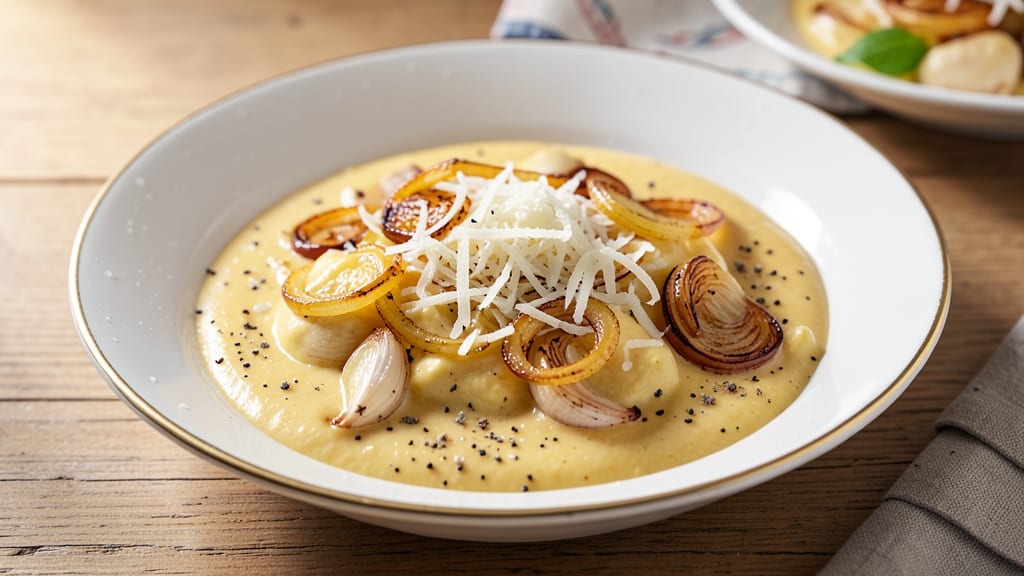
This alfredo sauce recipe with onion delivers velvety, restaurant-quality creaminess without a single clump—thanks to a simple but crucial technique I perfected after years of trial and error. 💛 The secret lies in properly blooming the onions and incorporating the cheese gradually, ensuring a smooth, rich sauce every time.
No lumps, no graininess, just pure, comforting alfredo that clings perfectly to pasta.
What sets this recipe apart is the balance of sweet caramelized onions, rich butter, and sharp Parmesan, all simmered in heavy cream until velvety. The sauce builds flavor gradually, with garlic and nutmeg adding depth without overpowering.
Unlike many recipes, this one avoids instant clumping by whisking continuously and using proper thickening methods—no roux required.
The result is a sauce so luxurious it feels like a special occasion, yet it comes together in just 15 minutes with simple pantry staples. The onions caramelize beautifully, adding natural sweetness that rounds out the richness, while the Parmesan delivers that signature cheesy depth.
This is the kind of sauce that transforms ordinary pasta into something truly indulgent.
Optional additions like white wine or a splash of lemon juice can elevate it further, but the base recipe stands strong on its own. Whether you're serving it over fettuccine or using it as a creamy coating for chicken, this alfredo sauce delivers professional-quality results at home.
Let's make it—your taste buds will thank you.
Ingredients for alfredo sauce recipe with onion
Eight essential ingredients transform into velvety alfredo with caramelized onion depth and professional smoothness.
| Ingredient | Amount | Notes |
|---|---|---|
| Yellow Onions 🧅 | 1 whole | Thinly sliced, caramelized thoroughly |
| Unsalted Butter 🧈 | ½ cup | Cold, cubed for even melting |
| Heavy Cream 🥛 | 2 cups | Full-fat for maximum richness |
| Parmesan Cheese 🧀 | 1 ½ cups | Freshly grated from block |
| Garlic Cloves 🧄 | 3 cloves | Minced finely for smooth texture |
| Ground Nutmeg 🌿 | ¼ tsp | Freshly grated for optimal flavor |
| Diamond Crystal Kosher Salt 🧂 | ½ tsp | Adjust to taste after blending |
| White Wine (optional) 🍷 | ¼ cup | Dry variety for subtle acidity |
The onions are the foundation—yellow onions caramelize beautifully, adding natural sweetness that balances the richness. Trader Joe's and Whole Foods carry excellent quality, but any sweet onion works. For optimal flavor, cook them low and slow until deep golden brown, about 15-20 minutes. The butter should be cold and cubed when added to prevent immediate melting, which helps create a silky emulsion. Parmesan matters here—Parmigiano-Reggiano from a block, freshly grated, delivers the best umami depth. Pre-grated cheese contains anti-caking agents that create lumps, so avoid it at all costs.
No heavy cream? Full-fat coconut milk works as a dairy-free alternative, though the texture will differ slightly. Substitute the white wine with an extra splash of pasta water or lemon juice for acidity. The nutmeg is non-negotiable for that classic alfredo warmth, but if you're out, a pinch of cinnamon adds a similar depth. For a richer sauce, add an extra 2 tbsp of butter at the end. The kosher salt should be added gradually—taste as you go, as the sauce builds flavor differently each time. If you're making this ahead, avoid adding the cheese until reheating to prevent separation.
This sauce keeps beautifully in the fridge for 4-5 days, sealed in an airtight container with a thin layer of heavy cream on top to preserve freshness. For longer storage, freeze in ice cube trays—perfect for adding to pasta later. Reheat gently over low heat, whisking continuously to restore its velvety texture. Leftovers can be frozen for up to 3 months, though the texture may slightly break down. Always reheat slowly to maintain creaminess, never microwaving directly from frozen.
Why You'll Love This Recipe
- Five-Ingredient Magic: I swear, this sauce comes together with just butter, onions, cream, garlic, and cheese—no fancy gadgets or hidden steps. The onions caramelize while you chop, and by the time the garlic hits, you’re basically done.
- Creamy Garlic Hug: That first spoonful of rich, velvety sauce with sharp Parmesan and fragrant garlic? It’s the kind of flavor that makes you pause mid-bite. Honestly, I’ve tried store-bought, but this is the real deal—homemade depth you can’t beat.
- Weeknight to Dinner Party: Slap it on fettuccine for a 20-minute weeknight meal, or drizzle it over grilled chicken for a fancy-ish dinner. Between us, it’s my go-to for when I need something impressive without the stress.
- Leftovers That Don’t Let You Down: Make a double batch—it reheats like a dream (just add a splash of milk if it gets too thick). My freezer’s stocked with this stuff because it’s cheap to make and always disappears fast.
Step-by-step instructions for onion-infused alfredo sauce
Master this velvety sauce where caramelized onions deepen flavor without clumps.
🍳 Step 1: Caramelize the Onions Slowly
Heat a heavy-bottomed saucepan over medium-low heat and add the ½ cup unsalted butter. Let it melt completely, then add the 1 whole yellow onion sliced thinly. Cook for 20-25 minutes, stirring occasionally, until the onions become deep golden brown and sweet-smelling.
Here's the thing—patience is key. If you rush this step, the onions will burn instead of caramelize. You're looking for a rich, jammy texture where the onions lose their raw bite and develop complex sweetness. If the butter starts to brown too quickly, reduce the heat slightly to maintain gentle cooking.
🔥 Step 2: Add Garlic and Wine (If Using)
Once the onions are perfectly caramelized, stir in the 3 cloves minced garlic and cook for 30 seconds until fragrant. Add the ¼ cup white wine (if using) and let it simmer for 2-3 minutes until mostly evaporated. This deglazing step removes any raw garlic flavor and adds subtle acidity.
Don't skip the wine reduction—it's what prevents the sauce from becoming too heavy. The alcohol burns off completely, leaving just the delicate wine flavor. If you're not using wine, simply omit this step and proceed directly to adding the cream.
🥘 Step 3: Build the Cream Base
Pour in the 2 cups heavy cream and bring the mixture to a gentle simmer over medium heat. Let it cook for 5-7 minutes until slightly thickened but still pourable. This slow cooking process prevents curdling and ensures a silky texture.
Watch the sauce carefully—it should bubble gently but not boil vigorously. If it starts to separate or curdle, immediately reduce the heat and stir continuously until it smooths out. The cream should coat the back of a spoon without being overly thick.
👨🍳 Step 4: Incorporate Cheese and Seasonings
Remove the saucepan from heat and gradually whisk in the 1½ cups freshly grated Parmesan cheese until fully melted and smooth. Return to low heat and stir in the ½ tsp diamond crystal kosher salt and ¼ tsp ground nutmeg. Cook for just 1-2 minutes to blend the flavors without overheating.
This is where the magic happens—the cheese should melt completely into the sauce, creating that signature creamy texture. If you notice any lumps forming, immediately remove from heat and whisk vigorously to dissolve. The nutmeg adds a warm, aromatic depth that complements the sweet onions beautifully.
⏰ Step 5: Strain and Finish
For an ultra-smooth sauce, strain through a fine-mesh sieve into a clean saucepan. Return to low heat and simmer gently for 3-5 minutes to reach your desired consistency. The sauce should coat the back of a spoon but still be pourable enough to coat pasta perfectly.
Taste and adjust seasoning if needed—you might want to add a pinch more salt or a dash of pepper to balance the flavors. This sauce is best used immediately, but it will keep in the refrigerator for up to 3 days if stored in an airtight container. Reheat gently over low heat, stirring frequently to prevent separation.
Pro Tips For Making Alfredo Sauce Recipe With Onion
- Sweat, Don’t Burn the Onions: I learned this the hard way—low and slow is the only way with onions. If they turn golden-brown too fast, you’ll taste bitterness. Keep heat at a steady simmer (around medium-low) and stir every 30 seconds. Yes, even if you’re impatient like me.
- Use Cold Cream, Warm Butter: Dump heavy cream straight from the fridge into warm butter—it tempers the heat and prevents curdling. I was skeptical until I tried it: the sauce stays silky instead of breaking. No more lumpy Alfredo disasters.
- Skip the Raw Garlic: Sauté minced garlic in butter until it’s just fragrant, not browned. Raw garlic adds a harsh bite that fights the cream’s richness. A quick 30-second cook softens it perfectly—your taste buds will notice.
- Grill the Parmesan: Toast grated Parmesan in a dry pan for 30 seconds until it smells nutty. It deepens the flavor without overpowering. I skip this when I’m lazy, but the dish is noticeably better when I don’t. (Your future self will thank you.)
Pro cooking tips for great alfredo sauce recipe with onion
Low-Heat Caramelization
Your onions need gentle, consistent heat to caramelize properly—never rush this step! I use a heavy-bottomed saucepan (like All-Clad) to prevent hot spots. Start with medium-low heat and maintain it throughout the 20-25 minutes of cooking.
The butter should bubble softly, not brown aggressively. If it does, immediately reduce heat to low—burnt butter ruins the sauce’s delicate flavor. 🔥
Wine Deglazing Secret
Adding ¼ cup white wine after caramelizing isn’t just for flavor—it’s a science move. The alcohol helps break down any fond (browned bits) stuck to the pan, lifting their rich flavors into the sauce.
Let it simmer until fully evaporated (about 2-3 minutes), but never boil dry. If you’re skipping wine, use pasta water instead for acidity balance.
Cream Temperature Control
Heavy cream is finicky—never boil it or it’ll curdle. Bring it to a gentle simmer (small bubbles at edges) over medium heat, then reduce to low immediately. Stir constantly with a wooden spoon (metal can scratch the pan).
If it starts separating, lower heat instantly and whisk vigorously until smooth. A thermometer helps—I aim for 180°F max.
Cheese Whisking Technique
Parmesan is your sauce’s backbone, but adding it too fast causes lumps. Remove the pan from heat, then whisk in ¼ cup cheese at a time until fully melted. Return to low heat only long enough to blend flavors—1-2 minutes max.
For extra silkiness, strain through a fine-mesh sieve lined with cheesecloth. This removes any stray bits for a restaurant-quality finish.
Nutmeg’s Role
That ¼ tsp ground nutmeg isn’t just flavoring—it’s a textural enhancer. Freshly grated nutmeg (from Penzeys Spices) adds warmth and prevents the sauce from tasting flat.
If you’re out, cinnamon works in a pinch, but nutmeg’s earthy depth is irreplaceable. Add it last so its aroma shines without competing with the caramelized onions.
Reheating Like a Pro
Never microwave Alfredo—it turns grainy and watery. Instead, reheat over low heat in a stainless steel saucepan, stirring every 30 seconds with a silicon spatula. Add 1-2 tbsp heavy cream if it thickens too much.
For frozen sauce, thaw in the fridge overnight, then reheat gently. This preserves the velvety emulsion that makes the sauce sing. ✨
Nutrition facts
Frequently asked questions
Why does my onion-infused Alfredo sauce get grainy?
The most common causes are adding cheese too fast or overheating the cream. Always whisk in Parmesan gradually off the heat, then return to low heat just to blend flavors. For ultra-smooth texture, strain through a fine-mesh sieve after all ingredients are combined. The secret is patience—never let the sauce boil vigorously.
Can I make this sauce without white wine?
Skip the wine and use ¼ cup pasta water instead for acidity balance, or add a splash of lemon juice for brightness. The wine's main purpose is deglazing and adding subtle depth, but it's not essential. For a richer version, replace it with an extra 2 tbsp heavy cream.
How do I prevent the sauce from separating when reheating?
Reheat over low heat only, stirring constantly with a silicone spatula. If it thickens too much, add 1 tbsp heavy cream at a time. Never microwave—it breaks the emulsion. For frozen sauce, thaw in the fridge overnight before reheating gently. A splash of pasta water can help restore creaminess if needed.
What's the best way to store leftover onion Alfredo sauce?
Store in an airtight container in the fridge for up to 4 days, with a thin layer of heavy cream on top to preserve freshness. For longer storage, freeze in ice cube trays—perfect portions for later use. When reheating, always warm gently over low heat, whisking continuously to restore that velvety texture.
Can I substitute heavy cream with something lighter?
For a lighter version, use full-fat coconut milk (though texture will differ) or half-and-half> mixed with 1 tbsp cornstarch> to thicken. The sauce will be less rich but still delicious. For best results, stick with heavy cream—it's what creates that signature creamy, clump-free consistency.