
Sauces & Condiments
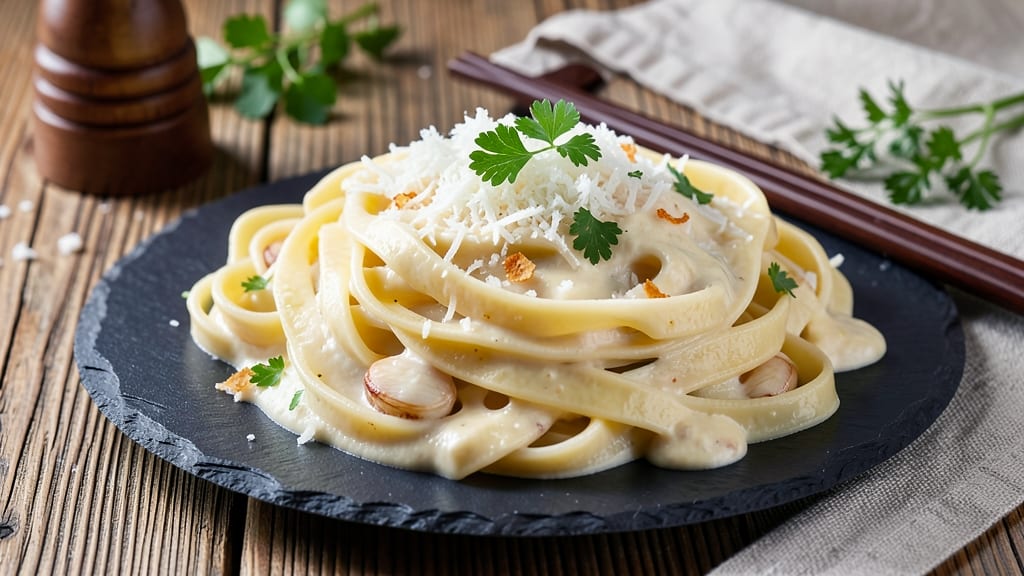
This alfredo sauce recipe for 1 lb pasta delivers the ultra-creamy, velvety texture you crave without the risk of scorched cheese. The secret lies in a foolproof technique that transforms simple ingredients into a rich, restaurant-quality sauce in just 15 minutes.
No heavy cream? No problem—this version uses butter and a touch of milk for a lighter yet equally luxurious result.
The magic happens when you melt butter and flour into a smooth roux before gradually whisking in warm milk and freshly grated parmesan. This gradual process prevents lumps and ensures every strand of pasta gets coated in that creamy, dreamy sauce.
The key is patience—letting the sauce simmer gently so the cheese melts completely without breaking.
What you’ll end up with is a sauce so rich and smooth it clings perfectly to fettuccine, chicken, or roasted vegetables, creating a dish that’s both comforting and elegant.
The best part? It reheats beautifully, making it ideal for meal prep or leftovers. Serve immediately over hot pasta for the ultimate creamy experience.
For extra depth, stir in a clove of minced garlic or a sprinkle of fresh parsley at the end. Store leftovers in an airtight container in the fridge for up to 5 days or freeze for 3 months—perfect for quick weeknight dinners. Let’s make this sauce!
Ingredients for alfredo sauce recipe for 1 lb pasta
Nine essential ingredients transform into velvety perfection over 1 lb pasta—creamy, dreamy, and foolproof.
| Ingredient | Amount | Notes |
|---|---|---|
| Unsalted Butter 🧈 | ¾ cup | Cold, cubed for even melting |
| All-Purpose Flour 🌾 | ¼ cup | Sifted for smooth texture |
| Whole Milk 🥛 | 1 ½ cups | Warmed for seamless blending |
| Parmesan Cheese 🧀 | 1 ½ cups | Freshly grated, fine texture |
| Garlic Cloves 🧄 | 1 whole | Minced for subtle aroma |
| Fresh Parsley 🌿 | ¼ cup | Chopped, for vibrant finish |
| Salt 🧂 | ½ tsp | Diamond Crystal preferred |
| Ground Black Pepper 🌶️ | ¼ tsp | Freshly cracked for depth |
| Nutritional Yeast 🍄 | 1 tbsp | Optional, for umami boost |
The butter and flour are your foundation—European-style butter gives richer flavor, while sifted flour prevents lumps. Grab Parmigiano-Reggiano from the deli counter (pre-grated lacks texture), and warm the milk just until steaming—never boiling. The garlic should be freshly minced, not jarred, for that bright, aromatic punch. Trader Joe's and Whole Foods carry all these staples reliably, but check the Parm's expiration date—it's the most perishable item here.
No whole milk? Half-and-half or light cream works in a pinch, but the sauce will be slightly heavier. Swap Parmesan for Pecorino Romano if you prefer a sharper bite, though it melts differently. Short on garlic? Garlic powder at half the amount adds flavor but lacks complexity. The nutritional yeast is optional but adds a cheesy depth without dairy. For a vegan version, replace butter with vegan butter and milk with unsweetened almond milk—though texture will differ slightly.
This sauce reheats like a dream—just add a splash of milk to loosen. Store in a glass jar with a tight seal for up to 5 days in the fridge, or freeze in ice cube trays for single-serving portions. The Parmesan keeps best in the freezer, so grate extra and freeze in 1-tbsp portions for future sauces. Leftovers taste even better the next day as flavors meld—perfect for meal prep.
Why You'll Love This Recipe
- No-Fuss Stovetop Magic: I swear by this method—just melt butter, toss in flour, and let the milk simmer until it thickens like a dream. No whisking till your arm falls off, no waiting for roux perfection. That first spoonful of sauce? Smooth as silk, every time.
- Garlic-Parmesan Punch: Between us, the secret’s in the garlic—minced fine, cooked just until fragrant, then drowned in that rich, nutty Parmesan. It’s not fancy, but it’s ridiculously good, with that perfect creamy bite that makes you reach for seconds without thinking.
- Weeknight Wonder: Dinner in 30? Done. This sauce works with fettuccine, penne, even roasted chicken—no one’s judging if you serve it straight from the pot. Honestly, I’ve fed this to date nights, lazy Sundays, and my teenager’s "I’m starving" moments. It doesn’t ask for much, but it delivers.
- Leftovers That Lie: The best part? This sauce improves overnight. Thickens just right, flavors meld, and it’s still creamy enough to reheat without turning gluey. I make double batches, freeze half, and thank my past self when I’m too tired to cook. Budget-friendly? More like smart friendly.
Step-by-step instructions for ultra-creamy Alfredo sauce
This method guarantees a velvety, never-scratched sauce that clings perfectly to fettuccine.
Create the Roux Foundation
Melt the 0.75 cup unsalted butter in a heavy-bottomed saucepan over medium heat. I like to use cold, cubed butter so it melts evenly without burning. Once fully melted, reduce heat to medium-low and whisk in the 0.25 cup all-purpose flour immediately. This creates a roux that forms the backbone of our sauce.
Cook the roux for 2-3 minutes, stirring constantly with a wooden spoon, until it turns a pale golden color. You'll see it thicken noticeably—this is crucial for emulsifying the cheese later. If it browns too quickly, reduce heat further. The goal is a smooth, paste-like consistency that coats the back of your spoon.
Gradually Add Warm Milk
Slowly pour in the 1.5 cups warm whole milk while whisking vigorously to prevent lumps. I warm the milk separately to 110°F—just enough to blend seamlessly without scrambling the cheese later. Keep the heat at medium-low and continue whisking for 3-4 minutes until the mixture thickens into a smooth, creamy texture.
This gradual addition prevents sudden temperature spikes that could cause the cheese to separate. You'll notice the sauce transform from a thin liquid to a thick, pourable consistency. If it thickens too quickly, add 1-2 tablespoons of milk to maintain smoothness. The sauce should coat the back of your spoon but still flow easily.
Incorporate Cheese and Aromatics
Reduce heat to low and begin adding the 1.5 cups freshly grated Parmesan cheese in small increments, whisking constantly. The cheese will initially clump, but keep stirring—it will melt into a luxurious cream. Add the 1 whole minced garlic clove and 1 tbsp nutritional yeast (if using) along with the 0.5 tsp salt and 0.25 tsp ground black pepper. The nutritional yeast adds a subtle umami depth that elevates this classic sauce.
Let the mixture simmer gently for 5-7 minutes, stirring frequently, until the cheese is completely melted and the sauce reaches a velvety consistency. You'll smell the rich, nutty aroma of the Parmesan developing—this is your cue that the sauce is coming together. The sauce should be thick enough to coat the back of a spoon but still coat pasta beautifully.
Finish with Fresh Parsley
Remove the sauce from heat and stir in the 0.25 cup chopped fresh parsley. This adds a bright, vibrant finish that cuts through the richness of the cheese. Let the sauce rest for 5 minutes—this allows the flavors to meld and the sauce to thicken slightly. If it becomes too thick, whisk in 1-2 tablespoons of warm milk to reach your desired consistency.
Here's the thing—this sauce is best used immediately, but it can be reheated gently on the stove if needed. The key is to keep it moving constantly to prevent separation. Serve this ultra-creamy Alfredo over 1 lb fettuccine, tossing the pasta in the sauce until every strand is beautifully coated. The result? A restaurant-quality sauce that's foolproof and delicious every time.
Pro Tips For Making Alfredo Sauce Recipe For 1 Lb Pasta
- Melt Butter Slowly: I learned this the hard way—dumping cold butter into the pan and ending up with greasy, clumpy sauce. Instead, cut your 8 tablespoons of unsalted butter into small cubes and let them melt gradually over medium-low heat. This keeps the butter from shocking the flour and creates a smoother roux every time.
- Toast the Flour: Skip the pale roux, and cook the flour in butter until it turns a very light golden color—about 2-3 minutes. This deepens the flavor and prevents that raw, floury taste that ruins so many homemade Alfredo sauces. (Yes, even if you’re impatient like me.)
- Strain the Parmesan: Grate your own Parmesan and strain it through a fine-mesh sieve to remove those gritty bits—trust me, they’re the reason your sauce tastes like sandpaper. Or, if you’re short on time, buy pre-grated Parmesan labeled “freshly grated” and skip this step, but don’t use the powdered kind.
- Warm the Milk First: Heat the whole milk in a separate saucepan until it’s just steaming (not boiling) before adding it to the roux. Cold milk shocks the sauce and can cause lumps, while warm milk blends in silky smooth. (Pro move: Keep a splash of milk warm in a small pot while you finish cooking the roux.)
Essential equipment for this dish
Heavy-Bottomed Saucepan
Start with a 3-quart heavy-bottomed saucepan—I swear by All-Clad Stainless Steel or Le Creuset Dutch oven for even heat distribution. These prevent hot spots that can scorch your roux or burn the delicate cheese.
A lighter pan will cause temperature fluctuations, leading to lumps or graininess. If you're on a budget, a Calphalon stainless steel pan works perfectly too. 🔥
Whisk for Smoothness
A balloon whisk is non-negotiable for this recipe. The OXO Good Grips brand is my go-to because it handles the dense roux and cheese beautifully without splattering. Avoid wire whisks—they break too easily under the stress of constant stirring.
For an extra touch of luxury, a silicon-coated whisk prevents sauce from sticking to the wires during the milk incorporation phase.
Fine-Mesh Grater
Freshly grated Parmigiano-Reggiano makes all the difference, so invest in a Microplane or Box Grater with fine holes. Pre-grated cheese contains anti-caking agents that prevent smooth melting. I like the KitchenAid Classic Grater for its durability—it handles the job without clogging.
Store-bought grated cheese will give you a grainy, clumpy sauce that lacks that velvety texture. 🧀
Thermometer for Precision
While not strictly necessary, a kitchen thermometer ensures your milk reaches the perfect temperature of 110°F before adding it to the roux. I use the Thermoworks Thermapen ONE—it’s fast and accurate.
Warm milk blends seamlessly with the roux, preventing cheese separation. If you don’t have one, test the milk with your finger—it should feel warm but not hot enough to burn you.
Wooden Spoon for Stirring
A heat-resistant wooden spoon is essential for stirring the roux and preventing scorching. I prefer olive wood spoons—they’re gentle on non-stick surfaces and durable. Avoid metal utensils during the roux phase, as they can cause hot spots.
For extra comfort, choose a spoon with a thick handle—your wrist will thank you after constant stirring. A silicon spatula also works well for scraping up any stuck bits from the pan’s edges.
Glass Storage Containers
Store leftovers in glass jars or airtight containers—I love Pyrex with snap-on lids for easy reheating. Glass preserves the sauce’s flavor better than plastic and is microwave-safe. For freezing, use quart-sized freezer-safe containers with 1-inch headspace to prevent expansion cracks.
Label with the date—this sauce keeps for 5 days in the fridge or 3 months in the freezer. 💫
Nutrition facts
Frequently asked questions
Can I make this Alfredo sauce without butter?
You can substitute butter with an equal amount of vegan butter or olive oil, but the flavor will differ. For a lighter option, use 1/4 cup olive oil instead of butter, but reduce the milk to 1 cup to maintain balance. The sauce will be less rich but still creamy. For a dairy-free version, use unsweetened almond milk and nutritional yeast for depth.
Why did my Alfredo sauce turn grainy?
Graininess usually happens when cheese isn't melted properly or milk is added too quickly. Always whisk constantly when adding milk and cheese, and keep heat at low-medium. If it happens, strain the sauce through a fine-mesh sieve to remove lumps. For extra smoothness, add 1 tablespoon of cream cheese to the warm sauce—it helps emulsify.
What's the best pasta shape for Alfredo?
Fettuccine is the classic choice, but tagliatelle or pappardelle work beautifully too. For extra sauce cling, try fregola sarda (Sardinian pasta) or ribbon-shaped pasta. Avoid thick noodles like penne—they hold sauce poorly. The wider the noodle, the more surface area for that creamy coating!
How do I make this sauce thicker or thinner?
For a thicker sauce, simmer uncovered for 2-3 extra minutes to evaporate moisture. Need it thinner? Whisk in 1-2 tablespoons warm milk at a time. Pro tip: Let the sauce rest for 5 minutes after removing from heat—it thickens naturally as it cools. If it separates, whisk vigorously and reheat gently over low heat.
Can I add protein to this sauce?
Toss in 1/2 lb cooked chicken, shrimp, or grilled salmon during the last 2 minutes of cooking. For vegetarian options, stir in sautéed mushrooms or roasted bell peppers. The key is to add proteins after the cheese has fully melted to prevent curdling. Keep heat at low to avoid scrambling.