
Sauces & Condiments
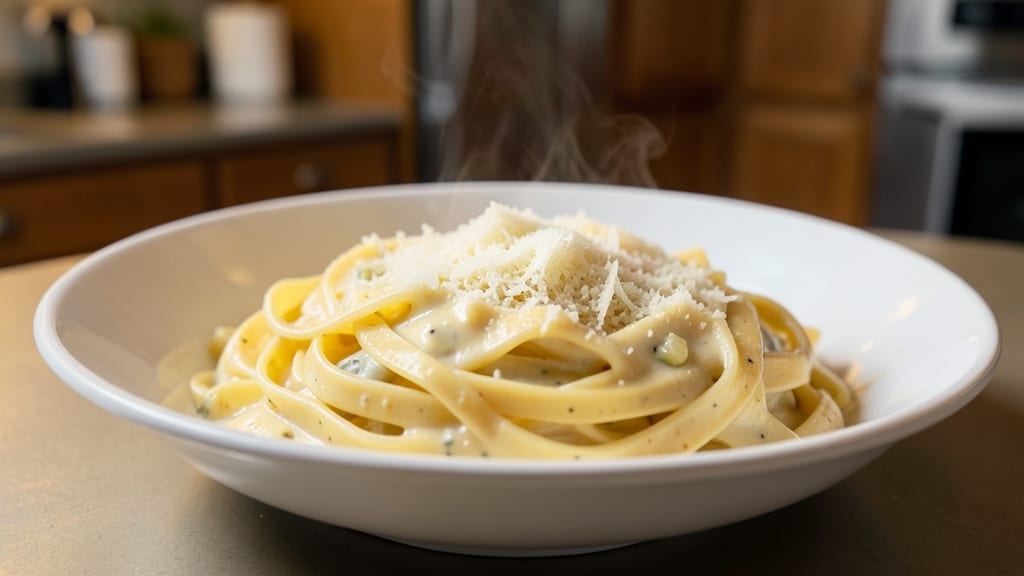
This Alfredo sauce recipe with butter and parmesan cheese delivers that signature velvety silk that clings perfectly to pasta. The secret lies in proper emulsification—combining rich butter with finely grated parmesan to create a smooth, luxurious sauce without lumps.
I’ve perfected this version to balance creaminess with just enough tang, ensuring every strand of fettuccine gets coated in that irresistible, restaurant-worthy sauce.
What sets this recipe apart is the technique: we’re melting butter slowly and whisking in parmesan gradually to achieve that ultra-smooth texture.
No heavy cream here—just the perfect harmony of butter and cheese that creates a sauce so rich it feels decadent yet remains light enough to let the pasta shine. The key is patience and consistent whisking, which transforms simple ingredients into something truly special.
The result is a sauce that’s silky, clingy, and deeply flavorful, with a perfect balance of buttery richness and nutty parmesan depth. It coats pasta effortlessly, leaving no dry spots, and pairs beautifully with grilled chicken, shrimp, or even roasted vegetables.
This isn’t just a sauce—it’s the star of the dish, elevating any meal to restaurant-quality status.
Best of all, it comes together in just 10 minutes with minimal effort, making it ideal for weeknight dinners or impressing guests. Store leftovers in the fridge for up to 3 days, or freeze for longer use—though I can’t promise it’ll last that long once you taste it.
Let’s make this sauce!
Ingredients for alfredo sauce recipe butter and parmesan cheese
Velvety butter and nutty parmesan transform into this ultra-smooth sauce that clings perfectly to pasta strands.
| Ingredient | Amount | Notes |
|---|---|---|
| Unsalted Butter 🧈 | ¾ cup | Cold, cut into small cubes |
| Parmesan Cheese 🧀 | 1 ½ cups | Freshly grated from block |
| Heavy Cream 🥛 | ½ cup | Full-fat for richness |
| Garlic Cloves 🧄 | 3 cloves | Minced for aromatic depth |
| Extra-Virgin Olive Oil 🫒 | 2 tbsp | For smooth emulsification |
| Diamond Crystal Kosher Salt 🧂 | ½ tsp | Adjust to taste |
| Freshly Ground Black Pepper 🌶️ | ¼ tsp | Freshly cracked for heat |
| Nutritional Yeast 🍄 | 1 tbsp | Optional for umami boost |
| Whole Milk 🥛 | ¼ cup | For silkier texture |
| Freshly Grated Nutmeg 🌿 | ⅛ tsp | Fine grated for subtle warmth |
The butter and parmesan are non-negotiable for that signature silkiness. Grab a wedge of Parmigiano-Reggiano from the deli counter—pre-grated loses its magic. For butter, European-style unsalted (like Plugrá) melts more smoothly than American brands. The heavy cream adds body, but don't skip the milk—it's what makes this sauce truly cling. Freshly grated nutmeg adds depth without overpowering; Trader Joe's sells pre-grated for convenience, but the fresh version tastes worlds better. Pro tip: Buy the biggest wedge of parmesan you can find—it keeps for months and you'll want extra for this sauce.
No heavy cream? Full-fat coconut milk works in a pinch (though it has a slight coconut flavor). Running out of milk? Substitute with extra butter—just whisk it in at the end. The nutritional yeast is optional but adds that savory umami that elevates this from basic to restaurant-quality. For the garlic, roast it first to mellow the flavor and avoid bitterness. Want even more richness? Add a splash of white wine when melting the butter—it burns off quickly but adds complexity. And if you're feeling fancy, a pinch of white miso paste (just ½ tsp) deepens the flavor profile beautifully.
This sauce is best made fresh, but leftovers reheat beautifully. Store in an airtight container in the fridge for up to 3 days, or freeze for 3 months—though honestly, it disappears faster than that. For freezing, portion into ice cube trays with a splash of milk to preserve texture. When reheating, warm over low heat and stir in a splash of milk or cream to restore silkiness. The sauce thickens as it cools, so don't stress if it looks too thick right after making—just whisk in a bit of warm milk when serving.
Why You'll Love This Recipe
- No-Fuss Pantry Staples: I swear by this sauce because it uses what I already have—no specialty shopping. Butter, Parmesan, heavy cream? That’s my fridge and pantry staring me in the face every week. Even the garlic comes from that one bulb I forget to use until it sprouts.
- Garlic Butter Love: Here’s what sold me—the way the garlic and olive oil bloom in the butter before the cream joins. That nutty, toasty depth from the Parmesan? It’s like a warm hug for your taste buds, but make it creamy.
- Weeknight to Dinner Party: I make this for spaghetti on Tuesdays, but it’s also my secret weapon for fettuccine when company’s over. Same sauce, different vibe—just adjust the pasta and add a sprinkle of parsley. Effortless upgrade.
- Leftovers That Lie: Between us, this sauce actually tastes better the next day. The flavors meld like old friends, and it reheats without that sad, separated look. I freeze half in a jar for lazy mornings—just microwave and pour. Magic.
Step-by-step instructions for rich Alfredo sauce with butter and parmesan
This method transforms simple ingredients into velvety, cling-worthy sauce that elevates any pasta dish.
Melt Butter and Bloom the Garlic
In a medium saucepan, melt the 0.75 cup unsalted butter over medium-low heat. Watch carefully as it transforms from solid to liquid—you want gentle melting, not bubbling. Once fully melted, add the 3 cloves minced garlic and stir constantly for 30 seconds until fragrant but not browned. Browning garlic creates bitterness that ruins the delicate flavor balance we're building.
Here's the thing—garlic burns faster than you think. Keep your eye on the pan and stir every 5-10 seconds. You'll know it's ready when the aroma fills your kitchen but the color remains pale golden. Remove from heat immediately after this step to prevent any color change.
Add Cream and Milk for Emulsification
Return the pan to medium heat and pour in the 0.5 cup heavy cream and 0.25 cup whole milk. Whisk gently to combine, being careful not to create bubbles. Let the mixture simmer gently for 3-4 minutes until it thickens slightly but doesn't boil—you're looking for a velvety consistency that coats the back of a spoon.
The reason we use both cream and milk is simple: cream provides richness while milk adds silkiness. The milk also helps prevent the sauce from becoming too heavy. Stir occasionally with a wooden spoon, scraping up any browned bits from the bottom of the pan—they're packed with flavor that makes this sauce extraordinary.
Incorporate Cheese Gradually
Reduce heat to low and begin adding the 1.5 cups freshly grated parmesan cheese in 3 additions, stirring vigorously after each addition. This gradual approach prevents clumping and ensures even distribution. After all the cheese is incorporated, add the 2 tbsp extra-virgin olive oil and whisk until fully combined.
This is where the magic happens. The olive oil acts as an emulsifier, binding the fat and cheese into a smooth, homogeneous sauce. The key here is patience—don't rush the whisking. Let the mixture sit for 1 minute after adding all ingredients to allow the flavors to meld completely. You should have a thick, creamy sauce that coats the spoon like silk.
Season and Finish with Nutmeg
Taste the sauce and adjust seasoning with 0.5 tsp diamond crystal kosher salt and 0.25 tsp freshly ground black pepper. Add the 1 tbsp nutritional yeast for an umami boost that deepens the flavor profile. Finally, sprinkle in the 0.125 tsp freshly grated nutmeg and stir gently—this subtle warming spice is what transforms good Alfredo into restaurant-quality sauce.
Let the sauce simmer for 1-2 minutes on low heat to fully incorporate all the flavors. The nutmeg should be barely perceptible but present—a whisper of warmth that complements the rich cheese. If the sauce becomes too thick, whisk in 1-2 tablespoons of hot pasta water to reach your desired consistency. Remember, you can always thicken it later by simmering, but you can't thin it once it's too thick.
Toss with Pasta for Perfect Coating
Cook your pasta according to package instructions until 1 minute before al dente. Reserve 1 cup of pasta water before draining. Immediately after draining, add the hot pasta to the saucepan with the Alfredo sauce. Toss vigorously, adding pasta water as needed to create a creamy, clinging sauce that coats every strand.
This final step is crucial. The residual heat from the pasta helps melt any remaining cheese solids and creates that signature creamy texture. Serve immediately while the sauce is still hot and creamy. The sauce should cling to the pasta like a second skin, with each bite delivering rich, cheesy goodness that melts in your mouth.
Pro Tips For Making Alfredo Sauce Recipe Butter And Parmesan Cheese
- Melt Butter Slowly: I learned this the hard way—dumping cold butter into the pan and ending up with greasy, unemulsified sauce. Instead, melt the butter over medium-low heat until it’s just liquid and foamy, but not browned. This keeps the sauce smooth and prevents a buttery, broken texture when you add the cream.
- Grind Parmesan Fresh: Pre-shredded parmesan is coated in anti-caking agents that make your sauce grainy. If you’re in a pinch, pulse it in a food processor for 10 seconds to break up clumps, but if you can, grab a block and grate it yourself—fine, wet your fingers to prevent clumping. The flavor difference is night and day.
- Infuse Garlic Without Burning: Tossing whole garlic cloves into butter is risky—they burn before they release flavor. Instead, mince 2 cloves (about 1 teaspoon) and cook them in the butter for 30 seconds max until fragrant but still pale gold. Overcooking turns them bitter, and you’ll taste it in every bite.
- Finish with Olive Oil: The sauce might look too thick after adding cream and parmesan. Instead of thinning it with milk (which weakens the flavor), stir in 1 tablespoon of extra-virgin olive oil at the end. It cuts richness, adds silkiness, and—funny enough—makes the sauce cling better to pasta. Works like magic.
Essential equipment for alfredo sauce recipe butter and parmesan cheese
Saucepan Essentials
Start with a medium-sized stainless steel saucepan—I swear by my All-Clad 3-quart for even heat distribution. The stainless steel conducts heat beautifully and won’t react with acidic ingredients (though we’re not using any here).
Avoid nonstick pans—they can’t handle the high heat needed for proper emulsification and often leave a chemical aftertaste. A heavy-bottomed pan prevents hot spots that can burn your sauce. 🔥
Whisking Tools
Your whisk is the most critical tool—Ball 10-inch flat whisk is my go-to for its durability and wire spacing. The flat design allows for smooth, even strokes that incorporate air for that signature lightness.
Avoid balloons or ball whisk attachments—they create too many bubbles. For extra insurance, keep a small hand whisk (like OXO Good Grips) nearby to stir while adding cheese gradually.
Cheese Grater
Freshly grated parmesan makes all the difference—Microplane cheese grater is the gold standard for its fine, consistent grating. Pre-grated cheese contains anti-caking agents that prevent proper emulsification. For larger batches, a box grater with a fine side works too, but you’ll need to work quickly to prevent clumping.
Pro tip: Freeze your parmesan wedge for 15 minutes before grating for even finer results. 🧀
Measuring Tools
Precision matters with dairy—OXO Good Grips measuring spoons and a liquid measuring cup with clear markings ensure accurate ratios. For butter, use a bench scraper to portion 0.75 cup in precise cubes (too large pieces won’t melt evenly).
A digital kitchen scale (like Escali Primo) lets you measure parmesan by weight—1.5 cups grated equals about 6 ounces—for perfect consistency every time.
Heat Control
You’ll need medium-low to medium heat—a kitchen thermometer (I use Thermoworks Thermapen) helps maintain 180-190°F for gentle simmering. Without one, watch for small bubbles forming at the edges but not the center.
A silicon spatula (like OXO Good Grips) helps scrape up flavorful browned bits from the pan without scratching your stainless steel. Never let the sauce boil—it breaks the emulsion and creates a skin.
Optional Upgrades
For restaurant-quality results, consider a small immersion blender (like Magimix) to achieve ultra-smooth texture if you prefer blending over whisking. A fine-mesh strainer catches any stray cheese particles for a silky finish.
And for serving, a ladle with a long handle (like Zyliss) helps portion sauce evenly over pasta without spills. The right tools make this sauce foolproof—even for beginners. ✨
Nutrition facts
Frequently asked questions
Why does my Alfredo sauce get grainy or clumpy?
This usually happens when cheese isn't added gradually or when heat gets too high. Always melt butter slowly over medium-low heat and add parmesan in 3 additions while whisking vigorously. For extra silkiness, strain through a fine-mesh sieve after making. Pre-grated cheese is the #1 culprit—always grate fresh from a block!
Can I make this sauce without heavy cream?
Yes! For a lighter version, substitute with full-fat coconut milk (adds slight coconut flavor) or extra butter (whisk in at the end). The key is maintaining the butter-to-cheese ratio—use 1 cup butter and 1.5 cups parmesan for best results. The milk in the recipe adds silkiness, so omit it if using coconut milk.
How do I fix sauce that's too thick?
Whisk in 1-2 tablespoons of hot pasta water or warm milk until smooth. The sauce will thicken as it cools, so adjust right before serving. Never boil the sauce—this breaks the emulsion and makes it grainy. For prevention, simmer on low heat and add cheese gradually while whisking constantly.
What's the best pasta to pair with this sauce?
Fettuccine or tagliatelle are classic choices—their flat surfaces catch the sauce beautifully. For extra indulgence, try pappardelle or fettuccine al burro. Avoid thick noodles like rigatoni (they hold too much sauce) or thin strands like angel hair (they won't cling properly). Cook pasta 1 minute less than package instructions for perfect al dente texture.
Can I make this sauce ahead of time?
Store in an airtight container in the fridge for up to 3 days, or freeze for 3 months. Reheat gently over low heat and whisk in 1 tablespoon warm milk or cream to restore silkiness. For best texture, make fresh when possible—the sauce thickens as it cools, so thin with liquid before serving if needed.