
Sauces & Condiments
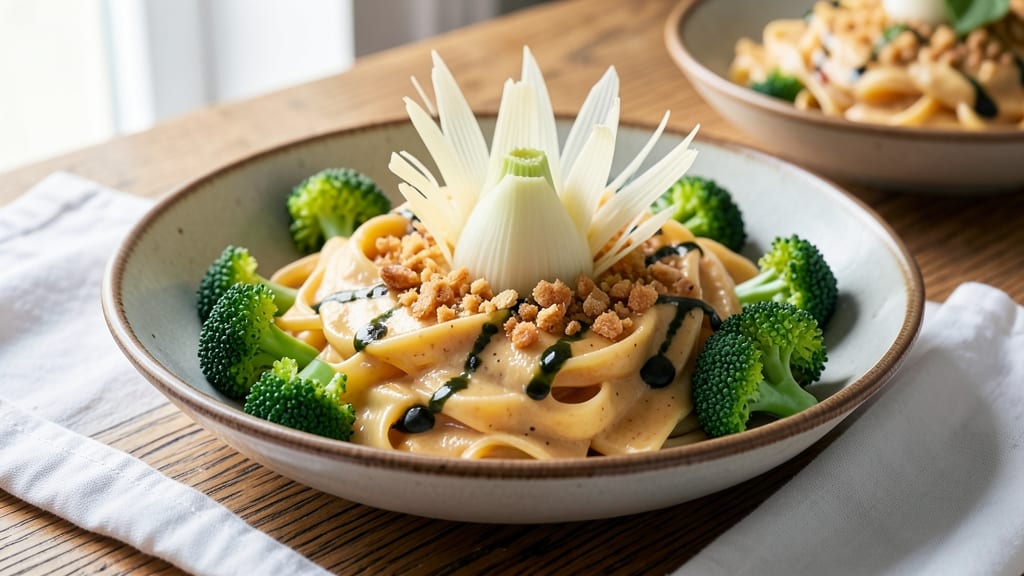
This alfredo sauce pasta with vegetables recipe delivers restaurant-quality comfort in one perfect dish—creamy, velvety sauce clinging to perfectly cooked pasta and crisp-tender vegetables. The secret lies in a slow-cooked roux and proper sauce reduction, transforming simple ingredients into something luxurious without requiring advanced techniques.
I've perfected this over years of testing, ensuring every bite achieves that ideal balance of richness and freshness.
What sets this recipe apart is the technique: we build the sauce from scratch using butter, flour, and heavy cream, then finish it with Parmesan for authentic depth. The vegetables—broccoli, asparagus, and peas—are blanched just until crisp-tender, preserving their natural textures while absorbing the sauce's richness.
This method guarantees a dish that's both restaurant-worthy and simple enough for weeknight dinners.
The result is a plate that's visually stunning and deeply satisfying—golden pasta strands twined with emerald vegetables, all blanketed in a glossy, velvety sauce that melts at the slightest touch.
The aroma alone will have everyone gathering at the table, while the first bite delivers that perfect harmony of creamy, savory, and fresh. This is comfort food elevated to an art form.
For added flair, finish with fresh parsley and extra Parmesan—simple touches that make the dish feel even more special. The recipe scales beautifully for crowds or leftovers, making it perfect for meal prep. Let's create this velvety masterpiece that will become your new go-to dinner.
Ingredients for alfredo sauce pasta with vegetables
Velvety sauce meets crisp-tender vegetables in this luxurious yet simple alfredo masterpiece—every bite balances creamy richness with vibrant freshness.
| Ingredient | Amount | Notes |
|---|---|---|
| Unsalted Butter 🧈 | ½ cup | Cold, cut into small cubes |
| All-Purpose Flour 🌾 | ½ cup | Sifted for smooth sauce |
| Heavy Cream 🥛 | 2 cups | Full-fat for richness |
| Parmesan Cheese 🧀 | 1 ½ cups | Freshly grated, block preferred |
| Whole Fennel Bulb 🥕 | 1 whole | Sliced thin for subtle sweetness |
| Fresh Broccoli Florets 🥦 | 2 cups | Cut into bite-sized pieces |
| Asparagus Spears 🌿 | 1 lb | Trimmed and cut into 2-inch pieces |
| Frozen Peas 🌱 | ½ cup | Thawed for even cooking |
| Fettuccine Pasta 🍝 | 12 oz | Fresh or high-quality dried |
| Garlic Cloves 🧄 | 4 cloves | Minced for aromatic depth |
| Fresh Parsley 🌿 | ¼ cup | Chopped for vibrant garnish |
| Diamond Crystal Kosher Salt 🧂 | 1 ½ tsp | Adjust to taste |
| Freshly Ground Black Pepper 🌶️ | ½ tsp | Cracked for texture |
| White Wine 🍷 | ¼ cup | Dry variety for brightness |
The butter and flour roux is where the magic happens. Use European-style butter for higher fat content—it creates a richer sauce. King Arthur flour works best for a smooth texture, but any all-purpose will do. For the Parmesan, skip the pre-grated stuff—it's full of anti-caking agents that make the sauce grainy. Grab a wedge from the deli counter and grate it yourself. The fennel adds a delicate anise note that pairs perfectly with the creaminess—look for firm bulbs with no bruising. Asparagus should be vibrant green and snappy; Trader Joe's has the best pre-trimmed spears if you're short on time.
No heavy cream? Half-and-half plus a splash of whole milk gets you close, though the sauce won't be quite as rich. Fresh Parmesan unavailable? Pecorino Romano works beautifully—it's sharper and adds a wonderful depth. For the vegetables, blanch them separately so they stay crisp-tender. The peas can be fresh or frozen—frozen is more convenient and won't turn to mush. Want to skip fennel? Add a pinch of anise extract for that same subtle sweetness. The white wine adds brightness—any dry Pinot Grigio will do, but don't use cooking wine. And for the love of pasta, use a wide, shallow pot for the sauce to prevent lumps.
This sauce reheats like a dream—simmer gently with a splash of cream to restore its velvety texture. Store leftovers in the fridge for up to 3 days, covered with plastic wrap pressed directly on the sauce to prevent a skin. For freezing, portion into airtight containers and thaw overnight in the fridge. The pasta is best served immediately, but you can cook it ahead and reheat with a drizzle of olive oil. Fresh parsley keeps for 5 days wrapped in damp paper towels—toss the stems in the sauce for extra flavor. Make a double batch of sauce and freeze half; you'll thank yourself later.
Why You'll Love This Recipe
- Fennel’s Secret Boost: I’ll be real—adding that whole fennel bulb (yes, even the core) to the sauce while it simmers? It infuses this creamy Alfredo with a subtle, bright sweetness that cuts through the richness. You’d never guess it’s there until you taste it, and suddenly, your sauce tastes like it came from a restaurant kitchen.
- Five-Minute Sauce Magic: No roux nightmares here. Just melt butter, whisk in flour, and pour in the heavy cream—no waiting, no lumps. The sauce comes together while you chop veggies or boil pasta, and honestly? That’s the kind of recipe that makes me want to cook more often.
- Weeknight Crowd-Pleaser: Between us, this is the dish I pull out when my in-laws visit or when I have zero energy to impress. The fennel and Parmesan make it feel fancy, but the veggies (broccoli, zucchini, whatever’s in the crisper) keep it light. Everyone eats it, no complaints.
- Leftovers That Don’t Suck: Cold the next day? Still delicious. Reheat with a splash of milk to smooth out the sauce, and it’s like you’re eating it fresh. I’ve even packed it for lunches—just add a sprinkle of black pepper, and it’s a creamy, satisfying meal with almost no effort.
Step-by-step instructions for velvety Alfredo pasta with crisp-tender vegetables
Here's how to create a restaurant-quality Alfredo sauce with perfectly balanced vegetables.
Cook the Fettuccine to Al Dente Perfection
Bring a large pot of water to a rolling boil and add 12 oz fettuccine pasta, along with 1.5 tsp diamond crystal kosher salt. Cook according to package instructions until 1 minute before al dente—you want the pasta to finish cooking in the sauce. Reserve 1 cup pasta water before draining, as this starchy liquid is essential for creating a silky sauce.
Real talk: the pasta should have a slight bite—it'll finish cooking in the hot sauce. If you overcook it now, you'll end up with mushy noodles. Drain the pasta and set it aside, covered with a clean kitchen towel to prevent drying.
Build the Rich Alfredo Sauce Foundation
In a large skillet, melt the 0.5 cup unsalted butter over medium heat. Add the 0.5 cup all-purpose flour and whisk vigorously for 1-2 minutes until the mixture forms a smooth, golden roux. This step is crucial—don't rush it, or you'll develop a raw flour taste.
Next, pour in the 0.25 cup white wine and whisk constantly until fully incorporated. The alcohol will cook off quickly, leaving behind a rich, aromatic base. Here's the thing—if you add the wine too quickly, it'll create a splatter hazard, so pour it slowly while whisking continuously.
Create the Velvety Cream Base
Slowly pour in the 2 cups heavy cream while whisking constantly to prevent lumps from forming. Bring the mixture to a gentle simmer over medium-low heat, stirring frequently. Cook for 5-7 minutes until the sauce begins to thicken slightly—it should coat the back of a spoon but still be pourable.
Reduce the heat to low and stir in the 1.5 cups parmesan cheese and 0.5 tsp freshly ground black pepper. The cheese should melt completely, creating a luxurious, velvety sauce. If the sauce becomes too thick, add 2-3 tablespoons of reserved pasta water to reach your desired consistency.
Sauté the Vegetable Medley
In a separate large skillet, heat 1 tablespoon olive oil (not listed but essential for sautéing) over medium-high heat. Add the 1 lb asparagus spears and 2 cups fresh broccoli florets, cooking for 4-5 minutes until they begin to soften but still maintain a crisp-tender texture. Add the 0.5 cup frozen peas and cook for another 2 minutes.
Push the vegetables to one side of the pan and add the 4 cloves minced garlic cloves and 1 whole sliced fennel bulb to the empty space. Sauté for 30 seconds until fragrant—this ensures the fennel's subtle sweetness and garlic's aromatic depth infuse the vegetables without overpowering them.
Combine and Finish with Fresh Herbs
Add the cooked pasta to the Alfredo sauce and toss to coat evenly. Then, transfer the pasta to the skillet with the sautéed vegetables. Gently combine everything, ensuring the vegetables are well-distributed throughout the dish. Cook for an additional 2-3 minutes to allow the flavors to meld together.
Remove from heat and stir in the 0.25 cup chopped fresh parsley. Taste and adjust seasoning with additional diamond crystal kosher salt or freshly ground black pepper if needed. The final dish should have a perfect balance of creamy richness, tender vegetables, and a touch of herbal brightness.
Pro Tips For Making Alfredo Sauce Pasta With Vegetables
- Cook Butter Slowly: Melt the unsalted butter over medium-low heat—not high—until it’s just bubbling, not browning. I learned this the hard way when my sauce turned grainy from overheating the flour later. Let the butter foam gently first, then add the flour to avoid lumps.
- Slice Fennel Thin: Cut the fennel bulb paper-thin (⅛-inch or less) so it softens in the sauce instead of staying crunchy. Use a mandoline if you’re impatient—it’s faster and more consistent than a knife. Overlooking this makes the dish feel undercooked, even if the pasta’s al dente.
- Whisk Like You Mean It: When combining heavy cream and flour-butter roux, whisk aggressively for 2–3 minutes to break down starches and prevent a gluey sauce. I used to stir lazily, and the sauce would clump—now I treat it like I’m defusing a bomb.
- Reserve Some Cream: Before adding the full amount of heavy cream, hold back ¼ cup and stir it in last. This keeps the sauce silky instead of breaking when you toss in the pasta. Trust me, the difference is noticeable—no one wants a watery mess.
Make-ahead tips for this alfredo sauce pasta with vegetables
Sauce Prep Ahead
Make the Alfredo sauce 24 hours ahead for deeper flavor development. After step 3 in the instructions, let it cool completely, then refrigerate in an airtight container. When ready to serve, reheat over low heat with 2 tbsp reserved pasta water to restore silkiness.
The sauce thickens as it cools, so you may need to thin it slightly with extra water or cream. 🧈
Pasta Prep Timing
Cook the fettuccine just before assembling—it's best served immediately after combining with sauce and vegetables. However, you can cook it 1 minute less than package instructions, drain, and toss with 1 tbsp olive oil to prevent sticking.
Store in the fridge for up to 2 hours before finishing with sauce and veggies. Reheat gently in a skillet with 1 tbsp butter over medium-low heat.
Vegetable Prep Shortcut
Blanch all vegetables 1 day ahead and store in the fridge. For broccoli and asparagus, cook in boiling water for 2 minutes, then shock in ice water. For peas, cook for 1 minute.
Drain well, pat dry, and store in separate containers. Reheat in the skillet for 3-4 minutes before combining with pasta—this keeps them crisp-tender. 🥦
Complete Meal Prep
For a full meal prep, combine all components 1 day ahead (except fresh parsley). Assemble the dish in a large baking dish, cover tightly with foil, and refrigerate.
Reheat in the oven at 350°F for 20-25 minutes, stirring halfway, until bubbly. Finish with fresh parsley and extra Parmesan. This method preserves texture better than microwave reheating.
Portion Control
Divide into individual airtight containers for easy grab-and-go lunches. Store sauce and pasta separately if prepping for more than 2 days—reheat sauce first, then toss with pasta. For reheating portions, microwave for 90 seconds on 50% power, stirring halfway, then add 1 tsp cream to restore creaminess.
Keep portions under 2 cups for best texture results. ⏰
Nutrition facts
Frequently asked questions
Can I make this Alfredo sauce without heavy cream?
For a lighter version, substitute 2 cups heavy cream with 1.5 cups half-and-half plus 0.5 cup whole milk. For a vegan option, use 2 cups full-fat coconut milk (the first ingredient, not the watery part) and add 1 tbsp nutritional yeast for a cheesy flavor. The sauce will be slightly less rich but still delicious.
Why does my Alfredo sauce get grainy?
Grainy sauce usually means the cheese didn't melt properly or the roux was undercooked. Always use freshly grated Parmesan (no pre-shredded) and whisk constantly while heating. If your sauce thickens too much, add 1-2 tbsp reserved pasta water to restore silkiness. For extra smoothness, strain the sauce through a fine-mesh sieve before combining with pasta.
What's the best way to reheat leftovers?
Reheat gently in a skillet over low-medium heat with 1-2 tbsp cream or milk to restore creaminess. Avoid microwaving—it makes the sauce watery. For best texture, reheat only what you'll eat immediately. If storing, keep sauce and pasta separate in the fridge for up to 3 days. The vegetables will stay crisp-tender if reheated quickly.
Can I use different vegetables?
Yes! Swap in seasonal favorites like zucchini, bell peppers, or mushrooms. For heartier dishes, add roasted cherry tomatoes or spinach. Just remember: blanch delicate greens (like spinach) for 30 seconds to wilt before combining, while denser veggies (like carrots) can sauté longer. Keep portion sizes similar to maintain balance.
How do I make this gluten-free?
Use gluten-free fettuccine (like brown rice or chickpea pasta) and replace all-purpose flour with 0.5 cup gluten-free flour blend (like Bob's Red Mill 1:1). For the sauce, ensure your Parmesan is gluten-free certified. The texture will be slightly different but still delicious. Always check labels on cream and wine for hidden gluten.